Wayground logo

Free Printable Worksheets

Font size

S
M
L
XL
Worksheets

Form 2 Science Chapter 10-11

Total questions: 80

Worksheet time: 1hrs 10mins

Name
Class
Date
1.
An ________ is a reflected sound.
a)
Vibration
b)
Echo
c)
Pitch
d)
Volume
2.
_____________ is the highness or lowness of a sound.
(Hint: Think about our sound song.)
a)
Amplitude
b)
Pitch
c)
Volume
d)
Vibration
3.
Sound is a form of energy produced by ______________.
a)
vibrations
b)
distances
c)
prisms
d)
Ms. Crews
4.
Sound waves travel the FASTEST through _____________.
a)
gases
b)
liquids
c)
solids
5.
Sound waves travel the SLOWEST through _____________.
a)
gases
b)
solids
c)
liquids
6.
How is sound produced?
a)
By the vibration of particles
b)
By the transfer of particles 
7.
The reflection of sound waves off of a hard surface can create ______.
a)
A wave
b)
An echo 
8.
Soft surfaces _______ sound waves. 
a)
Reflect
b)
Absorb
9.
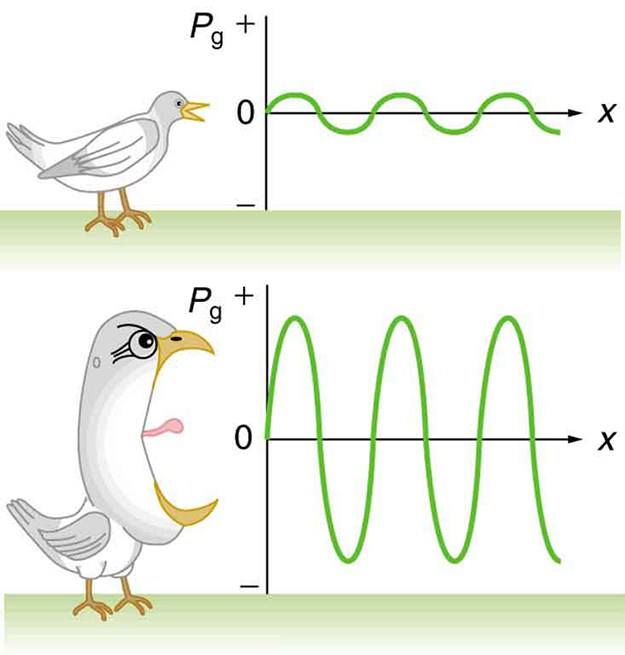
________ describes how LOUD a sound is. 
a)
Amplitude
b)
Frequency 
10.
To make a sound from a stringed instrument louder you must
a)
hit it
b)
pluck it harder
c)
hold it higher
d)
pluck it softer
11.
We measure pitch in....
a)
Volume
b)
Decibles
c)
Amplitude
d)
Frequency
12.
When the car moves AWAY from you, its horn seems...
a)
Low pitched
b)
High pitched
c)
Normal
13.
When an ambulance move TOWARD you it sounds ________ pitched. 
a)
high
b)
low
c)
medium
14.
The Doppler effect is seen when a wave-making source moves toward an observer. 
a)
True
b)
False
15.
The Doppler effect occurs when an observer moves towards a wave-making source. 
a)
True
b)
False
16.

Which of the following does not allow sound waves to propagate?

a)

vacuum

b)

liquid

c)

solid

d)

gas

17.

Which of the following is a good sound absorber?

a)

Concrete wall

b)

Marble tile

c)

Aluminium sheet

d)

Softboard

18.

Choose the correct arrangement of the speed at which mediums transmit sound in ascending order.

a)

Solid, gas, liquid

b)

Solid, liquid, gas

c)

Gas, liquid, solid

d)

Liquid, gas, solid

19.

Which of the following affects the pitch of sound?

a)

Loudness of sound

b)

Amplitude of sound

c)

Reflection of sound

d)

Frequency of sound

20.

What is term used to describe reflected sound?

a)

Pitch

b)

Loud

c)

Echo

d)

Note

21.

Which of the following fields does not use sonar?

a)

Medicine

b)

Education

c)

Shipping

d)

Fisheries

22.

Which of the following animals uses echolocation to move in the dark?

a)

Dog

b)

Cat

c)

Elephant

d)

Bat

23.

Which tool is used to overcome the limitation of hearing in humans?

a)

Kaleidoscope

b)

Microscope

c)

Stethoscope

d)

Periscope

24.

Which of the following is the hearing range of humans?

a)

16 Hz to 12 000 Hz

b)

55 Hz to 33 500 Hz

c)

20 Hz to 20 000 Hz

d)

2 000 Hz to 110 000

25.
If you want to change the pitch of a sound, you have to change the ___
a)
frequency
b)
amplitude
c)
speed
d)
volume
26.
This is the unit used to measure the volume of a sound. 
a)
Decibel
b)
Medium
c)
Vibration
d)
Oscilloscope
27.
The speed of a sound wave depends on
a)
the frequency
b)
the medium
c)
both air temperature and medium
d)
the air temperature
28.
What is a pitch?
a)
highness or lowness of a sound
b)
the intensity of a vibration
c)
the amplitude of the sound wave
d)
volume of sound
29.

Bats use ________ to locate mosquitoes in the air.

a)

solar

b)

ecology

c)

echolocation

d)

refraction

30.
The number of wavelengths that pass a point each second
a)
frequency
b)
wavelength
c)
pitch
d)
amplitude
31.
Material (matter) through which a wave travels
a)
medium
b)
Doppler Effect
c)
sound
d)
pitch
32.
When a sound is louder what measurement gets bigger?
a)
Frequency 
b)
Amplitude 
c)
Wavelength 
d)
Crest
33.
Why is the school library covered with carpet?
a)
So everyone can make a lot of noise
b)
to help absorb sounds to keep it quiet
c)
because it looks good
d)
to help absorb sounds so it can stay noisy
34.
The Milky Way Galaxy is most likely 
a)
an irregular galaxy
b)
a spiral galaxy
c)
an elliptical galaxy
d)
a nebula
35.
Which is the hottest?
a)
a red giant
b)
small, white dwarf
c)
main-sequence yellow star
d)
main-sequence blue star
36.
A student notices that the moon looks larger than the stars.  Why?
a)
The moon is reflecting light from the sun
b)
The moon is closer to Earth then the stars
c)
The moon is much larger than the stars
d)
The moon is much larger than Earth
37.
Venus appears bright in the night sky because...
a)
it has a gravitational field
b)
is the largest planet
c)
is the closest planet to Earth
d)
has a high surface temperature
38.
What color are the hottest stars?
a)
red
b)
yellow
c)
orange
d)
blue
39.
The color of a star depends on its
a)
size
b)
temperature
c)
shape
d)
magnitude
40.

Which one is an irregular galaxy?

a)
b)
c)
d)
41.

Name this type of galaxy

a)

spiral galaxy

b)

elliptical galaxy

c)

irregular galaxy

42.

name this type of galaxy

a)

spiral galaxy

b)

elliptical galaxy

c)

irregular galaxy

43.

the sun is an example of a

a)

star

b)

planet

c)

galaxy

d)

comet

44.

which statement is true

a)

the milky way is a larger spiral galaxy

b)

our solar system is located at the edge of one of the spiral arls of the milky way

45.

a planet that has water

a)

mars

b)

venus

c)

earth

d)

sun

46.

the arrangement of colour of the star starting from the lowest temperature to the highest temperature

a)

red, orange, yellow, blue, white

b)

orange, yellow, white, blue, red

c)

red, orange, white, blue, yellow

d)

red, orange, yellow, white, blue

47.
What is the theory that states the universe began with a huge explosion?
a)
Apparent Magnitude
b)
Light year
c)
Big Bang Theory
d)
Galaxy
48.
What is the distance that light can travel in one year? 
a)
Light year
b)
Irregular Galaxy
c)
Supernova
d)
Quasar 
49.
What is a small, hot, dim star that is the leftover center of an old star?
a)
Spiral Galaxy
b)
Supernova
c)
White Dwarf
d)
Black Hole
50.
What is gigantic explosion that causes the death of a massive star?
a)
Supernova
b)
Nebula
c)
Red Giant
d)
White Dwarf
51.

What is a star? Choose 2 answers.

a)

a huge collection of gas, dust, and billions of stars and their solar systems. It is held together by gravity.

b)

-a large ball of burning gas in space that is usually seen from earth as a point of light in the sky at night.

c)

a ball of hydrogen and helium with enough mass that it can sustain nuclear fusion at its core.

52.

What is a galaxy held together by?

a)

Thor (Tor)

b)

glue (pegamento)

c)

gravity (la gravedad)

53.

What is a galaxy?

a)

a large group of stars gas, and dust held together by gravity (pg. 394)

b)

the Universe probably began about 13.7 billion years ago with an enormous explosion. (pg.398)

c)

It uses convex lenses which are curved outward like the surface of a ball. (pg. 412)

54.

What is an asteroid?

a)

patterns of stars in the night sky. (pg. 378)

b)

small, rocky objects that orbit the sun. Although asteroids orbit the sun like planets, they are much smaller than planets.

c)

the measurement of light that a star gives off (pg.380)

55.

What is a comet? (Choose 2 answers)

a)

They orbit the sun. Jets of gas and dust from them form long tails that can be seen from Earth.

b)

a region where light can not escape (pg.392)

c)

a giant star that measure 450,520,00 km.

d)

a ball of frozen gases, rock and dust that is about the size of a small town.

56.

What is a meteor? (choose 2 answers)

a)

a large group of stars, gas, and dust held together by gravity.(pg.394)

b)

the fireballs or 'shooting stars' from when meteoroids enter Earth’s atmosphere (or that of another planet, like Mars) at high speed and burn up

c)

a telescope that uses a curved mirror to direct light. (pg.412)

d)

a small body of matter from outer space that enters the earth's atmosphere, becoming incandescent as a result of friction and appearing as a streak of light.

57.

What is a meteoroid? ( el meteoroide ) Choose 2

a)

a small body moving in the solar system that would become a meteor if it entered the earth's atmosphere.

b)

a large group of stars, gas, an dust held together by gravity. (pg.394)

c)

a giant red star (pg.402)

d)

a small chunk of rock or iron that travels through space

58.

What is the definition of a meteorite? ( el meteorito)

a)

a large cloud of gas and dust. (pg.390)

b)

the reusable spacecraft that transports astronauts, satellites, and other materials, to and from space (pg.425)

c)

a fragment of rock or iron from outer space, usually a meteoroid or asteroid, which survives passage through the atmosphere as a meteor to impact the surface of the Earth

59.

an enormous explosion that occurs when a massive star dies

a)

black hole

b)

nuclear fusion

c)

supernova

d)

solar wind

60.

a hot, dense, slowly cooling sphere of carbon that remains when a red giant star dies

a)

red giant

b)

supergiant

c)

black hole

d)

white dwarf

61.

an immense cloud of dust & gas where stars are born

a)

black hole

b)

nebula

c)

prominence

d)

supernova

62.
What is the life cycle of a medium sized star?
a)
Nebula, red giant, nova, white dwarf, black hole
b)
Red giant, nova, white dwarf, dead star
c)
Nebula, red giant, nova, white dwarf, dead star
d)
Nebula, white dwarf, dead star
63.
The largest type of star is 
a)
nebula
b)
red giant
c)
red supergiant
d)
supernova
64.
All of the galaxies together is _______.
a)
nebula
b)
solar system
c)
Milky Way
d)
universe
65.
Elliptical, spiral, and irregular are all types of ______.
a)
solar systems
b)
universes
c)
galaxies
d)
stars
66.
What color of star is the coolest?
a)
Red
b)
Yellow
c)
Blue
d)
White
67.
After a supernova, the core can collapse into a neutron star, or if massive enough even a ___________.
a)
Black Hole
b)
White Dwarf
c)
Brown Dwarf
d)
Black Dwarf
68.
What determines if a star becomes a giant or a supergiant?
a)
star size
b)
star temperature
c)
star color
d)
star luminosity
69.
Our galaxy is called the
a)
Earth Nebula
b)
The Hubble Galaxy
c)
The Milky Way
d)
The Snickers
70.
The Milky Way Galaxy is a 
a)
spiral
b)
lenticular
c)
elliptical 
d)
irregular
71.
The life cycles of stars are determined by their:
a)
mass (size)
b)
color
c)
distance from Earth
d)
luminosity
72.
What is the distance that light can travel in one year? 
a)
Light year
b)
Irregular Galaxy
c)
Supernova
d)
Quasar 
73.
What is a small, hot, dim star that is the leftover center of an old star?
a)
Spiral Galaxy
b)
Supernova
c)
White Dwarf
d)
Black Hole
74.
What is gigantic explosion that causes the death of a massive star?
a)
Supernova
b)
Nebula
c)
Red Giant
d)
White Dwarf
75.
What is an object that is so massive and dense that even light can not escape its gravity?
a)
Main-sequence
b)
black hole
c)
Apparent Magnitude
d)
Comet
76.
What is a large cloud of dust and gas where new stars are formed or stars explode?
a)
quasar
b)
black hold
c)
supernova
d)
nebula
77.

What causes the nebulae dense and form into a star?

a)

strong gravitational pull and nuclear reaction

b)

collision between planets

c)

exposure to high heat

78.

what factors determine the brightness of a star

a)

size and colour

b)

colour and distance

c)

size and distance

d)

temperature and colour

79.

how does the image of galaxies was taken?

a)

by hubble telescope

b)

by satellites

c)

by astronaut

80.

Nuclear reaction in the sun converts the hydrogen gas into

a)

oxygen

b)

nitrogen

c)

helium

d)

water