wayground logo

Free Printable Worksheets

Font size

S
M
L
XL
Worksheets

JAGT - Speed Force Newton Laws

Total questions: 127

Worksheet time: 3hrs 31mins

Name
Class
Date
1.
Bill jogs 400 meters to Andy's house, turns around, and runs 400 meters back home.  He does so in 267 seconds.  What is Bill's average speed?
a)
about 3 m/s
b)
about 1.5 m/s
c)
0
d)
about 4 m/s
2.
What is the formula to calculate speed?
a)
S = t/d
b)
S = d/t
c)
S = d x t
d)
S = t x d
3.

A runner races in the 100 meter dash. It takes her 10 seconds to finish. What is her average speed?

a)

10 m/s

b)

1000 m/s

c)

100 seconds

d)

10 seconds

4.
Dave runs a 400 m race with a speed of 4 m/s. What time will it take him to finish the race?
a)
400 minutes
b)
100 minutes
c)
100 seconds 
d)
.25 seconds 
5.
Which of the following is a unit of time?
a)
sec
b)
mi
c)
m/s
d)
km
6.
Which of the following is a unit of speed ?
a)
sec
b)
mi
c)
m/s
d)
min
7.
Which of the following is a unit of distance ?
a)
miles/hr
b)
mi
c)
s
d)
min
8.
Which of the following is a unit of distance ?
a)
miles/hr
b)
hr
c)
km
d)
min
9.
Which of the following is a unit of time?
a)
km/hr
b)
hr
c)
km
d)
mi
10.
A train travels 25 km in .5 hrs. How fast is the train going?
a)
25 miles/hr
b)
5 miles/hr
c)
125 km/hr
d)
50 km/hr
11.

Speed -

a)

A measure that gives rate of change and position

b)

A measure that dissolves to one unit

c)

A measure of distance an object travels per unit of time.

d)

A measure of distance an object travels per unit of measurement.

12.

What is the speed of a bus that travels 250 km in 2 hours?

Formula ?

Answer ?

a)

S= D/T

125km/hr

b)

S= T/D

521km/meters

c)

S=D/T Km/hr

d)

All fo the above

13.
Calculate these 3 car's speeds, then rank them in order of fastest to slowest, with 3 being the fastest car and 1 the slowest car.
Car A- distance: 4 meters, time: 2 sec
Car B- distance: 2 meters, time: 2 sec
Car C- distance: 8 meters, time: 2 sec
a)
Car A= 1
Car B= 2
Car C = 3
b)
Car A = 2
Car B= 1
Car C= 3
c)
Car A= 3
Car B= 1
Car C = 2
d)
Car A = 3
Car B= 2
Car C= 1
14.
Distance over time.
a)
Travel
b)
Motion
c)
Velocity
d)
Speed
15.
Change in position over time.
a)
Location
b)
Velocity
c)
Motion
d)
Movement
16.
Speed plus direction.
a)
Velocity
b)
Motion
c)
Position
d)
Acceleration
17.
How would decreasing the time it takes you to run a certain distance affect your speed? Speed will...
a)
Increase
b)
Decrease
18.
What does this graph represent?
a)
Constant Speed
b)
Acceleration
c)
Deacceleration
d)
Not moving
19.
Which runner won the race?
a)
A
b)
B
c)
C
d)
It was a tie
20.
According to the graph how far does the person travel in the first 5 seconds?
a)
2 m
b)
10 m
c)
0 m
d)
5 m
21.

Velocity is speed with __________________________.

a)

a unicycle helmet

b)

direction

c)

fight

22.

The rate at which something moves is what?

a)

time

b)

space

c)

sound

d)

speed

23.

A unicyclist pedals 40 hours at 5 miles per hour without making any stops. How far does she get?

a)

200 miles

b)

8 miles

c)

35 miles

d)

45 miles

24.
65 miles per hour North is an example of an objects what?
a)
Speed
b)
Velocity
c)
Average Speed
d)
Constant Speed
25.
On a distance vs. time graph, the steeper the slope _____
a)
the slower the speed
b)
the faster the speed
c)
less acceleration
d)
greater acceleration
26.
Speed is different from velocity because
a)
Velocity has a direction
b)
Speed uses Distance /Time
c)
Velocity doesn't include time
d)
Velocity doesn't include distance
27.
Total distance divided by total time is
a)
average speed
b)
constant speed
c)
instantaneous speed
d)
acceleration
28.
Ms. Bush drives 50 miles. What does Ms. Bush need to figure out her speed?
a)
The type of car she drives
b)
Her heart rate as she drives
c)
The time she has driven
d)
The direction she was going
29.
Acceleration is defined as the CHANGE in 
a)
time of motion to another place. 
b)
velocity 
c)
distance 
d)
speed
30.
A box sliding down an inclined plane attains a velocity of 27 m/s in 3 seconds from rest.  Find the acceleration.
a)
30 m/s
b)
24 m/s2
c)
9 m/s2
d)
81 km/hr
31.
A roller coasters accelerates from an initial velocity of of 6.0 m/s to a final velocity of 70 m/s over 4 seconds.  What's the acceleration?
a)
24 m/s2
b)
18 m/s2
c)
16 m/s2
d)
16 m/s
32.
A dog runs with an initial speed of 7.5 m/s on a waxed floor.  It slides to a stop in 15 seconds.  What is the acceleration?
a)
-7.5 m/s
b)
-7.5 m/s2
c)
-0.5 m/s2
d)
7.5 mi//hr
33.
The picture of the position vs. time graph shows an object that is...
a)
accelerating/speeding up
b)
moving at a constant speed 
c)
not moving 
d)
accelerating/slowing down. 
34.
A car starts from rest at a stop light and reaches 20 m/s in 3.5 s. Determine the acceleration of the car.
a)
2.2m/s2
b)
7.0m/s2
c)
5.7m/s2
d)
70m/s2
35.
Acceleration only takes place when things speed up. 
a)
True
b)
False
36.
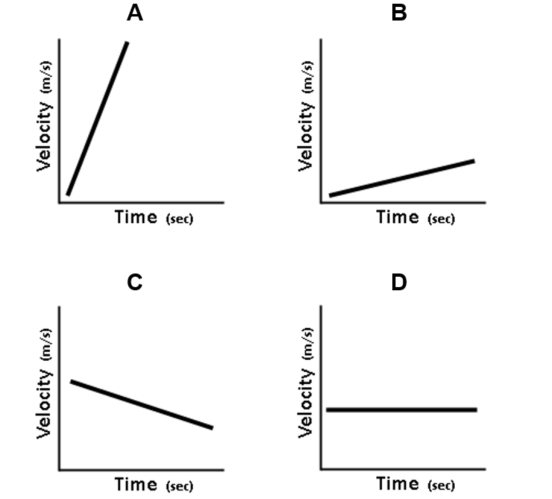
Which graph represents zero acceleration (constant velocity)?
a)
A
b)
B
c)
C
d)
D
37.
Which graph represents the greatest acceleration?
a)
A
b)
B
c)
C
d)
D
38.
Which of the following is a unit for acceleration?
a)
km/s
b)
m/s2
c)
mi/hr
d)
ft
39.
How can acceleration be zero?
a)
a car runs out of gas and slowly rolls to a stop
b)
a car decreases speed at a constant rate until it comes to rest
c)
car has constant speed and is traveling on a straight path
d)
the car travels round trip and is back at the starting point
40.
Can be measured in meters per second (m/s)
a)
Distance
b)
Time
c)
Speed
d)
Acceleration
41.
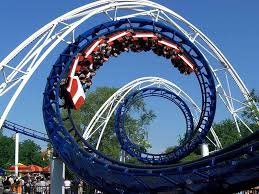
When a car goes around a corner at 20 mph, why do we say it  accelerates?
a)
The car is accelerating because of the velocity is constant
b)
The car accelerates because it's going 20 mph
c)
Cars always accelerate when they are in motion
d)
The car is accelerating because it's changing direction
42.

A correct measure of velocity would be

a)

300 m/hr

b)

7,800 m/sec

c)

40 kn/hr north

43.
The SI unit for acceleration is
a)
mph
b)
ft/sec2
c)
m/s2
44.
A car accelerates from a standstill to 70 m/s in 10 seconds.  What is the acceleration?
a)
0.7m/s2
b)
7m/s2
c)
14m/s2
d)
none of the above
45.
Why does a car accelerate as it round a corner at a constant speed?
a)
Its direction changes
b)
It doesn't
c)
It slows down
d)
Its speeds up  
46.

Which runner stopped for a rest?

a)

Albert

b)

Bob

c)

Charlie

d)

None of them stopped

47.
Which graph is would represent a decrease in speed?
a)
Graph A
b)
Graph B
c)
Graph C
d)
The object is not decreasing in speed in any of these graphs
48.
Describe the speed of the object from
0-2 seconds using the distance vs. time graph.
a)
Constant speed
b)
Speeding up
c)
Slowing down
d)
Not moving
49.

Use the graph above and pick the most accurate description of the object's motion

a)

object is moving at constant speed

b)

object is speeding up

c)

object is at rest

d)

object is slowing down

50.

Use the picture above to choose the most accurate description of the object's motion

a)

object is speeding up in the positive direction

b)

object is slowing down in the positive direction

c)

object is speeding up in the negative direction

d)

object is slowing down in the negative direction

51.
What kind of acceleration is shown here?
a)
positive
b)
negative
c)
none
d)
varies
52.
What kind of acceleration is shown here?
a)
positive
b)
negative
c)
none
d)
varies
53.
What is the velocity?
a)
positive
b)
negative
c)
decreasing
d)
increasing
54.
What is the velocity?
a)
not moving
b)
increasing
c)
positive
d)
negative
55.

What type of force is this man using to push his grocery cart?

a)

Normal Force

b)

Gravity

c)

Air Resistance

d)

Applied Force

56.

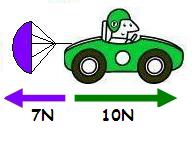
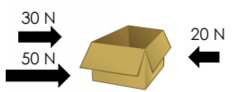
What is the net force?

a)

3 N

b)

3 N, right

c)

17 N, right

d)

3 N, left

57.
What is the net force?
a)
20 N 
b)
0 N 
c)
400 N 
d)
40 N 
58.

What is the unit to MEASURE force?

a)

Kilogram

b)

Meter

c)

Pounds

d)

Newton

59.

A ____________ is a push or a pull on an object.

a)

friction

b)

force

c)

magnet

d)

gravity

60.
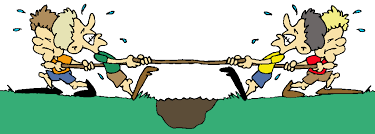
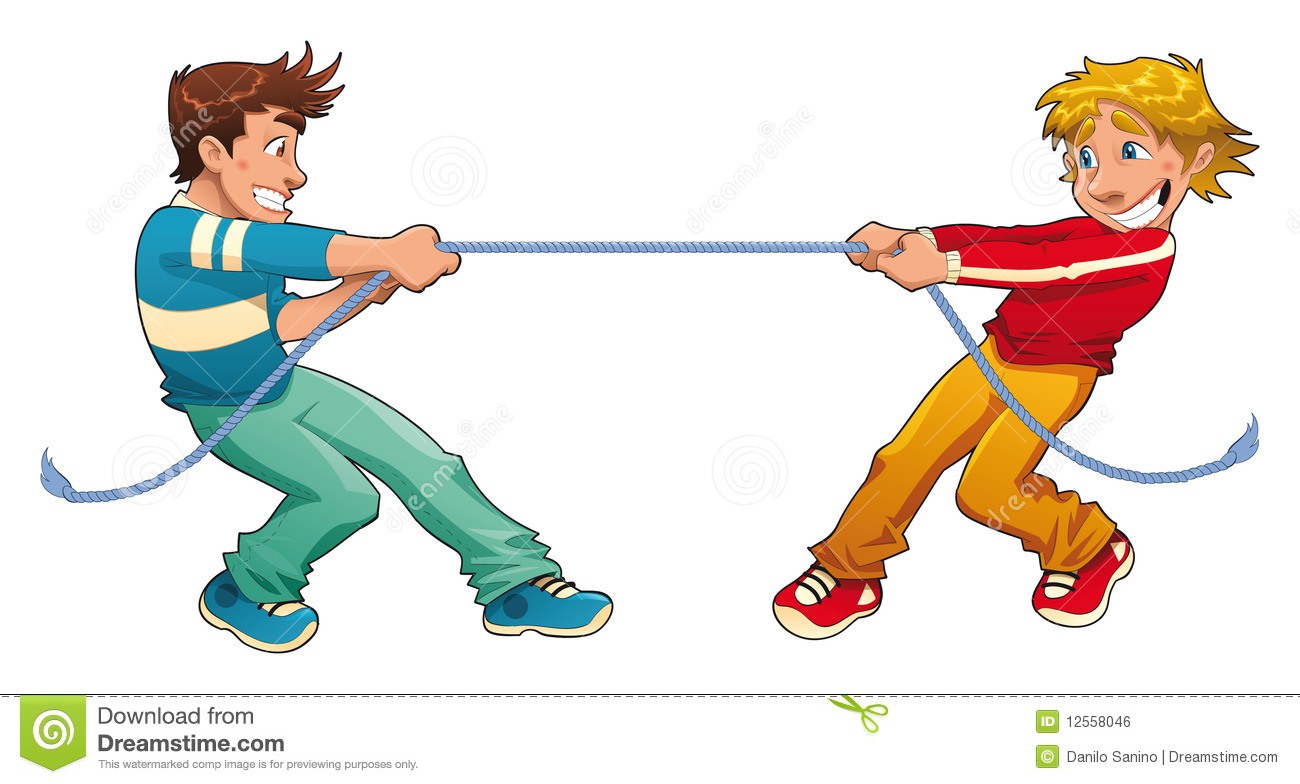
If these teams are pulling with the same amount of force what will happen?
a)
The boy in blue will win.
b)
They will not move at all.
c)
The boy in red will win.
d)
Both will fall down.
61.
The sum of all forces acting on an object.
a)
Contact Force
b)
Balanced Force
c)
Unbalanced Force
d)
Net Force
62.
Calculate the Net Force. 
a)
60N, Left 
b)
40N, Right 
c)
0N
d)
60N, Right
63.
What is a Force?
a)
The distance
b)
Mass
c)
A push or pull
d)
Give me a  failing grade 
64.
What force holds the planets in motion around the sun?
a)
Magnetic
b)
Electrical
c)
Gravitational
d)
Air Resistance
65.
Name the missing force...
a)
frictional force
b)
weight force
c)
thrust
d)
buoyant force
66.
Name the missing force...
a)
applied force
b)
weight force
c)
tension force
d)
drag
67.
What is force?
a)
A push exerted on an object
b)
A push or pull exerted on an object
c)
A pull exerted on an object
d)
Nothing
68.
The force that pulls things toward earth.
a)
Speed
b)
Gravity
69.
Force depends on
a)
Force
b)
mass
c)
acceleration
d)
mass and acceleration 
70.
The SI Unit of force is
a)
Pascal
b)
Meter/second
c)
Newton
d)
kg
71.
Which force produces a change in motion?
a)
unbalanced force
b)
balanced force
c)
gravitational force
d)
frictional force
72.
If there are two forces going in the same direction how would you find the net force?
a)
Subtract
b)
Add
c)
Neither
d)
Multiply
73.
What is the formula for work?
a)
W=F*D
b)
W=F/D
c)
W=F-D
d)
W=F+D
74.

What minimal force must be exerted by a mother to lift her 5kg baby?

a)

0 N

b)

5 N

c)

49 N

d)

10 N

75.

In the district finals, Vanessa kicks the 0.600 kg soccer ball with a force of 80 N. How much does she accelerate the ball?

a)

122 m/s/s

b)

50 m/s/s

c)

133 m/s/s

d)

48 m/s/s

76.

A 68 kg runner exerts a force of 59 N. What is the acceleration of the runner?

a)

9.8 m/s/s

b)

5 m/s/s

c)

1.968 m/s/s

d)

0.868 m/s/s

77.

How much would a 70 kg person weigh on Mercury?

a)

542.1 N

b)

254.1 N

c)

386 N

d)

678.5 N

78.

The gravity on Mercury is 0.37 that of Earth. what is the acceleration of gravity on Mercury?

a)

5.6 m/s/s

b)

3.63 m/s/s

c)

4.5 m/s/s

d)

2.9 m/s/s

79.

A small car weighs 10168.25 N, what is its mass?

a)

99648.85 kg

b)

1563.48 kg

c)

998 kg

d)

1037.58 kg

80.

A tennis ball with a mass of 0.1 kg is accelerated at a rate of 164 m/s when hit by a professional tennis player. What force does the racket exert on the ball?

a)

15.3 N

b)

16.4 N

c)

25 N

d)

13.3 N

81.

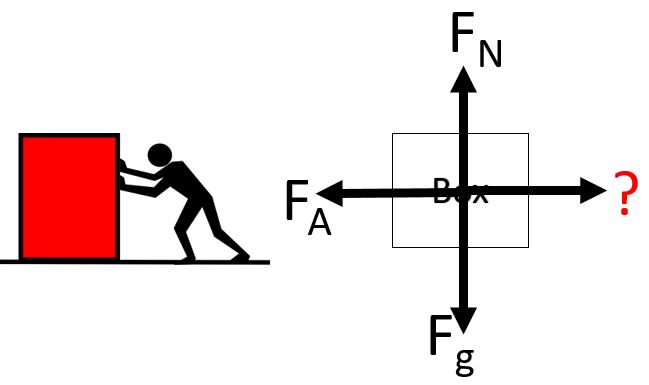
A man pushes a 50kg box at a constant velocity. He applies a force of 200N to the left.


Calculate Fg

a)

50kg

b)

200N

c)

500N

d)

20kg

82.

A man pushes a 50kg box at a constant velocity. He applies a force of 200N to the left.


Find FN

a)

50kg

b)

200N

c)

500N

d)

50kg

83.

A man pushes a 50kg box at a constant velocity. He applies a force of 200N to the left.


What is Fa?

a)

50kg

b)

200N right

c)

500N

d)

200N left

84.

A man pushes a 50kg box at a constant velocity. He applies a force of 200N to the left.


Find Ff

a)

50kg

b)

200N right

c)

500N

d)

200N left

85.

Find the weight of a 20g object

a)

200N

b)

20g

c)

0.2N

d)

0.02kg

86.

You have a ball with a weight of 76N. What is the mass of the ball?

a)

76N

b)

76kg

c)

7.6kg

d)

7.6N

87.

What statement is true?

a)

Mass never changes. Weight does.

b)

Weight never changes. Mass does.

c)

Both mass and weight change because they are affected by gravity.

d)

Neither mass nor weight change. They are always the same.

88.

Find the weight of a 5kg rock on Mercury with a gravitational pull of 3.59m/s/s.

a)

5kg

b)

17.95N

c)

1.39N

d)

0.718N

89.

What unit do scientists use to measure force?

a)

Grams

b)

Newton

c)

Meters

d)

Joule

90.

The moon has a smaller gravity than the Earth. If you were to travel to the moon, your weight would …

a)

Increase

b)

Decrease

c)

Not change

d)

Vary with day and night

91.

When you slide a box across the floor, what force must your push be stronger than?

a)

Normal force

b)

Friction force

c)

Gravity

d)

Air resistance

92.

Which force pulls downward on objects?

a)

Normal force

b)

Friction force

c)

Gravity

d)

Air resistance

93.

What force is needed to accelerate 60 kg object at 2 m/s2?

(a)  

94.

A force of 200 N pushes an object at 8 m/s2. What is the mass of the object?

(a)  

95.

A force is described as …

a)

A push only

b)

A pull only

c)

A push or a pull

d)

None of the above

96.
What is a PUSH or PULL of an object?
a)
Motion
b)
Force
c)
Friction
d)
Gravity
97.
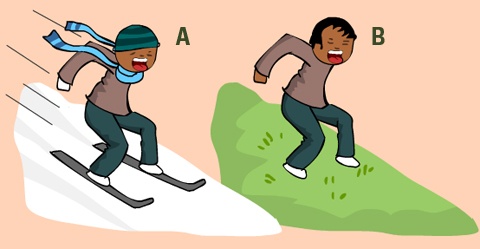
Why is it harder for the boy in Image B to get down the hill?
a)
Motion
b)
Friction
c)
Work
d)
Displacement
98.
If these boys are pulling with the same amount of force.  What will happen?
a)
The boy in blue will win.
b)
They will not move at all.
c)
The boy in red will win.
d)
Both will fall down.
99.
Which force produces a change in motion?
a)
unbalanced force
b)
balanced force
c)
gravitational force
d)
frictional force
100.
At which point is potential energy greatest
a)
W
b)
X
c)
Y
d)
Z
101.
The formula 
? = mass x acceleration
or 
? = m x a 
is used to find 
a)
Force
b)
Velocity
c)
Momentum
d)
Gravity
102.
For every action, there is an equal and opposite reaction.
a)
Newton's
1st
Law of Motion
b)
Newton's
2nd
Law of Motion
c)
Newton's
3rd
Law of Motion
103.
When you push a boat off from the dock, you are demonstrating Newton's 3rd Law of Motion. It simply states that for every action there is an equal and opposite _______________?
a)
Motion
b)
Change
c)
Reaction
d)
Push
104.
"For every action, there is an equal and opposite reaction."
a)
Newton's 1st Law
b)
Newton's 2nd Law
c)
Newton's 3rd Law
d)
Newton's 4th Law
105.
Force = Mass x Acceleration
a)
Newton's 1st Law
b)
Newton's 2nd Law
c)
Newton's 3rd Law
d)
Newton's 4th Law
106.
"An object in motion (or at rest) will to stay in motion (or at rest) until an outside force acts upon it."
a)
Newton's 1st Law
b)
Newton's 2nd Law
c)
Newton's 3rd Law
d)
Newton's 4th Law
107.
The tendency of an object to resist changes in its motion is...
a)
inertia
b)
force
c)
acceleration
d)
velocity
108.
Any push or pull on an object.
a)
force
b)
velocity 
c)
inertia
d)
momentum
109.
The force that opposes motion between two surfaces in contact with each other.
a)
inertia
b)
friction
c)
momentum
d)
gravity
110.
The force of attraction between all matter.
a)
inertia
b)
friction
c)
net force
d)
gravity
111.
A force that opposes motion between a surface in contact with the atmosphere.
a)
air resistance
b)
gravity
c)
momentum
d)
terminal velocity
112.
When all the forces on an object are equal and opposite, & the net force is zero, that's...
a)
balanced forces
b)
unbalanced forces
c)
terminal velocity
d)
reaction forces
113.
A magician pulls a tablecloth out from under dishes and glasses on a table without disturbing them.
a)
Newton's 1st Law
b)
Newton's 2nd Law
c)
Newton's 3rd Law
114.
Pushing a child on a swing is easier than pushing an adult on the same swing, because the adult has more mass and requires more force to accelerate.
a)
Newton's 1st Law
b)
Newton's 2nd Law
c)
Newton's 3rd Law
115.
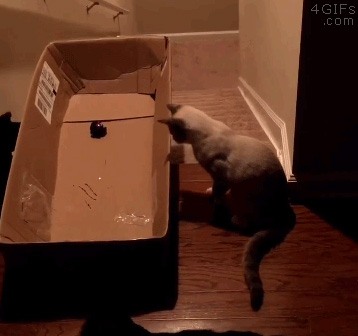
This person bought coffee and put it on the seat next to them. If they stopped quickly and the coffee spilled which law would that represent?
a)
Newton's 1st Law
b)
Newton's 2nd Law
c)
Newton's 3rd Law
116.

Whats Newtons First Law?

a)

The more force applied to an object the faster it will accelerate.

b)

An object in motion will stay in motion and an object at rest will stay at rest unless acted by an outside force.

c)

for every ection there is an equal and oposite reaction

117.

The Law of Inertia

a)

Newtons 1st Law of motion

b)

Newtons 2nd Law of motion

c)

Newtons 3rd Law of motion

118.

The tendency of an object to resist changes in its motion is...

a)

Acceleration

b)

Velocity

c)

Inertia

d)

Force

119.

Newton's third law states that any action will have a(n) ___ and ___ reaction

a)

Equal and similar

b)

Equal and opposite

c)

Equal and different

d)

Greater and opposite

120.

Acceleration: is the rate of change in _____.

a)

distance

b)

Speed

c)

Velocity

d)

displacement

121.

What is the Net Force?

a)

10

b)

0

c)

3

d)

2

122.
What is the net force?
a)
30 N 
b)
25 N 
c)
5 N 
d)
55 N 
123.
What is the standard unit force is measured in?
a)
Newtons
b)
pounds
c)
grams
d)
meters
124.

Force exerted between the surfaces of two objects.

a)

Friction

b)

Inertia

c)

Force

d)

Gravity

125.
Who is the scientist who came up with the Laws of Motion?
a)
Sir Issac Newton
b)
The Greeks
c)
John Dalton
d)
Sir John Newt
126.
What is Newtons 2nd law of motion?
a)
Pancakes 
b)
Force= Mass multiplied by acceleration
c)
For every action there is a equal and opposite  re-action.
d)
Law of gravity 
127.
Which has more Inertia? (so need more force to move) 
a)
Truck
b)
Ant
c)
A cat
d)
A skateboard