wayground logo

Free Printable Worksheets

Font size

S
M
L
XL
Worksheets

(GEO) Midterm Review

Total questions: 126

Worksheet time: 4hrs 44mins

Name
Class
Date
1.
What is it called when points lie on the same line.
a)
Midpoint
b)
Coplanear
c)
Segment Bisector
d)
Collinear
2.

A ____ is represented by a flat surface that extends without end and has no thickness.

a)

line

b)

plane

c)

distance

d)

opposite rays

3.

A ______ indicates a location in space. It has no size.

a)

line

b)

point

c)

ray

d)

vertex

4.

A _____ is part of a line that consists of one endpoint and all the points of the line on one side of the endpoint.

a)

ray

b)

segment

c)

line

d)

opposite rays

5.

An angle is formed by two rays with the same endpoint. The endpoint is the _____ of the angle.

a)

point

b)

corner

c)

vertex

d)

midpoint

6.

If two rays share the same endpoint and form a line we call them _______.

a)

segment

b)

distance

c)

congruent

d)

opposite rays

7.

The _____ of an angle is the region containing all the points between the two sides of the angle.

a)

exterior

b)

vertex

c)

interior

d)

bisect

8.

A(n) ____ angle has a measure of 90.

a)

acute

b)

obtuse

c)

right

d)

straight

9.

A(n) ______ angle has a measure less than 90.

a)

acute

b)

obtuse

c)

right

d)

straight

10.

The distance between endpoints of a segment is also call the _____ of that segment

a)

midpoint

b)

length

c)

congruent

d)

bisect

11.

When angles have equal measure, we say they are ____ angles.

a)

bisect

b)

vertex

c)

congruent

d)

coordinate

12.

A line, ray, or segment that intersects a segment at its midpoint is said to _____ the segment.

a)

distance

b)

coordinate

c)

length

d)

bisect

13.

The real number that corresponds to a point on a line is called the ____ of the point.

a)

midpoint

b)

coordinate

c)

distance

d)

length

14.

A(n) ______ angle has a measure more than 90.

a)

acute

b)

obtuse

c)

right

d)

straight

15.

A(n) _____ angle has a measure of exactly 180.

a)

acute

b)

obtuse

c)

right

d)

straight

16.

The ______ of an angle is the region that contains all the points outside the two sides.

a)

exterior

b)

interior

c)

plane

d)

vertex

17.

A _______ is an accepted statement of fact.

a)

postulate

b)

undefined term

c)

sentence

d)

congruent

18.

A ______ is part of a line that consists of two endpoints and all the points between them.

a)

distance

b)

length

c)

segment

d)

ray

19.

Points and lines in the same plane are called _______.

a)

congruent

b)

collinear

c)

equal

d)

coplanar

20.
What is this Symbol called?
a)
Congruent
b)
Equal
c)
Parallel Lines
d)
Angle
21.
What is the intersection of planes R and P?
a)
point I
b)
point H
c)
line HI
d)
ray IH
22.
How many noncollinear points determine a plane?
a)
1
b)
2
c)
3
d)
infinitely many
23.
Which of the following is NOT a correct way to describe this plane?
a)
plane ABC
b)
plane CBA
c)
plane BAC
d)
plane A
24.
What is the intersection of lines TR and VQ?
a)
S
b)
TSR
c)
RS
d)
Q
25.
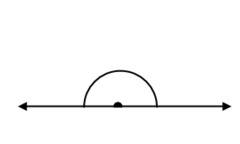
What type of angle is shown?
a)
acute
b)
obtuse
c)
right
d)
straight
26.
Solve
a)
x = 6
b)
x = 7
c)
x = 12
d)
x = 144
27.
Solve for x
a)
x = 2
b)
x = 4
c)
x = 6
d)
x = 8
28.
What is another name for ∠H
a)
∠KGH
b)
∠LGH
c)
∠LHG
d)
∠K
29.
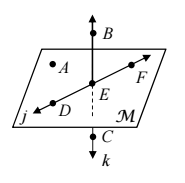
An example of coplaner points
a)
D, E, B
b)
C, B, A
c)
M, E, C
d)
A, F, E
30.
If I named ∠LGH, what angle am I talking about?
a)
red
b)
purple
c)
yellow
d)
green
31.
If I wanted to name ∠KGL which colored angle am I talking about?
a)
light blue
b)
yellow
c)
blue 
d)
green
32.
Give another name for line k.
a)
Line BC
b)
Line BCE
c)
Line ED
d)
Line k is the only name, there isn't another name.
33.
Name the intersection of Line c and Plane R
a)
Point J
b)
Line HK
c)
Point K
d)
Line MN
34.

Consider the number line and statement below the image. As it is written, is the congruence statement correct?

a)

Yes

b)

No

35.
Name the angle pair. 
a)
Complementary
b)
Supplementary
c)
Adjacent
d)
Vertical
36.
Name the angle pair. 
a)
Complementary
b)
Supplementary
c)
Adjacent
d)
Vertical
37.
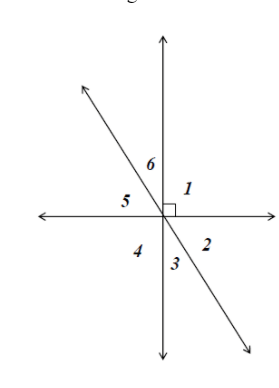
Angles 4 and 1 are what angle pair?
a)
Complementary
b)
Supplementary
c)
Acute
d)
Vertical
38.
Name a pair of angles that form a linear pair.
a)
Angles 1 and 2
b)
Angles 2 and 4
c)
Angles 5 and 8
d)
Angles 9 and 10
39.
Name a pair of angles that are vertical.
a)
Angles 4 and 5
b)
Angles 7 and 9
c)
Angles 8 and 9
d)
Angles 5 and 7
40.
Name the angle pair. 
a)
Complementary
b)
Supplementary
c)
Linear Pair
d)
Vertical
41.
Find x if the angles are complementary.
a)
15
b)
75
c)
25
d)
90
42.
Solve for x.
a)
10.5
b)
11.5
c)
34
d)
34.5
43.
Angles on opposite sides of a vertex and are congruent are called _____.
a)
Vertical angles
b)
Supplementary Angles
c)
Corresponding Angles
d)
Alternate Interior Angles
44.
Angles which add up to 180° are called _____.
a)
Vertical angles
b)
Supplementary Angles
c)
Corresponding Angles
d)
Complementary Angles
45.

Vertical angles are always

a)

90 degrees

b)

180 degrees

c)

congruent

d)

adjacent

46.

Name a pair of vertical angles in the figure.

a)

∠1 and ∠4

b)

∠6 and ∠5

c)

∠2 and ∠4

d)

∠1 and ∠6

47.
What are adjacent angles?
a)
Angles that are across from each other
b)
Angles that add to 180
c)
Angles that add to 90
d)
Angles that are next to each other
48.
How can you prove a conjecture is false?
a)
Counterexample
b)
Not Possible
c)
Patterns
49.
What is the hypothesis of the given Conditional Statement?
a)
Jimmy will go to Orlando
b)
Jimmy goes on vacation
c)
Jimmy will go to Orlando
d)
Who is Jimmy?
50.
What is the converse to this statement?
a)
If it isn't dark outside, then it is not night.
b)
If it is night, then it is dark outside
c)
If it is not night, then it is not dark outside.
d)
It is night.
51.
What is the conclusion to this?
a)
Clarkson will be the coolest
b)
Clarkson will not be the coolest
c)
Clarkson gives us Mountain Dew
d)
Clarkson will not give us Mountain Dew
52.
Conditional: If Maria gets married, then the reception will be at the country club.
What is this statement: If the reception is at the country club, then Maria will be getting married.
a)
Converse
b)
Inverse
c)
Contrapositive
d)
Negation
53.

Given the conditional statement;

"If I am hungry, then I eat."

Which of the following is the inverse?

a)

If I eat, then I am hungry.

b)

If I don't eat then I am not hungry

c)

If I am not hungry, then I don't eat.

d)

If I am not hungry, then I eat.

54.

Given the conditional statement;

"If it is Wednesday, then Jane doesn't have baseball practice."

What is the hypothesis of this statement.

a)

It is Wednesday

b)

Jane doesn't have baseball practice

c)

If it is Wednesday

d)

Then Jane doesn't have baseball practice

55.

Given the conditional;

"If our class earns ten trucks, then we get a treat."

What is the contrapositive?

a)

If our class doesn't earn ten trucks then we don't get a treat.

b)

If our class doesn't get a treat, then we didn't earn ten trucks.

c)

If out class earns ten trucks then we don't get a treat.

d)

Trucks!

56.
Which property is shown below?
__________________________
4(x+6) = 4x + 4(6)
a)
Reflexive
b)
Distributive
c)
Transitive
d)
Substitution
57.
If y/4 = 5, then y = 20
a)
Multiplication Property of Equality
b)
Division Property of Equality
c)
Addition Property of Equality
d)
Subtraction Property of Equality
58.
x = x
a)
Transitive Property of Equality
b)
Symmetric Property of Equality
c)
Reflexive Property of Equality
d)
Division Property of Equality
59.
If AB = CD and CD = EF, then AB = EF
a)
Symmetric Property of Equality
b)
Reflexive Property of Equality
c)
Transitive Property of Equality
d)
CLT or Simplify
60.
Name the property described:
If PQ = RS then RS = PQ
a)
Reflexive
b)
Symmetric
c)
Transitive
d)
Addition
61.
Name the property described:
m∠1=m∠1
a)
Reflexive
b)
Symmetric
c)
Transitive
d)
Addition
62.

Which property of real numbers was used to get from Step 3 to Step 4?

a)

Addition Property of Equality

b)

Subtraction Property of Equality

c)

Symmetric Property

d)

Substitution Property

63.
Which property justifies the work in solving this equation?
a)
Addition Property of Equality
b)
Additive Inverse Property
c)
Identity Property of Addition
d)
Subtraction Property of Equality
64.
Step 1 is what
a)
addition property of equality
b)
given
c)
subtraction property of equality
d)
prove
65.
What is reason 2?
a)
Addition Property of Equality
b)
Subtraction Property of Equality
c)
Multiplication Property of Equality
d)
Division Property of Equality
66.
2. Find X
a)
9
b)
27
c)
45
67.

1. Name a plane parallel to plane ADE.

a)

Plane BCF

b)

Plane ABC

c)

Plane CDE

d)

Plane ABE

68.

4. What is the relationship between angles 5 and 7?

a)

Corresponding Angles

b)

Alternate Interior Angles

c)

Alternate Exterior Angles

d)

Consecutive Interior Angles

69.

5. What is the transversal for angles 5 and 7?

a)

Line a

b)

Line b

c)

Line c

d)

Line d

70.

6. What is the relationship between angles 8 and 11?

a)

Corresponding Angles

b)

Alternate Interior Angles

c)

Alternate Exterior Angles

d)

Consecutive Interior Angles

71.
Which pair of angles are alternate exterior angles?
a)
Angle 7 and Angle 4
b)
Angle 2 and Angle 6
c)
Angle 8 and Angle 1
d)
Angle 2 and Angle 8
72.
Which pair of angles are alternate interior angles?
a)
Angle 7 and Angle 4
b)
Angle 3 and Angle 6
c)
Angle 8 and Angle 1
d)
Angle 2 and Angle 8
73.
What is the angle relationship?
a)
Alternate Interior
b)
Alternate Exterior
c)
Corresponding
d)
Same Side Interior
74.
Which of these angles is NOT congruent to angle 5?
a)
Angle 6
b)
Angle 8
c)
Angle 1
d)
Angle 4
75.
Find the missing angle.
a)
29° 
b)
39° 
c)
49° 
d)
59° 
76.

Find the midpoint of the line segment with endpoints (-2,0) & (9,-1).

a)

(1, 3)

b)

(3.5, -.5)

c)

(-.5, 3.5)

d)

(6, -.5)

77.
What is the midpoint between (3, -1) and (7, -5)
a)
(5, -2)
b)
(10, -6)
c)
(5, -3)
d)
(2, -2)
78.

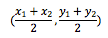
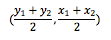
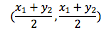
Which of the following is the correct midpoint formula given two endpoints (x1, y1) and (x2, y2)?
a)
b)
c)
d)
79.
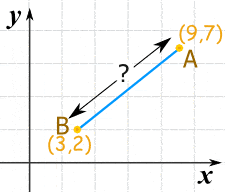
Find the distance.
a)
7.1
b)
7.8
c)
8.7
d)
8.9
80.
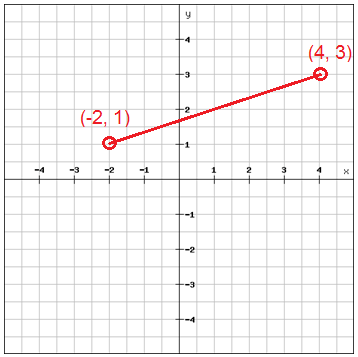
What is the distance between the two points?
a)
6.3
b)
6.5
c)
6.7
d)
16
81.
Find the value of x. 
a)
14
b)
112
c)
108
d)
104
82.
Find the distance between (-5, -8) and (-1, -16).
a)
8.9
b)
9.8
c)
10.3
d)
11
83.
Solve for x.
a)
16
b)
11
c)
50
d)
6
84.

10. Solve for x if l || m.

a)

3

b)

3.8

c)

6

d)

7.2

85.

11. Solve for x if l || m.

a)

9.3

b)

7

c)

8

d)

10.1

86.

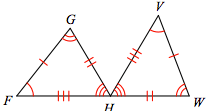
Remember order matters. Which of the following is true?

a)

∆FGH ≅ ∆VHW

b)

∆HFG ≅ ∆HWV

c)

∆HGF ≅ ∆VHW

d)

∆FGH ≅ ∆VWH

87.

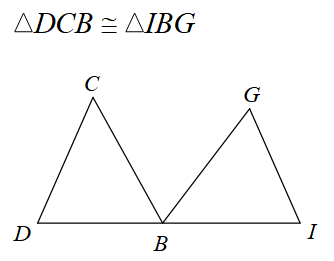
 JK  ?\overline{JK}\ \cong\ ?  

a)

 KX\overline{KX}  

b)

 JK\overline{JK}  

c)

 XJ\overline{XJ}  

d)

 KI\overline{KI}  

88.

 CB  ?\overline{CB}\ \cong\ ?  

a)

 I\angle I  

b)

 GI\overline{GI}  

c)

 IB\overline{IB}  

d)

 BG\overline{BG}  

89.

 ML  ?\overline{ML}\ \cong\ ?  

a)

 CL\overline{CL}  

b)

 LD\overline{LD}  

c)

 DC\overline{DC}  

d)

 NL\overline{NL}  

90.

 D  ?\angle D\ \cong\ ?  

a)

 X\angle X  

b)

 W\angle W  

c)

 Y\angle Y  

d)

 C\angle C  

91.

 I ?\angle I\cong\ ?  

a)

 X\angle X  

b)

 XKJ\angle XKJ  

c)

 KJX\angle KJX  

d)

 IJK\angle IJK  

92.
If ∆LMK ≅ ∆LMT, then
MK= ____
a)
LM
b)
K
c)
MT
d)
LT
93.
Use the figure to write and solve an equation for x.
a)
5
b)
6
c)
7
d)
8
94.
Solve
a)
25°
b)
125°
c)
145°
d)
45°
95.
State if the two triangles are congruent.  If they are, state how you know.
a)
A
b)
B
c)
C
d)
D
96.
State if the two triangles are congruent.  If they are, state how you know.
a)
A
b)
B
c)
C
d)
D
97.
State if the two triangles are congruent.  If they are, state how you know.
a)
A
b)
B
c)
C
d)
D
98.
State if the two triangles are congruent.  If they are, state how you know.
a)
A
b)
B
c)
C
d)
D
99.
State if the two triangles are congruent.  If they are, state how you know.
a)
A
b)
B
c)
C
d)
D
100.
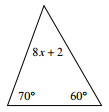
Find the missing angle measure.
a)
61°
b)
153°
c)
27°
d)
146°
101.
Find the measure of the indicated angle. 
a)
89
b)
211
c)
119
d)
81
102.
Find the missing angle measure.
a)
30°
b)
45°
c)
35°
d)
100°
103.
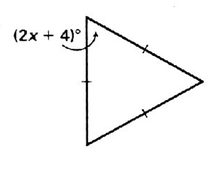
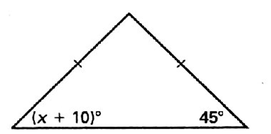
Find x
a)
60
b)
48
c)
30
d)
28
104.
Solve for x.
a)
7
b)
9
c)
10
d)
-11
105.
What is the measure of angle 2?
a)
50
b)
65
c)
115
106.
a)
72
b)
67
c)
65
d)
54
107.
Find x
a)
90
b)
45
c)
22
d)
35
108.
Solve for x.
a)
7
b)
9
c)
10
d)
-11
109.

Find the area of the shape above

a)

67

b)

52 sq cm

c)

67 sq cm

d)

52 cm

110.

What is the area?

a)

16 cm squared

b)

36 cm squared

c)

144 cm squared

d)

72 cm squared

111.
What is the area of this shape?
a)
54 cm2
b)
45 cm2
c)
63 cm2
d)
36 cm2
112.
Find the slope of the line.
a)
-5/4
b)
5/4
c)
-4/5
d)
4/5
113.

What does "m" stand for in the slope formula?

a)

y axis

b)

slope

c)

y coordinate

d)

x coordinate

114.
Find the slope:
a)
3/4
b)
4/3
c)
-3/4
d)
-4/3
115.
Find the slope given the points (2, −7) and (−1, 6). 
a)
-13/3
b)
13/3
c)
0
d)
2/3
116.

Find the slope given the points (3,2) and (4,7).

a)

4

b)

5

c)

-5

d)

1/5

117.
Parallel lines have __________ slopes
a)
Equal
b)
Opposite
c)
Reciprocal 
d)
Total
118.
What slope is parallel to:  
m = 3/4
a)
4/3
b)
3/4
c)
-3/4
d)
-4/3
119.

The following represents slopes of two lines. Which answer choice describes the two lines?
 m=13m=-\frac{1}{3}  and  m=13m=-\frac{1}{3}  .

a)

Parallel

b)

Perpendicular

c)

Neither

120.
The following represents slopes of two lines.  Which answer choice describes the two lines?
m = 7 and m = -7
a)
Parallel
b)
Perpendicular
c)
Neither
121.
Slopes of perpendicular lines are...
a)
opposite reciprocals.
b)
opposites.
c)
identical.
d)
always 7.
122.

What is the slope of a line perpendicular to 5?

a)

5

b)

1/5

c)

-1/5

d)

-5

123.

What is the slope of a line perpendicular to -10/3

a)

-10/3

b)

10/3

c)

3/10

d)

-3/10

124.
A line contains the points (4, 3) and (19, −2). Which equation represents this line?
a)
y = -x + 7
b)
y = -3x + 12
c)
y = - 1/3x + 13/3
d)
y = 1/3x + 5/3
125.
What is the equation of a line that is perpendicular to this line and goes through the given point?
y = 3x + 2      (3, -4)
a)
y = 3x - 2
b)
y = -1/3x - 5
c)
y = 3x - 4
d)
y = -1/3x - 3
126.
What is the equation of a line parallel to the following line that passes through the given point? 
y = -4x + 6      (2, -1)
a)
y = 1/4x + 6
b)
y = -4x + 7
c)
y = -4x + 2
d)
y = 1/4x -1