wayground logo

Free Printable Worksheets

Font size

S
M
L
XL
Worksheets

G8 Chapter 2 How do we map matter?

Total questions: 77

Worksheet time: 54mins

Name
Class
Date
1.

The periodic table is a chart that organizes the elements based on their atomic properties. Elements in the periodic table are organized according to the periodic law. The periodic law states that chemical and physical properties of elements are periodic functions of their atomic numbers (the number of protons in the nucleus). As the atomic number of elements increases, different elements display similar characteristics at regular intervals.


Periodic law states that elements are arranged _______________________________________________________________.

a)

in alphabetical order.

b)

from largest to smallest.

c)

as periodic functions of their atomic numbers.

d)

there is no rhyme or reason.

2.

Vertical columns on the periodic table are called ___?

a)

groups

b)

periods

c)

rows

d)

families

3.

Which color on the image of the periodic table corresponds with the halogens.

a)

red

b)

black

c)

blue

d)

orange

4.

Which color on the image of the periodic table corresponds with the noble gases.

a)

red

b)

black

c)

blue

d)

orange

5.

Which color on the image of the periodic table corresponds with the transition metals.

a)

red

b)

black

c)

blue

d)

orange

6.

Which color on the image of the periodic table corresponds with the alkaline earth metals.

a)

yellow

b)

dark yellow

c)

blue/green

d)

teal

7.

Horizontal rows on the periodic table are called ___?

a)

groups

b)

periods

c)

rows

d)

families

8.

The periodic table is mostly comprised of what type of element?

a)

Metals

b)

Nonmetals

c)

Metalloids

9.
The atomic number tells you what?
a)
number of electrons
b)
number of protons
c)
number of neutrons
d)
both electrons and protons in an atom.
10.
Which is an alkali metal?
a)
Magnesium
b)
Iron
c)
Sodium
d)
Europium
11.
Elements in a ..................have similar chemical properties.  
a)
period
b)
group
c)
row
12.
A neutron has a charge of
a)
+2
b)
No charge
c)
-1
d)
+1
13.
A proton is....
a)
A negatively charged subatomic particle
b)
A positively charged subatomic particle
c)
A neutrally charged subatomic particle
d)
The only subatomic particle located in the nucleus
14.
a)

Element

b)

Compound

c)

Homogeneous Mixture

d)

Heterogeneous Mixture

15.
a)

Element

b)

Compound

c)

Homogeneous Mixture

d)

Heterogeneous Mixture

16.
a)

Element

b)

Compound

c)

Homogeneous Mixture

d)

Heterogeneous Mixture

17.
A substance that contains only one type of atom is a(n)
a)
compound
b)
element
c)
heterogeneous mixture
d)
homogeneous mixture
18.

Jay combines water, sugar, and lemon juice to form lemonade. What type of substance was made?

a)

Element

b)

Molecule

c)

Mixture

19.
a)

Element

b)

Compound

c)

Mixture

20.
a)

Element

b)

Compound

c)

Mixture

21.
a)

Element

b)

Compound

c)

Mixture

22.
a)

Element

b)

Compound

c)

Mixture

23.
a)

Element

b)

Compound

c)

Mixture

24.

What is the mass number?

a)

the number of protons in the nucleus

b)

the number of protons and neutrons in the nucleus

c)

the number of neutrons in the nucleus

d)

the number of protons and electrons in the atom
25.

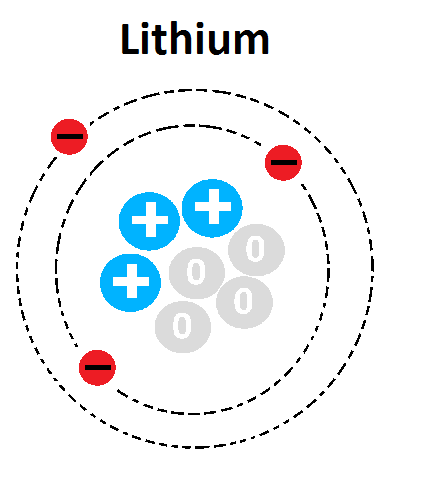
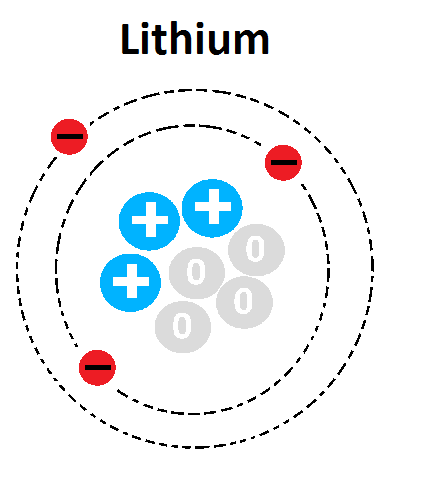
What is the atomic number of this atom?

a)

1

b)

3

c)

4

d)

7

26.

What is the mass number of this atom?

a)

1

b)

3

c)

4

d)

7

27.
Most of the mass in an atom is made up of _____________________?
a)
protons and electrons
b)
protons and neutrons
c)
neutrons and electrons
d)
electrons and quarks
28.
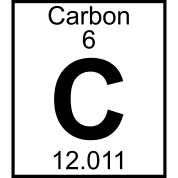
What does the C represent?
a)
atomic mass
b)
atomic number
c)
element name
d)
chemical symbol 
29.

What does the 6 represent?

a)

Atomic mass

b)

atomic number

c)

chemical symbol

d)

element name

30.
In order for an atom to be neutral what has to be true?
a)
The atom has more protons than neutrons
b)
The atom has more neutrons than protons
c)
The atom has the same number of protons and neutrons
d)
The atom has the same number of protons and electrons
31.
How is the number of neutrons in the nucleus of an atom calculated?
a)
Add the number of e- and p+ together
b)
Subtract the number of e- from p+
c)
Subtract the number of p+ from the mass number
d)
Add the mass number to the number of e-
32.
What subatomic particles would you find in the nucleus of an atom?
a)
Protons only
b)
Protons and Neutrons
c)
Neutrons and Electrons
d)
Protons and Electrons 
33.
If an atom has 12 positively charged subatomic particles, which of the following must it also have to be considered a neutral atom?
a)
12 neutrons
b)
12 electrons
c)
12 protons
d)
24 protons and neutrons
34.

An atom has 10 protons, 15 neutrons and 10 electrons what is its mass number.

a)

20

b)

10

c)

35

d)

25

35.

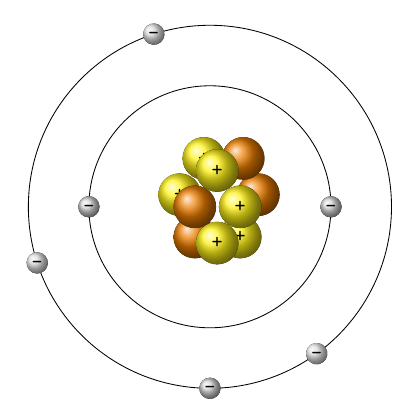
How many electrons does this atom have?

a)

2

b)

4

c)

6

d)

10

36.
An element with a mass number of 11 and an atomic number of 5 has how many neutrons?
a)
11
b)
5
c)
6
d)
16
37.

Which of the following determines the identity of an element?

a)

number of protons

b)

atomic mass

c)

number of neutrons

d)

number of shells

38.
Which substance supports burning?
a)
Hydrogen
b)
Nitrogen
c)
Oxygen
d)
Carbon Dioxide
39.
What is the percentage existence of oxygen gas in air?
a)
%78
b)
%32
c)
%18
d)
%21
40.
Which of the following method is one of the laboratory preparation of oxygen gas?
a)
Decomposition of KClO3
b)
Decomposition of H2S
c)
Combination of H and O
d)
Distillation of H2O
41.
Which of the following is not an use of oxygen? 
a)
For cutting metals
b)
In hospitals
c)
As fuel for cars
d)
For respiration
42.
What is the test for Oxygen gas?
a)
Litmus paper
b)
Glowing splint
c)
"Pop" sound
d)
Red flame
43.
Which of following air pollutant gases causing "greenhouse" effect?
a)
SO3
b)
NO2
c)
CO
d)
CO2
44.

What method is used to collect carbon dioxide?

a)
b)
c)
45.

What method is used to collect oxygen?

a)
b)
c)
46.

What method is used to collect hydrogen?

a)
b)
c)
47.

Methane is insoluble in water and has Mr of 16. Which methods can be used to collect methane?

a)
b)
c)
48.

Oxygen cannot be collected by upward delivery. Why?

a)

Oxygen is insoluble in water.

b)

Oxygen is soluble in water.

c)

Oxygen is denser than air.

d)

Oxygen is less dense than air.

49.

Carbon dioxide cannot be collected by upward delivery. Why?

a)

Carbon dioxide is insoluble in water.

b)

Carbon dioxide is soluble in water.

c)

Carbon dioxide is denser than air.

d)

Carbon dioxide is less dense than air.

50.

Hydrogen cannot be collected by downward delivery. Why?

a)

Hydrogen is insoluble in water.

b)

Hydrogen is soluble in water.

c)

Hydrogen is denser than air.

d)

Hydrogen is less dense than air.

51.

The following chemical equation is classified as a ______________.


CaCO3 → CaO + CO2

a)

synthesis reaction

b)

decomposition reaction

c)

single-replacement reaction

d)

double-replacement reaction

52.

Hydrogen peroxide, H2O2, changes in the presence of a catalyst in the following reaction. What type of chemical reaction is this?

2H2O2(aq) → 2H2O(l) + O2(g)

a)

synthesis reaction

b)

combustion reaction

c)

decomposition reaction

d)

single replacement reaction

53.

Write a balanced reaction for this reaction

Zn(s) + H2SO4(aq) →

a)

Zn(SO4)2 + H

b)

ZnSO4 + H2

c)

ZnSO4 + H

d)

Zn2SO4 + H2

54.

Predict the products for the decomposition of potassium chlorate: KClO3

a)

KCl + O2

b)

K2O + Cl2

c)

K + ClO3

d)

K + ClO2

55.

Which is not a property of carbon dioxide?

a)

It is a colorless gas

b)

It supports combustion

c)

It is denser than air

d)

It is an odorless gas

56.

Which is a use of carbon dioxide

a)

used in respiration

b)

used for life support

c)

used in fire extinguishers

d)

used to make fertilizers

57.

Which substance is used to prove that an unknown gas is carbon dioxide?

a)

a burning splint

b)

hydrogen gas

c)

plain drinking water

d)

lime water

58.

Manganese Dioxide acts as a____________ to break down H2O2

a)

Enzyme

b)

Suppressor

c)

Catalyst

d)

Molecule

59.

What are the reactants in the preparation of CO2?

a)

Marble chips and Hydrochloric Acid

b)

CO2 , H2O and CaCl3

c)

Carbon dioxide and Water

d)

Hydrogen and CaCO3

60.

JJ Thomson discovered what subatomic particle

a)

nucleus

b)

neutron

c)

proton

d)

electron

61.

Rutherford discovered what part of the atom

a)

nucleus

b)

neutron

c)

proton

d)

electron

62.

Who proposed the theory that atoms orbit the nucleus in specific orbits.

a)

Bohr

b)

Democritus

c)

Rutherford

d)

Chadwick

63.

Which of the following shows the correct order of Atomic Theory Timeline

a)

Rutherford, Bohr, Dalton, Democritus, Thomson

b)

Bohr, Democritus, Thomson, Rutherford, Dalton

c)

Dalton, Thomson, Rutherford, Bohr, Democritus

d)

Democritus, Dalton, Thomson, Rutherford, Bohr

64.

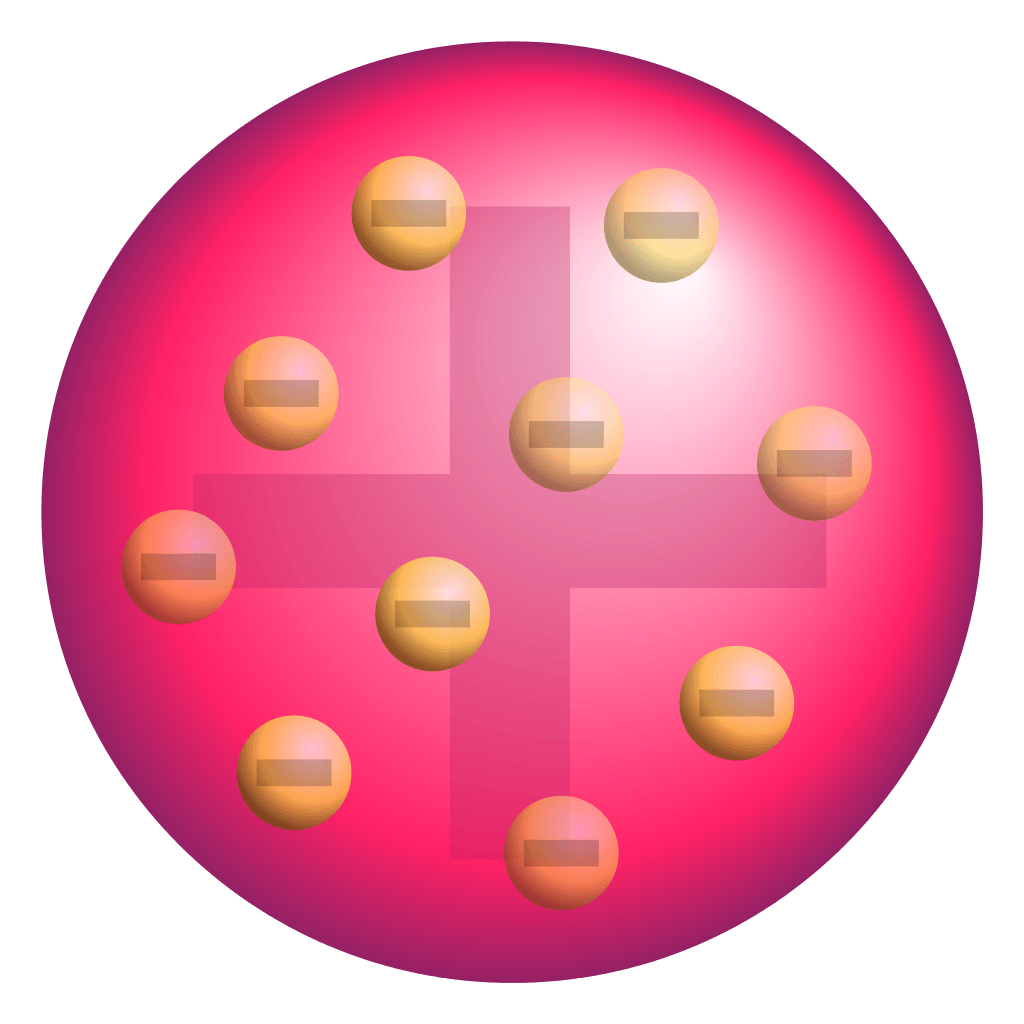
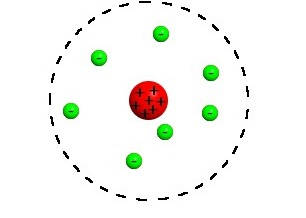
Compare the differences between the plum pudding and Rutherford’s standard model of the atom. Include the later developments in the nucleus.
4 lines
65.
This model this model was the first to show a nucleus, consisting of protons and neutron.  Electrons surround the nucleus but are not shown in distinct energy levels. 
a)
The "Rutherford Model" of the atom
b)
The "Plum Pudding Model" of the atom
c)
The "Quantum Mechanical Modell" of the atom
d)
Democritus's model of the atom
66.
This model added on to previous models by showing electrons existed at certain "energy levels". However it does not accurately show what those levels look like.
a)
The "Bohr Model" of the atom
b)
The "Rutherford Model" of the atom
c)
The "Plumb Pudding Model" of the atom
d)
The "Quantum Mechanical Model" of the atom
67.
This model was developed after J.J. Thompson discovered electrons, a particle smaller than an atom. Is shows electrons floating freely in a positive space.
a)
The "Plum Pudding Model" of the atom
b)
The "Rutherford Model" of the atom
c)
Democritus's model of the atom
d)
The "Quantum Mechanical Model" of the atom
68.
How many protons are in this element?
a)
79
b)
196
c)
117
d)
Cannot be determined
69.
What is the symbol for Potassium?
a)
P
b)
K
c)
Pb
d)
Pd
70.
What is the name of this element?
a)
Helium
b)
Rubidium
c)
Hydrogen
d)
Mercury
71.
Which one of these is not a noble gas?
a)
Helium
b)
Radon
c)
Iodine
d)
Krypton
72.
Acid + Metal --> ?
a)
Salt + Water
b)
Salt + Hydrogen
c)
Salt
d)
Hydrogen
73.
Iron + Hydrochloric acid --> ?
a)
iron sulfate + water
b)
iron + hydrogen
c)
iron chloride + hydrogen
d)
iron chloride + water
74.
Magnesium + sulphuric acid --> ?
a)
magnesium sulfate + water
b)
magnesium sulfate + hydrogen
c)
magnesium chloride + hydrogen
d)
magnesium chloride + water
75.
Which gas gives out a 'squeaky pop' when a lit splint is placed in it?
a)
hydrogen
b)
oxygen
c)
carbon dioxide
d)
nitrogen
76.
Which metal is the least reactive out of: copper, magnesium, zinc and iron?
a)
copper
b)
magnesium
c)
zinc
d)
iron
77.
Which metal is the most reactive out of: copper, magnesium, zinc and iron?
a)
copper
b)
magnesium
c)
zinc
d)
iron