wayground logo

Free Printable Worksheets

Font size

S
M
L
XL
Worksheets

Final Biology Review

Total questions: 68

Worksheet time: 1hrs 5mins

Name
Class
Date
1.
Which is NOT true of MEIOSIS?
a)
Produces two cells
b)
Allows for genetic recombination
c)
Produces gametes
d)
Includes crossing over
2.
In a cross of two heterozygous parents, what proportion of the offspring will also be heterozygous?
a)
50%
b)
100%
c)
0%
d)
75%
3.
Which is NOT a characteristic of all living things?
a)
Sleep
b)
Cells
c)
Reproduction
d)
Grow
4.
As you go to higher trophic levels....
a)
Amount of energy available decreases
b)
Amount of biomass increases
c)
Number of organisms increases
d)
Size of organisms decreases
5.
SPEED QUESTION!! Organisms that CANNOT make their own food.
a)
Autotrophs
b)
Heterotrophs
c)
Producers
d)
Prokaryotes
6.
What do you call a change in an organism's DNA?
a)
Replication
b)
Mutation
c)
Codon
d)
Phenotype
7.
Which word below properly describes cell membranes?
a)
impermeable
b)
permeable
c)
semi-permeable
8.
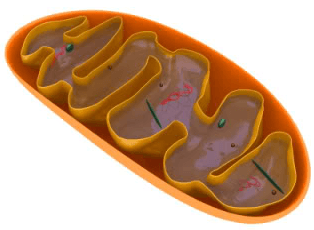
What process takes place in the mitochondria?
a)
Photosynthesis
b)
Cell Respiration
c)
Mitosis
d)
Meiosis
9.
Scientifically, what causes cancer?
a)
exposure to chemicals
b)
poor diet
c)
genetics
d)
uncontrollable cell growth
10.

The process where the better adapted organisms survive to pass traits along to offspring.

a)

Evolution

b)

Natural Selection

c)

Extinction

d)

Artifical Selection

11.
What are tiny organelles that convert glucose into ATP?
a)
Ribosomes
b)
Vesicles
c)
Cytoskeleton
d)
Mitochondria
12.
If the number of births is greater than the number of deaths in a population, what will happen to the growth of the population?
a)
It will increase.
b)
It will decrease.
c)
It will stay the same.
d)
It will fluctuate.
13.
What are the reactants in the equation for cellular respiration?
a)
oxygen and lactic acid
b)
carbon dioxide and water
c)
glucose and oxygen
d)
water and glucose
14.
a)

The overall trend in the data would be best described as increasing

b)

The overall trend in the data would be best described as decreasing

c)

The overall trend in the data would be best described as unchanging

d)

The overall trend in the data would be best described as unrelated

15.
I make proteins for the cell. What am I?
a)
ribosome
b)
mitochondria
c)
chloroplast
d)
lysosome
16.
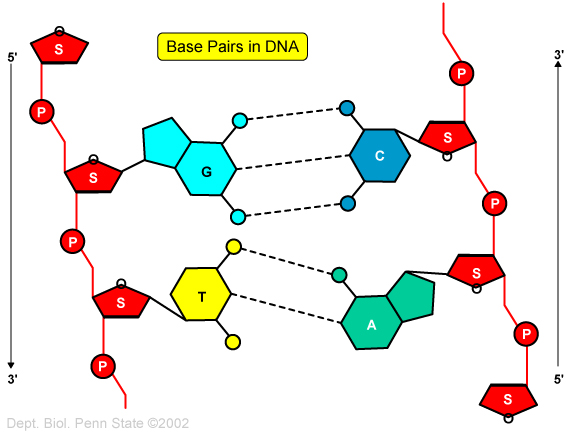
Guanine bonds with ______________.
a)
Adenine
b)
Guanine
c)
Cytosine
d)
Thymine
17.
I have the sugar dioxyribose.
a)
DNA
b)
RNA
18.
This picture shows normal blood cells, which are round, and sickle cells, which appear much longer. People with sickle cells suffer from sickle cell anemia, which is an inherited disease. It is caused by a change in a gene responsible for production of hemoglobin. This type of change is known as a(n)
a)
cancer
b)
mutation
c)
genotype
d)
acquired chararcteristic
19.

What do all the prokaryotic and eukaryotic cells above have in common?

a)

Flagella

b)

A vacuole

c)

A nucleus

d)

DNA

20.

Which biomolecule is pictured above?

a)

Lipid

b)

Nucleic Acid

c)

Carbohydrate

d)

Protein

21.

Which type of RNA carries the DNA code to the ribosome?

a)

tRNA

b)

rRNA

c)

mRNA

22.

Which biomolecule is shown above?

a)

Nucleic acid

b)

Lipid

c)

Protein

23.

What occurs in S phase of the cell cycle?

a)

Growth

b)

Checking for mutations

c)

Cell division

d)

DNA replication

24.
Based on physical features, this cell is most likely a(n) ____________ cell.
a)
eukaryotic plant
b)
eukaryotic animal
c)
prokaryotic fungus
d)
prokaryotic bacterial
25.
What conclusion would be MOST appropriate about the genetic variation between humans and the three apes as illustrated by the phylogenetic tree?
a)
Genetic variation between all four organisms is non-existent.
b)
The genetic variation between all four organisms is about the same
c)
The genetic variation between humans and orangutans is the greatest.
d)
Humans branched off from the other three animals due to great genetic variations.
26.
While working in the lab with samples of food, Rachel saw this rod-shaped organism under the microscope. With further tests, Rachel noticed that the organism was single-celled and did not contain a nucleus. Which of these did Rachel conclude was the best way to classify this organism?
a)
bacteria
b)
fungus
c)
protist
d)
virus
27.

What is the name of the molecule that #1 is pointing to?

a)

Ribosome

b)

DNA

c)

mRNA

d)

Amino acid chain

28.

The algae at the beginning of a food chain are:

a)

producers/autotrophs

b)

consumers/heterotrophs

c)

decomposers/detritus

d)

scavengers/decomposters

29.

What is the difference between secondary succession and primary succession

a)

primary is takes place in the ocean, secondary takes place on the land

b)

primary is on a newly exposed surface, secondary begins with soil

c)

primary takes place in the woods, secondary in the ocean

d)

primary is in the soil, and secondary is on newly formed surfaces

30.

What is the biological importance of the molecule adenosine triphosphate (ATP)?

a)

provides chemical energy

b)

creates glucose from light

c)

creates biological proteins

d)

provides mechanical energy

31.
In looking at the diagram above, what are the products of this reaction?
a)
oxygen and carbon dioxide
b)
sugar (glucose) and oxygen
c)
water, carbon dioxide and light energy
d)
water and light energy and sugar (glucose)
32.
Refer to the illustration above to answer the question.  Which derived characteristic(s) does the lizard have that the trout does not have?
a)
legs
b)
backbone
c)
legs and hair
d)
backbone and leg
33.
Plants and animals both perform cellular respiration.         
a)
True
b)
False
34.

Mitosis is ________.

a)

dividing of cytoplasm

b)

what only occurs in prokaryotic cells

c)

the process of the cell dividing to form two identical daughter cells

d)

performing normal functions of the cell

35.

How does the number of chromosomes in gametes (sex cells) compare with the number of chromosomes in all other cells?

a)

Gametes have twice as many chromosomes

b)

Gametes have 1/4 the number of chromosomes

c)

Gametes have 1/2 the number of chromosomes

d)

Gametes have twice as many chromosomes

36.

Which of the following results in creating genetic recombination (creates variation in the gametes from meiosis)?

a)

alleles

b)

crossing over

c)

genes

d)

hybrid crosses

37.
All eukaryotes and prokaryotes are surrounded by a _____.
a)
cell wall
b)
cell membrane
c)
cell envelope
d)
loving, supportive family
38.
Where are proteins made?
a)
Golgi body
b)
Mitoichondria
c)
Chromosomes
d)
Ribosomes
39.

Which of the following supports the argument that viruses are nonliving?

a)

Their DNA does not encode proteins

b)

They have RNA rather than DNA

c)

They are not cellular

d)

They do not evolve

40.

Viruses _____.

a)

use the host cell to copy themselves and then viruses to synthesize their own proteins

b)

metabolize food to produce their own ATP

c)

use the host cell to copy themselves and make viral proteins

d)

manufacture their own ATP, proteins, and nucleic acids

41.
Which type of transport does not require energy?
a)
Passive transport
b)
Active transport
c)
Pump
d)
Neuron connections
42.
if a blood cell is placed in salt water it will
a)
loose water and shrink
b)
gain water and shrink
c)
loose water and swell
d)
gain water and swell
43.
a solution that is mainly solute is 
a)
hypotonic
b)
hypertonic
c)
isotonic
d)
solvent
44.
a solute is
a)
something dissolved in water
b)
water
c)
transport
d)
what something is dissolved in
45.

Enzymes are _____________?

a)

Hydrocarbons

b)

Hormones

c)

Lipids

d)

Proteins

46.

What is activation energy

a)

The energy released after chemical reactions

b)

The energy required to activate an enzyme

c)

Energy absorbed by chemical reactions

47.
With what 3 letters do enzymes typically end?
a)
-ose
b)
-ase
c)
-ese
d)
-tic
48.
Where do substrates bind on an enzyme?
a)
voltage-gated channels
b)
surface receptor
c)
calcium channels
d)
active site
49.
Which of the following is not a part of interphase?
a)
G2
b)
M
c)
G1
d)
S
50.
How does mitosis in plant cells differ from mitosis in animal cells?
a)
animal cells form a cell plate
b)
plant cells form a cell plate
c)
plant cells go through the process in reverse
d)
plant cells go through two rounds of mitosis while animal cells just do one
51.
Structure (b) is a ____.
a)
chromosome
b)
chromatid
c)
centromere
52.
When does crossing over occur?
a)
Interphase
b)
Prophase 1
c)
Prophase 2
d)
Metaphase 1
53.

If a stem cell (body cell) has 24 chromosomes, how many will it have at the end of meiosis?

a)

24

b)

12

c)

6

d)

the number varies per species

54.
Human eggs and sperm are _____, and each has ____ chromosomes.
a)
diploid, 23
b)
diploid, 46
c)
haploid, 23
d)
haploid, 46
55.

Which of the these bases are the Purines

a)
b)
c)
d)
56.
Nitrogenous bases are joined by which type of bond?
a)
polar bonds
b)
ionic bonds
c)
covalent bonds
d)
hydrogen bonds
57.
The main function of tRNA is to...
a)
carry a message that, when translated, forms proteins
b)
form a portion of ribosomes
c)
string together complementary RNA and DNA strands
d)
bring amino acids from the cytoplasm to the ribosomes
58.
Which of the following is the site of transcription?
a)
vacuole
b)
lysosome
c)
nucleus
d)
ribosome
59.
Which of the following is the site of translation?
a)
vacuole
b)
lysosome
c)
nucleus
d)
ribosome
60.

Which term means "same alleles"?

a)

heterozygous.

b)

genes.

c)

homozygous.

d)

DNA.

61.

Colorblindness is more common in males because it is controlled by

a)

Mendelian inheritance.

b)

Incomplete dominance.

c)

codominance.

d)

Sex-linked inheritance.

62.

How many alleles does a child get from each parent for a trait?

a)

1

b)

2

c)

3

d)

4

63.

What is the mode of inheritance shown here?

a)

Recessive because it "skips" a generation

b)

Dominant because it shows up in every generation

64.

If this pedigree shows a recessive disorder, what MUST the genotype of individual II-3 be?

a)

HH

b)

Hh

c)

hh

65.
Darwin theorized that individuals having an advantage due to their traits or abilities will be more likely to survive and reproduce.  This theory is known as
a)
evolution
b)
speciation
c)
adaptation
d)
natural selection
66.
the hind leg bones in a whale are examples of
a)
homologous structures
b)
analogous structures
c)
fossils
d)
vestigals
67.
As a population grows, it will most likely stop growing at what size?
a)
Growth limit
b)
Exponential limit
c)
Carrying Capacity
d)
It won't stop growing
68.
Which kind of growth does the human population follow? It is described as a J-shaped curve.
a)
Exponential Growth
b)
Logistic Growth
c)
Outstanding Growth
d)
Minimal Growth