
 Worksheets
Unit 4 Review
Total questions: 70
Worksheet time: 58mins
Cell theory was discovered and advanced because of the development of which instrument?
telescope
gyroscope
light microscope
electron microscope
Which is NOT part of the Cell Theory?
All cells come from existing cells.
Microscopic organisms are not made of cells.
All living things are made of one or more cells.
Cells are the basic unit of structure and function in living things.
Recall the three tenets of the cell theory. Which of these statements can be used to determine that viruses are non-living?
do not contain nuclei.
are not composed of cells.
are not able to reproduce.
do not contain nucleic acid.
Which two structures are not found in animal cells?
vacuoles and ribosomes
chloroplasts and ribosomes
cell walls and chloroplasts
endoplasmic reticulum and cell walls
Unlike a typical animal cell, this plant cell has an angular shape. The shape of a plant cell is due, mostly, to the presence of the
nucleus
cell wall
chloroplast
cell membrane
The main difference between a prokaryotic cell and a eukaryotic cell is
the ability to grow.
the ability to reproduce.
the presence of nucleic acids.
the presence of a true nucleus.
This organelle is found in plant cells. The function of this organelle is to collect solar energy and use this to produce food, or glucose, for the plant. This organelle is the
leucoplast.
chloroplast
mitochondrion
Golgi Body
_______ is a jellylike substance in both the animal and the plant cell containing important chemicals and acts like a matrix for the cell organelles.
chloroplast
cytoplasm
mitochondrion
nucleus
Karina is looking at a group of cells under the microscope. The organism has many cells, each with a cell wall and green chloroplasts. It has a nucleus and membrane bound organelles. In which kingdom should this organism be classified?
Animlia
Plantae
Protista
Fungi
Which type of cell contains DNA enclosed in a nucleus?
centriole
eukaryote
plasmid
prokaryote
Which type of cell has a large, central vacuole that controls water pressure?
virtual cell
plant cell
animal cell
bacteria cell
Which organelle, found in this plant cell, breaks down sugars for cellular energy?
chromsomes
mitochondria
nucleus
ribosomes
In mitosis of a single cell, the nucleus
enlargens
splits into two
splits into four
loses half of its chromosomes
No matter what the cell type, prokaryotic or eukaryotic, plant or animal, the ____________ forms a protective barrier between the exterior environment and the interior of the cell.
cell wall
cytoskeleton
cell membrane
glycoproteins

What is the function of the organelle labeled A in the diagram?
controls what goes into and out of the cell
gel-like fluid that fills most of the cell
controls everything the cell does
storage spaces in the cell

These characteristics describe the _______________ of a cell.
chromosomes
mitochondria
nucleus
ribosomes
_______________ produce proteins by following coded instructions that come from the nucleus of the cell.
ribosomes
flagella
Golgi body
vacuoles
Chloroplasts are concentrated in the palisade mesophyll. Chloroplasts are the site of photosynthesis and contain chlorophyll which is important for making glucose in photosynthesis. How do plants use chlorophyll in photosynthesis?
Chlorophyll absorbs sunlight energy for photosynthesis.
Chlorophyll stores carbon dioxide for photosynthesis.
Chlorophyll stores glucose made in photosynthesis.
Chlorophyll stores oxygen made in photosynthesis.

This simple bacteria cell has the same structure as more complex cells. It controls what comes in to and leaves the cell and also maintains homeostasis. It is the
capsule.
cytoplasm.
membrane.
wall.
An animal cell: the human body. Different but also alike. Your brain is the control center of your body. What is the control center of this animal cell?
nucleus
ribosome
Golgi Body
mitochondria
Which statement was NOT included in cell theory?
All living things are composed of cells.
Living cells come only from other living cells.
Each cell contains a cell membrane, cytoplasm, nucleus, mitochondria, and endoplasmic reticulum.
Cells are the smallest structure of living things that can perform the functions necessary for life.
Which instrument is credited for helping scientists develop cell theory?


This early cell theory scientist looked in a microscope and discovered "animalcules" in the gunk from his teeth and pond water.
Schleiden
Leeowenhoek
Hooke
Virchow
Schwann
Who discovered and named cells while looking at cork?
Captain Hook
Robert Hooke
Matthais Schleiden
Rudolf Virchow
What was Schleiden convinced of?
All plants are made of cells
All animals are made of cells
All cells are prokaryotic
None of the above
Who noted that all animals are made of cells and helped write the first two parts of cell theory?
Rudolf Virchow
Anton van Leeuwenhoek
Theodor Schwann
Robert Hooke
These three scientists together helped come up with the second part of the cell theory (all living things are made of one or more cells). CHOOSE 3 ANSWERS
Schleiden
Leeowenhoek
Hooke
Virchow
Schwann

Robert Hooke, Anton van Leeuwenhoek, Theodor Schwann, Rudolf Virchow, and Matthias Schliden were all responsible for what theory?
The Theory of Gravity
The Theory of Relativity
The Cell Theory
The Theory of Continental Drift
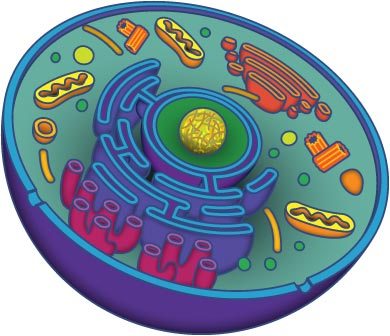
All living things are made up of...
cells
tissues
organ
organ systems
What is the basic structural and functional unit of all living things?
atom
cell
bacteria
animalcules
All cells -----
come from other dead cells
come from other living cells
crystallize out of the air
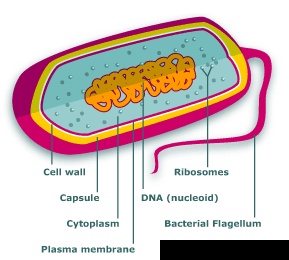
A cell biologist finds a cell without chloroplasts, but it still contains a nucleus, cell membrane, and a cytoplasm. What kind of cell is this?
Prokaryotic
Eukaryotic
Plant
Animal

Structures in a cell that have specialized jobs.
Similar concept to organs for the human body.
Biomolecules
Atoms
Molecules
Organelle

Storage area inside of cells, lined by a membrane.
Plant cell storage: large vacuole.
Animal cell storage: small vesicles.
Nucleus
Lysosome
Endoplasmic Reticulum
Vacuole/Vesicle

Organelle surrounding a cell that regulates what gets into and out of the cell.
Often called the plasma membrane.
Endoplasmic Reticulum
Vacuole
Cell Membrane
Lysosome

A rigid layer of cellulose (complex carbohydrates) found outside the cell membrane
in plants and algae.
Fungi and bacteria also have modified cell walls.
Nucleus
Vacuole
Cell Membrane
Cell Wall

A green organelle found in autotrophs (mostly plants and algae) that converts light energy into chemical energy (photosynthesis).
Chloroplast
Mitochondria
Nucleus
Vacucole

All the material inside a cell except the nucleus.
Endoplasmic Reticulum
Cytoplasm
Plastid
Lysosome

An organelle that transports and packages large molecules like complex carbohydrates, lipids and proteins.
Sometimes called golgi body or golgi complex.
Ribosome
Golgi Reticulum
Endoplasmic Apparatus
Golgi Apparatus

An organelle containing enzymes that “digest” macromolecules.
Endoplasmic Reticulum
Golgi Apparatus
Lysosome
Vacuole

A large organelle
in eukaryotic cells where genetic material (DNA)
is stored and replicated.
It is surrounded by the nuclear membrane or nuclear envelope.
Nucleus
Endoplasmic Reticulum
Cytoplasm
Vacuole

An organelle inside the nucleus made of protein and RNA.
Ribosomes are produced here and transported out of the nucleus to the endoplasmic reticulum (RER).
Nucleolus
Nucleus
Endoplasmic Reticulum
Ribosome

Organelle that is found in the cytoplasm and acts as a protein factory, mostly on endoplasmic reticulum.
Endoplamic Reticulum
Mitochondria
Ribosome
Lysosome

Organelle in eukaryotic cells where protein packaging
and intercellular transport
take place.
Smooth ER has no ribosomes (SER), while rough ER contains ribosomes and looks like dots (RER).
Endoplasmic Reticulum
Gogi Apparatus
Lysosome
Cell Membrane
Both prokaryotic and eukaryotic cells have all of the following EXCEPT:
Cytoplasm
Ribosomes
DNA
Cell Wall
The plant organelle that captures light to make energy is the:
Cell Wall
Mitochondria
Chloroplast
Ribosome
If the lysosome were a part of the city it would be the:
Mayor - controls the cell
Waste management - digests cell waste and cleans up
Farms- synthesizes proteins
Water tower - stores water
The cell wall provides
Genetic Material
Energy
Structure
Proteins
The organelle where cellular respiration occurs is the:
Chloroplast
Mitochondria
Ribosome
Lysosome
The function of the smooth ER is to:
Make proteins
Make lipids
Make carbohydrates
Make nucleic acids
The function of the rough ER is to:
Produce and folding lipids
Produce and folding proteins
Produce and folding carbohydrates
Produce and folding Nucleic acids

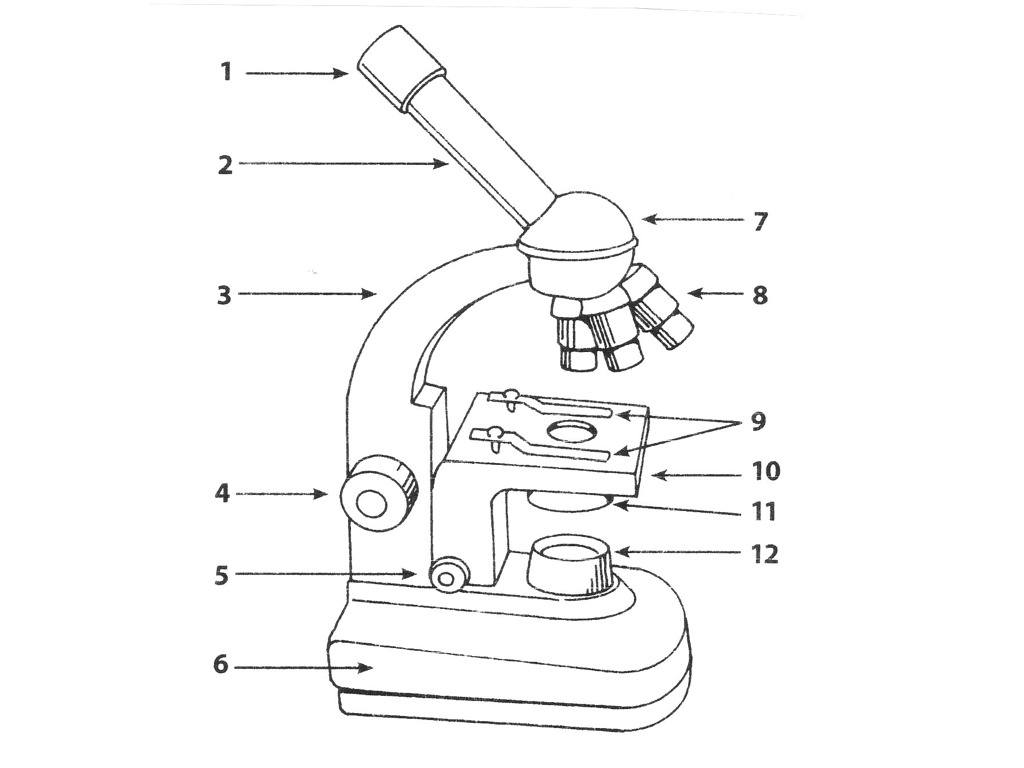


What is part 8?
objective lenses
body tube
arm
coarse adjust
What is part 9?
stage clips
body tube
stage
coarse adjust

Which part holds the eyepiece in place above the objective lens?
condensor
objective lense
barrel
body tube

The specimen slide is placed on the ___
platform
table
stage
base

