wayground logo

Free Printable Worksheets

Font size

S
M
L
XL
Worksheets

Unit 2 Review – Electron Arrangement and the Periodic Table

Total questions: 75

Worksheet time: 2hrs 57mins

Name
Class
Date
1.
subatomic particles found on the outermost shell & responsible for the atom's reactivity
a)
neutrons
b)
valence electrons
c)
isotopes
d)
ions
2.
Value representing the number of protons in an element
a)
Atomic Mass
b)
Mass Number
c)
Valence Electrons
d)
Atomic Number
3.
Where electrons are likely to be found as they travel around the nucleus
a)
Nucleus
b)
Electron Cloud
c)
Within a Proton
d)
Within a Neutron
4.

What is one way Neutrons are different from electrons?

a)

they both are negative

b)

neutrons have no charge, while electrons have a negative charge

c)

Both are in the nucleus( center of atom)

d)

Electrons are inside nucleus and neutrons are outside the nucleus.

5.

What is the atomic number?

a)

35

b)

18

c)

17

d)

52

6.

How many protons and electrons does this element have?

a)

35

b)

18

c)

17

d)

52

7.

How many neutrons does calcium have?

a)

20

b)

40

c)

60

d)

0

8.

What is the atomic mass of Arsenic?

a)

33

b)

107

c)

75

9.
An element's identity is determined by the number of
a)
electrons.
b)
protons.
c)
neutrons.
d)
valence.
10.
What was Dmitri Mendeleev's greatest contribution to the history of the periodic table?
a)
He arranged all of the known elements by their atomic number
b)
He realised that there was a pattern of reactivity which repeated every 8 elements
c)
He predicted the existence (and properties) of new elements
d)
He identified the "law of triads" which became the groups
11.
Who arranged the first periodic table.
a)
Mosely
b)
Einstein
c)
Mendeleev
d)
Bohr
12.
What property did Menedleev use to organize his first periodic table?
a)
atomic number
b)
atomic mass
c)
alphabetical order
d)
chemical properties
13.
Why were there blank spaces left in Mendeleev's periodic table?                                              
a)
He didn't know what to put there.
b)
 Undiscovered elements not yet known.
c)
Multiple elements could have fit
d)
He forgot to add the elements in.
14.
Moseley discovered that the ________ was the most fundamental property needed for organization.                                                 
a)
atomic mass
b)
mass number
c)
atomic number
d)
number of protons
15.
What atom matches this electron configuration?
1s2s2p3s2
a)
Neon
b)
Magnesium
c)
Aluminum
d)
Potassium
16.
Which is the electron configuration for an oxygen atom?
a)
1s22s22p63s23p64s2
b)
1s22s22p4
c)
1s22s22p6
d)
1s22s22p63s23p6
17.
How many valence electrons are represented here?
a)
7
b)
5
c)
2
d)
8
18.
How many p orbitals are there in a sublevel?
a)
2
b)
1
c)
4
d)
3
19.
How many electrons can the d sublevel hold?
a)
8
b)
10
c)
2
d)
4
20.
What atom matches this electron configuration?
[Xe] 6s2 4f14 5d9
a)
Mercury
b)
Gold
c)
Platinum
d)
Thallium
21.
What is the shorthand electron configuration for Sulfur atom?
a)
[Ar] 3p4
b)
[He] 3s23p4
c)
[Ne] 3s23p4
d)
[Na] 3s23p3
22.
How many electrons can the first energy level hold?
a)
1
b)
2
c)
8
d)
0
23.
How many valence electrons does Chlorine have?
a)
5
b)
2
c)
7
d)
5
24.
Which element is pictured?
a)
neon
b)
fluorine
c)
magnesium
d)
argon
25.
Which of the following is a p block element?
a)
Ca
b)
Ar
c)
Re
d)
Au
26.
Electron arrangement that uses arrows
a)
Electron configuration
b)
Shorthand configuration
c)
Lewis dot structure
d)
Orbital diagram
27.
Electrons occupy orbitals of lowest energy first is part of what electron configuration rule?
a)
Hund’s Rule
b)
Aufbau Principle
c)
Pauli Exclusion Principle
28.

This could be the dot diagram of

a)

Mg

b)

Cl

c)

C

d)

O

29.
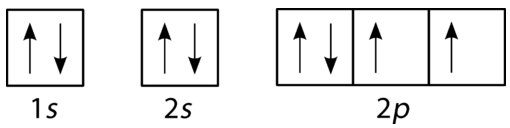
This orbital diagram represents:  
a)
C
b)
B
c)
N
d)
O
30.
What is incorrect about this orbital diagram?
a)
Both arrows in the 2p box should be pointing up
b)
There is nothing incorrect with this diagram
c)
In the there should only be 1 orbital in the first 2p box and one in the 2nd 2p box
d)
All the arrows should be pointing up.
31.
The blue section of the wave is measuring _________________.
a)
wavelength
b)
crest
c)
trough
d)
amplitude 
32.

Which color has the highest frequency?

a)

red

b)

orange

c)

green

d)

blue

33.
Electrons are paired based on their spin directions, clockwise and counterclockwise, is what electron configuration rule?
a)
Hund’s Rule
b)
Aufbau Principle
c)
Pauli Exclusion Principle
34.
All orbitals of equal energy are occupied by one electron before any single orbital is occupied by a second electron.
a)
Aufbau principle
b)
Pauli exclusion principle
c)
Hund’s rule
d)
Core Notation
35.
An electron occupies the lowest energy orbital that can receive it.
a)
Hund’s rule
b)
Pauli exclusion principle
c)
Bohr model of the atom
d)
Aufbau principle
36.
Select the correct order of waves on the Electromagnetic Spectrum
a)
Radio, Micro, Infra, Visible, Ultra, X-ray, Gamma
b)
Gamma, X-ray, Ultra, Vis, Infra, Micro, Radio
c)
Vis, Micro, Infra, Ultra, X-ray, Gamma, Radio
d)
Micro, Radio, Vis, Infra, Ultra, X-ray, Gamma
37.
_____________________light is the only type of EM wave detected by the human eye.
a)
Red
b)
Gamma
c)
Microwave
d)
Visible
38.
What is the lowest point on a wave?
a)
amplitude
b)
peak
c)
trough
d)
wavelength
39.
The maximum distance from the center line to the top of the crest or the bottom of the trough is called the __________ of the wave.
a)
amplitude of the wave
b)
wavelength of the wave
c)
frequency of the wave
d)
speed of the wave
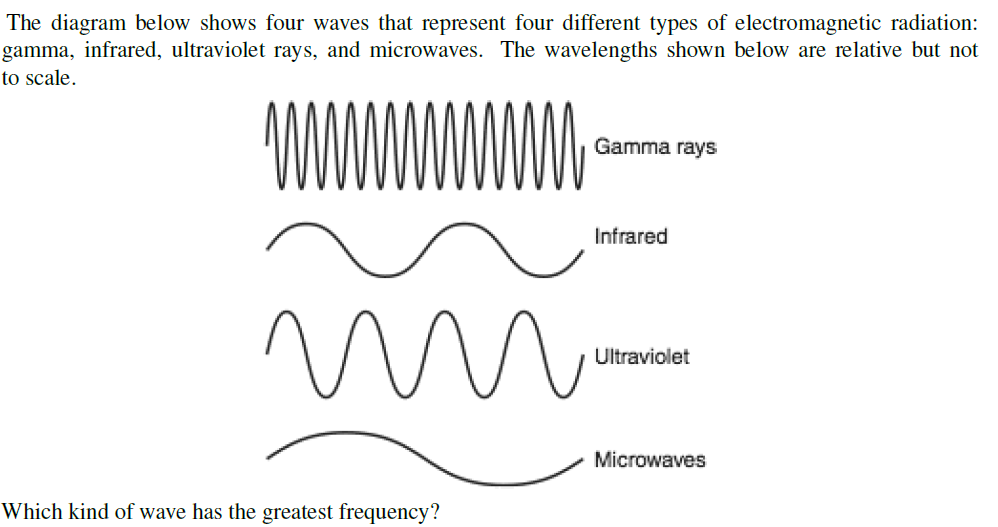
40.
Which kind of wave has the greatest frequency?
a)
gamma rays
b)
infrared
c)
ultraviolet
d)
microwaves
41.
Why do you see lightning from a distant storm before you hear thunder?
a)
The thunder is produced after the lightning.
b)
Your eyes react faster than your ears.
c)
Light travels faster than sound.
d)
Sound travels faster than light.
42.
Which statement regarding light is true?
a)
it travels at a constant speed
b)
its speed depends on temp
c)
slows down as it moves
d)
travels fastest through water
43.

Violet light has a wavelength of 4.10 x 10⁻¹² m. What is the frequency?

a)

1.23 x 10 -3 Hz

b)

7.31 x 10¹⁹ Hz

c)

1.37 x 10¹² Hz

d)

3.0 x 10⁸ Hz

44.
Violet light has a wavelength of
4.10 x 10⁻¹²  m. What is the frequency?
a)
1.23 x 10^ -3 Hz
b)
7.31 x 10^ 19 Hz
c)
1.37 x 10^12 Hz
d)
3.0 x 10^ 8 Hz
45.

The frequency of violet light is 7.5x10¹⁴ Hz. What is its wavelength?

a)

4.0x10⁻⁷ m

b)

4.0x10⁷ m

c)

2.25x10²³m

d)

2.25x10²³ Hz

46.
What is the Energy of a blue light with the frequency of 6.91x10¹⁴Hz? (E=hv)
a)
4.56x1049J
b)
9.55x10-49J
c)
4.56x10⁻¹⁹J
d)
5.82x10¹⁹J
47.
What is the name of this element?
a)
Lithium
b)
Boron
c)
Carbon
d)
Neon
48.
What group does this element belong to?
a)
Group 1: Alkali metals
b)
Group 18: Noble Gases
c)
Group 2: Alkaline-Earth Metals
d)
Group 17: Halogens
49.

Which Bohr model represents Neon?

a)
b)
c)
d)
50.

Cations are...

a)

Positive

b)

Negative

c)

Neutral

51.

Anions are...

a)

Positive

b)

Negative

c)

Neutral

52.

How many electrons can go in the Second energy level?

a)

2

b)

8

c)

18

d)

32

53.

What are the orbitals that make up the n=1 energy level (first energy level)?

a)

s

b)

s, p

c)

s, p, d

d)

s, p, d, f

54.

According to the Octet Rule, atoms of elements react with each other in order to attain ____ electrons in their outermost energy level or shell.

a)

2

b)

4

c)

6

d)

8

e)

10

55.
As you move down the periodic table atoms get bigger.  This is because ____________.
a)
The atoms have more mass.
b)
The atoms have more protons.
c)
The atoms have more energy levels
d)
The atoms have more nuetrons
56.
Atoms that have a high electronegativity, _______________.
a)
give up their electrons more easily.
b)
hold on to their electrons more tightly.
c)
have more electron shells.
57.
Ionization energy is...
a)
the energy required to add an electron to a specific atom
b)
how much energy it takes to remove an electron from an atom
c)
the energy required to shield the outer electrons from the nucleus
d)
a measure of the ability of an atom to attract electrons
58.
Atomic radius generally increases as we move __________.  
a)
down a group and from right to left across a period 
b)
up a group and from left to right across a period 
c)
down a group and from left to right across a period 
d)
up a group and from right to left across a period 
59.
Electronegativity __________ from left to right within a period and __________ from top to bottom within a group.
a)
decreases, increases 
b)
increases, increases
c)
increases, decreases 
d)
stays the same, increases
60.
A group of elements that includes the most active of the elements is the -
a)
halogens.
b)
noble gases.
c)
nitrogen group.
d)
alkaline earth metals.
61.

Order the elements S, Cl, and F in terms of increasing ionization energy.

a)

S, Cl, F

b)

Cl, F, S

c)

F, S, Cl

d)

F, Cl, S

e)

S, F, Cl

62.
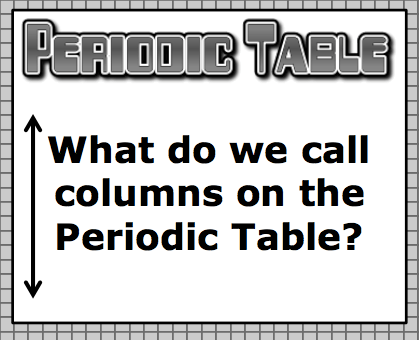
a)
Periods
b)
Groups
63.
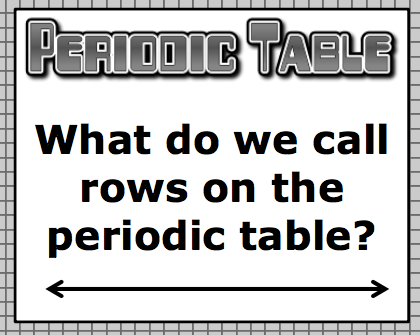
a)
Periods
b)
Groups
64.
a)
energy levels
b)
valence electrons
c)
protons
d)
neutrons
65.
a)
energy levels
b)
valence electrons
c)
protons
d)
neutrons
66.
a)
Same group
b)
Same period
67.
a)
Group 1
b)
Group 17
c)
Group 2
d)
Group 18
68.
a)
Group 1
b)
Group 17
c)
Group 18
d)
Group 2
69.
a)
Group 1
b)
Group 17
c)
Group 18
d)
Group 2
70.
a)
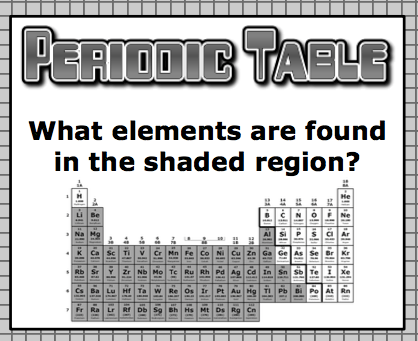
Metals
b)
Nonmetals
c)
Metalloids
71.
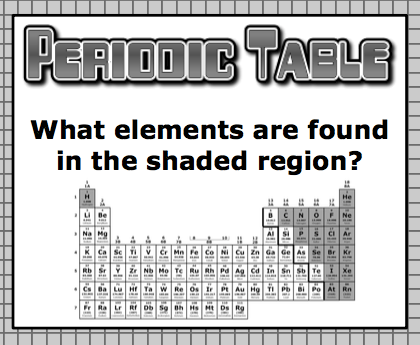
a)
Metals
b)
Nonmetals
c)
Metalloids
72.
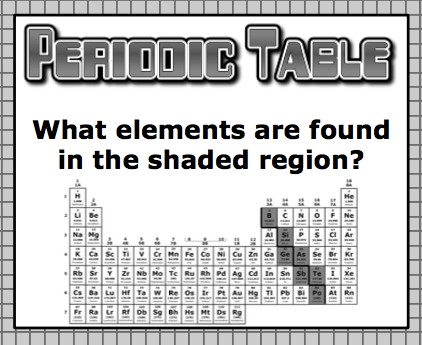
a)
Metals
b)
Nonmetals
c)
Metalloids
73.
a)
Metals
b)
Nonmetals
c)
Metalloids
74.
a)
Metals
b)
Nonmetals
c)
Metalloids
75.
What gases are in the unknown mixture?
a)
Gas B & Gas D
b)
Gas C & Gas B
c)
Gas A & Gas D
d)
Gas D & Gas C