
 Worksheets
Interaction of spheres
Total questions: 150
Worksheet time: 2hrs 44mins

Which one of the following is NOT one of Earth's spheres.
geosphere
hydrosphere
biosphere
atmosphere
hemisphere

Which of Earth's spheres contains rocks and sediments?
Geosphere
biosphere
atmosphere
hydrosphere
hemisphere

Which of Earth's spheres includes water?
geosphere
biosphere
hydrosphere
atmosphere
hemisphere

Oceans have no effect on the temperature on Earth's land.
true
false

Recycling can positively impact Earth's spheres.
true
false

In the team's mountain model, which of Earth's spheres is interacting with the geosphere?
hydrosphere
hemisphere
biosphere
atosphere
Water evaporates from a lake into the air, forming clouds. The clouds eventually form rain and it falls to the ground. In which spheres does this cycle happen?
geosphere and cryosphere
cryosphere and hydrosphere
hydrosphere and atmosphere
thermosphere and atmosphere

The layers of Earth's atmosphere perform specific functions. Study the illustration, which shows the layers of the atmosphere.
troposphere
mesosphere
stratosphere
thermosphere
When animals breathe, they take in oxygen from the air. The oxygen is used to obtain energy from food. This example demonstrates interaction between which two spheres?
atmosphere and biosphere
cryosphere and atmosphere
biosphere and hydrosphere
hydrosphere and geosphere
Earth’s spheres interact in many ways. Which describes how the hydrosphere and atmosphere interact?
A heavy snowfall adds mass to a glacier.
Polluted air kills several animal species.
Magma erupts and releases trapped gases.
Ocean currents influence weather patterns.
Earth’s spheres interact in many ways. What is one way that the cryosphere and biosphere interact?
A glacier picks up rock and sediment as it moves down a valley.
Heavy rains bring an end to a dry period on the African savannah.
A volcanic eruption destroys the plants on an island.
A melting glacier provides fresh water for plants and animals in the valley below the glacier.
The atmosphere insulates Earth, keeping the temperature warmer and more stable than it would otherwise be. This insulating effect has an impact on other Earth spheres. What might happen to the cryosphere if the insulating effect of the atmosphere increased?
Less of the cryosphere would enter the hydrosphere.
More of the cryosphere would enter the hydrosphere.
The cryosphere would become bigger.
The cryosphere would not change.

Look at the illustration. The volcanic eruption is sending out clouds of dust and ash. An interaction between which two spheres is being demonstrated?
biosphere and geosphere
cryosphere and biosphere
geosphere and atmosphere
atmosphere and hydrosphere
Which set of the spheres on Earth would BEST represent animal species in a forest?
atmosphere, geosphere, cryosphere
geosphere, hydrosphere, atmosphere
biosphere, geosphere, atmosphere
cryosphere, biosphere, and hydrosphere

Albert wanted to create a model to show that water vapor in Earth’s atmosphere helps insulate the planet. He filled 4 jars halfway with water at room temperature (25°C). He put a lid on two jars and left two jars open. He placed the jars on windowsills in his classroom. He left the blinds up in windows I and II and closed the blinds in windows III and IV. Study the lab setup.
Which setup best models Albert’s hypothesis that water vapor in Earth’s atmosphere helps insulate the planet?
I
II
III
IV
Samal read a story about transforming a planet so that it resembles Earth and can sustain life. The characters in the story wanted to create an artificial atmosphere on Mars that closely resembled Earth’s atmosphere. Most of the story was fiction, but there was one detail about Earth’s atmosphere that Samal recognized as true.
Which detail about Earth’s atmosphere is true?
It has no effect on surface temperatures.
It shields life forms on the surface from radiation.
It allows meteors to strike the surface.
It is thicker over places where there are high elevations.
Ultraviolet radiation from the sun is high energy and can damage cells. Earth’s ozone layer blocks a lot of the sun’s ultraviolet radiation. In the past, some products used by people contained a chemical that destroyed the ozone layer. These chemicals have been banned in an attempt to preserve the ozone layer.
What would happen to life on Earth if the ozone layer disappeared?
Some animals would develop skin and eye damage.
Fish would grow to increasingly larger sizes.
Many plant species would grow out of control and deplete soils of nutrients.
Lakes and rivers would experience an increase in algal growth, which would deplete oxygen in the water.
The surface of the moon, which is rocky, is covered with craters that were formed when meteorites struck its surface. Earth’s surface, which is also rocky, shows fewer meteorite impacts.
Which statement below explains why there are so few meteorite craters on Earth?
There is more weathering and erosion on the moon’s surface than on Earth’s surface.
The moon's gravity shields Earth from most of the meteoroids on a path for Earth.
Earth’s atmosphere causes most meteoroids to burn up before they impact.
Earth’s crust is rockier than the moon’s, so meteorite impacts rarely make craters.

Maggie is comparing the characteristics of Mercury and Earth. She notes that there is a large range between the daytime and nighttime temperatures on Mercury. In comparison, temperatures in Florida do not vary as much, as shown in the table below.
What condition best explains the larger temperature range on Mercury than on Earth?
length of Mercury’s year
absence of liquid water on Mercury
presence of ice on Mercury
presence of very thin atmosphere on Mercury
You have learned that the ozone layer protects Earth by absorbing harmful ultraviolet radiation from the sun. in which layer of the atmosphere is ozone mainly found?
stratosphere
mesosphere
thermosphere
exosphere
Infrared radiation from the sun passes through nitrogen and oxygen molecules in the atmosphere. But it is trapped near Earth’s surface by carbon dioxide and water vapor, and reradiated back to Earth. Suppose the temperature of Earth's atmosphere became warmer.
Which statement would best explain why?
Carbon dioxide and water vapor in the atmosphere are trapping less infrared radiation.
More infrared radiation is passing through the atmosphere to the surface.
The amount of oxygen and nitrogen in the atmosphere is decreasing.
The amount of water vapor and carbon dioxide in the atmosphere is increasing.

The illustration shows four layers of Earth’s atmosphere. Each layer serves as a filter, blocking some radiation from outer space while allowing other radiation to pass through.
Which layer of the atmosphere receives the least amount of radiation?
the exosphere
the ionosphere
the stratosphere
the troposphere
Scientific theories are supported by large amounts of evidence.
What is the most likely fate of a scientific theory?
It will change dramatically and quickly.
It will remain exactly the same over time.
It will be modified over time as new evidence is found.
It will be completely discarded when new evidence is found.
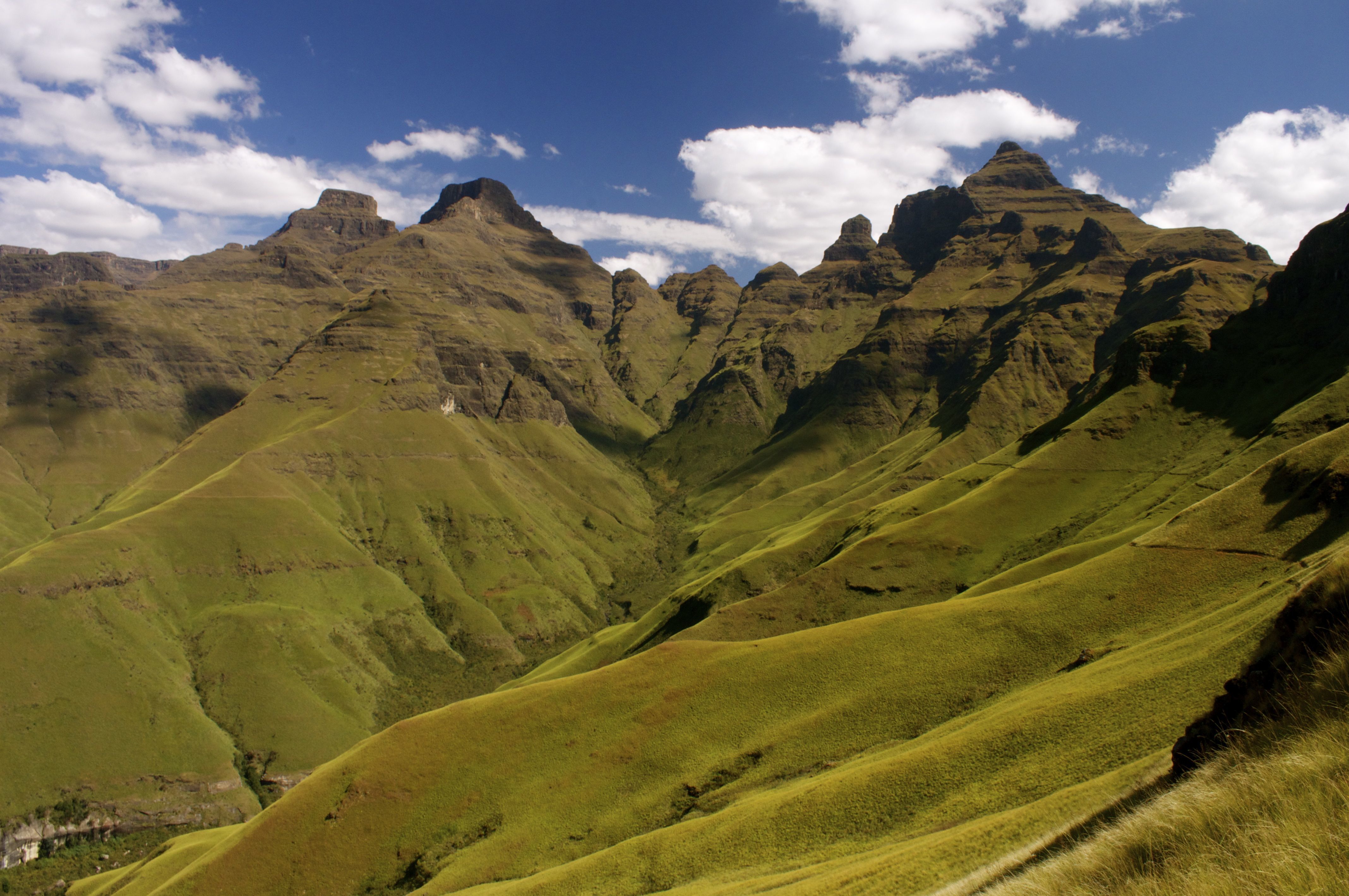



When a river deposits sediment, which 2 spheres are interacting? (choose 2)
Geosphere
Hydrosphere
Atmosphere
Biosphere

When ocean water evaporates into the air, which 2 spheres are interacting? (choose 2)
Geosphere
Hydrosphere
Atmosphere
Biosphere

What is the geosphere?
all the air and gases on the planet
all the frozen water on the Earth
the non-living soil, rocks, and minerals of the Earth
the rivers, lakes, and oceans of the Earth

What is the hydrosphere?
all the air and gases on the planet
made up of living things
the non-living soil, rocks, and minerals of the Earth
the rivers, lakes, and oceans of the Earth

What is the atmosphere?
all the air and gases on the planet
made up of living things
the non-living soil, rocks, and minerals of the Earth
the rivers, lakes, and oceans of the Earth

When lake water evaporates, the interaction is between the __________ and the _____________.
atmosphere and hydrosphere
biosphere and geosphere
hydrosphere and geosphere
atmosphere and biosphere

When a river current erodes the banks of the river, the interaction is between the __________ and the _____________.
atmosphere and hydrosphere
biosphere and geosphere
hydrosphere and geosphere
atmosphere and biosphere

When an animal or human breathes air, the interaction is between the __________ and the _____________.
atmosphere and hydrosphere
biosphere and geosphere
hydrosphere and biosphere
atmosphere and biosphere
Choose the picture that best represents the "geosphere".


Choose the picture that best represents the "biosphere".

what is a cryosphere
parts of earth with animals
hot parts of earth
a portion of earth with solid water


Select the image that best shows the cryosphere and the biosphere interacting.


The geosphere is LIVING
True
False
What Sphere includes all living things?
Biosphere
Lithosphere
Atmosphere
Hemisphere

Water vapor is an example of what sphere?
Atmosphere
Cryosphere
Biosphere
Geosphere
Snow is an example of what sphere?
Atmosphere
Hydrosphere
Biosphere
Geosphere

Polar Bears hunt seals on ice is an interaction of what two spheres?
Biosphere-Hydrosphere
Biosphere-Atmosphere
Hydrosphere-Atmosphere
Hydrosphere-Geosphere
Coral reefs protect coastlines by absorbing energy from pounding waves.
Biosphere and Atmosphere
Geosphere and Biosphere
Hydrosphere and Biosphere
Explain how all four spheres can interact together.

Plants (__________) draw water (___________) and nutrients from the soil (___________) and release water vapor into the atmosphere.
biosphere; hydrosphere; geosphere
hydrosphere; biosphere; geosphere
biosphere; atmosphere; hydrosphere
cryosphere; biosphere; hydrosphere

Which of these BEST describes the relationship between the atmosphere and hydrosphere?
the atmosphere and hydrosphere have no relationship
the hydrosphere grows due to the formation of volcanoes
the solid layer of the hydrosphere is located in the atmosphere
evaporation brings water into the atmosphere and condensation brings it back to the hydrosphere

The relationships between Earth's various systems affect everything from climate to formation of landforms. Which statement BEST describes the relationship between Earth's hydrosphere and atmosphere?
Varied land temperature is a result of the spheres' interaction, which affects weather patterns.
The spheres' interaction affects global sea temperatures, resulting in the formation and melting of ice.
Earth's tectonic plates are affected by this relationship, which can create earthquake activity.
The interaction between the spheres affects elevated landforms, and is responsible for volcano eruptions.
When nitrogen is returned to the soil when dead plants decompose, the interaction is between which two spheres?
Hydrosphere and geosphere
Cryosphere and geosphere
Biosphere and geosphere
Biosphere and atmosphere
The cryosphere has a great impact on climate around the globe as it interacts with the __________ and ___________.
geosphere and biosphere
atmosphere and hydrosphere.
hydrosphere and geosphere.
polarsphere and atmosphere.


Which has a wavelength about the size of a water molecule?
Radiowaves
Microwaves
Ultraviolet
X-rays
Which wavelength is about the size of a typed period?
Radiowaves
Microwaves
Ultraviolet
X-Rays
Which wavelength is about the size of a baseball?
Radio waves
Infrared
Ultraviolet
X-Rays
Which has the longest wavelength?
Gamma Rays
Visible Light
Microwaves
Radiowaves
Which has a longer wavelength?
Red
Orange
Blue
Violet
Which has a lower frequency?
Red
Orange
Blue
Violet
Which has a higher frequency?
Red
Orange
Blue
Violet
Which of the following is true?
A long wavelength means a low frequency
A long wavelength means a high frequency
All of the electromagnetic spectrum has the same wavelength
A long wavelength means high energy
Which electromagnetic waves carry more energy?
If it has a long wavelength
If it has a short wavelength
If it has a low frequency
They all carry the same amount of energy
To calculate the frequency of an electromagnetic wave, you need to know the speed of the wave and its
wavelength.
intensity.
refraction.
amplitude.
Electromagnetic waves vary in
the speed they travel in a vacuum.
wavelength and frequency.
the way they reflect.
the orientation of their electric and magnetic fields.
The full range of frequencies of electromagnetic radiation is called
visible light.
radio waves.
the electromagnetic spectrum.
invisible radiation.
The waves with the longest wavelengths in the electromagnetic spectrum are
Infrared rays.
radio waves
gamma rays
X-rays
The visible light spectrum ranges between
radar waves and X-rays.
television waves and infrared rays.
infrared rays and ultraviolet rays.
ultraviolet rays and gamma rays.
The visible light spectrum ranges between
radar waves and X-rays.
television waves and infrared rays.
infrared rays and ultraviolet rays.
ultraviolet rays and gamma rays.


Which of the following is not a way that matter and light interact?
transmission
absorption
redirection
reflection
The color you see is the color that is
refracted
reflected
absorbed
redirected
the most familiar type of EM wave is
ultraviolet waves
x-rays
light
microwaves


Which letter represents wavelength?


What type of waves are all of the EM Spectrum?
Longitudinal
Transverse
Seismic
Radio Waves
All EM Waves travel at the same speed in a vacuum, true or false?
True
False
Which two elements differ when looking at the EM Spectrum Waves
Wavelength
Speed
Frequency
When moving from left to right in the EM Spectrum, what happens to the frequency of the waves?
Decreases
Increases
Stays the same
When moving from left to right in the EM Spectrum, what happens to the wavelength of the waves?
Increases
Decreases
Stays the same
Which wave on the EM Spectrum has the highest frequency?
Gamma Rays
Radio Waves
Visible Light
X-Ray
What is the correct order (from left to right) when looking at the EM Spectrum
Radio Waves, Micro Waves, Infra Red, Visible Light, UV, X-Ray, Gamma Rays
Radio Waves, Visible Light, UV, X-Ray, Gamma Rays, Micro Waves, Infra Red
Micro Waves, Infra Red, Visible Light, UV, Radio Waves, X-Ray, Gamma Rays
Infra Red, Visible Light, Radio Waves, Micro Waves, UV, X-Ray, Gamma Rays
Which part of the EM Spectrum are humans able to see?
Infra Red
Ultraviolet
Visible Light
Gamma Rays
Which wave on the EM Spectrum has the largest wavelength?
Micro Waves
Radio Waves
Gamma Rays
Visible Light

