Wayground logo

Free Printable Worksheets

Font size

S
M
L
XL
Worksheets

PAP Chem Quizizz Final Review Pt.2

Total questions: 80

Worksheet time: 2hrs 5mins

Name
Class
Date
1.

How many dots would you put around carbon, a group 14 element?

a)

4

b)

6

c)

8

d)

18

2.

This could be the dot diagram of

a)

Mg

b)

Cl

c)

C

d)

O

3.

How many electrons should sodium, atomic number 11, have around its Lewis dot model?

a)

1

b)

2

c)

3

d)

4

4.

How many valence electrons does Aluminum Have?

a)

1 Valence electron

b)

2 Valence electron

c)

3 Valence electron

d)

4 Valence electron

e)

5 Valence electron

5.

How would you draw a Lewis dot diagram for Magnesium?

a)
b)
c)
d)
6.

Which of these is correct?

a)
b)
c)
7.

Which of the following shows a correct Lewis dot structure?

a)
b)
c)
d)
8.

What are valence electrons?

a)

The innermost electrons

b)

The outermost electrons

9.

What is the octet rule?

a)

Elements can only have 8 electrons in its outermost shell

b)

The elements must form an octopus like structure

10.

What is the correct Lewis Dot Structure for ammonia NH3

a)
b)
c)
d)
11.

Which is the correct molecular structure for carbon dioxide CO2?

a)
b)
c)
d)
12.
Which of the following is the correct Lewis dot structure for the molecule fluorine (F2)?
a)
A
b)
B
c)
C
d)
D
13.

CCl4 has how many double bonds?

a)

0

b)

1

c)

2

d)

3

14.

Which of the following elements are an exception to the octet rule and require less than 8 valence electrons?

a)

H only needs 2

b)

Li only needs 3

c)

Cl only needs 1

d)

C only needs 4

15.

What is a cation?

a)

a metal with a negative (-) charge that gains electrons

b)

a non-metal with a negative (-) charge that loses electrons

c)

a metal with a positive (+) charge that loses electrons

d)

a non-metal with a positive (+) charge that loses electrons

16.

What is a anion?

a)

a metal with a negative (-) charge that loses electrons

b)

a non-metal with a negative (-) charge that gains electrons

c)

a metal with a positive (+) charge that gains electrons

d)

a non-metal with a positive (+) charge that loses electrons

17.

MgCl2

a)

Ionic

b)

Covalent

c)

Metallic

18.

NaCl

a)

Ionic

b)

Covalent

c)

Metallic

19.

CO2

a)

Ionic

b)

Covalent

c)

Metallic

20.

NO3 1-

a)

Ionic

b)

Covalent

c)

Metallic

21.

NH4 1+

a)

Ionic

b)

Covalent

c)

Metallic

22.

SO4

a)

Covalent

b)

Ionic

c)

Metallic

23.

What bond is formed between 2 or more nonmetals sharing electrons?

a)

Covalent bond

b)

Ionic bond

c)

Metallic bond

24.

What bond type transfers electrons?

a)

Covalent bond

b)

Ionic bond

c)

Metallic bond

25.

What bond type is a "sea of electrons"?

a)

Covalent bond

b)

Ionic bond

c)

Metallic bond

26.

Where are metals located on the periodic table?

a)

right side of the staircase

b)

on the staircase

c)

left side of the staircase

27.

Where are the nonmetals located on the periodic table?

a)

right side of the staircase

b)

left side of the staircase

c)

on the staircase

28.

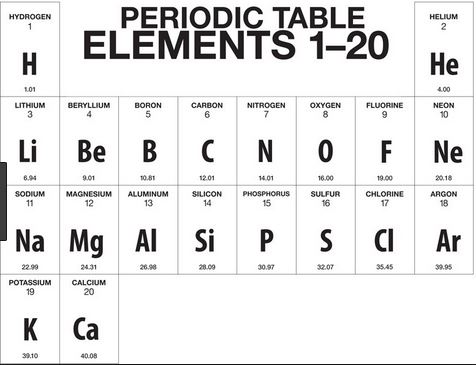
How many total valence electrons are participating in bonding in the molecule above?

a)

8

b)

4

c)

2

d)

3

29.

What is the correct formula for Calcium Phosphate?

a)

Ca3(PO4)2

b)

Ca3(PO4)

c)

Ca2(PO4)

d)

Ca2(PO4)2

30.

What is the correct name for the compound with the formula (NH4)3PO4

a)

Ammonium Pyrophosphite

b)

Ammonium Phoporylate

c)

Ammonium Phosphite

d)

Ammonium Phosphate

31.

The correct name for the compound with the formula PbSO3 is

a)

Lead (II) Sulfite

b)

Lead (III) Sulfite

c)

Lead Sulfite

d)

Lead Sulfate

32.

What is the correct formula for a mercury II sulfate

a)

Hg(SO4)3

b)

Hg(SO4)4

c)

Hg(SO4)2

d)

HgSO4

33.

What is the correct name for the compound with the formula Pb(NO3)2

a)

Lead (I) Nitrate

b)

Lead Nitrite

c)

Lead (II) Nitrate

d)

Lead Nitrate

34.

What is the correct name of the compound P2O5

a)

phosphorous oxide

b)

diphosphorous pentoxide

c)

phosphorous pentoxide

35.

What is the name of the compound P4S10

a)

phosphorous sulfide

b)

tetraphosphide decasulfate

c)

phosphorous decasulfate

d)

tetraphosphorous decasulfide

36.

What is the name of Al2O3

a)

aluminum oxide

b)

dialuminum trioxide

c)

aluminum III oxide

37.

What is the formula for sodium bromide?

a)

NaBr

b)

NaBr2

c)

Na2Br

d)

SoBr

38.

What is the name for BrO3?

a)

bromine oxide

b)

monobromine trioxide

c)

bromine trioxide

d)

bromide trioxide

39.

What is the chemical formula for an ionic compound of potassium and oxygen?

a)

KO

b)

K2O

c)

K2O2

d)

KO2

40.

What is the following shape?

a)

Linear

b)

Bent

c)

Trigonal Pyramidal

d)

Trigonal Planar

41.

What is the following shape?

a)

Linear

b)

Trigonal Planar

c)

Tetrahedral

d)

Trigonal Pyramidal

42.

What is the following shape?

a)

Linear

b)

Bent

c)

Trigonal Pyramidal

d)

Tetrahedral

43.

What is the following shape?

a)

Linear

b)

Bent

c)

Trigonal Pyramidal

d)

Tetrahedral

44.

What is the following shape?

a)

Bent

b)

Trigonal Planar

c)

Tetrahedral

d)

Trigonal Pyramidal

45.

What 3-D VSEPR shape does this molecule exhibit?

a)

linear

b)

tetrahedral

c)

trigonal pyramidal

d)

trigonal planar

46.
What is the VSEPR shape of H2S?
a)
linear
b)
trigonal planar
c)
bent
d)
tetrahedral
47.
What molecular shape is the structure shown here? (BCl3)
a)
linear
b)
trigonal planar
c)
tetrahedral
d)
trigonal pyramidal
48.
What molecular shape is the structure shown here? (H2O)
a)
tetrahedral
b)
trigonal planar
c)
bent
d)
trigonal pyramidal
49.
What molecular shape is the structure shown here? (NH4+)
a)
linear
b)
trigonal planar
c)
tetrahedral
d)
trigonal pyramidal
50.
The following is what type of reaction:
PbCl2 + AgNO3 → Pb(NO3)2 + AgCl
a)
Synthesis
b)
Decomposition
c)
Single Replacement
d)
Double Replacement
51.
The following is what type of reaction:
NH3 + HCl  → NH4Cl
a)
Synthesis
b)
Decomposition
c)
Single Replacement Replacement
d)
Double Replacement Replacement
52.
What type of chemical reaction is this?
Al(OH)3 → Al2O3  + H2O
a)
Decomposition
b)
Combustion
c)
Synthesis
d)
Single Replacement 
53.
3Ca + 2AlCl3 --> 3CaCl2 + 2Al
a)
Synthesis
b)
Decomposition
c)
Single Displacement
d)
Double Displacement
54.
One reactant into several products.
a)
Decomposition
b)
Synthesis
c)
Combustion
d)
Single Replacement
55.
Always starts with a Hydrocarbon that reacts with oxygen and produces carbon dioxide and water. 
a)
Decomposition
b)
Synthesis
c)
Combustion
d)
Single Replacement
56.
Two Reactants and One Product
a)
Decomposition
b)
Synthesis
c)
Combustion
d)
Single Replacement
57.
4Si   + S8   -->   2Si2S4
a)
Synthesis
b)
Decomposition
c)
Single Displacement
d)
Double Displacement
58.
C4H12 + O2 → CO2 + H2O
a)
Synthesis
b)
Combustion
c)
Single Replacement
d)
Double Replacement
59.
3KOH + H3PO4 --> K3PO4 + 3H2O
a)
Synthesis 
b)
Decomposition
c)
Single displacement
d)
Double displacement
60.
Fe + H2SO4 --> Fe2(SO4)3 + H2
a)
Synthesis (combination)
b)
Decomposition
c)
Single replacement
d)
Combustion
61.
When balancing equations a ____ can be placed to the left of a formula of a substance to make the equations balanced
a)
charge
b)
subscript
c)
random number
d)
coefficient
62.
What coefficient should be used to make the following equation balanced?
N2+O2--> _NO 
a)
1
b)
2
c)
3
d)
4
63.
Balance this equation:
 __Li + __Cl2 -> __LiCl
a)
2Li + Cl2 -> 4LiCl2
b)
2Li + Cl2 -> LiCl2
c)
2Li +  Cl2 -> 2LiCl
64.
Ann Proctor won the 2007 World Waterski Racing Championship race in her category when she finished the 88-kilometer course in 51.23 minutes. What was her average speed in miles per hour? (Hint: 1 km= 0.62 miles) 
a)
23.66 mph
b)
63.90 mph
c)
46.59 mph
d)
51.23 mph
65.
The molar mass of an element is the mass of one ____ of the element.
a)
atom
b)
molecule
c)
mole
d)
gram
66.
What can be determined from a balanced chemical equation?
a)
Mole ratio of any two substances in the reaction
b)
Energy released in the reaction.
c)
Electron configuration of all elements in the reaction. 
d)
Mechanism involved in the reaction. 
67.
Where do you look to calculate the molar mass?
a)
avogadros number
b)
periodic table 
68.
What is the molar mass of one molecule of Nitrogen N2?
a)
14.01 amu
b)
14.01 g
c)
28.02 g
d)
28.02 amu
69.
Find the percent composition of N2S2.
a)
N: 69.6%  S: 30.4%
b)
N:36% S: 75.6%
c)
N: 96.6% S: 3.4%
d)
N: 30.4% S: 69.6%
70.
What is the Law of Conservation of mass?
a)
Mass is created in a chemical reaction
b)
Mass is created in a physical change
c)
New chemicals formed from a chemical reaction have a larger overall mass than the original reactants
d)
Mass is never created or destroyed
71.
How many atoms of carbon are in 6.00g of carbon?
a)
1.20x1024atoms C
b)
6.02x10²³atoms C
c)
3.01x10²³atoms C
d)
1.50x10²³atoms C
72.
How many grams are in 1.2 x 1024 molecules of CO?
a)
28 grams
b)
56 grams
c)
6.02 grams
d)
1.2 grams
73.

How many atoms would be in 8.4g of butane (C4H10)?

a)

50.568 x 10²³

b)

12.204 x 10²³

c)

0.872 x 10²³

d)

5.04 x 10²³

74.
Which has more molecules?
a)
1 mole H2O
b)
1 mole Al(OH)3
c)
1 mole NaCl
d)
There are all the same
75.
How can you figure out how particles (atoms) there are in 2 moles?
a)
2
b)
2 x (6.02 x 1023)
c)
2 x (atomic mass)
d)
2 ÷ (6.02 x 10²³)
76.
Molar volume of any gas at STP
a)
22.4 L
b)
2.24 L
c)
6.02 x 10²³ L
d)
224 L
77.
A 2.00 L sample of pure oxygen gas (O2) is measured at STP.  How many moles of oxygen is this?
a)
24.4 mol
b)
0.007 mol
c)
1.44 mol
d)
0.09 mol
78.
How many molecules are there in a 110 L sample of gas at STP?
a)
8 x 10²³ molecules
b)
8 x 1024  molecules
c)
3 x 1024 molecules
d)
3 x 10²³ molecules
79.
When the equation H2O2 --> H2O + O2 is completely balanced, the sum of all coefficients will be
a)
5
b)
8
c)
3
d)
2
80.
When the equation NH3 + O2 --> HNO3 + H2O is completely balanced using smallest whole numbers, the sum of all the coefficient is
a)
3
b)
4
c)
5
d)
6