wayground logo

Free Printable Worksheets

Font size

S
M
L
XL
Worksheets

Pedigree Analysis

Total questions: 33

Worksheet time: 33mins

Name
Class
Date
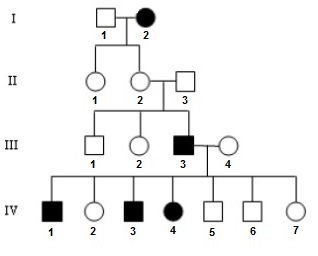
1.
What is the mode of inheritance shown here?
a)
Sex Linked Recessive
b)
Autosomal Dominant
c)
Autosomal Recessive
d)
Sex Linked Dominant
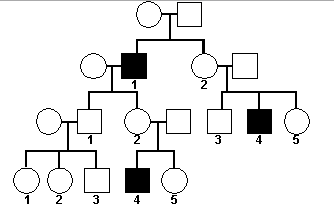
2.
What is the mode of inheritance shown here?
a)
Autosomal Recessive
b)
Autosomal Dominant
c)
Sex Linked Recessive
d)
Sex Linked Dominant
3.
What type of heredity is shown in the pedigree?
a)
Sex-Linked Dominant
b)
Sex-Linked Recessive
c)
Autosomal Dominant
d)
Autosomal Recessive 
4.
Is the following genotype homozygous or heterozygous?
TT
a)
homozygous
b)
heterozygous 
5.
Which individual in the first generation is a carrier?
a)
The male
b)
The female
c)
individual 1
d)
None of the above
6.
In the second generation, how many people have the disease or display the physical trait?
a)
2
b)
4
c)
5
d)
6
7.
How many people in this whole pedigree have the trait/disease?
a)
2
b)
3
c)
4
d)
6
8.
What is the mode of inheritance shown here?
a)
Sex Linked Recessive
b)
Autosomal Dominant
c)
Autosomal Recessive
d)
Sex Linked Dominant
9.
The image shows:
a)
Not affected Female
b)
Not affected Male
c)
Affected Male
d)
Affected Female
10.
The image shows:
a)
Not Affected Male
b)
Not Affected Female
c)
Affected Male
d)
Affected Female
11.
If this pedigree shows an autosomal recessive disorder, what MUST the genotype of individual II-3 be?
a)
HH
b)
Hh
c)
hh
d)
None of the above
12.
There are no carriers for Huntington's Disease- you either have it or you don't. Is Huntington's disease caused by a dominant or recessive trait?
a)
Dominant
b)
Recessive
13.
How many generations are shown in this pedigree?
a)
1
b)
2
c)
3
d)
4
14.
What do half colored symbols represent?
a)
The individual is a carrier (heterozygous).
b)
The individual expresses the trait.
c)
The individual has both recessive alleles.
d)
The individual has both dominant alleles.
15.
Is this trait (the shaded individuals) dominant or recessive?
a)
dominant
b)
recessive
16.

How many alleles does a person carry for a trait?

a)

1

b)

2

c)

3

d)

4

17.

How many alleles does a child get from each parent for a trait?

a)

1

b)

2

c)

3

d)

4

18.

This pedigree represents the inheritance of hemophilia in this family. How many of the males have the hemophilia trait?

a)

8

b)

5

c)

2

d)

3

19.

What type of heredity is shown in the pedigree?

a)

Sex-Linked Dominant

b)

Sex-Linked Recessive

c)

Autosomal Dominant

d)

Autosomal Recessive

20.

If this pedigree shows a recessive disorder, what MUST the genotype of individual 4 be?

a)

HH

b)

Hh

c)

hh

21.
Hemophilia is a recessive sex-linked trait. If H = normal & h = has hemophilia, which genotype represents a male with hemophilia. 
a)
XHY
b)
XHXh
c)
XhXh
d)
Xh
22.

The pedigree is showing a _____________ trait.

a)

autosomal dominant

b)

autosomal recessive

c)

sex linked recessive

23.
What is the genotype of the mother?
a)
BB
b)
bb
c)
Bb
d)
BB or Bb
24.

This is a __ trait.

a)

autosomal recessive

b)

sex-linked recessive

c)

autosomal dominant

25.
What is the mode of inheritance shown here?
a)
Autosomal Dominant
b)
Autosomal Recessive
c)
Sex Linked Recessive
26.
What do we use pedigrees for?
a)
To look at families
b)
To make determinations about the offspring
c)
To track traits in families
d)
Nothing
27.

Assuming a trait is AUTOSOMAL DOMINANT, what genotypes could make a person AFFECTED?

a)

AA

b)

Aa

c)

aa

d)

XAY

e)

XaY

28.

Assuming a trait is AUTOSOMAL DOMINANT, what genotype would make a person UNAFFECTED?

a)

AA

b)

Aa

c)

aa

d)

XAY

e)

XaY

29.

Assuming a trait is X-LINKED RECESSIVE, what are the genotypes of an AFFECTED person?

a)

XAY

b)

XaY

c)

XAXA

d)

XAXa

e)

XaXa

30.

Assuming a trait is X-LINKED RECESSIVE, what are the genotypes of an UNAFFECTED person?

a)

XAY

b)

XaY

c)

XAXA

d)

XAXa

e)

XaXa

31.

Assuming a trait is X-LINKED DOMINANT, what are the genotypes of an UNAFFECTED person?

a)

XAY

b)

XaY

c)

XAXA

d)

XAXa

e)

XaXa

32.

A recessive pedigree is recognized by the trait...

a)

only showing in females.

b)

showing in every generation.

c)

skipping at least one generation.

d)

being found on the X chromosome.

33.

Pedigrees are used to

a)

determine genotypes based on phenotypes.

b)

trace the family history of a chromosomal disorder.

c)

Predict the probable occurrence of a genetic disorder in offspring.

d)

all of the above.

e)

only answers b and c.