Wayground logo

Free Printable Worksheets

Font size

S
M
L
XL
Worksheets

Natural Selection & Adaptation Review

Total questions: 60

Worksheet time: 2hrs 54mins

Name
Class
Date
1.

If organisms have developed traits that fit their environment, they will have a better chance of living long enough to have babies. What is this process called?

a)

Natural selection

b)

Cloning

c)

Genetic engineering

d)

Selective breeding

2.

A genetic difference that makes it more likely that an organism will live long enough to have babies is ______________________.

a)

An adaptation

b)

A variation

c)

Natural selection

d)

Mutation

3.

If the beak of a species of bird changes over time to a certain shape, what part of the bird's environment would that adaptation relate to?

a)

What food the bird can eat

b)

What kind of nest the bird builds

c)

How high up in a tree the bird lives

d)

Beak shape doesn't relate to any part of a bird's environment

4.

Which of the following is an example of a trait that can potentially be beneficial to a species?

a)

Fur color

b)

Having claws

c)

Camouflaging feathers

d)

Flippers

e)

All of these

5.

Which of the following environments would rabbits with dark-colored fur have the best chance of surviving in?

a)

A temperate forest like the ones in Virginia

b)

A snowy tundra

c)

A desert

d)

A swamp

6.
Individuals with favorable traits survive, reproduce, and pass their traits onto their offspring.  This is called
a)
Mutation
b)
Adaptation
c)
Evolution
d)
Natural Selection
7.
Brown mice survive and reproduce in their desert environment better than white mice because owls can see and eat the white mice more easily. In this situation, what is doing the selecting?
a)
Owl
b)
Desert Background
c)
Brown Mice
d)
White Mice
8.
Some lizards have different size legs.  Lizards with longer legs are able to better access food.  Overtime Lizards with short legs became less common.
What is the adaptation?
a)
Lizards
b)
Long legs
c)
Leg size 
d)
Food
9.
Natural selection as the mechanism for evolution was first proposed by what scientist?
a)
Charles Darwin
b)
Albert Einstein
c)
Steven Hawking
d)
Isaac Newton
10.
Which of these would be considered an adaptation of an animal that lives in the snowy tundra?
a)
Large webbed feet
b)
A thick coat of fur and blubber
c)
Green scales
d)
A diet that consists of pineapples and coconuts
11.
Giraffes long necks are an adaptation that allows them to feed on leaves of the tall trees in their environment. A giraffe is born with an unusually short neck. What will most likely happen as a result of this?
a)
It will run faster
b)
It will feed on termites instead
c)
It will have an easier time reproducing
d)
It will have a hard time getting food
12.
Which traits in the giraffe population will get passed on to the next generation
a)
the long neck
b)
the short neck
13.
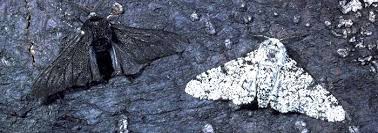
The peppered moth, at one point, appeared in two forms: Dark and Light colored. This is evidence of _________ in a species.
a)
competition
b)
variation
c)
reproduction
d)
extinction
14.
The darker moths had an advantage over the light color moths when the soot covered the trees. Dark color was a (n)_________ which allowed them to survive in the forest now. 
a)
invention
b)
morph
c)
adaptation
d)
trick
15.
The process by which individuals that are better adapted to their environment are more likely to survive and reproduce is called
a)
natural selection
b)
camoflauge
c)
revolution
d)
adaptation
16.

The breeding of organisms for desired characteristics.

a)

selective breeding

b)

camouflage

c)

variations

d)

natural selection

17.

Characteristics of a species that enable it to survive.

a)

adaptations

b)

selective breeding

c)

artificial selection

d)

ancestor

18.

Explains how populations change as their environment changes.

a)

natural selection

b)

camouflage

c)

selective breeding

d)

behavioral adaptation

19.

Slight differences in the appearance of individual members of a species.

a)

variations

b)

naturalist

c)

adaptations

d)

mimicry

20.

An adaptation that enables a species to blend in with its environment.

a)

camouflage

b)

mimicry

c)

functional adaptation

d)

selective breeding

21.

The resemblance of one species to another species.

a)

mimicry

b)

camouflage

c)

artificial selection

d)

selective breeding

22.

What is the advantage of finches (birds) having different shaped beaks?

a)

To look different from other species.

b)

To be able to eat the food readily available in the environment.

c)

To protect itself against predators.

d)

To protect itself against prey.

23.
Survival of the Fittest and Evolution were proposed by what scientist?
a)
Charles Darwin
b)
Albert Einstein
c)
Steven Hawking
d)
Isaac Newton
24.

Hollow, light weight bones is an adaptation that...

a)

is an internal structure that helps birds fly

b)

is an external structure that helps birds fly

c)

disables birds ability to fly

d)

helps birds walk

25.

The purpose of gills on a fish is to

a)

Take in nitrogen from the water

b)

Help fish avoid predators

c)

Take in hydrogen from the water

d)

Take in oxygen from the water

26.

Plants have a structure that allow them to transport water from the roots to the leaves

a)

Phloem

b)

Xylem

c)

Stem

d)

Soot

27.

Breeding two cows to produce more milk and meat is natural selection

a)

true

b)

false

28.

A characteristic of an organism is called a ______.

a)

natural selection

b)

adaptation

c)

generation

d)

trait

e)

population

29.
Two organisms that are closely related would have
a)
very similar DNA sequence
b)
exactly the same DNA sequences
c)
no proteins in common
d)
completely different DNA sequence
30.
Predict which moth would increase in population
a)
light 
b)
dark
31.
How can migration enhance the survival of organisms?
a)
Migration causes adaptations to occur more frequently.
b)
Migration helps organisms to avoid predators.
c)
Migration requires organisms to exert a lot of energy.
d)
Migration makes finding necessary resources more likely.
32.
Over time, corn plants are bred to make larger corn cobs and kernels. This is and example of _________.
a)
selective breeding
b)
dichotomous key
c)
natural selection
d)
extinction
33.
How might pockets of air in a bird's bones allow it to fly?
a)
They keep the bird very light.
b)
They produce helium for lift.
c)
They allow the birds to absorb more oxygen.
d)
They allow wind to flow through their bones.
34.
I traveled around the world on the HMS Beagle in 1831 in search of answers.
a)
Reginald Punnett
b)
Gregor Mendel
c)
Charles Darwin
d)
Alfred Hitchcock 
35.
What does this image represent? 
a)
Evolution 
b)
Natural Selection 
c)
Lunch 
d)
Selective Breeding 
36.
Which is not an adaptation of a polar bear? 
a)
White fur 
b)
Large Feet 
c)
Thin Layer of fat 
d)
Strong Swimmer 
37.
What organism did Darwin study at the Galapagos Island? 
a)
Lions
b)
Tigers 
c)
Bears 
d)
Birds 
38.
A characteristic or feature that increases an organism's ability to survive within a changing environment.
a)
adaptation
b)
hibernation
c)
migration
d)
Natural Selection
39.
Blending in with surroundings
a)
hibernation
b)
Natural Selection
c)
camouflage
d)
variation
40.
The process of breeding organisms with specific traits to influence traits of the next generation.
a)
variation
b)
Natural Selection
c)
Evolution
d)
Selective Breeding
41.
A group of similar organisms that can mate with each other and produce fertile offspring.
a)
species
b)
adaptation
c)
hibernation
d)
variation
42.
To pass the winter in a sleeping or resting state.
a)
migration
b)
camouflage
c)
hibernation
d)
variation
43.
To move from one region or climate to another usually on a regular schedule for food or breeding.
a)
hibernation
b)
migration
c)
variation
d)
selective breeding
44.

movement of individuals into a population, thereby adding alleles to the gene pool

a)

emigration

b)

evolution

c)

gene flow

d)

immigration

45.

organisms with beneficial traits survive and reproduce better than others, thereby contributing more alleles to the gene pool of future generations

a)

artificial selection

b)

evolution

c)

natural selection

d)

sexual selection

46.

a genetic trait that allows an organism to survive and reproduce better than others within a population

a)

adaptation

b)

gene pool

c)

natural selection

d)

fitness

47.

males and females acquire distinct forms either because the members of one sex choose mates with particular features or because in the competition for mates among the members of one sex only those with certain traits succeed

a)

artificial selection

b)

natural selection

c)

sexual selection

d)

behavioral selection

48.
A giraffe has a long neck in order to better reach leaves to eat.  This is an example of _____. 
a)
an adaptation
b)
environment
c)
response
d)
stimulus
49.
The role an organism plays in its ecosystem
a)
niche
b)
behavior
c)
structure
d)
function
50.
Organisms with the most beneficial traits will survive.  This is commonly known as ___.
a)
theory of evolution
b)
variations
c)
survival of the fittest
d)
ecosystems
51.
What characteristic did Darwin observe about the finches on the Galapagos Islands?
a)
Their feathers 
b)
Genotypes 
c)
Their beaks
d)
Their body sizes
52.

What is selective breeding?

a)

the process by which humans breed organisms for certain characteristics

b)

the process by which inherited traits in a population change over generations

c)

the process by which Charles Darwin noted the differences among finches on the Galapagos Islands

d)

the process in which individuals better adapted to their environment are more likely to survive and reproduce

53.

Some dairy farmers want to increase the amount of milk produced by their cows. How can the farmers use selective breeding to increase milk production?

a)

By increasing the age of the cows that are bred.

b)

By choosing cows that are high milk producers.

c)

By limiting the number of offspring per cow.

d)

By choosing cows that can produce milk after eating the most food.

54.
Individuals in a population that have a variation that gives them an advantage in their environment are more likely to ...
a)
survive and reproduce.
b)
die and not reproduce. 
c)
move to a different environment. 
d)
change their characteristics to fit the environment. 
55.

All of these finches have different-shaped beaks. They are an adaptation to gain access of _____.

a)

Water

b)

Food

c)

Shelter

d)

Mate

56.
Why are advantageous traits more likely to be passed onto offspring?
a)
Because they are more likely to survive and reproduce.
b)
Because they come from dominant alleles.
c)
Because they come from recessive alleles.
d)
Because the trait is an acquired phenotype.
57.
Breed an organism for a desired trait is the definition of
a)
selective breeding
b)
natural selection
c)
natural breeding
d)
biological evolution
58.
The discovery of DNA and genes proved that
a)
Darwin was wrong
b)
mutations create variations and come from genes
c)
we are all the same species
d)
bats and butterflies have a very close common ancestor
59.
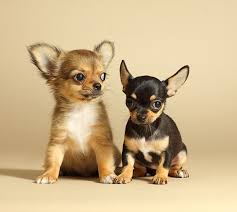
Dogs such as Chihuahuas are examples of....
a)
Artificial Selection 
b)
Natural Selection 
c)
Mutations 
60.

What is an adaptive trait?

a)

A genetic trait that helps an organism to maximize its survival and reproduction ability

b)

A trait that makes an animal strong

c)

a trait that makes an animal weak

d)

a poisonus plant