
 Worksheets
Dr. Potts - Semester One Exam Review
Total questions: 96
Worksheet time: 2hrs 55mins
The _ is an organized set of investigation procedures used by scientists.
scientific method
scientific law
scientific theory
A(n) _ is a factor that doesn't vary in an experiment.
constant
control
independent variable
The factor whose value depends on the independent variable is the _.
experiment
constant
dependent variable
Process that uses observations and investigation to gain knowledge about events in nature is called _.
science
predicting
inferring

Marcia did an experiment to find out whether tulips grow faster under fluorescent lighting or incandescent lighting. Under flourescent lighting, Marcia's plants grew 1.5 cm taller in two months. She gave her notes to Alex, who did the same experiments with similar results. Which term describes Alex's experiment?
plagiarism
replication
pseudo science
repitition
What is the best definition of the term "theory", as it’s used in science?
What is the best definition of the term "theory", as it’s used in science?
It is well tested set of ideas that explains events that occur in nature.
A theory is based on laws that can be proven true.
It is a hypothesis that has been confirmed
Read the law of conservation of energy in the box below.
The total energy of an isolated system
is constant; energy may be changed from one form to another, but may not be
created nor destroyed.
Why is this a scientific law?
because it explains a concept in science, and any topic in science can be turned into a scientific law
because it describes a specific relationship under given conditions in the natural world
because it can be controlled by human actions
because it describes energy and how it transfers
Why do we use models?
Building something by hand makes science more fun
to represent things that are too small to see, or that are too large to see. They can be used to explain the past and predict the future.
to determine the difference between the independent and dependet variable
to encourage better peer review
Photosynthesis changes light energy into chemical energy and stores the chemical energy as _____________
water
sugar (glucose)
carbon dioxide.
In what cell organelle does photosynthesis take place?
cytoplasm
Nucleus
chloroplast
Which of the following is the correct reaction for photosynthesis?
sunlight + carbon dioxide + water --> glucose + oxygen
glucose + oxygen --> carbon dioxide + water + ATP
oxygen + water --> carbon dioxide + glucose
Carbon is removed from the atmosphere through which process?
photosynthesis
factory emmisions
cellular respiration
During cellular respiration, cells use _______and _______ to produce carbon dioxide, water, and ATP.
oxygen : glucose sugar
carbon dioxide : glucose sugar
water : oxygen
Cellular respiration releases the energy available in food to make _______; a cell’s useable form of energy.
DNA
water
ATP
In which cell organelle does cellular respiration take place?
Nucleus
Cytoplasm
Mitochondria
Which organisms perform cellular respiration?
Plant
Animal
Both plants and animals
If the forest disappeared what would you predict will happen to the carbon dioxide in the atmosphere?
increase
decrease
stay the same
How do plants and animals help each other?
Plants produce oxygen for animals and animals produce carbon dioxide for plants
Plants produce carbon dioxide for animals and animals produce oxygen for plants
Plants and animals do not help each other


Which two words are ways to describe luster
bright, dark
light, dark
shiny, dull
sparkly, smooth
Q6: Anything that has mass or takes up space is known as...
matter
objects
physical properties
science

What is mass?
anything that takes up space
the amount of matter an object has
the amount of space an object takes up
the measure of how warm something is


Which of the following has the least amount of energy?
UV rays
The color yellow
Radio waves
Gamma rays
Metal are better conductors because they...
Are harder
Bend easily
Have free-ranging electrons that move around very quickly

Which of the following has the longest wavelength?
microwaves
UV rays
Infrared
Gamma rays

Select the correct order of waves on the EMS (least energy to the most energy)
Radio, Micro, Infra, Visible, Ultra, X-ray, Gamma
Gamma, X-ray, Ultra, Vis, Infra, Micro, Radio
Vis, Micro, Infra, Ultra, X-ray, Gamma, Radio
Micro, Radio, Vis, Infra, Ultra, X-ray, Gamma
Scientists frequently repeat the experiments of others scientists. Why is this important in science?
Scientists often ask each other for help in performing experiments.
Replication of experiments helps to confirm and verify results.
Scientists frequently perform other scientists’ experiments in order to practice their technique.
Repeating experiments is an effective way to make sure a laboratory is in optimal condition.
Cara read an article on why repetition and replication are so important, but she did not understand the difference between them. Which of the following best explains the two terms?
Repetition is when a scientist repeats an experiment; replication is when a scientist conducts an experiment on genetic material.
Repetition is when a scientist does the same experiment a number of times; replication is when other scientists reproduce a scientist’s experiment.
Repetition is when a scientist publishes in more than one scientific periodical; replication is when another scientist reproduces another scientist’s results.
Repetition is when a scientist commits an error in an experiment the first time and must repeat it; replication is when a scientist repeats an experiment to make sure it is valid.
Helen is studying the growth of two different types of plants. She planted two of each type of plant in locations with different levels of sunlight: full sun, partial shade, and full shade. For five weeks, Helen records the number of new leaves on each plant.
Which of the following statements correctly describes the independent and dependent variables in Helen's experiment?
The independent variable is the kind of plant, and the dependent variable is the amount of sunlight.
The independent variable is the amount of sunlight, and the dependent variable is the number of new leaves.
The independent variable is the amount of sunlight, and the dependent variable is the kind of plant.
The independent variable is the number of new leaves, and the dependent variable is the amount of sunlight.

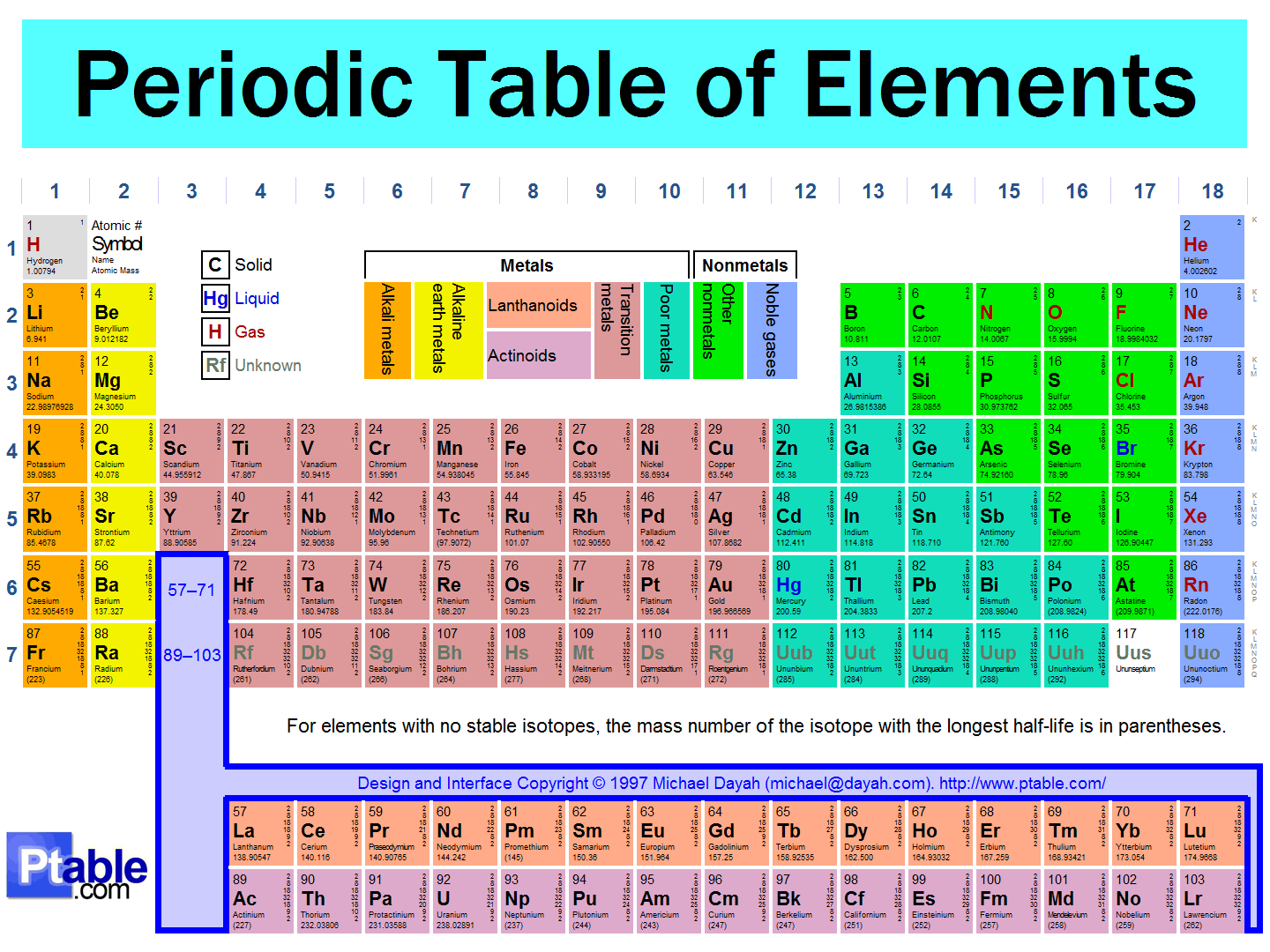

As you move left to right on a row or period what happens?
Atomic number increases by 1
Electrons decrease
Number of shells decrease
Nothing
What happens to the number of shells as you move down a group?
They decrease by 1
They increase by 1
Nothing
All elements in the same row have the same number of shells.
True
False
Sometimes
We use M.A.N. to find the number of .....
Protons
Electrons
Neutrons
Shells
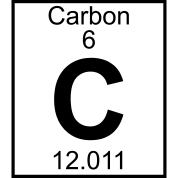
A subatomic particle that has a negative charge
noble gases
protons
electrons
neutrons


In a solution the substance that dissolves in the solvent.
Solute
Suspension
Colloid
Solvent
In a solution the substance which the solute dissolves
solvent
suspension
colloid
solution
Which statement is true about compounds?
a pure substance where two or more elements are chemically combined
a homogenous mixture of 2 or more elements
a pure substance containing only one type of atom
a heterogeneous mixture of 2 or more elements chemically combined

2. Which element has the most similar properties with boron?
A) Silicon
B) Gallium
C) Carbon
D) Fluorine
Metals are considered malleable. What does malleable mean?
Brittle
Can bend to a certain point without breaking
Good conductor of heat
Poor conductor of heat

This atom has....
4 protons
5 electrons
6 protons
6 neutrons
Most of the mass of an atom is because of the total mass of the .......
The electrons and protons
The protons & neutrons
The electrons and neutrons
The electron cloud

How many electrons does an atom of silver have?
107.87
60.87
60
47
APE-MAN means that.....
Atomic mass, Atomic number & electrons are all the same #
Atomic #, Protons, and electrons are always the same #
Atomic number - Atomic mass = Neutrons
Mass - electrons = Neutrons

The element in period 5, group 4 is?
Dubnium (Db)
Antimony (Sb)
Tin (Sn)
Zirconium (Zr)
Which of these particles is the smallest?
electron
neutron
atom
proton
All atoms of the periodic table are considered to be neutral because.....
They all have neutrons which are neutral in charge
Electrons and protons do opposite things in the atom
Neutrons and electrons have the same charge
The number of electrons equal the number of protons
Pure substances include:
Elements
Homogeneous Mixtures
Compounds
Heterogeneous Mixtures
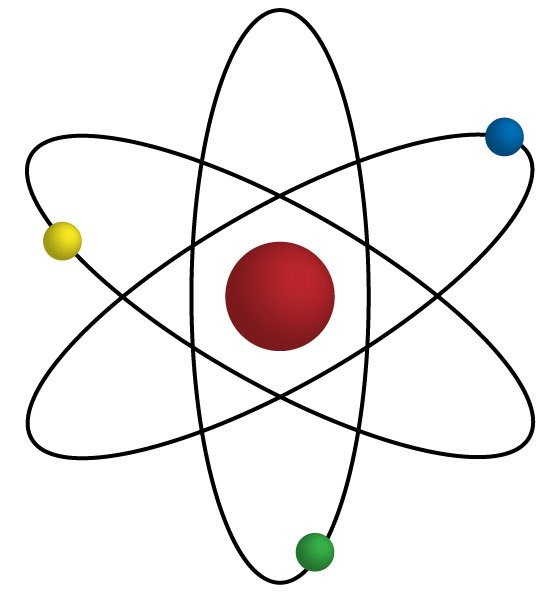

In a ______________, one substance is dissolved in another substance.
solution
suspension
colloid

What best explains the graphic and information that you see above?
The astronaut's weight and mass are the same, because weight and mass measure the same thing.
The astronaut's weight and mass are the different, because density varies when you travel to outer space.
The astronaut's mass changes as he travels to different places because the gravitational pull is different in each place.
The astronaut's weight changes as he travels to different places because the gravitational pull is different in each place.
How do you get the volume of an irregularly shaped object?
V= L x W x H
V= M/D
Water Displacement
Using a scale
_____________is a measure of the average kinetic energy of all particles in an object
Weight
Volume
Mass
Temperature
Why is burning fossil fuels harmful?
they cause cancer
They can get extremely hot
it increases the amount of carbon dioxode/greenhouse gases in the air
this would destroy fossils

