
 Worksheets
Fruits
Total questions: 74
Worksheet time: 42mins
After fertilization, the ovule will develop to:
fruit
seeds
calyx
mesocarp
After fertilization, (true) fruits developed from:
ovary
ovule
receptacle
stigma
These are the whorl or group of petals, which are usually thin, soft and colored to attract animals that help the process of pollination.
calyx
corolla
androecium
gynoecium
These are the outer whorl of sepals; typically these are green, but are petal-like in some species.
peduncle
pedicel
corolla
calyx
Each ____ consists of a filament topped by an anther where pollen is produced. It is the male reproductive organ.
carpel
pistil
stamen
style
Swelling into small pad at the tip of the stalk or peduncle.
stigma
style
pedicel
receptacle
To absorb water
The food conducting tissue of plant is
Phloem
Xylem
Collenchyma
Parenchyma

The floral part that produces pollengrain is called
Sepal
Petal
Anther
Overy
Conifers (pine trees) reproduce by making:
male & female cones
spores
angiosperms
runners
Flowering plants (angiosperms) are split into two further categories called:
monocotyledons & tricotyledons
dicotyledons & monocotyledons
protists & spores
seeding & seedless
What is a characteristic of a dicot plant?
leaf veins resemble a net of web
leaf veins are parallel
Fibrous root system
flowers in multiples of three
What is the difference between a monocot (corn) plant seed & a dicot (bean) plant seed?
(monocot) corn seed is bigger then a (dicot) bean seed
(monocot) corn seed is always yellow where a (dicot) bean seed can be many different colors
(monocot) corn seed has a single cotyledon, while a (dicot) bean seed has two cotyledons
(monocot) corn seed germinates at a lower temperature than a dicot (bean) seed
During photosynthesis green plants absorb........
oxygen
nitrogen
carbon monoxide
Carbon dioxide

Identify the group of plant
Algae
Fungi
Bryophytes
Pteridophytes


A transparent object that bends light into rainbow colors.
prism
mirror
convex lens
concave lens
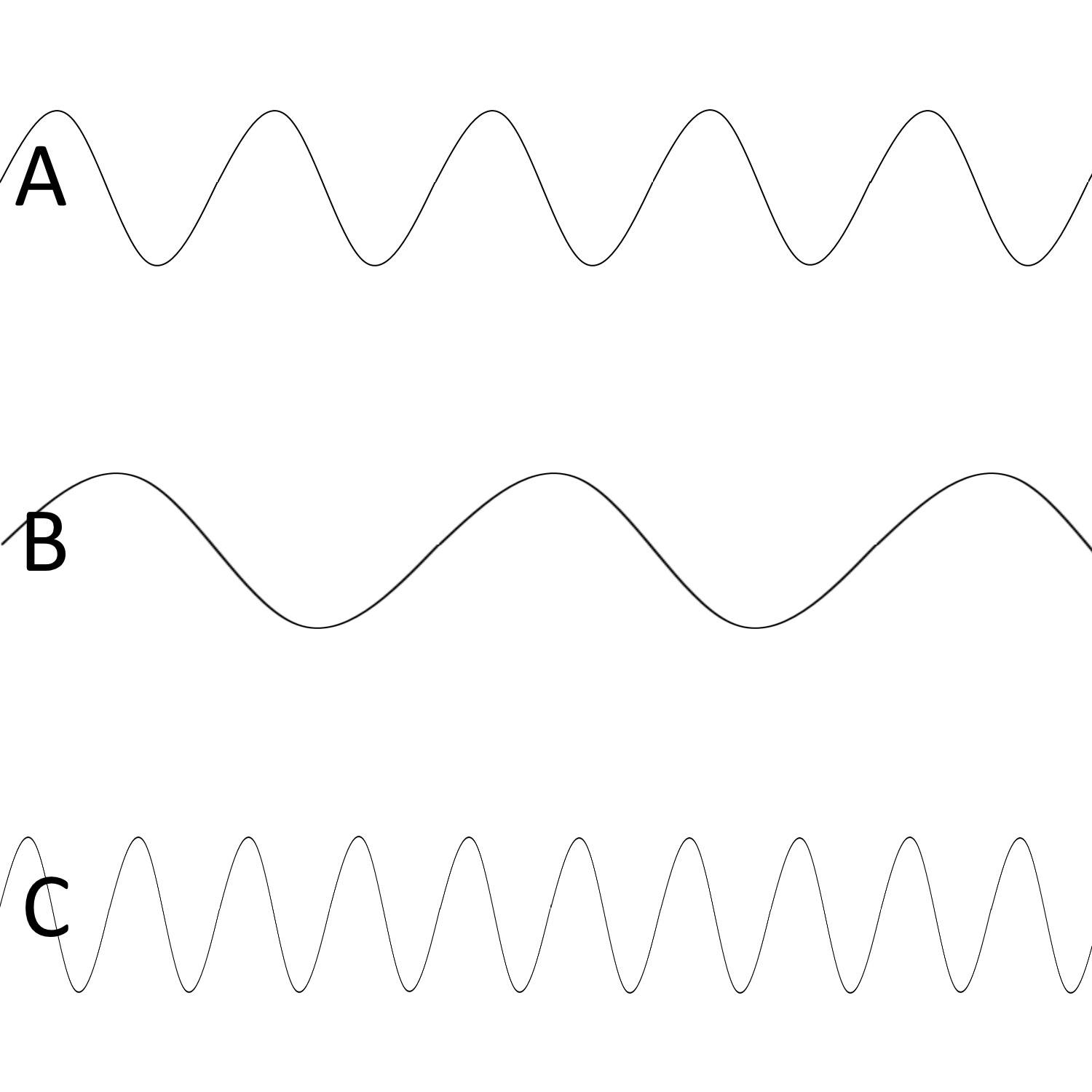
Which wave has the longest wavelength?
A
B
C
None (same wavelength)

Which type of light has the highest frequency of this group (be careful of the order!)?
red
yellow
green
blue

Of the visible spectrum, what color has the longest wavelength?
Blue
Green
Yellow
Red
Violet

Of the visible spectrum, what color has the shortest wavelength?
Blue
Green
Yellow
Red
Violet

Which organelle is responsible making food (Glucose) using sunlight?
Cell Membrane
Nucleus
Chloroplast
Mitochondria
Select all that are raw materials for Photosynthesis.
Water
Carbon Dioxide
Oxygen
Sunlight (Light Energy)
Glucose (Sugar/food)
Select all that are products of Photosynthesis.
Water
Carbon Dioxide
Oxygen
Sunlight (Light Energy)
Glucose (Sugar/food)

Is the oxygen (O2) created in photosynthesis a reactant or a product?
reactant
product
What are the tiny openings in the leaf that help the plant take in carbon dioxide and release oxygen called?
chlorophyll
chloroplast
stomata
carbon dioxide
Where are most of the cholorplasts found?
in the fruit
in the roots
in the leaves
in the bark
What makes plant vacuole different from an animal vacuole?
plant vacuoles are small and animal vacuoles are large
Plant vacuoles are large and and animal vacuoles are small
plant vacuoles are specialized, such as contractile vacuoles
Animal vacuoles store large amounts of water. Plant vacuoles store food.
What do you call the additional layer around the outside of plant cells that is made from cellulose that protect and give shape?
Cell Wall
Chloroplast
Cell Membrane
Golgi Complex


The process in which cells divide
mitosis
osmosis
diffusion
Rod-like shapes of genetic material in the nucleus are called
organelle
nucleus
chromosomes
What is the jelly like material inside the cell?
cytoplasm
organelles
vacuole
What part of the cell controls cell growth and reproduction?
cytoplasm
nucleus
chloroplast
The movement of water or other solvent through a plasma membrane
diffusion
osmosis
dissolved

X-cell wall
Y-cytoplasm
Z-nucleus
x-nucleus
Y-cytoplasm
Z-Chloroplast
x-nucleus
Y-cell wall
Z-chloroplast
X-chloroplast
Y-cell wall
Z-nucleus

