wayground logo

Free Printable Worksheets

Font size

S
M
L
XL
Worksheets

Chem Semester Exam practice

Total questions: 150

Worksheet time: 3hrs 39mins

Name
Class
Date
1.

Which of the following is the best description of an element.

a)

a substance that cannot be broken down into simpler substances

b)

a naturally occurring mineral made of more than one substance

c)

a small particle made with a specific chemical composition

d)

a collection of atoms that have different abilities when joined together

2.

Which of the following would indicate the formation of a new substance

a)

a liquid turns to a solid

b)

a sample of metal melts

c)

Bubbles and fissing occur

d)

a solid dissolves in a liquid

3.

Which of the following characteristics is shared by all chemical reaction

a)

produce a precipitate

b)

show a color change

c)

release heat energy

d)

form new substance

4.

potential energy and kinetic energy are similar in that both-

a)

are demonstrated when an object is at rest

b)

depend on the height of an object above the ground

c)

can each be converted into the other form

d)

will produce an increase in the mass of an object.

5.

Which field of science studies the composition and structure of matter?

a)

physics

b)

biology

c)

chemistry

d)

biology

6.

Which state of matter is characterized by having an indefinite shape, but a definite volume?

a)

gas

b)

liquid

c)

solid

d)

none of these

7.

Which of the following is a physical change/

a)

corrosion

b)

explosion

c)

evaporation

d)

rotting of food

8.

Which of the following processes does NOT involve a change in chemical properties?

a)

rusting

b)

fermenting

c)

boiling

d)

burning

9.

In the measurement 0.503 L, which digit is the estimated digit?

a)

5

b)

the 0 immediately to the left of the 3

c)

3

d)

the 0 to the left of the decimal point

10.

How many significant figures are in the measurement 811.40 grams?

a)

two

b)

three

c)

four

d)

five

11.

Express the product of 2.2 mm and 5.00 mm using the correct number of significant digits.

a)

10 mm 2

b)

11 mm2

c)

11.0 mm2

d)

11.00 mm2

12.

What is the measurement 1042 L rounded off to two significant digits?

a)

1.0 x 10³ L

b)

1040 L

c)

1050 L

d)

1.1 x 10³ L

13.

What is the metric system prefix for the quantity 0.000 001?

a)

centi-

b)

deci-

c)

kilo-

d)

micro-

14.

What is the SI unit of mass?

a)

liter

b)

joule

c)

candela

d)

kilogram

15.

Which of the following mass units is the largest?

a)

1 cg

b)

1 dg

c)

1 mg

d)

1 ng

16.

If the temperature changes by 100 K, by how much does is change in  °C\degree C ?

a)

0 °C\degree C  

b)

37 °C\degree C  

c)

100 °C\degree C  

d)

273  °C\degree C  

17.

Chlorine boils at 239 K. What is the boiling point of chlorine expressed in degrees Celsius?

a)

°C\degree C 93

b)

34 °C\degree C

c)

-61 °C\degree C

d)

-34 °C\degree C

18.

Which of the following is NOT a part of Dalton's atomic theory?

a)

All elements are composed of atoms.

b)

Atoms are always in motion.

c)

Atoms of the same element are identical.

d)

Atoms that combine do so in simple whole-number ratios.

19.

As a consequence of the discovery of the nucleus by Rutherford, which model of the atom is thought to be true?

a)

Protons, electrons, and neutrons are evenly distributed throughout the volume of the atom.

b)

The nucleus is made of protons, electrons, and neutrons.

c)

Electrons are distributed around the nucleus and occupy almost all the volume of the atom.

d)

The nucleus is made of electrons and protons.

20.

The atomic number of an element is the total number of which particles in the nucleus?

a)

neutrons

b)

protons

c)

electrons

d)

protons & electrons

21.

What does the number 84 in the name krypton-84 represent?

a)

the atomic number

b)

the mass number

c)

the sum of protons and electrons

d)

twice the number of protons

22.

In Bohr's model of the atom, where are the electrons and protons located?

a)

The electrons move around the protons, which are in the center of the atom.

b)

The electrons and protons move throughout the atom.

c)

The electrons occupy fixed positions around the protons, which are at the center of the atom.

d)

The electrons and protons are located throughout the atom, but they are not free to move.

23.
a)
metric ruler
b)
Celsius thermometer
c)
graduated cylinders
d)
pan balances
24.
a)
Celsius thermometer
b)
beakers
c)
hot plates
d)
pan balance
25.
a)
celsius thermometers
b)
pan balance
c)
beaker
d)
metric ruler
26.
a)
metric ruler
b)
triple beam balance
c)
pan balance
d)
beaker
27.
a)
beaker
b)
hot plate
c)
metric ruler
28.

This is used to pour dry materials into another container

a)

scoop

b)

funnel

c)

bunsen burner

d)

goggles

29.

This is used to clean chemicals or debris (stuff) out of your eyes

a)

test tube holder

b)

eye wash

c)

eye dropper

d)

lab apron

30.

This is used to protect your body and clothes during an experiment.

a)

test tube holder

b)

eye wash

c)

eye dropper

d)

lab apron

31.

This is used to store and mix chemicals during an experiment

a)

fire extinguisher

b)

thermometer

c)

beaker

d)

tongs

32.

This is used to clean test tubes

a)

test tube brush

b)

ruler

c)

forceps

d)

test tube

33.

This is used to pick up small objects in the science lab

a)

test tube brush

b)

ruler

c)

forceps

d)

test tube

34.

This is used to find the mass of an object

a)

graduated cylinder

b)

inference

c)

observation

d)

triple beam balance

35.

This is a conclusion that a person makes based on past experiences or known facts

a)

graduated cylinder

b)

inference

c)

observation

d)

triple beam balance

36.

This is a conclusion that a person makes based on their 5 senses (hearing, seeing, smelling, tasting, touching)

a)

graduated cylinder

b)

inference

c)

observation

d)

triple beam balance

37.
When is it OK to eat or drink in the lab?
a)
Always
b)
Never
38.

What should you do if you break glass in the lab?

a)

Tell the teacher.

b)

Sweep up the glass.

c)

Pick up the glass with your hands.

d)

Ignore it; the teacher will clean it up when she sees it later.

39.
When in the lab...
a)
long sleeves and loose clothing should be rolled up
b)
closed toe shoes should be worn
c)
long hair should be pulled back
d)
all of the above
40.
What is the CORRECT procedure for students to follow if a chemical is spilled?
a)
Stand back and advise the teacher of the spill.
b)
Run madly out of the room.
c)
Splash large amounts of water onto the spill.
d)
Immediately ask to go to the restroom.
41.
If your lab partner gets chemicals in his/her eyes, the first thing you should do is
a)
Clean up spilled chemical
b)
Call 9-11
c)
Take them to eye wash and tell the teacher immediately
d)
Make the person sit down to calm their nerves
42.
When heating a substance in a test tube, the test tube should be pointed
a)
Towards you
b)
Away from you and others
c)
Away from others
d)
Towards others and away from you
43.
The pendulum made 17 full swings in 30 seconds.
a)
Qualitative
b)
Quantitative
c)
Both
d)
Neither
44.
There were fewer drops on the penny dipped in soap than the one dipped in oil.
a)
Qualitative
b)
Quantitative
c)
Both
d)
Neither
45.
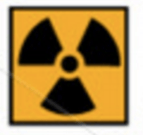
What safety symbol is this? 
a)
biohazard
b)
radiation
c)
toxic
d)
corrosive
46.
What does this symbol indicate?
a)
Corrosive substances are present; protect your hands.
b)
Wash your hands.
c)
Extreme temperatures are present; wear appropriate gloves.
d)
Bacteria are present.
47.
What safety Symbol is this?
a)
Flamable
b)
Oxidizing Agent
c)
No Open Flame
d)
Explosion
48.
a)
Poison
b)
Bio Hazard
c)
Environmental Hazard
d)
Not Drinking Water
49.
Ramone wants to know: does the distance a person kicks a soccer ball effect how well they will do on their math test.  What is the dependent variable?
a)
How far they kick the soccer ball
b)
who the person is
c)
how well they do on the math test
d)
Type of soccer ball.
50.
Marcos wants to know: Does the type of gasoline put in a car effect how fast the car can drive? What is the independent variable?
a)
Type of gasoline
b)
which car the gas is put into
c)
how fast the car can drive
d)
how much gas is put into the car
51.
Angelina set up an experiment to see how the mass of a ball affects the distance it rolls off a ramp. Identify the independent variable.
a)
Distance traveled by the ball
b)
Height of the ramp
c)
Mass of the ball
d)
Who set up the experiment (Ms. S, etc)
52.

Does the flavor of ice cream effect how fast the ice cream melts? The flavor of ice cream is the....

a)

independent variable

b)

dependent variable

53.

Does the type of shoe worn during a 30 meter dash affect the speed of the runner? The speed of the runner is the...

a)

independent variable

b)

dependent variable

54.

Which of the following is something you should NOT do in a lab?

a)

read the label of chemical bottles before using it

b)

pour unused chemicals back into their original bottles

c)

use lots of water to wash skin that has been splashed with chemicals

d)

take only as much as you need of shared chemicals

55.

An observation made with your senses

a)

Qualitative observation

b)

Quantitative observation

c)

temperature

d)

conclusion

56.

What is a manipulated variable (independent variable)?

a)

the variable that changes as a result of the experiment

b)

the variable that the scientist changes

c)

the evidence

d)

the quantitative observation

57.

Based on the graph, what happens to the solubility of CO2 as the temperature increases?

a)

it increases

b)

it stays the same

c)

it decreases

d)

what is a graph?

58.

What is a control?

a)

a variable that is unchanged to compare results to

b)

a changed variable

c)

a hypothesis

d)

a conclusion

59.

Which is NOT an SI base unit?

a)

second

b)

kilogram

c)

degree Celsius

d)

meter

60.

What is the correct representation of 702.2g in scientific notation?

a)

7.02 x 10³g

b)

70.22 x 101 g

c)

7.022 x 10² g

d)

70.22 x 10² g

61.

Which of the following shows 229.613 correctly rounded to four significant figures and in scientific notation?

a)

0.2296 x 10⁻³

b)

2.29 x 10³

c)

2.296 x 10⁻²

d)

2.296 x 10²

62.

How many significant figures (digits) are in the number 0.0034051?

a)

4

b)

5

c)

7

d)

3

63.
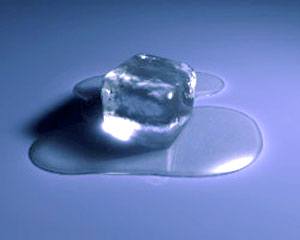
What kind of change is a phase change?
a)
Physical - it's still the same substance
b)
chemical - it's made of chemicals 
64.

What does a represent?

a)

Proton

b)

Neutron

c)

Electron

65.

What does b represent?

a)

Proton

b)

Neutron

c)

Electron

66.

What does c represent?

a)

Proton

b)

Neutron

c)

Electron

67.

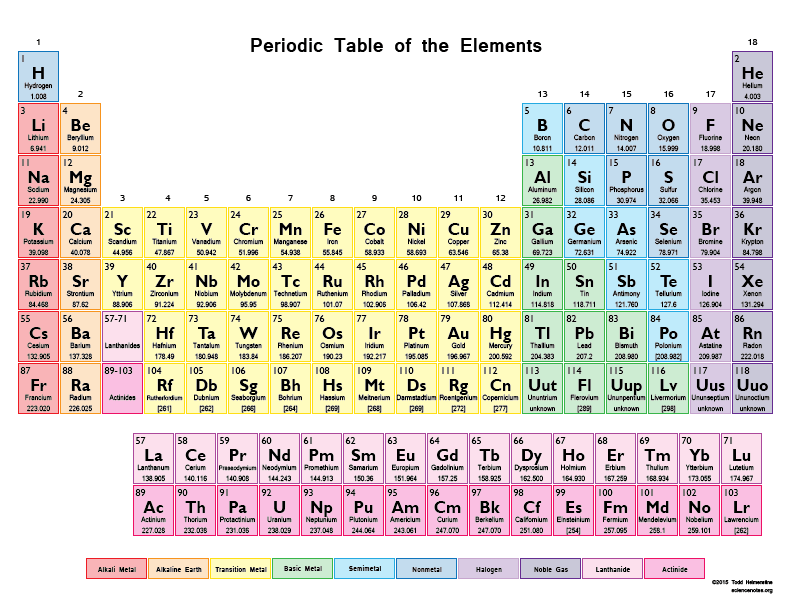
What is the atomic mass of this element?

a)

20

b)

60

c)

40

d)

41

68.

What is the symbol of this element?

a)

Calcium

b)

P

c)

Ca

d)

C

69.

protons

a)

negative charge, nucleus

b)

positive charge, shells

c)

positive charge , nucleus

d)

neutral charge, nucleus

70.

A pure substance that is a compound is made out of

a)

particles of more than one type of atom

b)

particles of the same type of atom

c)

a mixture of two or more substances that can be physically separated

71.

What is the number of protons that the element in this image contain?

a)

14

b)

7

c)

15

d)

18

72.
A mixture can be separated by ________ means. 
a)
physical
b)
chemical
73.
What is the atomic number?
a)
the number of protons
b)
the number of protons and neutrons
c)
the number of neutrons
d)
the number of protons and electrons
74.
What is the mass number defined as?
a)
the number of protons
b)
the number of protons and neutrons
c)
the number of neutrons
d)
the number of protons and electrons
75.
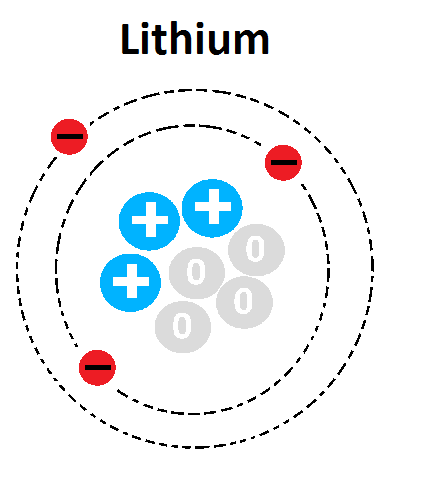
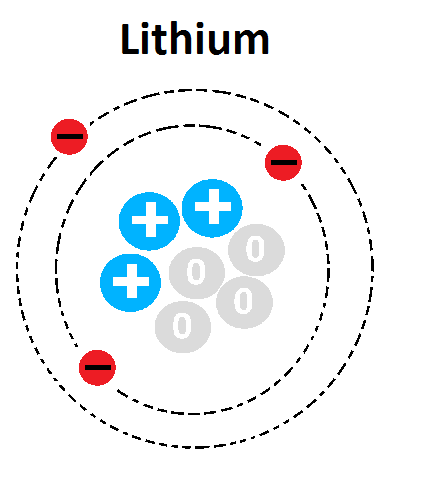
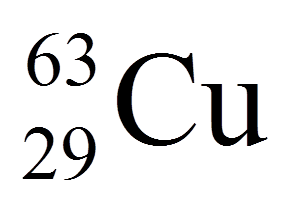
What is the atomic number of this atom?
a)
1
b)
3
c)
4
d)
7
76.

What is the mass number of this atom?

a)

1

b)

3

c)

4

d)

7

77.

An element has the mass number 12 and atomic number 6. The number of neutrons in it is:

a)

6

b)

10

c)

4

d)

8

78.

Atoms of the same element which have a different number of neutrons are called _________________.

a)

ions

b)

isotopes

c)

quarks

d)

molecules

79.

How many neutrons does C-14 [atomic #6] contain? (tap to enlarge the image)

a)

6

b)

7

c)

14

d)

8

80.

Isotopes have different numbers of

a)

protons

b)

neutrons

c)

electron

d)

properties

81.

The number in Kr-84 represents what about Krypton?

a)

The number of electrons

b)

The number of protons

c)

The mass number

82.

If an atom has 10 electrons, how many protons does it have?

a)

0

b)

1

c)

10

d)

5

83.
How many protons does He have?
a)
4
b)
2
c)
6
d)
0
84.
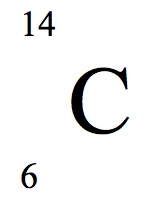
The top number in this isotope notation is
a)
the mass number
b)
the atomic number
c)
the atomic mass
d)
the neutron number
85.
The photo above shows the isotopic notation for which isotope?
a)
Carbon 12
b)
Carbon 13
c)
Carbon 14
d)
Carbon 15
86.
Which of the following is the proper equation for determining the number of neutrons for a given isotope?
a)
mass # - atomic #
b)
atomic mass - protons
c)
protons + electrons
d)
mass # + protons
87.

Which subatomic particle is used to identify the atom, as it never changes?

a)

protons

b)

neutrons

c)

electrons

88.

Atoms of the same element with differing number of electrons are called ________.

a)

elements

b)

atoms

c)

ions

d)

isotopes

89.

Which of the following describes an anion

a)

protons = 8 neutrons = 8 electrons = 8

b)

protons = 8 neutrons = 8 electrons = 10

c)

protons = 8 neutrons = 10 electrons = 8

d)

protons = 10 neutrons = 8 electrons = 8

90.

How many electrons are found in the following ion?

a)

3

b)

7

c)

10

d)

14

91.

How many electrons does the following have?

a)

2

b)

22

c)

10

d)

12

92.
How many significant figures: 1000 mL
a)
1
b)
2
c)
3
d)
4
93.

How many significant figures: 450 m

a)

3

b)

2

c)

1

d)

0

94.
Round 1047.78 to three sig figs
a)
104
b)
105
c)
1050
d)
1050.00
95.
Calculate 5.50 cm + 5.50 cm and give your answer with the appropriate number of significant figures.
a)
11 cm
b)
11.0 cm
c)
11.00 cm
d)
11.000 cm
96.
How many significant figures will be in the answer to the following question:
7.62 x 6.98 x 3.2645
a)
1
b)
2
c)
3
d)
4
97.
Calculate 12.34 + 1.234 + 0.1234
a)
13.6974
b)
13.697
c)
13.70
d)
13.7
98.

In division and multiplication, the answer should have the same number of significant figures as the

a)

number in the calculation with the fewest significant figures.

b)

number in the calculation with the most significant figures.

c)

average number of significant figures in the calculation.

d)

total number of significant figures in the calculation.

99.

Samples with masses of 0.12 g, 1.8 g, and 0.562 g are mixed together. The combined mass of the three samples, expressed to the correct number of significant figures, should be recorded as

a)

2.4 g.

b)

2.48 g.

c)

2.482 g.

d)

2.5 g.

100.
a)

6.5

b)

6.60

c)

6

d)

6.65

101.

length?

a)

3.2 cm

b)

3.12 cm

c)

3 cm

d)

3.219 cm

102.

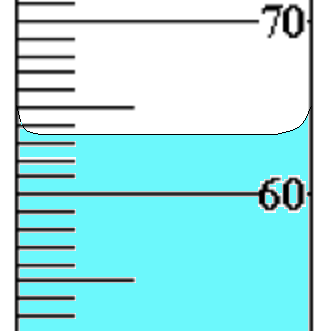
Volume?

a)

63.5 mL

b)

63 mL

c)

63.55 mL

d)

6 mL

103.
What is the volume of liquid in this graduated cylinder?
a)
43.0 mL
b)
43 mL
c)
43.05 mL
d)
44.5 mL
104.
What is the length of this line?
a)
5 cm
b)
4.300 cm
c)
4.30 cm
d)
4.3 cm
105.
Zed went to the store and bought a bag of chips.  He estimated there would be 350 chips in the package, but realized there were only 210 chips in that package.  What was his percent error?
a)
35%
b)
67%
c)
85%
d)
92%
106.
The students measured length during a science experiement, they got 12 cm. But the actual measurement was 14.25 cm. What was the percent error?
a)
15.79%
b)
18.75%
c)
2.25%
d)
18%
107.

Find the percent error. Round to the nearest tenth of a percent.

Actual speed: 38 mph

Estimated speed: 35 mph

a)

8.1%

b)

0.79%

c)

7.9%

d)

6.8%

108.

You know 1000 mg = 1 g. Convert 2.5 grams into milligrams. (Hint: You can Bunny Hop this one!)

a)

25 mg

b)

25,000 mg

c)

250 mg

d)

2500 mg

109.

How many kilograms of calcium are there in 173 pounds of calcium? (1 lb = 454 g; 1 kg = 1000 g)

a)

1.10 kg

b)

78.5 kg

c)

110 kg

d)

78500 kg

110.

How many minutes are in a school year, 187 days?

a)

269,280 min.

b)

16, 200 min.

c)

16, 156 min.

d)

269,000 min.

111.

A child weighs 40.0 lb and is to receive 0.10 mg of an antibiotic for each kg of body weight. How many milligrams of the antibiotic shall the child receive? (1 kg = 2.2 lbs)

a)

18.2 mg

b)

182 mg

c)

0.182 mg

d)

1.82 mg

112.
What unit should be in the denominator of the conversion factor?
a)
yards
b)
leagues
c)
feet
d)
fathoms
113.
What unit should be in the numerator of the conversion factor?
a)
yards
b)
leagues
c)
feet
d)
fathoms
114.
40 cm = ______ mm
( 1 cm = 10 mm)
a)
4000
b)
40
c)
400
d)
None of the Above
115.

6 kg = _____ g

a)

6

b)

6000

c)

600

d)

.006

116.
Convert 17 m to cm:
(1 m = 100 cm)
a)
0.17 cm
b)
0.017 cm
c)
1,700 cm
d)
170 cm
117.
A scientist is performing an experiment to determine the melting point of a new substance. Which action could increase the likelihood of obtaining accurate results? 
a)
repeating the experiment three times
b)
experimenting with multiple substances
c)
writing out the procedure after the experiment
d)
using three types of thermometers
118.
How does repeating an expirement improve the likelihood of obtaining accurate results?
a)
data can be compared
b)
time can be decreased
c)
equipment can be added
d)
procedures can be changed
119.
Science or Pseudoscience:  Personal bias and the opinion of the scientist.
a)
Science
b)
Pseudoscience
120.
In order for an explanation to be considered scientific, it must be based on ____________.
a)
an inference
b)
a conclusion
c)
past experience
d)
evidence
121.

If experimental findings are not reproducible,

a)

it is an indication of scientific fraud.

b)

the results are considered valid, but not usable.

c)

the results are not considered valid.

d)

It's an indication that scientific method was not followed.

122.
Which is not a pseudoscience?
a)
Religion
b)
Astrology
c)
Superstitions
d)
Ecology
123.
Which one the following is NOT a branch of science, but a pseudoscience because it not testable, repeatable and observable by scientific standards. 
a)
A. astronomy: study of physical objects (such as stars, galaxies, planets, moons, asteroids, comets and nebulae) and processes (such as supernovae explosions, gamma ray bursts, and cosmic microwave background radiation)
b)
B. physics: the study of properties of matter and energy (mechanics, heat, light and other radiation, sound, electricity, magnetism, and the structure of atoms)
c)
C. biology: the study of living organisms
d)
D. astrology: the study of how the positions of the stars and movements of the planets have a supposed influence on events and on the lives and behavior of people
124.
24.1% of all the isotopes of a an element have a mass of 75.23 amu, 48.7% have a mass of 74.61 amu, and 27.2% have a mass of 75.20 amu.
What is the average mass of this element?
a)
74.92 amu
b)
24.97 amu
c)
75.01 amu
d)
74.51 amu
125.

The atomic mass of an element is the ___.

a)

average of the mass number and the atomic number for the element

b)

weighted average of the masses of the isotopes of the element

c)

total mass of the isotopes of the element

d)

total number of subatomic particles in the nucleus

126.

Calculate the average atomic mass of the element iron (Fe) using the following data:

[Isotope / % abundance]

[Iron 54 / 6% ] [Iron 56 / 92% ] [ Iron 57 / 2% ]

a)

53.7 amu

b)

54.9 amu

c)

5592.0 amu

d)

55.9 amu

127.
4.35% of all X atoms have a mass of 39.946 amu. 83.79% have a mass of 41.941 amu, 9.50% have a mass of 42.941 amu, and 2.36% have a mass of 43.939 amu. What is the average atomic mass of atom X?
a)
41.97 amu
b)
42.19 amu
c)
10.43 amu
d)
40.04 amu
128.
If an atom contains exactly three protons, then it's an atom of _____
a)
lithium
b)
gold
c)
nitrogen
d)
carbon
129.
How many electrons are in an atom that has an atomic number of 34, an atomic mass of 74 and a charge of -2?
a)
34
b)
36
c)
2
d)
40
130.
The molar mass of an element is equal to its...
a)
Atomic mass
b)
Atomic number
c)
Oxidation number
d)
Valence electrons
131.
What is the molar mass of table salt (NaCl)?
a)
116.886 g/mol
b)
35.453 g/mol
c)
22.990 g/mol
d)
58.443 g/mol
132.
How many particles are in a mole?
a)
602
b)
602 million
c)
602 moles
d)
6.02 x 10²³
133.

Calculate the molar mass of Ba(C2H3O2)2

a)

255.3 g/mol

b)

237.3 g/mol

c)

228.3 g/mol

d)

196.3 g/mol

134.

Calculate the molar mass of NH4NO2

a)

50 g/mol

b)

60 g/mol

c)

64 g/mol

d)

78 g/mol

135.
Molar mass is in units of ________.
a)
grams
b)
grams/mole
c)
mole
d)
moles/gram
136.
Which would have more atoms?
a)
1 mole of Li
b)
1 mole of Au
c)
1 mole of Si
d)
None, all are equal
137.
A certain photon of light has a wavelength of 4.22x10⁻⁷nm. What is the frequency? (v=c/λ)
a)
7.11x10¹⁴ Hz
b)
7.11Hz
c)
1.41x10⁻¹⁵
d)
-1.41x10¹⁵
138.
A wave with a large wavelength will have a ______ frequency and _____ energy
a)
high, low
b)
high, high
c)
low, high
d)
low, low
139.
Select the correct order of waves on the EMS 
a)
Radio, Micro, Infra, Visible, Ultra, X-ray, Gamma
b)
Gamma, X-ray, Ultra, Vis, Infra, Micro, Radio
c)
Vis, Micro, Infra, Ultra, X-ray, Gamma, Radio
d)
Micro, Radio, Vis, Infra, Ultra, X-ray, Gamma
140.
Which has the SHORTEST wavelength and, therefore, the highest frequency/most energy
a)
Radio waves
b)
Ultraviolet Rays
c)
Gamma Rays
d)
X-rays
141.
What is the frequency of a light that has the Energy of 2.84x10⁻¹⁹. (v=E/h)
a)
4.30x10¹⁴Hz
b)
4.30x10⁻¹⁴Hz
c)
4.30x10-54Hz
d)
4.30x1054Hz
142.
The energy for a quantum of light is 2.84x10⁻¹⁹J. What is the wavelength. (λ=hc/E)
a)
6.97x10-45m
b)
6.97x1045m
c)
6.97x10⁻⁷m
d)
6.97x10⁷m
143.
What is the Energy of a blue light with the frequency of 6.91x10¹⁴Hz? (E=hv)
a)
4.56x1049J
b)
9.55x10-49J
c)
4.56x10⁻¹⁹J
d)
5.82x10¹⁹J
144.
What part is the arrow pointing to?
a)
Crest
b)
Trough
c)
Amplitude
d)
Wavelength
145.
What is represented by the blue lines?
a)
Trough
b)
Crest
c)
Wavelength
d)
Amplitude
146.
What part is represented by the blue lines?
a)
Crest
b)
Resting Point
c)
Wavelength
d)
Amplitude
147.
Which wave has a higher frequency?
a)
A
b)
B
148.
Which wave has a longer wavelength?
a)
A
b)
B
149.
If electrons in an atom have the lowest possible energies, the atom is in the
a)
ground state.
b)
inert state.
c)
excited state.
d)
radiation-emitting state.
150.

When an electron transitions from a higher energy level to a lower energy level....

a)

The electron collapse to the nucleus

b)

The electron loses all its energy

c)

Light is emitted

d)

Light is absorbed by the protons