wayground logo

Free Printable Worksheets

Font size

S
M
L
XL
Worksheets

Physical Science Midterm Exam Review

Total questions: 152

Worksheet time: 3hrs 16mins
Name
Class
Date
1.
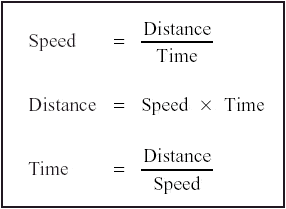
What is the formula to calculate speed?
a)
Speed = time/distance
b)
Speed = distance/time
c)
Speed = distance x time
d)
Speed = time x distance
2.
Which of the following is a unit for acceleration?
a)
km/s
b)
m/s2
c)
mi/hr
d)
ft
3.
Can be measured in meters per second (m/s)
a)
Distance
b)
Time
c)
Speed
d)
Acceleration
4.
What is velocity?
a)
the quickness of an object
b)
the location of an object
c)
acceleration
d)
speed in a specific direction
5.
When a car goes around a corner at 20 mph, why do we say it  accelerates?
a)
The car is accelerating because of the velocity is constant
b)
The car accelerates because it's going 20 mph
c)
Cars always accelerate when they are in motion
d)
The car is accelerating because it's changing direction
6.
Calculate the average speed (in meter/sec) if a cheetah runs 180 meters in 10 seconds.
a)
198 m/sec
b)
170 m/sec
c)
12 m/sec
d)
18 m/sec
7.
Of the following, which is a vector?
a)
Mass
b)
Time
c)
Speed
d)
Velocity
8.
Acceleration is defined as the CHANGE in 
a)
time it takes for one place to move to another place. 
b)
velocity of an object.
c)
distance divided by the time interval 
d)
velocity divided by the time interval 
9.
Acceleration only takes place when things speed up. 
a)
True
b)
False
10.
In each of the following cases, determine where the car has no acceleration ?
a)
A car shortly after a stoplight turns green.
b)
A car approaching a red light
c)
A car with the cruise control set at 80 km/h
d)
A car turning a curve at a constant speed
11.
Acceleration can be classified as _______________
a)
Speeding up
b)
Slowing Down
c)
Changing directions
d)
All of the above
12.

In which of the following situations would a car be speeding up while traveling forward?

a)

positive velocity and positive acceleration

b)

positive velocity and negative acceleration

c)

negative velocity and positive acceleration

d)

negative velocity and negative acceleration

13.

In which of the following situations would a car be slowing down while traveling backwards?

a)

positive velocity and positive acceleration

b)

positive velocity and negative acceleration

c)

negative velocity and positive acceleration

d)

negative velocity and negative acceleration

14.
What is the formula to calculate speed?
a)
S = t/d
b)
S = d/t
c)
S = d x t
d)
S = t x d
15.
What is speed?
a)
how far you go
b)
how much distance is covered over a period of time
c)
how fast you accelerate
d)
the change in the location of a object
16.
What is velocity?
a)
the quickness of an object
b)
the location of an object
c)
acceleration
d)
speed in a specific direction
17.
A runner races in the 100 meter dash.  It takes her 10 seconds to finish.  What is her average speed?
a)
10 m/s
b)
1000 m/s
c)
100 seconds
d)
10 seconds
18.
Alan travels 100 km in 5hrs. Find his average speed in km/h
a)
5km/hr
b)
10km/hr
c)
50km/hr
d)
20km/hr
19.
What two measurements are necessary for calculating speed?
a)
Mass and time
b)
Temperature and mass
c)
Mass and distance
d)
Distance and time
20.
Velocity is both ____ and _____. 
a)
speed , direction 
b)
direction, mass
c)
volume, density 
d)
direction, magnitude 
21.
Km (kilometers) is a unit for...
a)
Speed
b)
Distance
c)
Time
d)
Direction
22.
65mi/hr South is an example of...
a)
Speed
b)
Velocity
c)
Acceleration
d)
Direction
23.
An object is _____ if its position changes relative to another object.
a)
in motion
b)
at reset
c)
a frame of refence
d)
magical
24.

Which is a velocity?

a)

5m/s

b)

8m/s/s

c)

12m/s N

d)

15m/s

25.
What is the formula to calculate speed?
a)
S = t/d
b)
S = d/t
c)
S = d x t
d)
S = t x d
26.

A runner races in the 100 meter dash. It takes her 10 seconds to finish. What is her average speed?

a)

10 m/s

b)

1000 m/s

c)

100 seconds

d)

10 seconds

27.
Which of the following is a unit of speed ?
a)
sec
b)
mi
c)
m/s
d)
min
28.
Which of the following is a unit of distance ?
a)
miles/hr
b)
mi
c)
s
d)
min
29.

Speed -

a)

A measure that gives rate of change and position

b)

A measure that dissolves to one unit

c)

A measure of distance an object travels per unit of time.

d)

A measure of distance an object travels per unit of measurement.

30.

What is the speed of a bus that travels 250 km in 2 hours?

Formula ?

Answer ?

a)

S= D/T

125km/hr

b)

S= T/D

521km/meters

c)

S=D/T Km/hr

d)

All fo the above

31.
Calculate these 3 car's speeds, then rank them in order of fastest to slowest, with 3 being the fastest car and 1 the slowest car.
Car A- distance: 4 meters, time: 2 sec
Car B- distance: 2 meters, time: 2 sec
Car C- distance: 8 meters, time: 2 sec
a)
Car A= 1
Car B= 2
Car C = 3
b)
Car A = 2
Car B= 1
Car C= 3
c)
Car A= 3
Car B= 1
Car C = 2
d)
Car A = 3
Car B= 2
Car C= 1
32.

Motion is

a)

a word that rhymes with ocean.

b)

an object's change in its speed to a reference point.

c)

an object's change in position to a reference point.

d)

an object's change in position to its rate of speed.

33.

A reference point is

a)

the object that appears to stay in place.

b)

the number to the right of the decimal point.

c)

the object that appears to be in motion.

d)

is calculated by using speed, distance, and time.
34.
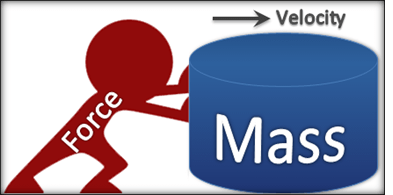
What law is best described by inertia?
a)
1st
b)
2nd
c)
3rd
35.
a)
1st
b)
2nd
c)
3rd
36.
a)
1st
b)
2nd
c)
3rd
37.
a)
1st
b)
2nd
c)
3rd
38.
a)
1st
b)
2nd
c)
3rd
39.
a)
1st
b)
2nd
c)
3rd
40.
Acceleration is due to a force put on an objects mass. 
a)
1st
b)
2nd
c)
3rd
41.
F = MxA
a)
1st
b)
2nd
c)
3rd
42.
Object at rest stays at rest.
a)
1st
b)
2nd
c)
3rd
43.
Action/Reaction
a)
1st
b)
2nd
c)
3rd
44.
Equal and Opposite
a)
1st
b)
2nd
c)
3rd
45.
A magician pulls a tablecloth out from under dishes and glasses on a table without disturbing them.
a)
Newton's 1st Law
b)
Newton's 2nd Law
c)
Newton's 3rd Law
46.
Rockets are launched into space using jet propulsion where exhaust accelerates out from the rocket and the rocket accelerates in an opposite direction.
a)
The Law of Inertia
b)
The Law of Acceleration
c)
The Law of Conservation of Momentum
47.
Pushing a child on a swing is easier than pushing an adult on the same swing, because the adult has more inertia.
a)
Newton's 1st Law
b)
Newton's 2nd Law
c)
Newton's 3rd Law
48.
Gravity attracts all objects towards one another.
a)
False
b)
True
c)
It depends
49.
Every object in the universe attracts every other object.
a)
True
b)
False
50.
Any object with mass has gravity.
a)
True
b)
Sometimes
c)
False
d)
Never
51.
As distance between two objects increase the pull of gravity 
a)
Increases
b)
Decreases
c)
Stays the same
52.
Which of the following never changes no matter where in the universe?
a)
weight
b)
force
c)
mass
d)
pounds
53.
What is the SI unit used to measure force? 
a)
pounds 
b)
grams 
c)
newtons 
d)
friction
54.
The amount of matter in an object is 
a)
pressure
b)
weight
c)
mass
d)
force
55.
Velocity is both ____ and _____. 
a)
speed , direction 
b)
direction, mass
c)
volume, density 
d)
direction, magnitude 
56.
The unit we use to measure acceleration is ___. 
a)
meters / second 
b)
meters 
c)
seconds 
d)
meters / second / second 
57.

In which case is work being done?

a)

A

b)

B

c)

C

d)

D

58.

Three cars (car F, car G, and car H) are moving with the same speed and slam on their brakes. The most massive car is car F, and the least massive is car H. If the tires of all three cars have identical coefficients of kinetic friction with the road surface, which car travels the longest distance to skid to a stop?

a)

They all travel the same distance in stopping.

b)

Car F

c)

Car G

d)

Car H

59.

What happens when a force acts upon an object and causes it to move?

(a)  

60.

It is the amount of work done per unit of time

(a)  

61.

What is the work formula?

(a)  

62.

1 newton-meter is equal to __________ of work.

a)

1 J

b)

1 N

c)

1 m

d)

1 kg

63.

Unit of measure of Power

(a)  

64.

How do you compute for Power?

(a)  

65.
Energy of motion is which type of energy?
a)
Potential
b)
Kinetic
c)
Sound
d)
Gravitational
66.
What kind of energy is represented in this picture?
a)
Thermal
b)
Potential
c)
Nuclear
d)
Mechanical
67.
What kind of energy does this device use?
a)
Chemical
b)
Electrical
c)
Thermal
d)
Chemical
68.
What kind of energy is represented in the picture?
a)
Thermal
b)
Chemical
c)
Sound
d)
Nuclear
69.
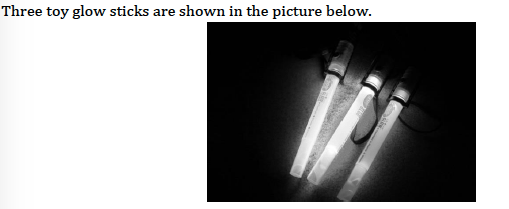
The glow sticks produce light for a short amount of time. The light from the glow stick is a conversion from what to what?
a)
thermal to light
b)
gravitational to potential
c)
radiant to electrical
d)
chemical to light
70.
On a roller coaster, where is maximum potential energy?
a)
At the bottom of a big hill
b)
When going around a corner
c)
When going upside down
d)
At the top of a big hill
71.
On a roller coaster, where is maximum kinetic energy?
a)
At the bottom of a big hill
b)
When going around a corner
c)
When going upside down
d)
At the top of a big hill
72.
Energy that is stored in bonds between atoms is:
a)
Mechanical energy
b)
Chemical energy
c)
Kinetic energy
d)
Nuclear energy
73.
Energy that comes from the nucleus of an atom. A form of potential energy.
a)
chemical energy
b)
Nuclear energy
c)
Sound energy
d)
Electrical energy
74.
According to which law of energy, energy can't be created or destroyed?
a)
First law of motion
b)
The law of tacos
c)
Laws of Energy
d)
law of conservation of energy
75.
The ability to do work is
a)
power
b)
energy
c)
thermal
d)
kinetic
76.
Heat energy is also called
a)
electrical energy
b)
chemical energy
c)
light energy
d)
thermal energy
77.
Sound energy needs a
a)
medium
b)
vacuum
c)
chemical
d)
light
78.
What type of energy includes both kinetic and potential energy?
a)
mechanical energy
b)
chemical energy
c)
heat energy
d)
sound energy
79.
Stored energy is called ______ energy.
a)
Kinetic
b)
Potential
c)
Pacific
d)
Safe
80.

Steam is an example of _____________energy.

a)

light

b)

thermal

c)

sound

d)

electrical

81.

Potential energy depends on ____________ & ______________.

a)

mass, speed

b)

mass, position

c)

speed, position

d)

mass, weight

82.

Kinetic energy depends on _____________ & _____________.

a)

mass, speed

b)

mass, position

c)

mass, weight

d)

speed, distance

83.

A windmill is an example of ________________energy.

a)

thermal

b)

mechanical

c)

light

d)

electrical

84.
True or false: as you move along the spectrum, radio to gamma waves, the wavelengths decrease in size (get smaller)
a)
true
b)
false
85.
Select the correct order of waves on the EMS from the longest wavelength to the shortest wavelength
a)
Radio, Micro, Infra, Visible, Ultra, X-ray, Gamma
b)
Gamma, X-ray, Ultra, Vis, Infra, Micro, Radio
c)
Vis, Micro, Infra, Ultra, X-ray, Gamma, Radio
d)
Micro, Radio, Vis, Infra, Ultra, X-ray, Gamma
86.
Which has the LONGEST wavelength and, therefore, the lowest frequency/energy
a)
Gamma Rays
b)
Radio Waves
c)
Visible Light
d)
Infrared rays
87.
Which section of the spectrum is the ONLY one we can see?
a)
X-rays
b)
Visible Light
c)
Gamma Rays
d)
Ultraviolet Rays
88.
How are electromagnetic waves different from other waves? 
a)
They have very short wavelengths 
b)
They transmit energy instead of matter 
c)
They can travel through empty space
d)
They can change direction by reflection 
89.
Which of the following electromagnetic waves has the lowest energy?
a)
gamma ray
b)
infrared wave
c)
visible light wave
d)
microwave
90.
The shortest wavelength in visible light is______.
a)
violet
b)
red
c)
blue
d)
yellow
91.
In ____shift, the galaxies appear _____ in color b/c they are moving away from us.
a)
blue; red
b)
red; red
c)
red; blue
d)
blue; blue
92.
Two like charges:
a)
 neutralize each other.
b)
repel each other. 
c)
must be neutrons. 
d)
attract each other.
93.
The charge of an electron is:
a)
Positive. 
b)
Negative. 
c)
Electrons have no charge
94.
Which of these is the proton?
a)
A
b)
B
c)
C
95.
An object that has more electrons than protons would have what kind of charge?
a)
Positive
b)
Negative
96.
An object that is positively charged contains more protons than electrons.
a)
True
b)
False
c)
I need more information
97.
Electric charges that are alike _______ each other.
a)
Attract
b)
Repel
98.
Plastic is an example of _______.
a)
an insulator
b)
a conductor
99.
A metal spoon is an example of _____.
a)
a conductor
b)
an insulator
100.
What types of charges attract?
a)
Positive and Positive
b)
Positive and Neutral
c)
Negative and Neutral
d)
Positive and Negative
101.
A negatively charged particle has
a)
more protons than electrons.
b)
more electrons than protons
c)
an equal number of protons and electrons
102.
A particle that has more protons than electrons is 
a)
positively charged
b)
negatively charged
c)
neutral
103.
The push or pull between charged objects is an
a)
electric force
b)
electric discharge
c)
electric field
104.
Opposite charges
a)
attract
b)
have no force
c)
repel
105.
Like charges
a)
attract
b)
repel
c)
have no force
106.
Electrically neutral particles
a)
repel
b)
attract
c)
have no force
107.
What is located in the nucleus of the atom? 
a)
protons and neutrons
b)
electrons and protons
c)
electrons and neutrons
108.
What type of charge do these balloons have?
a)
like charges
b)
opposite charges
109.
Gravity attracts all objects towards one another.
a)
False
b)
True
c)
It depends
110.
Any object with mass has gravity.
a)
True
b)
Sometimes
c)
False
d)
Never
111.
The four fundamental forces of nature are: 
a)
Electromagnetism, Gravity, Strong Nuclear, Weak Nuclear
b)
Gravity, Strong Nuclear, Weak Nuclear, Medium Nuclear
c)
Normal Force, Force due to gravity, Magnetism, Nuclear 
d)
Nuclear, Electricity, Gravity, Atomic 
112.
Rank the four fundamental forces of nature in order from weakest to strongest:  
a)
Electromagnetism, Gravity, Strong Nuclear, Weak Nuclear
b)
Weak Nuclear, Gravity, Electromagnetism, Strong Nuclear
c)
Gravity, Weak Nuclear,  Electromagnetism, Strong Nuclear
d)
Weak Nuclear, Electromagnetism, Gravity, Strong Nuclear
113.
Gravity is due to:
a)
the pull between Earth and the moon.
b)
the pull between the Sun and Earth. 
c)
the pull between any objects with mass. 
d)
the pull between atomic nuclei. 
114.
The weakest of the four fundamental forces is: 
a)
Gravity 
b)
Electromagnetism
c)
Strong Nuclear 
d)
Weak Nuclear 
115.
The strongest of the four fundamental forces is: 
a)
Gravity 
b)
Electromagnetism
c)
Strong Nuclear 
d)
Weak Nuclear 
116.
Gravity has a range that is ____________. 
a)
Short
b)
Long 
c)
Infinite
d)
Variable
117.
When an atom undergoes radioactive decay,  the energy that is released is due to: 
a)
Gravity 
b)
Electromagnetism 
c)
Strong Nuclear 
d)
Weak Nuclear 
118.
An apple falling from a tree is an example of the force of ____________. 
a)
Gravity 
b)
Electromagnetism 
c)
Strong Nuclear 
d)
Weak Nuclear 
119.
An electron moving in wire is an example of  ____________. 
a)
Gravity 
b)
Electromagnetism 
c)
Strong Nuclear 
d)
Weak Nuclear 
120.
_____________ is the force that binds protons together in the nucleus of an atom. 
a)
Gravity 
b)
Electromagnetism 
c)
Strong Nuclear 
d)
Weak Nuclear 
121.
What is force?
a)
A push exerted on an object
b)
A push or pull exerted on an object
c)
A pull exerted on an object
d)
Nothing
122.
Which is a factor that affects the strength of gravitational, magnetic, and electrostatic force fields?
a)
Mass
b)
Volume
c)
Distance
d)
Density
123.
Distance and mass are two factors that affect
a)
Gravitational Force Fields
b)
Magnetic Force Fields
c)
Electric Force Fields
d)
Electrostatic Force Fields
124.

Which of the following is false?

a)

Energy is the product of an activity

b)

Energy cannot be created or destroyed

c)

When gravity pulls an object towards the ground, energy is transferred mechanically

d)

A car's engine produces useful kinetic energy and wasted thermal energy

125.

As the cyclist accelerates, the _______________________ energy store in the cyclist’s body decreases and the _______________________ energy of the cyclist increases.

a)

chemical; kinetic

b)

gravitational potential; kinetic

c)

elastic potential; kinetic

d)

kinetic; gravitational potential

e)

kinetic; chemical

126.
Open systems like the oven allows energy to enter and leave
a)
True
b)
False
127.
A system can be defined as
a)
A collection of parts that work together to complete a purpose
b)
A system
c)
A piece of a whole
d)
A group that individually does work
128.
What types of systems are there?
a)
Mechanical and Electrical Systems
b)
Inside and Outside Systems
c)
Open and Closed Systems
d)
Human and Machine Systems
129.
This type of system does not interact with the world around it. It does all the work by itself
a)
Closed System
b)
Open System
130.

What is the ultimate source of energy for most organisms?

a)

The Sun

b)

The Earth

c)

Plants

d)

Producers

131.
In the food chain, which of the pictures is a PRODUCER?
a)
Sun
b)
Plants
c)
Ladybug
d)
Chicken
132.

Which animal is the top predator?

a)

hawk

b)

lizard

c)

snake

d)

grass

133.

Which animal is not the top predator but, a predator to a mouse?

a)

hawk

b)

rabbit

c)

snake

d)

grass

134.
All living things are made of _______, and all living things need _______. 
a)
matter, plants
b)
energy, matter
c)
matter, energy
135.
Matter can by _____________ over and over again, and energy is needed for recycling matter. ___________ is not recycled, but it is converted from one form to another.
a)
destroyed,  matter
b)
recycled, energy
c)
destroyed, energy
136.
During ____________, _____________ convert light energy into the chemical energy in sugar molecules. 
a)
chemosynthesis, consumers
b)
chemosynthesis, producers
c)
photosynthesis, producers
137.

The Earth is considered a (a)   system because only energy can enter and exit and matter cannot enter or exit.

138.

Why is a spaceship like the Earth?

a)

They are both closed systems that contain a finite amount of matter that needs to be cycled.

b)

They both contain biotic and abiotic components.

c)

They are both open systems that are able to transfer both matter and energy within our solar system.

d)

They cannot be compared because they are just too different.

e)

There is a theory that the Earth is flat and this makes spaceships a figment of our imagination.

139.

What is transported by a wave?

a)

air

b)

energy

c)

matter

d)

particles

140.
travels through solids fastest because the molecules are closer together
a)
speed of sound
b)
wavelength
c)
frequency
d)
amplitude
141.
The number of wavelengths that pass a point each second
a)
frequency
b)
wavelength
c)
pitch
d)
amplitude
142.
Material (matter) through which a wave travels
a)
medium
b)
Doppler Effect
c)
sound
d)
pitch
143.
How high or low a sound is; depends on the frequency (greater frequency= higher pitch)
a)
pitch
b)
frequency
c)
sound
d)
medium
144.
A wave in which the vibration is in the same direction as that in which the wave is traveling; sound waves
a)
longitudinal wave
b)
ocean wave
c)
transverse wave
d)
mechanical wave
145.
The part of a longitudinal wave where the particles of the medium are close together.
a)
rarefaction
b)
compression
c)
crest
d)
trough
146.
A part in a longitudinal wave where the particles are spread apart
a)
compression
b)
rarefaction
c)
crest
d)
trough
147.
A reflected sound wave
a)
frequency
b)
pitch
c)
echo
d)
rarefaction
148.
A wave that requires a medium through which to travel
a)
mechanical wave
b)
chemical wave
c)
electromagnetic wave
d)
pitch
149.

Sound is produced by -----

a)

Heat energy

b)

Low temperatures

c)

Vibrations

d)

Friction

150.
Highest point of a wave
a)
crest
b)
trough
c)
wavelength
d)
frequency
151.

The number of wavelengths that pass a point each second

a)

frequency

b)

wavelength

c)

pitch

d)

amplitude

152.

A wave produced when a sound is made that is responsible for carrying the sound to the ear.

a)

Sound

b)

Pitch

c)

Amplitude

d)

Sound Wave