
 Worksheets
Test Review!
Total questions: 53
Worksheet time: 1hrs 14mins

What is the role of the Sun in the process of Photosynthesis?
The sun delivers food to the plant
The sun is the main source of Energy for the plant
The sun lets the plant go through cellular respiration

What is the role of the chlorophyll in the process of photosynthesis?
Chlorophyll releases energy from the sunlight
Chlorophyll absorbs sunlight to make food for plants
Chlorophyll releases carbon dioxide from the plant

What is the role of water in the process of Photosynthesis?
Water helps convert oxygen into carbon dioxide
water is used to send nutrients and oxygen through the plant
water is used to excrete waste from the plant

Which of these are starting materials for Photosynthesis? (Select all that apply)
Sunlight
ATP Energy
Water
Oxygen
Carbon Dioxide

Which of the following correctly explains Photosynthesis?
Oxygen is absorbed by plants - Carbon Dioxide is released
Carbon Dioxide is absorbed by plants - Oxygen is released
Which organelle is responsible for Cellular Respiration? Which is responsible for Photosynthesis?
Nucleus - C.R and Chloroplasts - P.S
Chloroplasts - C.R and Mitochondria - C.R.
Mitochondria - C.R and Chloroplasts - P.S.
Cell Wall - C.R. and Chloroplasts - P.S.

Take a look at the model of Photosynthesis.
What is incorrect about it?
Water and Oxygen
Carbon Dioxide and Oxygen
Carbon Dioxide and Sugar
Carbon Dioxide only
No incorrect labels on the picture

Take a look at the model of Cellular Respiration.
What is incorrect about the model?
Everything
Cellular Respiration does not occur in the Mitochondria
Oxygen is absorbed and Carbon Dioxide is Released
The Energy created by Cellular Respiration is sunlight energy

What is the correct formula for Photosynthesis?
Sun + Oxygen + Carbon Dioxide --> Water + Glucose
Sun + Water + Carbon Dioxide --> Oxygen + Glucose
Glucose + Oxygen --> Water + Carbon Dioxide + Energy
None of these are correct

What is the correct formula for Cellular Respiration
Glucose + Carbon Dioxide --> Water + Oxygen + Energy
Sun + Water + Carbon Dioxide --> Oxygen + Glucose
Glucose + Oxygen --> Water + Carbon Dioxide + Energy
None of these are correct
The process of Cellular Respiration adds carbon to the atmosphere. Which living organisms go through this process?
only Animals release CO2 when they breathe out
only Plants release CO2 when they breathe out
Both Animals and Plants release CO2 when they breathe out
all non-living organisms release CO2 from their cells

How do Autotrophs get the energy they need for life processes?
They eat other organisms for energy
They use the nutrients in the soil for energy
They do not need energy for life processes
They convert sunlight into food that they use for energy

How do Heterotrophs get the energy they need for life processes?
They eat other organisms for energy
They find ways to survive on just water
They do not need energy for life processes
They convert sunlight into food that they use for energy
According to the Law of Conservation of Energy....
During the process of Photosynthesis, the sun's energy is....
The sun's energy is destroyed when absorbed into the plant
The sun's energy is created inside the plant
The sun's energy is converted into chemical energy
The sun's energy is converted into light energy

Which of these paths is a logical path that Carbon would take while moving around our Earth.
Atmo --> Plant --> Animal --> Ground
Atmo --> Animal --> Plant --> Ground
Ground --> Animal --> Plant --> Atmo

Which one of these does not add CO2 to the atmosphere?
cooking with gas
planting trees
burning wood
riding in a bus

Organisms that do not decompose can be buried and become what?
water
nutrients
air
fossil fuels

Carbon can be found in...?
The atmosphere
Inside of the Earth
Fossil fuels
All of the above!

Carbon enters the soil through dead plant or animal matter.
Decomposition
Respiration
Photosynthesis
Diffusion

The primary source of energy for all food chains starts with the _____________
Plant / Producer
Sun
Deer / Consumer
Water

Which level contains the least amount of available energy?
A
B
C
D

Giraffes eat only plants.
herbivore
carnivore
omnivore
decomposer

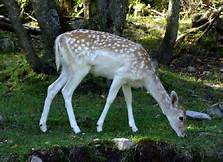
What is this?
herbivore
carnivore
omnivore
decomposer
Science is durable (reliable) but can ____________________over time with new evidence or new information
be proven wrong
be proven correct
change
Tom is creating an experiment to see what food his pet lizard likes the best. He creates an experiment in which he offers his lizard a choice of crickets or mealworms. He records how much of each choice is eaten each day. At the end of two weeks, Tom finds the lizard has eaten a few more mealworms than crickets. What is the independent variable?
type of food
type of lizard
how much the lizard ate
which food the lizard liked best
Ben makes five paper helicopters with different wing lengths. He drops them the same way from a height of two meters for five trials each. He records the amount of time it takes for each helicopter to fall to the ground.
What is the dependent variable?
Dropping the same way
Wing Length
Amount of time it takes the helicopter to hit the floor
Dropping from the same height
Ben makes five paper helicopters with different wing lengths. He drops them the same way from a height of two meters for five trials each. He records the amount of time it takes for each helicopter to fall to the ground.
What is the independent variable?
Dropping the same way
Wing Length
Amount of time it takes the helicopter to hit the floor
Dropping from the same height
Cindy wanted to find out how the amount of sunlight affects the growth of plants. She placed two tomato plants in 10 inch pots with potting soil and watered them ¼ cup each day. One plant was placed under a cardboard box and one was placed in the sunlight. She measured the growth of the plant each week for three weeks.
What is the dependent variable?
Using the same type of plant
Each plant was placed in a 10 inch pot
The growth of the plant
One plant is in the sunlight and the other is under a box
Zach wants to determine if the amount of time spent on social media has an effect of grades. What is the dependent variable?
popularity
computer skills
time on social media
grades
Alisson does an experiment to see how long it takes for a teaspoon of sugar to dissolve in a cup of water. She does this three times and then asks Carpaur to copy her experiment to see if he gets similar results. This is an example of what?
repetition
replication
Ms. Hayward conducts a study to see which period students are most late to. She does this for five days. This is an example of...
repetition
replication
torturing students

The purpose of this study was to discover
if water depth affects temperature
If water depth affects the number of fish
If temperature affects the depth of water


Which statement below fits the data table?
A pH of 6 shows the best plant growth
A pH of 4 grows the best plants
A pH of 5 grows the best plants
a pH of 4 or 5 grew the best plants



In the energy pyramid here, how much of the energy in each level gets lost as heat or used by the organism for survival?
80%
90%
10%
20%
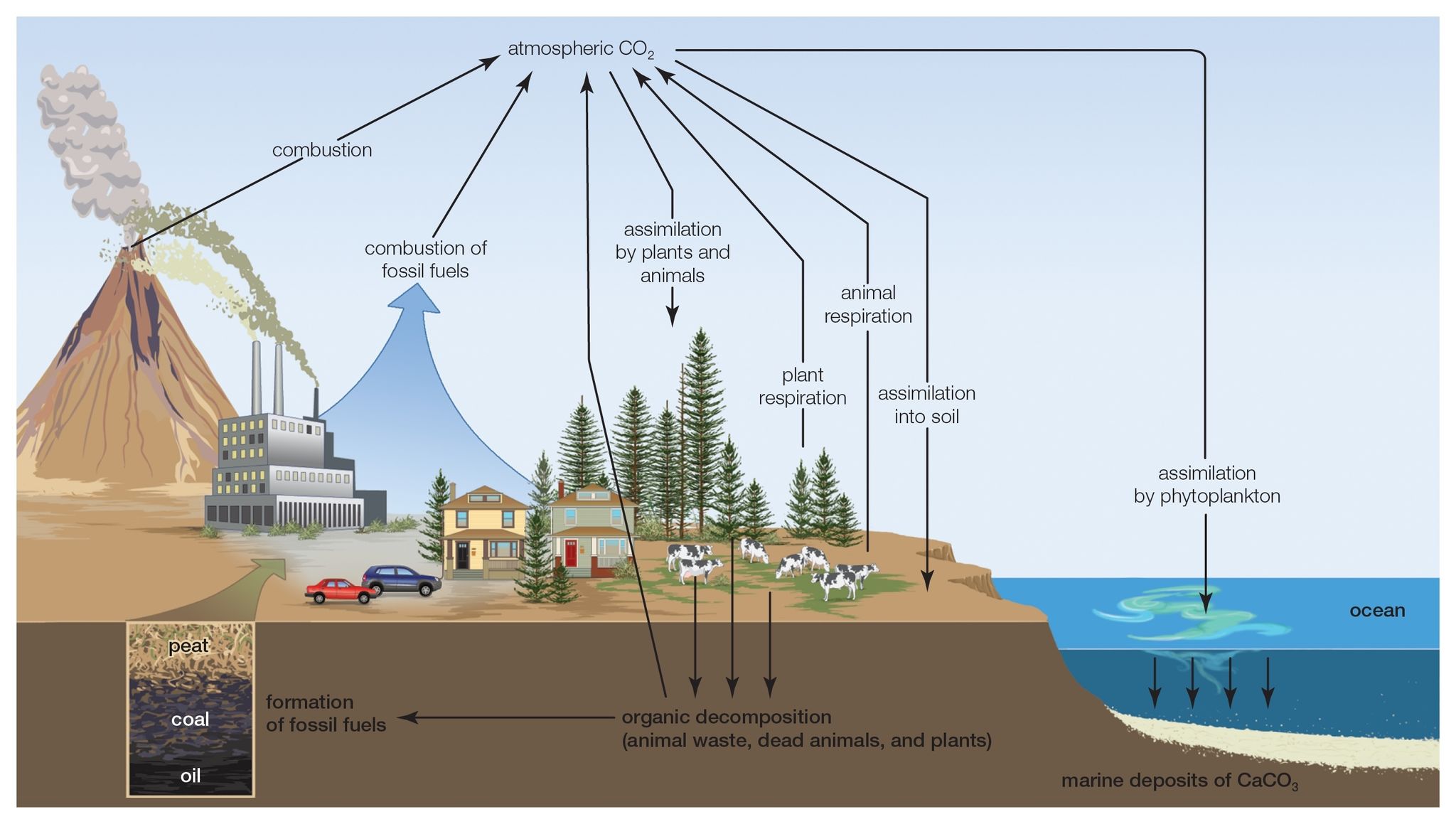
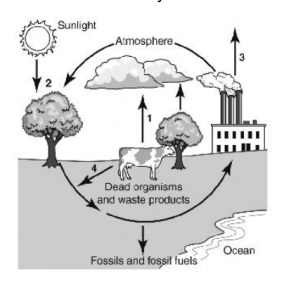
What is happening at 1?
cellular respiration: releasing CO2
decomposing, releasing CO2 in the soil
photosynthesis: absorbing CO2
turning CO2 from the atmosphere into organic molecules
During photosynthesis, carbon is moved from which reservoir to which reservoir?
From the atmosphere to the biosphere.
From the troposphere to the biosphere.
From the lithosphere to the biosphere.
From the hydrosphere to the biosphere
What is happening at 4?
cellular respiration: releasing CO2
decomposing, releasing CO2 in the soil
photosynthesis: absorbing CO2
turning CO2 from the atmosphere into organic molecules
What is happening at 2?
cellular respiration: releasing CO2
decomposing, releasing CO2 in the soil
photosynthesis: absorbing CO2
turning CO2 from the atmosphere into organic molecules

