
Font size
 Worksheets
Not Graded Final Exam JCC Review
Total questions: 100
Worksheet time: 1hrs 13mins
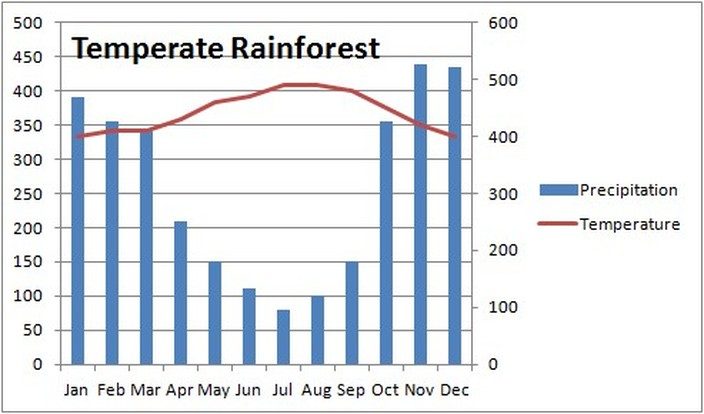
What is the system called where both matter and energy are exchanged between the system and the surrounding environment?
Open system
closed system
growth system
restricted system
What is the primary source of energy in a ecosystem?
cellular respiration in plants
energy from minerals in the soil
fossil fuels
solar energy
What is the term used for the largest population that an environment can support at any given time?
carrying capacity
full level
organism scope
biotic factor
Which of the following situations best describes the use of a renewable resource?
filling a car with gasoline
building wooden furniture
mining copper
burning coal in a power plant
Hydrogen could be used as a fuel source in the future because it...
is used in fuel cells
can be burned as fuel
is abundant
all of these are correct
The effects of water pollution on ecosystems
can be demonstrated by natural eutrophication
are always immediate and highly lethal
can magnify over time within food chains
result mostly from point-source pollution sources
What impact does deforestation have on the carbon cycle?
increase the amount of CO2 in the atmosphere
decrease the amount of CO2 in the atmosphere
increase the amount of photosynthesis
deforestation has no impact on the carbon cycle
Which of the following is an example of quantitative data?
smell
appearence
height
taste
have the ability to interbreed.

Which group of organisms performs cellular respiration?
I. autotrophs
II. Heterotrophs
III. Decomposers
I only
II only
III only
I and II
I, II, and III
Boreal forests tend to have a thick layer of organic material but the soil is poor in nutrients. What is the est explanation for this?
The organic material is low in nutrients
The rapid growth rate of plants uses the nutrients rapidly
The soils have a low permeability and the nutrients do not dissolve in the soils
Low precipitation rates and cold temperature slow decomposition
The sandy soil allows the nutrients to percolate into the groundwater
The human population is currently following a roughly J-shaped curve. This means that the population is
Growing more slowly than it did 100 years ago
Changing in a cyclical pattern
Shrinking at a small but steady rate
Maintaining its current levels
Increasing exponentially
Thomas Malthus warned that
Overpopulation could greatly harm humanity
Abstinence will bring ruin to all
Sharing a common resource will cause people to have more children in order to exploit the resource
Agricultural advancements are likely to harm grassland ecosystems
The IPAT equation should not be applied to developing countries, because the assumptions for the equation do not hold true for those countries
Despite dire predictions int he past, humans still inhabit the Earth. Some economics would argue that this is because
Technological developments have alleviated some of the strain of Earth's reosurces
Space exploration has revealed new frontiers
Malthus's measurements were inaccurate
World population growth has been slower than expected
Malthus overestimated the Earth's environmental sensitivity
What is sustainability?
diversity among plant and animal species
harmful substances or products in the environment
to take care of or control the environment
materials that occur in nature and can be used for economic gain
What is an ecological footprint?
diversity among plant and animal species
harmful substances or products in the environment
the impact of a person or community on the environment.
to take care of or control the environment

What does this graph show?
logistic growth
carrying capacity
negative growth
exponential growth

What is happening to the population at K in the graph?
births equal deaths
more births than deaths
more deaths than births
only deaths
All the members of a species living in the same area at the same time is called a _________.
species
population
community
ecosystem

What type of relationship (symbiosis) is shown in the picture?
mutualism
commensalism
parasitism
predation

What type of relationship (symbiosis) is shown in the picture?
mutualism
commensalism
parasitism
predation
The unique role of an organism is called its __________.
habitat
home
niche
location
Demography is
study of populations
study of predators
study of politics
study of food production

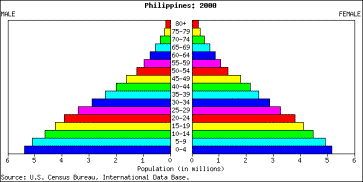
What type of graph is shown in the picture?
line graph
age structure graph
pie graph
survivorship graph
Developing countries have all but which of the following?
lower average incomes
a good amount of land per person
rapid population growth
agriculture based economies
The rich variety of life on earth is known as _____.
preservation
biodiversity
sustainability
extinction
A(n) __________species is an animal or plant that's considered at risk of extinction.
stable
extinct
threatened
endangered
Which of the following is considered to be the basic cause of environmental degradation, pollution, poor health, and premature death?
taxes on wages, income and wealth
poverty
government subsidies
laws and regulation to prevent pollution

Law that require sites that have massive cleanup due to hazardous waste contamination callled ____ and being managed by ____.
Toxic waste clean up act, Environmental Protection Agency
Clean air act , state governors
Clean water act, Federal Emergency Waste Management
Superfund, Environmental Protection Agency

What is the biggest human cause of water pollution?
Factories
Agriculture
Transport such as cars
Sewage treatment plan
Primary succession begins where there was no ecosystem and no soil such as
a severe storm
a volcanic eruption
an old farm is abandoned
a forest fire
Species that can gives early signs that an ecosystems are changed or damaged are called ___.
foundation species
keystone species
indicator species
invasive species
Which of the following tree harvesting method is most likely to lead to fragmented landscape that negatively impact biodiversity?
clear cutting
selective cutting
slash and burn clearing
gleaning
Environmentalist concerns about the environmental impact of growing human population because ___.
people are living longer, putting a strain on the world economy
life expectancy in Africa is still low
the standard of living is poor in developing countries, leading to human suffering and loss of human rights
the standard of living increases in developing countries, leading to increased use of natural resources
Which of the following is false?
most stream recovers rapidly from pollution because of their flow
dissolved oxygen is replaced quickly in rapid flowing river
oxygen level in rivers decreases in dry season
oxygen level in rivers increases as water temperature increases
An immediate harmful reaction to chemical exposure ranging from dizziness to death is called ___.
bioaccumulation
lethal dose
chronic response
acute response
LD-50 for rat is 250 mg/kg of body mass. Which of the following statement is true?
50% of any rat population would be sickened
50% of any warm blooded population would die
500 out of every 1000 people would experience acute effect
500 out of every 1000 rat would die
What is a consequence of habitat fragmentation of land?
Increased climate stability
Increased genetic flow
Reduced biodiversity
Increased population size
Which of the following is the least viable strategy for world food supply?
increase the number of crops from different plant species
doubling the global arable land for agriculture
increase land for grain production by reducing land for meat production
create a better system of food distribution
Overgrazing of public land is an example of ___.
rule of 70
eminent domain
tragedy of the commons
manifest of destiny
the differentiation of niches that enables similar species to coexist in a community
character displacement
climax community
resource partitioning
pioneer species
A city has a population of 8792 people. The area of the city is approximately 6.5 square miles. What is the population density of the city?
57148
208
1353
135
____ refers to how long a pesticide remain deadly in the environment.
persistence
lethal dose
usefulness
impact
Which of the following is most likely to have the greatest positive impact on the quality of natural environment?
discovery of new oil reserves
increase agricultural production on desert land
increase life expectancy in developed country
stabilize or reduce human population
Which of the following is a responsible for acid rain?
Coal
Nuclear
Oil
Solar
It is impossible for nuclear energy to replace oil and gas in the future because ____.
nuclear power can supply electricity, but cannot replace other uses of oil and gas
nuclear energy is too costly for general use
nuclear waste contribute to more global warming
there is not enough uranium

In fish, the survival rate decreases if the number of eggs is too large. Which statement describes why?
Resource partitioning allows similar species to coexist in the same ecological community.
The number of fish surviving after one year is proportional to the number of eggs produced.
The chance of survival decreases when there is intraspecific competition for resources among surviving yearlings.
More yearling fish survive beyond one year when there is an abundance of prey species present.
If there are 35,000 kcals of energy captured by the producers from the sun, how much is available for the tertiary consumer?
3,500 kcals
350 kcals
35 kcals
3.5 kcals
Why is a raccoon considered a prime example of a generalist?
Raccoons can only live in certain areas.
Raccoons can adapt to living in different habitats.
Raccoons can only eat certain types of foods.
Raccoons are not good examples of generalists.

What is the best estimate of the carrying capacity of the moose population?
30
50
1,500
2,500

Which letter represents carrying capacity?
B
C
D
E

What causes birth rates to drop in the third stage of the demographic transition?
advancements in medicine
advancements in technology
better opportunities for women
none of the above
Why are vegetables a more sustainable food source than meat?
It takes less land to raise animals for food.
It takes more land to raise animals for food.
Vegetables require more fertilizer.
Vegetables require more pesticides.
What caused the first exponential growth in the human population?
Black Plague
Roman Empire
Mongolian Empire
Advent of agriculture

If the producers were exposed to a toxin, which organism is likely to have the highest concentration of toxins in its tissues?
owl
mouse
rabbit
aphid

