
Font size
 Worksheets
physics 1st Sem, final exam
Total questions: 109
Worksheet time: 2hrs 55mins
Which of the following is not considered nonmatter
heat
light
atoms
magnetism
What is a tested and proven concept of science but still being test?
law
hypothesis
scientific fact
none of these
What is a"testable prediction"?
theory
law
questioning
hypothesis
Einstein's concept of relativity is considered a?
law
hypothesis
theory
none of these
A push or pull is considered what in physics?
vector
force
velocity
motion
Magnitude and direction make ?
vector
force
push and pull
motion
Force is measured what unit?
grams
vectors
newtons
force
The forces upward on an object must be balanced by other forces acting downward to make the vector sum equal to zero
Newton's laws of motion
mechanical equilibrium
vector rule
none of these
what is needed to change an objects state of motion
energy
vector
force
direction
When an object isn’t moving, it is
in balance
in direction of a vector
stationary
equilibrium
If two vectors pointing at each other of 100 N the other arrow a force of 30N what is the correct equation?
100N + 30 N = 130N
the force is 0 due to equilibrium
100N - 30N = 70N
30N -100N = -70N
If a book is setting on your desk in front you how many forces are acting on the book?
1
2
3
4
A gymnast is on the the"rings". The gymnast is using is using a force equal to?
gravity
magnitude
weight
none of these
The direction from the tail to the head of a vector is?
tension
mechanical equilibrium
magnitude
tension
When 2 perpendicular vectors that are equal in magnitude this is what rule?
vector rule
measurement of force rule
magnitude rule
none of these
The measurement of a newton is defined as?
F = m x a
move 1 kilogram im meter
amount of force to make an object move
the ability to to get mechanical advantage
Force equals __________________?
density times acceleration
mass times acceleration
W = f x d
F = distance x time
A ball sitting on the ground is an example of which
Newton' law?
Newton's 1st law
Newton's 2nd law
Newton's 3rd law
What force could effect Newton's 1st law
acceleration
friction
mass
weight
In physics if you double the mass you double the __________
of an object
gravity pull
weight
force
acceleration
As you sit in your chair forces are applied to you . What Newton's law is occuring?
1st law
2nd law
3rd law
this example is not discussed by Newton's laws of motion
If you are standing on a skateboard pushing on a wall and you move away from the wall, this what Newton's law?
1st law
2nd law
3rd law
Newton's cradle demonstrates the 2nd of motion.
true
false
A rocket in space would continue to go in the same direction at the same speed.
true
false
The formula for force is F = m x a. The 'm' stands for motion
True
false
What unit is speed measured?
newtons
meters per second
feet per second
miles per hour
The speed and direction of an object defines?
velocity
distance
impulse
momentum
Define acceleration.
the force of gravity
pushing the gas pedal
The rate at which velocity changes over time
Velocity is a vector which means it has?
speed and force
magnitude and direction
momentum impulse
Moving by the force of gravity with no air resistance.
freefall
momentum
acceleration
A feather" floats" due to what physics concept?
wind
gravity
air resistance
Energy that is stored is kinetic energy.
true
false
Energy can be created in a lab.
true
false
What 0unit vis used to measure speed?
newtons
meters per second
newton meters
meters
Velocity has magnitude and_______?
force
momentum
direction
energy
What is acceleration?
a change in velocity
a change motion
a form of energy
An object under the force of gravity with no air resistance.
gravity
force
freefall
momentum
A feather "floats" because of what physical condition.
gravity
air resistance
acceleration
none of these
A force that opposes motion between two surfaces that are touching
force
surface tension
opposing forces
none of these
Sliding friction requires less energy to move objects than rolling
true
false
The greater the force = more the friction.
true
false
Rolling friction produces greater amount of opposing force
true
false
Oils and greases affect by?
increasing friction
decreasing friction
maintaining friction
not affecting friction
Momentum is defined as?
velocity in motion
movement of matter
mass in motion
vector measurement
If an object is moving it has?
velocity
mass
momentum
impulse
Elastic and inelastic collisions refer to in physics as?
collisions that creat energy
If an object bounces or not at collision
Objects that stretch due to force
none of these
The physics definition of impulse is?
a constant flow of energy
a constant pulse of energy
a form of momentum that changes direction
A change in momentum
An inclined plane wrapped around a center plane is?
wedge
screw
ramp
pulley
given 20 N, 2 Kg, you can know a (acceleration) is
20N/2 kg=10m/s/s
20Nx2kg=40m/s/s
2kg/20N=0.1m/s/s
none of the above

You and your dad are moving the couch from one side to another. Your dad pushes with a force of 35 N to the right and you push with a force of 25 N right. What is the net force on the couch?
60 N right
10 N left
65 N right
50 N left
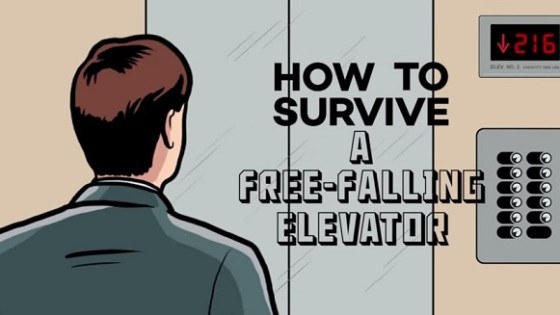
What is the force on a 1000 kg elevator that is falling freely at 9.8 m/sec2
102.04 N
9,800 N
980 N
103 N


1st
Law of Motion
2nd
Law of Motion
3rd
Law of Motion
(Using Fnet=ma), What net force is required to accelerate a car at a rate of 2 m/s2 if the car has a mass of 3,000 kg?
6,000 N
1,500 N
3,002 N
2,998 N
(Use Fnet=ma). What is the mass of a falling rock if it produces a force of 147 N? (Acceleration due to gravity = 9.8 m/s2)
15 kg
1,440.6 kg
156.8 kg
137.2 kg
(Use Fnet=ma). Your parents' car has a mass of 2,000 kg. If your car produces a force of 5,000 N, at what rate will it accelerate?
2.5 m/s2
0.4 m/s2
10,000,000 m/s2
3,000 m/s2

(Use Fnet=ma). Use the diagram to determine the net force, assume the object is accelerating at a rate of 2 m/s2 and determine the mass of the object.
2 kg
4 kg
6 kg
8 kg
a measure of the change in velocity during a period of time
velocity
acceleration
speed
vector
Newton’s law states that for every action, there is an ________ reaction.
unequal and opposite
equal and similar
stronger and opposite
equal and opposite

When a cannon fires a cannonball we observe Newton's third law. Which is the reaction force?
The cannon moving forward
The cannon moving backwards
The cannonball moving backwards
The cannonball moving forward


This picture shows .............
Newton 2nd law of motion
Newton 3rd law of motion
Newton 1st law of motion
I don't know
How many joules of work are done against a cart when a force of 50 N pushes it 1 kilometer away?
70000 J
50000 J
5500 J
6600 J
A student needs 10 Newtons of force to lift a box to the top of a 2 meter shelf. How much work do they do?
12 J
8 J
20 J
5 J
If the marble had a mass of 0.3kg and the hill was 2.3 m tall, how much potential energy did it have at the top of the ramp?
2.3 J
0.23 J
6.9 J
5.2 J
What is the correct unit for energy?
meters (m)
kilogram meters per second (kg m/s)
Newtons (N)
Joules (J)
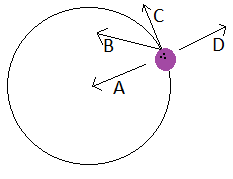
The purple ball is rolling counterclockwise around a track with uniform circular motion. Which vector represents the direction of the acceleration of the ball?
A
B
C
D

An object with uniform circular motion, has constant _?_ but constantly changing _?_.
speed, acceleration
speed, direction
acceleration, speed
acceleration, velocity
Any force or acceleration described as "centripetal" will always point _?_.
in the direction the object is moving
tangential to the circle
towards the center of the circle around which an object is moving
towards the outer edge of the circle around which an object is moving
What is the symbol for Potassium
P
Po
K
Pt
What is the symbol for Sodium
S
Au
So
Na


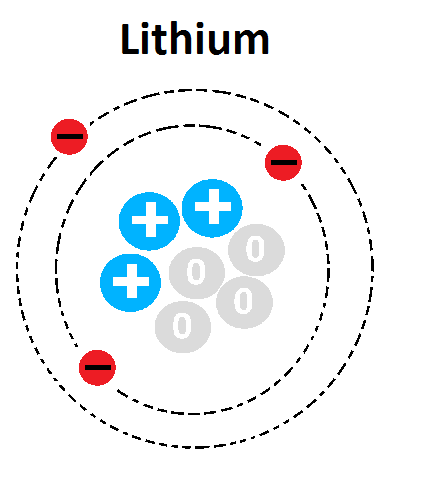

The innermost energy level has a maximum of how many electrons?
1
2
6
8
How many dots would you put around carbon, a group 14 element?
4
6
8
18

This could be the dot diagram of
Mg
Cl
C
O

This is a correct dot diagram for neon (Ne)
true
false
How many valance electrons in Ne?
2
10
7
nonev of these

The dot diagram has how many valance electrons in phosphorus ?
2
15
6
5
How many electrons in silver?
42
57
47
none of these
Archimedes made his famous discovery using the physics concept of
phase of matter
density
volume
knowledge of periodic table
a meniscus refers to ?
mass
matter
measurement
metrics

