
 Worksheets
Astronomy Review 2
Total questions: 112
Worksheet time: 1hrs 14mins
What theory states that at one time the entire universe was confined to a dense, hot, super mass ball that has since expanded outwards to form our universe as we know it?
Nebular Theory
Theory of Relativity
Identity Status Theory
Big Bang Theory
About how LONG AGO do we believe the universe began after the Big Bang?
4 million years
4.5 billion years
11 billion years
14 billion years
According to this theory...galaxies are __________ from where the Big Bang occurred.
Expanding
Not Moving
Shrinking
Cooling
Which TWO elements were the first two gases in the universe?
helium and lithium
iron and lead
hydrogen and oxygen
hydrogen and helium
The______________ describes how bodies of our solar system evolved from an enormous cloud of gases and dust?
Theory of Planetary Motion
Theory of Light
Theory of Dark Matter
Nebular Theory
What is the center of the universe in the Geocentric model?
Mars
The Sun
Earth
Neptune
What is the center of the universe in the Heliocentric model?
Mars
The Sun
Earth
Neptune
Which best describes the shape of Earth's orbit?
Circular
Ellipse
Sphere
Oval
What major observation did Hubble make about our universe?
The universe is expanding in all directions
As galaxies move further away they slow down and cool off
The universe is contracting and heating up
Galaxies closer to us are moving faster than galaxies further away from us
Hubble observed that galaxies moving AWAY from our planet emit (give off) a ______ shift.
Red
Blue
Green
Ultraviolet
TRUE or FALSE: Hubble stated that galaxes that are TWICE as far away from us are moving TWICE as fast.
True
False
TRUE or FALSE: As the universe expands the heat left behind produces a "glow".
True
False
This left behind heat as the universe expands, is what type of energy?
Ultraviolet radiation
Visible Light
Infrared storms
Microwave Background
Which is true of the Big Bang and the Universe
All elements in the universe have always been present, even before the BB
only shortly after the expansion were the elements present today created
There are different theories about the future of our universe - which theory is the most likley and has the MOST scientific support and backing?
Closed universe = the "Big Crunch"
Flat Universe = the "Big Chill"
Open Universe
True or False: The Universe is expanding FASTER now than ever before.
True
False
Who Came up with the three (3) laws of planetary motion?
Galileo
Kepler
Tycho Brahe
Newton
Which of the following is NOT one of the three Laws of Planetary Motion?
The planets move around the sun in an elliptical path
all planets move around the Sun at the same speed throughout their orbits
planets cover more distance closer they are to the sun in their orbit than when they are further in their orbit from the sun
the farther out a planet is from the Sun the longer its orbit and slower it moves
What is one piece of evidence supporting the Big Bang Theory?
The universe is static (not changing in size).
The universe is contracting.
The universe has always been the same size.
The universe is expanding.
What is the force that keeps the planets from going out into space in a straight line?
Rotation
Magnetism
Gravity
Revolution
Which of the following is associated with Tycho Brahe?
He came up with the 3 Laws of Planetary Motion
The was the first to propose a heliocentric model of the solar system
Created a telescope that he used to observe the night sky including Jupiter's largest moons and the phases of Venus
He was the first astronomer to accurately measure the
elliptical orbit within a matter of degrees.
Which of the following is associated with Nicolas Copernicus?
He came up with the 3 Laws of Planetary Motion
The was the first to propose a heliocentric model of the solar system
Created a telescope that he used to observe the night sky including Jupiter's largest moons and the phases of Venus
He was the first astronomer to accurately measure the
elliptical orbit within a matter of degrees.


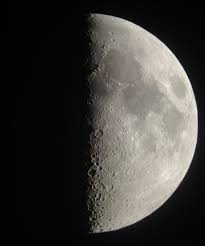


When the visible (lit) portion of the moon is decreasing, the moon is:


Tides are caused by the difference in the gravitational force of the ________ and ________ across the ________.
earth, sun, moon
sun, mars, jupiter
sun, moon, earth
tide, water, sun
Neap tides happen at _________ and _________ phases of the moon.
first quarter and new moon
last quarter and full moon
waxing and waning
1st quarter and 3rd quarter
What type of tide is evident when the moon is in the full moon phase?
high tide
low tide
spring tide
neap tide

Name the moon phase
Waning crescent
Waxing crescent
Waning gibbous
Waxing gibbous
As the moon revolves around the earth, the water follows the motion and causes...
Some waves and currents.
High tides and low tides.
The moon phases.
Sea levels.
Which of the following words describe the phases of the moon?
None, quarter, half, three quarters, full.
Dark, light, half, quarter, red.
New, crescent, quarter, gibbous, full.
First quarter, second quarter, third quarter, fourth quarter.
What is the LONGEST day of the Year for us in the Northern Hemisphere?
Summer Solstice
Autumnal Equinox
Winter Solstice
Spring or Vernal Equinox
Which of the following ALSO describes equinoxes?
There are longer days in the northern hemisphere
There are longer days in the southern hemisphere
There are an even number of hours of daylight and nighttime
The equator will be the warmest than any other time of the year
What is the SHORTEST day of the Year for us in the Northern Hemisphere?
Summer Solstice
Autumnal Equinox
Winter Solstice
Spring or Vernal Equinox
What would seasons be like if Earth's axis were STRAIGHT up and down (NOT tilted)?

In summer, the axis of the earth is pointed ______________ the sun?


Which season is taking place in the Northern Hemisphere in Position 3?
Which season is taking place in the Southern Hemisphere in Position 4?
What is true about the SOUTH pole at position 3?
days are longer
nights are longer
equal hours of day and night
days are longer
At which position is the NORTH pole receiving the MOST direct sunlight?
1
2
3
4
At which positions is the EQUATOR receiving the MOST direct sunlight?
1 and 3
2 only
2 and 4
2 only
What is the main reason of perihelion and aphelion periods of Earth around the sun?
due to Earth rotation
due to the sun's gravity
due to Earth revolution while the sun is rotating on its axis
the sun is not in the middle of the elliptical path of the Earth
The point where Earth is FURTHEST away from the Sun, which happens every month of July, is called
perihelion
aphelion
perigee
apogee
Which statement is TRUE about aphelion?
Earth experiences cooler temperatures
Earth moves slower in its orbit around the Sun
Full moons appear larger than normal
The Earth's tilt changes from 23.5 to 25 degrees
The period where Earth is CLOSEST to the SUN in its orbit is called
revolution
precession
perihelion
aphelion
Which statement is TRUE during perihelion period?
Earth's rotation is faster than when it is far from the Sun.
Earth's rotation is slower than when it is far from the Sun
The speed of Earth's revolution increases as it get closer to the Sun.
The speed of Earth's revolution decreases as it get closer to the Sun

Neap tides are moderate tides, meaning that high tides are a lower than usual. WHEN do NEAP tides occur?
When sun and moon are at right angles with each other.
When the moon is between sun and Earth.
When the moon is in its full moon phase
When the moon is in its new moon phase.
Spring tides are extreme tides, meaning that high tides are a higher than usual. WHEN do SPRING tides occur?
When sun and moon are at right angles with each other.
Always on the first day of the month.
When the moon is in its full moon phase
When the moon is in its 1st quarter phase?
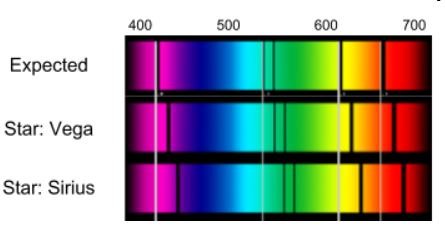
In the 1920s, Edwin Hubble looked at the spectra of stars from distant galaxies. To his surprise, he found that all of these spectra were red-shifted, and that the more distant the galaxy, the greater the red-shift. What is a reasonable conclusion from this evidence?
The universe is expanding.
The universe is contracting.
The universe is unchanging.
The universe is curved.
How does the Doppler Effect explain the redshift observed in distant galaxies?
The galaxies are stationary
The galaxies are moving towards us
The galaxies are moving away from us
The galaxies are changing in size

The following image helps show...
Big Bang Theory
Nebular Theory
Law of Planetary Motion
Expansion Theory
Solar Systems are first made up of GASES and DUST - which GAS is the most prevelant in the early stages of a solar system?
Helium
Hydrogen
Oxygen
Nitrogen
Early solar systems also consist of DUST - which of the following IS NOT one of the main METALS found in early solar system DUST?
iron
copper
nickel
aluminum
In addition to gases (H and He), and dust metals (Fe, Ni, Al)...ICES is also found in early solar system debris...which molecule is NOT a common frozen component in the solar system nebula?
Water
Methane
Ammonia
Ethane
Which option shows the 1st step in the formation of a solar system?
larger rocks collide, gravity sticks them together or they break apart due to collisions
dust particles collide and stick together to make larger rocks as they move around a protosun
an event causes dust/gas move in circular motion, flatten out
larger rocks yet continue to collide and stick together eventually forming small planetary bodies and asteroids
Which option shows the Third step in the formation of a solar system?
larger rocks collide, gravity sticks them together or they break apart due to collisions
dust particles collide and stick together to make larger rocks as they move around a protosun
an event causes dust/gas move in circular motion, flatten out
larger rocks yet continue to collide and stick together eventually forming small planetary bodies and asteroids
When oxygen combines with another compound to form carbon dioxide and water...this is called...
respiration
oxidation
condensation
combustion
The process that provides the sun with its energy
Yes - stars (like the sun) run on nuclear FUSION - which elements FIRST combine in early stages of a star to give it its energy?
hydrogens fuse to make helium
heliums fuse to make hydrogen
heliums fuse to make beryllium
heliums fuse to make oxygen
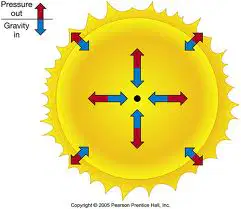
What do we call it when the FUSION EXPLOSION outward BALANCES the force of gravity wanting to push it inwards?
Hypertophic balance
Hydrostatic pressure
Hydrostatic Equilibrium
Balanced forces
Stars like our Sun produce what kind of energy that reaches us on Earth ?
geothermal
sound
electromagnetic
tidal
What type of electromagnetic energy is FILTERED out by our Earth's atmosphere?
light waves
radio waves
gamma rays
microwaves
Light energy reaching Earth's surface allows life to exist by providing plants with the essential light energy needed to undergo__________
fermentation
cellular respiration
chemosynthesis
photosynthesis
What is the correct order from LARGEST (grandest) to smallest levels of organization in space?
planets --> solar system --> star --> galaxy --> universe
universe --> galaxy --> solar system -- >
star --> planet
planets --> star --> solar system --> galaxy --> universe
universe --> galaxy --> star --> solar system
--> planet
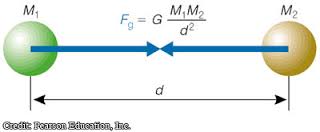

According to Newton's second Law, which would take more force to slow down?
The silver car
The green car
They would both take the same force
How many known planets are in our solar system?
4
7
8
9
What happens to the amount of the Sun's mass as it "burns"?
The mass of the Sun is constant.
It is converted into kinetic energy of the Sun.
It is converted into radiant energy.
It is converted into gravitational energy.
Between the orbits of what two planets is the asteroid belt located?
The asteroid belt is located between the orbits of Earth and Mars.
The asteroid belt is located between the orbits of Jupiter and Saturn.
The asteroid belt is located between the orbits of Saturn and Uranus.
The asteroid belt is located between the orbits of Mars and Jupiter.
Where does the moon get its light from?
The moon makes its own light
The moon gets light from Earth
The Moon gets light from the sun
None of the above
A cloud of gas and dust is called a....
Solar System
Nebula
Galaxy
Red Giant
What are the steps of the Nebular Theory?
Step 1: A tiny point rapidly expanded
Step 2: Helium was compressed into stars
Step 3: The stars explode and turn into planets
Step 1: Gravity pulled together atoms in a nebula
Step 2: Nuclear fusion occurred and a star is born
Step 3: Smaller clumps around the star formed into planets
Step 1: The solar system formed because of the Big Bang
Step 2: Our solar system was the first one
Step 3: Dark energy is pushing other solar systems away
Step 1: Gaseous planets will orbit the Sun slower
Step 2: Rocky planets will orbit the Sun faster
Step 3: The Sun will vaporize all the inner planets
How would the planets move if the Sun disappeared?
The planet would stop moving because gravity is no longer affecting it.
The planet would move for a little while longer, but then stop.
The planet would move in a straight line in the direction it had been traveling, because of its inertia.
The planet would stop moving, but then start moving again because it would attach to another celestial object or planet.
The revolution of the Earth around the Sun helps create...
Day and Night
Tides
Seasons
Moon phases
How long does it take Earth to rotate one time on its axis?
365 days
365 hours
24 hours
24 minutes
24 days
Which of the following is NOT true for a celesital object to be a planet?
must orbit a star
be large enough to form a spherical shape
has at least one moon
massive enough so that its gravity clears other objects near its orbit
Which planets are considered "ice" giants?
Pluto and Neptune
Neptune and Uranus
Uranus and Saturn
Saturn and Jupiter
Which planets would be considered more HOT and DENSE based on their classification?
Mercury and Mars
Mars and Jupiter
Jupiter and Saturn
Earth and Saturn
True or False: Seasons are most directly affected by how close or far away the Earth is from the Sun.
True
False

