
 Worksheets
PMA 3 Review
Total questions: 110
Worksheet time: 2hrs 44mins

This is an image of a Vespula vulgaris. What microscope would be used to look at this image?
Light Microscope
Dissecting Microscope
Scanning Electron Microscope
Transmission Electron Microscope

This is an image of the epidermis of an onion root. What microscope would be used to look at this image?
Light Microscope
Dissecting Microscope
Scanning Electron Microscope
Transmission Electron Microscope

This is an image of a pollen from different plants. What microscope would be used to look at this image?
Light Microscope
Dissecting Microscope
Scanning Electron Microscope
Transmission Electron Microscope

This is an image of a plant cell where you can see the nuclus and other organelles. What microscope would be used to look at this image?
Light Microscope
Dissecting Microscope
Scanning Electron Microscope
Transmission Electron Microscope
What is the main function of leaves in plants?
Food storage
Water absorption
Reproduction
Gas exchange
Which organ of a plant is responsible for supporting leaves and reproductive structures?
Stems
Leaves
Roots
Flowers
What is the function of roots in plants?
Food storage
Reproduction
Gas exchange
Water absorption
What is the main function of flowers in plants?
Reproduction
Water absorption
Food storage
Gas exchange
Emma, Ava, and William are working on a school project about plant tissues. They are particularly interested in the tissue responsible for providing structure and storing carbohydrates in plants. Which tissue should they focus on?
Meristematic tissue
Dermal tissue
Vascular tissue
Ground tissue
Which tissue in plants is responsible for internal water and nutrient transport?
Ground tissue
Vascular tissue
Dermal tissue
Meristematic tissue
Which of the following is responsible for transporting water and nutrients up from roots to stems and leaves?
Xylem
Phloem
Stomata
Guard cells
Which tissue in plants is responsible for gas exchange needed for photosynthesis and cellular respiration?
Ground tissue
Vascular tissue
Dermal tissue
Meristematic tissue
What is the main function of the stem?
To support the plant
To look pretty
To absorb sunlight
To fight off pests
Vascular Tissue that carries water upward from the roots to every part of the plant?
Stem
xylem
phloem
Anther
What is the vascular tissue that carries sugar and organic substances from the leaves down to the rest of the plant?
Xylem
Phloem
Cambium
Roots
What part of the flower is sticky to grab pollen?
Filament
Style
Stigma
Anther

What is it called when water sticks to water?
¿Cómo se llama cuando el agua se pega al agua?
Cohesion
Adhesion
Capillary Action
Xylem

What allows water to stick to particles of dust in the air, thereby condensing to form clouds?
¿Qué permite que el agua se adhiera a las partículas de polvo en el aire, condensándose así para formar nubes?
Cohesion
Adhesion
Dipole moment
Phloem

The process when plants release water vapor from their leaves is called ______.
El proceso en el que las plantas liberan vapor de agua de sus hojas se llama ______.
precipitation
evaporation
transpiration
condensation

On which kind of day would you expect the most evaporation from the surface of a pond?
¿En qué tipo de día esperaría la mayor evaporación de la superficie de un estanque?

Hydropower is a renewable resource.
True
False

What is a DISADVANTAGE of hydropower?
It is cheap to produce once the dam is built
It produces no air pollution
It is renewable
Dams can disturb natural ecosystems
This process requires fungi or bacteria to break down dead organic matter (biomass) back into the soil/sediment or atmosphere by releasing solid Carbon, Carbon Dioxide, and Methane
Photosynthesis
Cellular Respiration
Combustion
Decomposition
This process takes Carbon Dioxide and converts into Carbohydrates and Oxygen
Photosynthesis
Cellular Respiration
Combustion
Decomposition

Which of the following options shows the correct way energy flows in a food web?
The zebra gets energy from the lion
The elephant gets energy from the giraffe
The lion gets energy from the sun
The giraffe gets energy from plants

Producers have 100% energy that they get from the sun. How much energy would the rabbit get?
100%
50%
1%
10%
A plant has 300 kJ of energy produced. If a squirrel eats this plant, how much energy would they get?
300 kJ
3 kJ
30 kJ
0 kJ
Cohesion
Water's ability to stick to itself
Adhesion
Water's ability to stick to other things
Polarity
Allows things to dissolve in water
Expansion upon freezing
Allows ice to float
Which of the following best explains what would happen if a plant was to catch a disease that affects its roots?
Evaporation levels would decrease, since plants cannot uptake water
Evaporation levels would decrease, since plants increase water uptake
Transpiration levels would decrease, since plants cannot uptake water
Transpiration levels would increase, since plants cannot uptake water
Which of the following best explains the role that fossil fuels have in the carbon cycle?
It plays a role in higher respiration levels
It plays a role in lower respiration levels
It plays a role in higher levels of carbon dioxide
It plays a role in lower levels of carbon dioxide
Which of the following organisms directly receives energy from producers?
Carnivores
Herbivores
Decomposers
Animals who only eat other animals
What is an autotrophic organism?
Produces its own DNA
Produces its own plants
Produces its own food
Produces its own sunlight

Water has the ability to maintain a fairly _________ temperature
Hot
Cold
Consistent
Unstable

Sunlight affects which process in the water cycle?
Condensation
Evaporation
Precipitation
Runoff
Most plants absorb water through...
the root system
the leaves
the flower
the stem

Based on the graph, which statement best describes your observation?
Increase of emissions has lead to an increase in atmospheric carbon dioxide
Increase in emission has lead to a decrease in atmospheric carbon dioxide
The industrial revolution has lead to an increase in carbon dioxide emissions
Carbon dioxide emissions will continue to increase
The top layer of frozen water acts as an insulator keeping the water underneath slightly warmer. What property of water allows for this to occur?
Ability to moderate temperatures
Expansion upon freezing
Cohesive behavior
Surface tension

G1 and G2
G1 and S
M phase and cytokinesis
Which part of the Cell Cycle takes the longest?
Interphase
Mitosis
Prophase
Cytokinesis
Uncontrolled cell division which usually leads to tumors and disease is called:
Metaphase
Cytokinesis
Cancer
Diabetes
Which is NOT a phase of the cell cycle?
Interphase
Cytokinesis
Mitosis
Duplication
To make an identical copy
Spindle Fibers
Centrioles
Replicate
Spindle fibers

Two replicated cells split from each other and are able to move on their own.
Metaphase
Prophase
Cytokinesis
Telophase
Which of these lists presents the stages of the cell cycle in the correct order?
interphase, mitosis, cytokinesis
cytokinesis, mitosis, interphase
mitosis, interphase, cytokinesis
interphase, cytokinesis, mitosis
What occurs in mitosis?
The cell is growing
The cell is divided
Nucleus is divided
Match the Following: Base Pairing Rule
A
T
C
G
T
A
G
C
Match the following: Enzymes to Functions
Helicase
enzyme unzips DNA like a zipper, creating two single strands of DNA
DNA Polymerase
Builder enzyme that synthesizes new strands of DNA by adding DNA nucleotides
Ligase
Enzyme that joins or glues fragments of new DNA together
Primase
Enzyme that creates a starting point for DNA polymerase
DNA replication is described as (a) when new DNA is composed of one strand from the parent DNA and one strand that is newly synthesized.
What is the complementary base pairing for the following sequence?
ATATCGCG
(a)
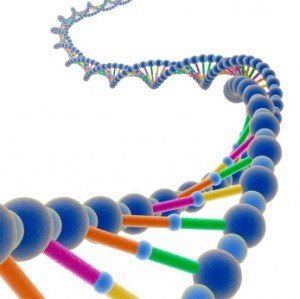
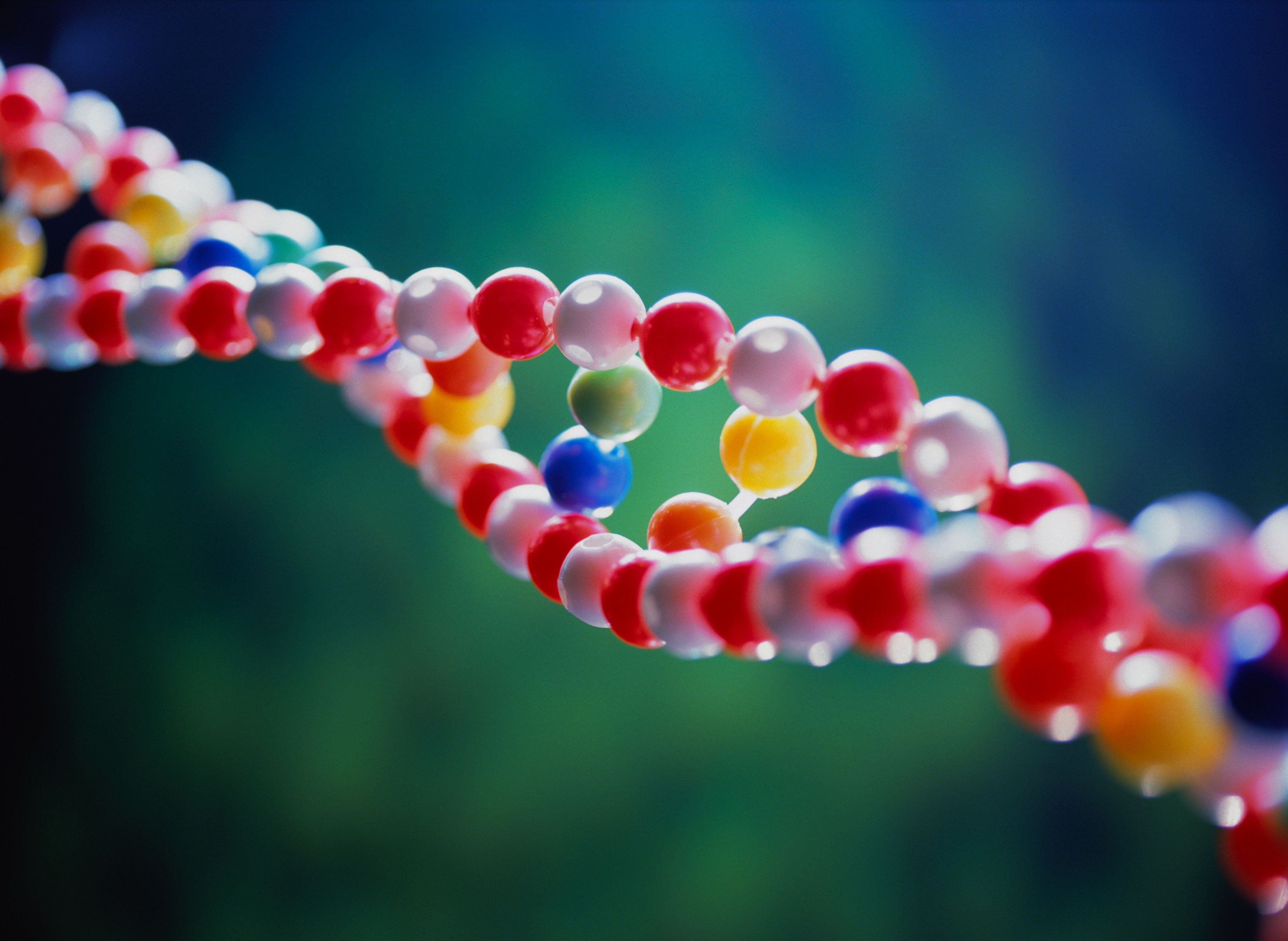


The graph below shows Florida orange production. Which of the following is an inference that can be supported by the graph?
Orange production was highest in 2004
Florida oranges may become extinct by 2030
The orange population has only declined since 2004
There was a decrease of orange production from 2004-2007
succession that occurs in an area with no soil or life
Biodiversity refers to what?
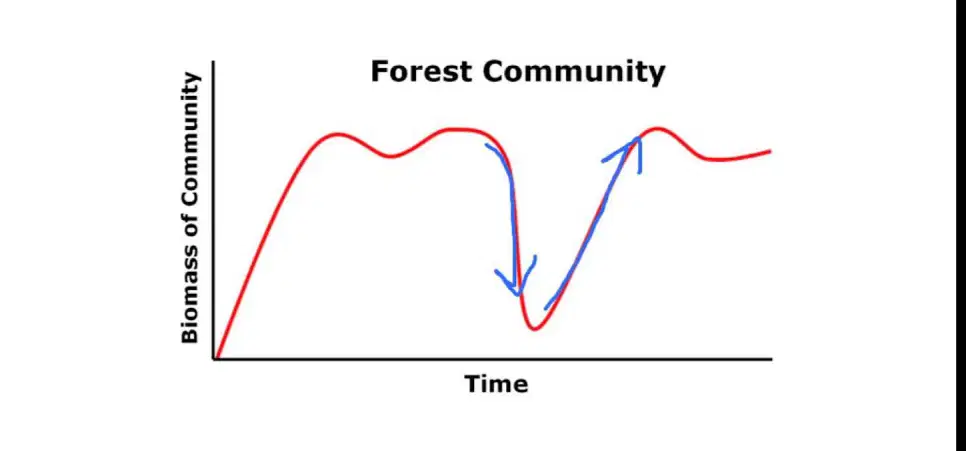
The following graph shows the biomass of a community after a forest fire, which process of succession is represented by this data?
Ecological succession
Gradual succession
Primary succession
Secondary succession
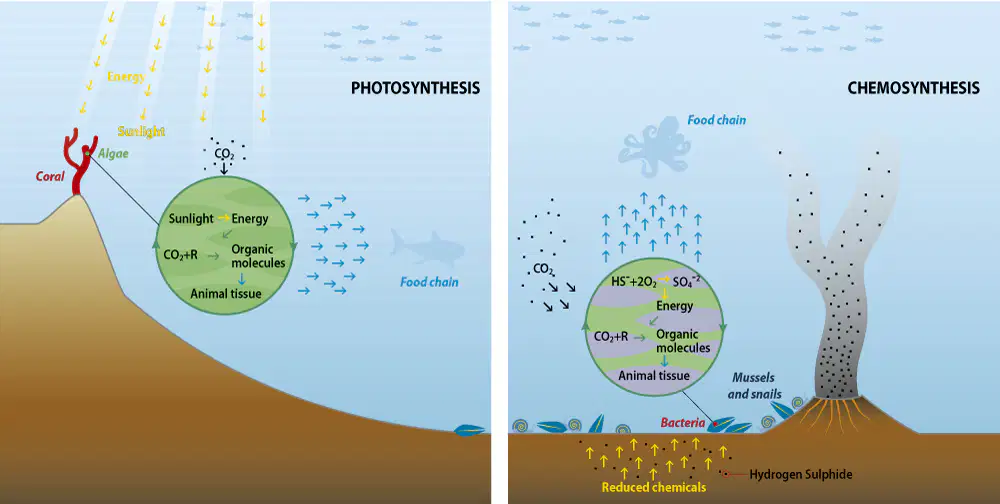
An autotroph is an organism that uses light to create its own food. Knowing this what would a Chemoautotroph use to produce its own food?
chemicals
light
other organisms
soil
pH is a chemical property of water that determines what type of organism lives there. What is a possible outcome of a change of pH occuring in an aquatic habitat?
Increase in photosynthesis from phytoplankton
Increase in the death rate of the organisms that live there
Increase in the birth rate of the organisms that live there.
Increase in consumption of plankton.

What abiotic factor would cause a decrease in a population for phytoplankton?
Increase in zooplankton
Decrease of sunlight
Increase in primary consumers
Increase in sunlight
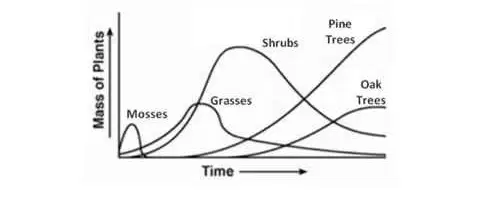
The following figure shows the mass of plants over time after a volcanic eruption. What form of succession does this graph represent?
Secondary succession
Primary succession
Ecological succession
Gradual succession

The following image shows the reality of rising sea levels. What long term effect would a rise in sea level have on the coastal ecosystem?
Increase in biodiversity more available water
Decrease in biodiversity due to habitat loss.
Decrease in biodiversity due to inland predators having easier access to marine organisms.
Increase in biodiversity due to terrestrial organisms adapting to the rising sea levels.
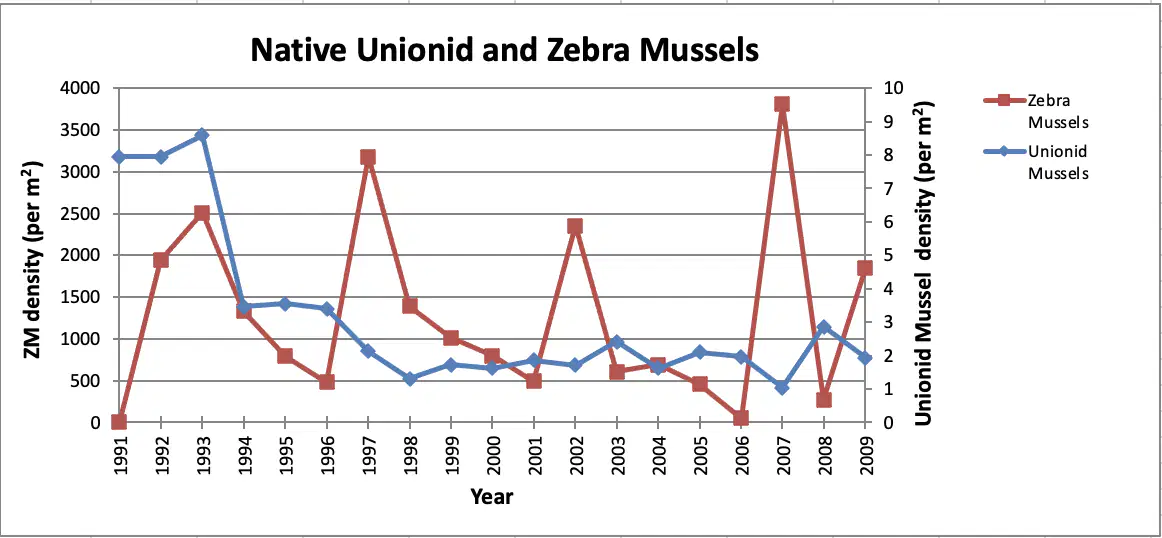
A unionid is a freshwater mussel, which statement best explains the change in the native unionid population?
The carrying capacity of the unionid was reached.
The introduction of the zebra mussel has decreased the amount of available resources for the Native unionid
The introduction of the zebra mussel has increased the amount of available resources for the native unionid
Zebra mussels are emigrating allowing for the native unionid population to shift.
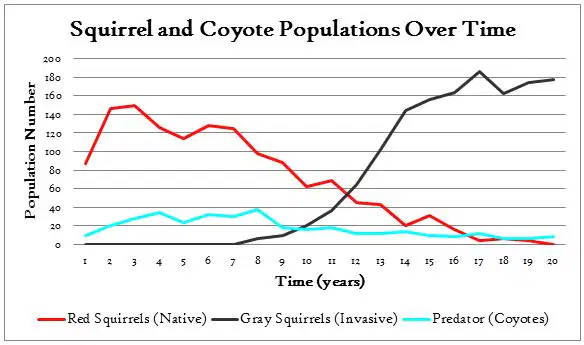
The following graph shows the population of red squirrel over time. Which statement best represents the reason for the drop in the red squirrel population?
The increase in predators in the area
The introduction of the invasive grey squirrel
Increase in global warming
Loss of habitat due to urbanization
How do you change the Cell Theory?
Discovering new evidence
Proving that you are correct
Giving ideas based on your opinion
Testing the hypothesis
Where does a cell come from?
Pre-existing cells
Emerged from the ground
Remains of dead organisms
Bacteria and viruses

What is the main function of large central vacuole in plants?
If with enough water, it causes the cell to become more rigid and creates structural support to the plants
It provides shelter for ATP inside the cell
It protects the DNA from foreign materials that enter the cell
With a good amount of sunlight, it will produce food

Mitochondria have double-membrane system. What is the main function of the inner membrane?
To provide protection for the ATP inside the cell
To provide large space area for the production of ATP
To create design and to make it more appealing
To instruct the proteins to make more ATP

Inside the nucleus is the DNA which carries the instruction to make protein, it needed to be delivered to the ribosome to synthesize the protein. Why is the rough ER located near the nucleus?
to protect it
to allow the ribosomes to make proteins more efficient
to give aesthetic to the cell
to get better directions in producing ATP

Active transport uses ATP to facilitate the movement of molecules against the concentration gradient.
True
False
What are the characteristics of plant?
Surrounded by a rigid coat of cellulose
Contains mitochondria and chloroplast
Has DNA and cell wall
Has flagella and cilia
What happens when ATP is turned to ADP?
Energy is released
Energy is preserved
Energy is constrained
Energy is congested
Which statement best explains the difference between active and passive transport?
Passive transport requires the use of a protein while active transport does not.
Active transport requires the use of a protein while passive transport does not.
Passive transport requires energy to occur while active transport does not.
Active transport requires energy to occur while passive transport does not.

The image below shows three different types of cells found in living organisms. What part of the cell theory is supported by this image?
All cells have a nucleus that holds their genetic material.
A cell is the basic structural and functional unit of living organisms.
All cells arise from pre-existing cells.
A cell can be seen in detail with a microscope.

The nucleus is a central structure in a cell surrounded by a nuclear membrane with nuclear pores. How does the structure of the nucleus support its function?
The nucleus contains genetic material that leaves through the nuclear pores to be passed down to offspring when organisms reproduce.
The nucleus is surrounded by a nuclear membrane that allows the exchange of materials with the outside of the cell through the nuclear pores.
The nucleus contains genetic material that is protected by the nuclear membrane with nuclear pores to allow some substances to be exchanged.
The nucleus is surrounded by a nuclear membrane that does not allow anything in or out of the nucleus so the DNA is always protected and not destroyed.
What is endosymbiotic theory?
Endosymbiotic theory explains how life today could have originated from a single cell.
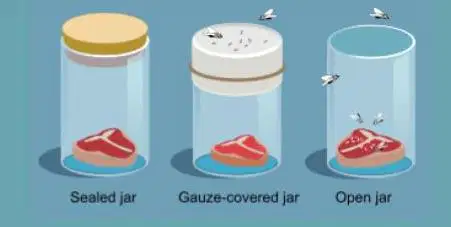
How does this image supports the origin of life?
Organisms needs to exposed to create new life
Cells can be spontaneously generated
Only living things can produce other living things
Why was the Miller-Urey experiment important?
It showed that the molecules needed for life could arise from early Earth conditions
It showed that life can only come from life
It showed that meat left uncovered will have growths on it
It proved that spontaneous generation was possible.
What were the conditions in early Earth?
No oxygen
No atmosphere
No oceans
Presence of gases like ammonia, methane, and CO2
What is the gradual change in species over time?
Evolution
Adaptation
Natural Selection

Look at the picture. What would be an appropriate caption to explain evolution by natural selection?
Genetic Variation
Adaptation
Natural Selection
Traits are inherited

Look at the picture. What would be an appropriate caption to explain evolution by natural selection?
Genetic Variation
Adaptation
Natural Selection
Traits are inherited
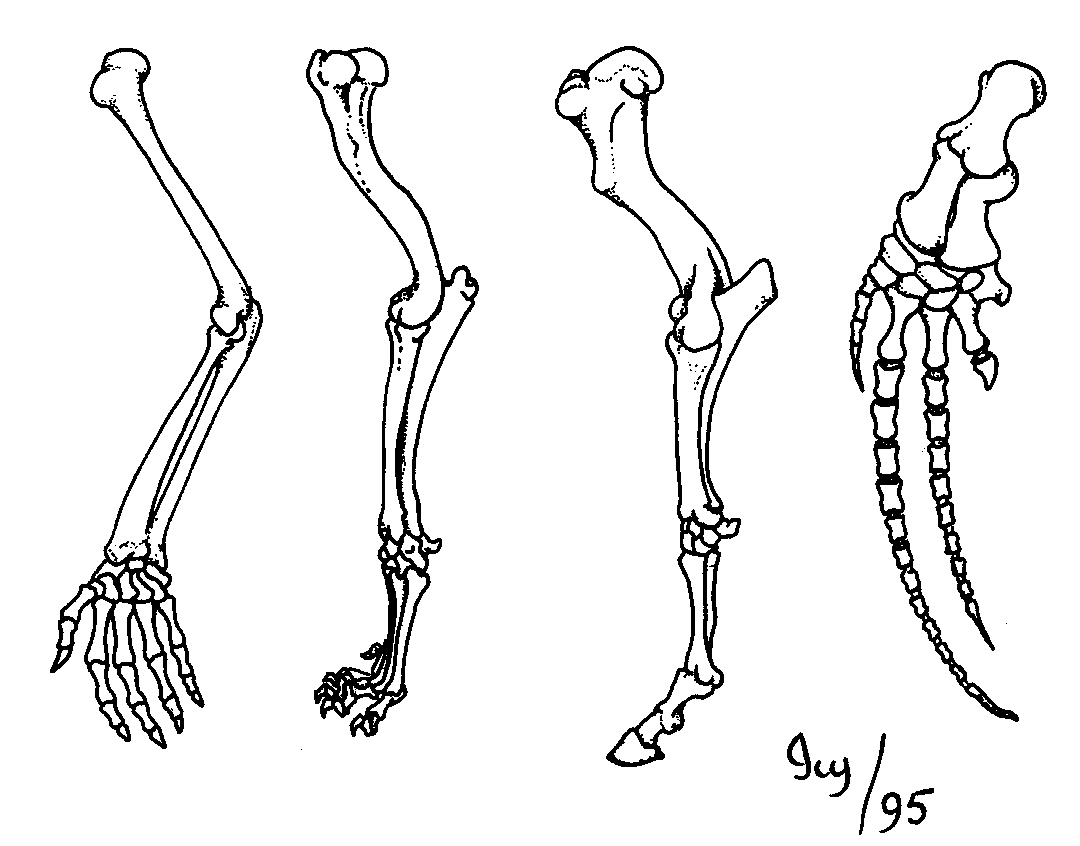

Does the presence of homologous structures in genetically different animals suggest common ancestry?
Yes
No
Recently, scientists have been able to use ___________to find common proteins and amino acids to determine how closely related species are.
DNA
Vestigial structures
Fossils
Homologous structures

A forest fire ignites in the Sam Houston State Forest and kills many members of a population of pigmy rattlesnakes.
Gene Flow
Genetic Drift

Select the best answer based on the image.
Gene Flow
Genetic Drift
Oysters lay 60-80 million eggs, only a few survive to reproduce. What condition of natural selection is this?
Overproduction of Offspring
Struggle to Survive
Non-random Mating
Inherited Variation
Enzyme is an example of protein. What is the function of this protein?
The function of the protein is to speed up chemical reactions.
The function of the protein is to provide structural support to the cell.
The function of the protein is to store genetic information.
What are the characteristics of nucleic acid?
Long chains of nucleotides composed of a sugar, a phosphate group, and a nitrogen base.
What is the result of biogeography (separation of landmasses and movement to different locations)?
Extinction of species
Organisms Evolved
Decrease in biodiversity

What macromolecule is A?
phospholipid
carbohydrate
protein
nucleic acid


In this situation, where the solute is illustrated by red dots, predict if WATER will move into or out of the cell, and how that will affect the cell.
Eukaryotic cells are
plants
animals
both
neither

Golgi body
smooth ER
centrioles
I have no ides

Which type of cell is this?
Prokaryote
Eukaryote

The diagram below shows the relationship between substrate concentration and reaction rate (how fast the reaction goes).
Based on the graph, which of the following accurately describes how substrate concentration changes the reaction rate.
Substrate concentration does not change reaction rate
High substrate concentration has a faster reaction rate
Low substrate concentration has a faster reaction rate
High substrate concentration has a slower reaction rate
If an enzyme solution is saturated (too much) with substrate, the most effective way to obtain an even faster yield (amount) of products is to:
Add more of the enzyme
Boil the solution
Add more substrate
Cool the solution

Without enzymes, many biological processes would occur too slowly for life to be possible. The graph below shows the activity of two enzymes at various pH values.
What does the graph indicate about enzymes?
A pH close to 7 is optimal for most enzymes.
Each enzyme functions best within a limited pH range.
The pH of a solution has little effect on the activity of an enzyme.
The activity of an enzyme increases as the pH of a solution increases.

Which macromolecule is shown?
lipid
protein
nucleic acid
carbohydrate
monosaccharides
monomers
proteins
None of these

