wayground logo

Free Printable Worksheets

Font size

S
M
L
XL
Worksheets

A & P - Axial Skeleton

Total questions: 112

Worksheet time: 59mins
Name
Class
Date
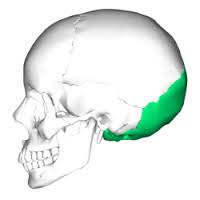
1.
What is this?
a)
Frontal
b)
Mandible
c)
Occipital
d)
Parietal
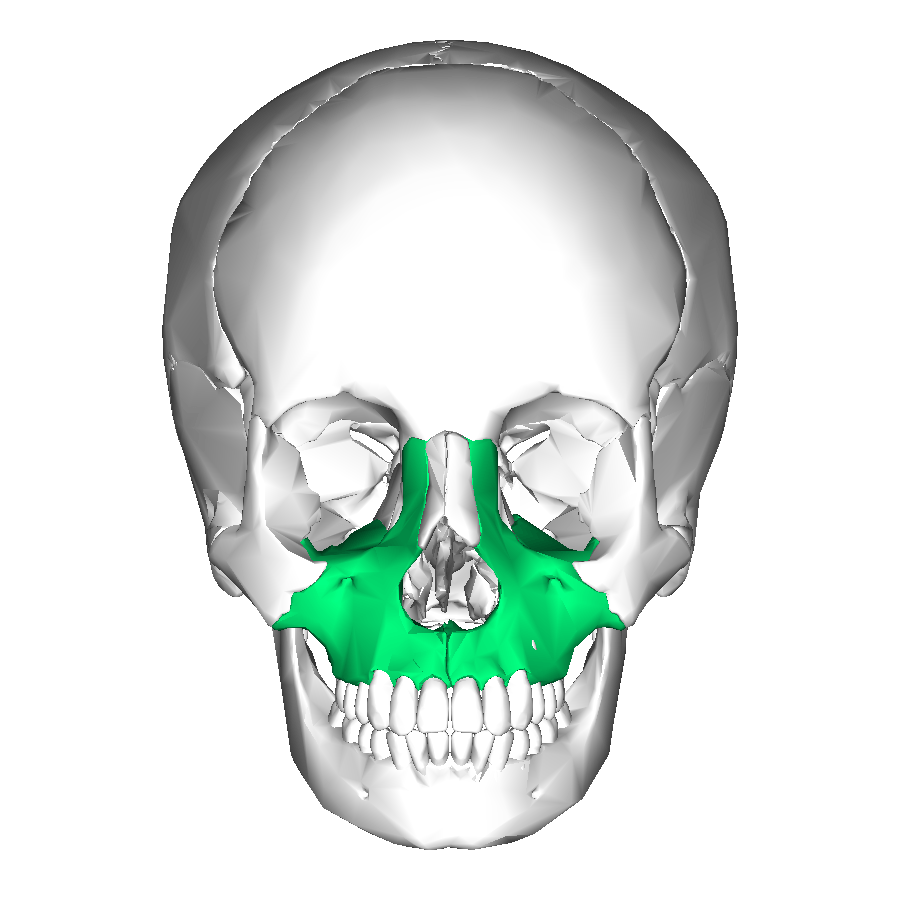
2.
What is this?
a)
Mandible
b)
Maxillae
c)
Zygomatic
d)
Lacrimal
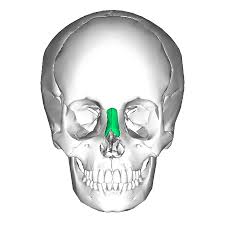
3.
What is this?
a)
Nasal
b)
Lacrimal
c)
Ethmoid
d)
Vomer
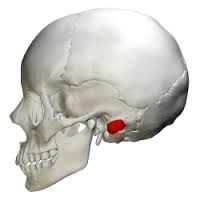
4.
What is this?
a)
Mastoid Process
b)
Styloid Process
c)
External Acoustic Meatus
d)
Zygomatic Process
5.
What is this?
a)
Parietal
b)
Occipital
c)
Frontal
d)
Temporal
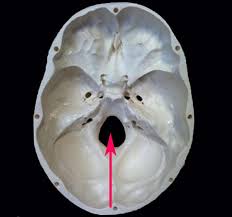
6.
What is this?
a)
Foramen Magnum
b)
Jugular Foramen
c)
Carotid Canal
d)
External Acoustic Meatus
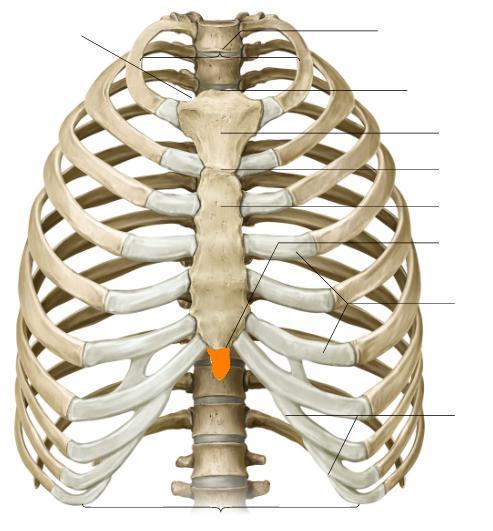
7.
What is this?
a)
Manubrium
b)
Xiphoid Process
c)
Body
d)
Costal Cartilage
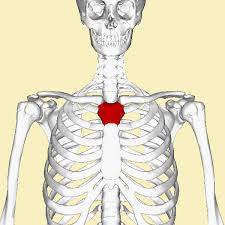
8.
What is this?
a)
Manubrium
b)
Body
c)
Xiphoid Process
d)
Clavicle
9.
There are 12 of these and they articulate with ribs
a)
Thoracic vertebrae
b)
Cervical Vertebrae
c)
Lumbar Vertebrae
d)
Sacral vertebrae
10.
Manubrium, Body, and Xiphoid Process are all parts of the 
a)
Sternum
b)
Vertebral column
c)
Temporal bone
d)
Pelvis
11.

parietal

a)

A

b)

B

c)

C

d)

D

e)

E

12.

temporal

a)

A

b)

B

c)

C

d)

D

e)

E

13.

occipital

a)

A

b)

B

c)

C

d)

D

e)

E

14.

frontal

a)

A

b)

B

c)

C

d)

D

e)

E

15.

sphenoid

a)

A

b)

B

c)

C

d)

D

e)

E

16.

zygomatic

a)

F

b)

G

c)

H

d)

I

e)

J

17.

ethmoid

a)

F

b)

G

c)

H

d)

I

e)

J

18.

lacrimal

a)

F

b)

G

c)

H

d)

I

e)

J

19.

nasal

a)

F

b)

G

c)

H

d)

I

e)

J

20.

mastoid process

a)

F

b)

G

c)

H

d)

I

e)

J

21.

styloid process

a)

F

b)

G

c)

H

d)

I

e)

K

22.

frontal

a)

A

b)

B

c)

C

d)

D

e)

E

23.

parietal

a)

A

b)

B

c)

C

d)

D

e)

E

24.

sphenoid

a)

A

b)

B

c)

C

d)

D

e)

E

25.

ethmoid

a)

A

b)

B

c)

C

d)

D

e)

E

26.

lacrimal

a)

A

b)

B

c)

C

d)

D

e)

E

27.

vomer

a)

F

b)

G

c)

H

d)

I

e)

J

28.

nasal

a)

F

b)

G

c)

H

d)

I

e)

J

29.

maxilla

a)

F

b)

G

c)

H

d)

I

e)

J

30.

zygomatic

a)

F

b)

G

c)

H

d)

I

e)

J

31.

mandible

a)

F

b)

G

c)

H

d)

I

e)

J

32.

How many pairs of ribs do you have total?

a)

24

b)

12

c)

7

d)

5

33.

The cartilage that connects ribs to the sternum is known as

a)

fibrocartilage discs

b)

costal cartilage

c)

elastic cartilage

d)

dense regular connective tissue

34.

Ribs 8-10 that are connected, via cartilage, to rib pair 7, and are thus indirectly connected to the sternum, are known as

a)

true ribs

b)

false ribs

c)

floating ribs

d)

suprasternal ribs

35.

What is the second cervical vertebra?

a)
Axis
b)
Body
c)
Vertebra prominens
d)
Atlas
36.

How many lumbar vertebrae are there in the vertebral column?

a)
12
b)
5
c)
7
d)
6
37.
How many thoracic vertebra exist in the spinal column? 
a)
15
b)
5
c)
12
d)
7
38.

First cervical vertebra; articulates with the head.

a)
Axis
b)
Body
c)
Vertebra prominens
d)
Atlas
39.

A hollow space that contains the spinal cord. 

a)
Vertebral foramen 
b)
Spinous process
c)
Transverse process 
d)
Intervertebral disc 
40.
How many cervical vertebrae exist in the spine? 
a)
7
b)
12
c)
5
d)
4
41.
There are __________ lumbar vertebrae. 
a)
12
b)
5
c)
7
d)
6
42.
How many thoracic vertebra exist in the spinal column? 
a)
15
b)
5
c)
12
d)
7
43.
How many lumbar vertebrae are there?
a)
5
b)
7
c)
12
44.
How many true ribs are there?
a)
2
b)
3
c)
7
45.
How many false ribs are there?
a)
2
b)
3
c)
7
46.
How many floating ribs are there?
a)
2
b)
3
c)
7
47.
What bone are the arrows pointing to?
a)
coccyx
b)
sacrum
48.
What is this?
a)
Nasal
b)
Lacrimal
c)
Ethmoid
d)
Vomer
49.
What is this?
a)
Mastoid Process
b)
Styloid Process
c)
External Acoustic Meatus
d)
Zygomatic Process
50.
What is this?
a)
Parietal
b)
Occipital
c)
Frontal
d)
Temporal
51.
What is this?
a)
Manubrium
b)
Xiphoid Process
c)
Body
d)
Costal Cartilage
52.
What is this?
a)
Manubrium
b)
Body
c)
Xiphoid Process
d)
Clavicle
53.
There are 12 of these and they articulate with ribs
a)
Thoracic vertebrae
b)
Cervical Vertebrae
c)
Lumbar Vertebrae
d)
Sacral vertebrae
54.
Label 2
a)
Lambdoidal suture
b)
Coronal suture
c)
Temporal bone
d)
Parietal Bone
55.
Label 3
a)
Lacrimal
b)
Ethmoid
c)
Vomer
d)
Zygomatic
56.

Identify the facial bone shown from different angles & highlighted in yellow.

a)

Sphenoid

b)

Ethmoid

c)

Palatine

d)

Vomer

57.
The bone shown in green is:
a)

Coccyx

b)

Sacrum

c)

Ichium

d)

Vertebrae

58.
The bone shown in green is:
a)
coccyx
b)
sacrum
c)
ichium 
d)
vertebra
59.
The bone shown in green is:
a)
coccyx
b)
manubrium of sternum
c)
body of sternum 
d)
xiphoid process
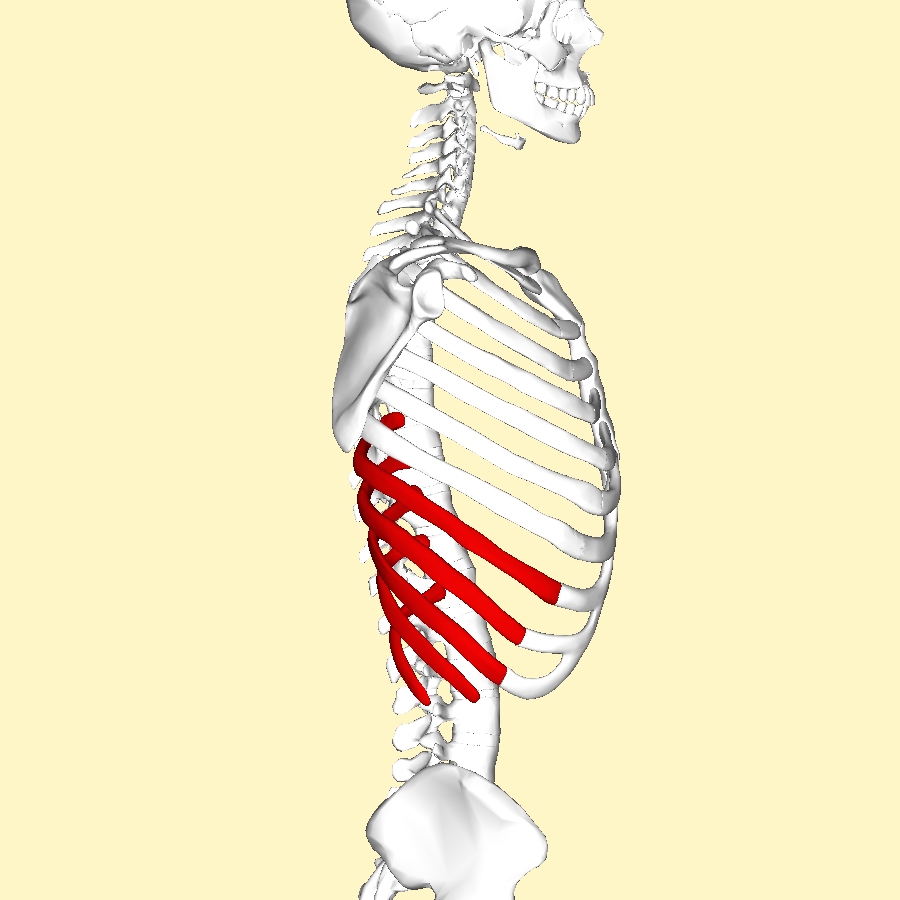
60.
a)
clavicle
b)
ribs
c)
humerus
d)
ulna
61.

The scientific name for "breastbone" is

a)

sternum

b)

tarsal

c)

phalange

d)

femur

62.
First cervical vertebra.
a)
Axis
b)
Body
c)
Vertebra prominens
d)
Atlas
63.
Second cervical vertebra.
a)
Axis
b)
Body
c)
Vertebra prominens
d)
Atlas
64.
There are __________ lumbar vertebrae. 
a)
12
b)
5
c)
7
d)
6
65.
How many cervical vertebrae exist in the spine? 
a)
7
b)
12
c)
5
d)
4
66.
How many thoracic vertebra exist in the spinal column? 
a)
15
b)
5
c)
12
d)
7
67.
What bone is #1 pointing to? 
a)
atlas 
b)
axis 
c)
thoracic
d)
lumbar
68.
What bone is #2 pointing to? 
a)
atlas
b)
axis
c)
lumbar
d)
thoracic 
69.
Which section of the vertebral column is #3?
a)
cervical
b)
thoracic
c)
lumbar
d)
coccyx
70.
Which section of the vertebral column is #5?
a)
cervical
b)
thoracic
c)
lumbar
d)
coccyx
71.
Which section of the vertebral column is #4?
a)
cervical
b)
thoracic
c)
lumbar
d)
coccyx
72.
What is # 6 pointing to? 
a)
cervical
b)
thoracic
c)
coccyx
d)
sacrum 
73.
What is # 7 pointing to? 
a)
cervical
b)
thoracic
c)
coccyx
d)
sacrum 
74.
How many fused vertebrae make up the coccyx?
a)
5
b)
4
c)
7
d)
2
75.
The vertebral column consists of _________ articulating vertebrae. 
a)
50
b)
24
c)
12
d)
9
76.
What is another name for the tailbone?
a)
Coccyx
b)
Saccrum
c)
We don't have a tailbone
d)
Intervertebral disc
77.

distal part of breastbone

a)

medial condyle

b)

lateral styloid

c)

xiphoid process

d)

AC joint

78.
What portion of the sternum articulates with the clavicles
a)
Manubrium
b)
Body 
c)
Xiphoid process
79.

The large wedge shaped vertebra at the inferior end of the spine.

a)

vertebrae

b)

sacrum

c)

femur

d)

tibia

80.

The last two pairs of ribs are called

a)

Floating ribs

b)

False ribs

c)

Vertebrosternal

d)

Vertebrocostal

81.
What bones protect your heart and chest?
a)
spine
b)
skull
c)
ribcage
d)
arm
82.
The bones in your back are made up of what?
a)
fingers
b)
phalanges
c)
vertebrate
d)
toes
83.
The middle, flat section of the sternum. 
a)
clavicle 
b)
head 
c)
glenoid cavity 
d)
Body 
84.

How many (total) ribs are found in the typical human? 

a)

24

b)
5
c)
10
d)
8
85.
Which bone does the sternal end of the clavicle attach to?
a)
Body
b)
Manubrium
c)
Xiphoid Process
d)
Vertebral Rib 1
86.
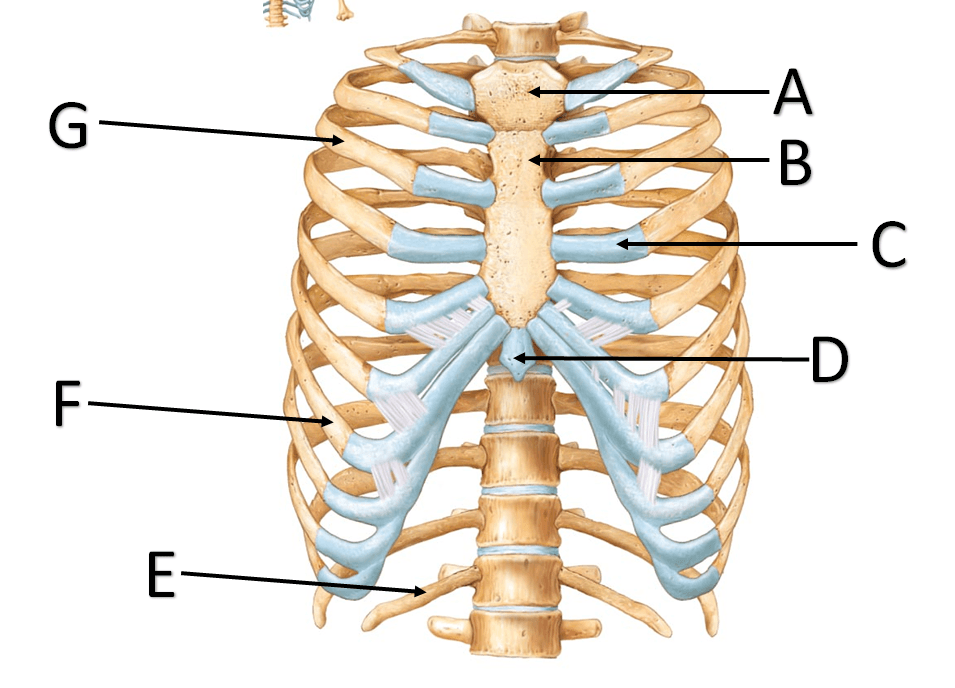
Letter C is pointing to: 
a)
Vertebral Rib
b)
Manubrium
c)
Costal Cartilage
d)
Vertebralchondral Rib
87.

Identify the lambdoid suture below.

a)
b)
c)
d)
88.

Identify the coronal suture below.

a)
b)
c)
d)
89.

Identify the sagittal suture below.

a)
b)
c)
d)
90.

Identify the squamous suture below.

a)
b)
c)
d)
91.

Identify the ethmoid bone below.

a)
b)
c)
d)
92.

Identify the maxilla(e) below.

a)
b)
c)
d)
93.

Identify the lacrimal bone below.

a)
b)
c)
d)
94.

Identify the mandible below.

a)
b)
c)
d)
95.

Identify the nasal bone(s) below.

a)
b)
c)
d)
96.

Identify the vomer bone below.

a)
b)
c)
d)
97.

Mandible is the ONLY movable bone of the skull

a)

True

b)

False

98.
The bone indicated by #1 is the 
a)
parietal bone
b)
temporal bone
c)
ethmoid bone
d)
occipital bone
99.
The bone indicated by #2 is the 
a)
parietal bone
b)
temporal bone
c)
ethmoid bone
d)
occipital bone
100.
The bone indicated by #3 is the 
a)
frontal bone
b)
nasal bone
c)
ethmoid bone
d)
temporal bone
101.
The bone indicated by #4 is the 
a)
frontal bone
b)
nasal bone
c)
ethmoid bone
d)
temporal bone
102.
The bone indicated by #5 is the 
a)
frontal bone
b)
sphenoid bone
c)
ethmoid bone
d)
temporal bone
103.
The suture indicated by #13 is the 
a)
coronal suture
b)
sagittal suture
c)
lamdoid suture
d)
squamous suture
104.
The suture indicated by #14 is the 
a)
coronal suture
b)
sagittal suture
c)
lamdoid suture
d)
squamous suture
105.
The suture indicated by #15 is the 
a)
coronal suture
b)
sagittal suture
c)
lamdoid suture
d)
squamous suture
106.
a)
Zygomatic
b)
Temporal
c)
Parietal
d)
Lacrimal
107.
a)
Zygomatic
b)
Vomer
c)
Ethmoid
d)
Lacrimal
108.
a)
Zygomatic
b)
Vomer
c)
Ethmoid
d)
Lacrimal
109.
a)
Zygomatic
b)
Vomer
c)
Ethmoid
d)
Lacrimal
110.
What suture is shown by arrow B?
a)
Coronal suture
b)
Squamous suture
c)
Lambdoidal suture
d)
Temporo-mandibular joint 
111.

Identify Bone "B"

a)

Ethmoid

b)

Sphenoid

c)

Lacrimal

d)

Zygomatic

112.

Identify Bone "C"

a)

Ethmoid

b)

Lacrimal

c)

Sphenoid

d)

Nasal