
 Worksheets
Unit 1- Unit 6 Review
Total questions: 115
Worksheet time: 1hrs 16mins
What are the four types of tissues in the human body? (Select all that apply)
Epithelial
Connective
Muscle
Nervous
How do we classify epithelial tissue?
Shape
Shape and number of layers
Counting the number of individual cells
Squamous
What is histology?
Study of organs
Study of different types of tissue
Study of histamines
Study of skin
What does pseudostratified mean?
Many layers of cells
Single layer that looks like many layers of cells
Single layer of cells
No layer of cells
What is the most abundant type of tissue in the human body?
Nervous
Muscle
Connective
Epithelial
What are the three types of muscle tissue?
cardiac
smooth
skeletal
biceps femoris
Striations can be seen in which type of muscle tissues?
Smooth and cardiac
smooth and skeletal
skeletal and cardiac
Cardiac only
In which body structure would we find smooth muscle?
Heart
hamstring muscles
bladder
skin
Nervous tissue is found in the brain, spinal cord, and nerves and is responsible for communication.
true
false
What type of muscle tissues is "involuntary muscle?"
Cardiac
Skeletal
Smooth
None


What type of tissue is this?
Connective - Blood Tissue
Connective - Loose
Epithelium - Stratified Squamous
Epithelial - Simple Cuboidal
Nervous - Neuron

Identify the type of connective tissue from the picture above.
adipose/fat
areolar
blood
lymph


What type of tissue is this?
Nervous - Spinal Chord
Epithelial - Simple Columnar
Connective - Adipose
Epithelial - Glandular
Connective - Dense

What type of tissue is this?
Connective - Bone tissue
Epithelial - Stratified Cuboidal
Muscle - Smooth
Epithelial - Simple Cuboidal
Nervous - Neuron


Identify the type of epithelial tissue from the picture above.
Simple squamous
Simple cuboidal
Stratified columnar
Stratified cuboidal
Cartilage heals slowly because
tissues are so hard
tissues are so fibrous
cells are so far apart
blood supply is poor
The neuron has a single long-part called the ___.
Dendrites
Nerve fibers
Axon
Nerve Endings
Nerve impulse enables animals to move rapidly in response to ____.
Body parts
Myelin Sheath
Stimuli
Cytoplasm
A neuron consists of a ______ which comprises of Nucleus and Cytoplasm.
Nerve
Cell body
Nucleus
Spinal Cord

Name the part B in the following picture.
Axon
Dendrite
Cell Body
Axon Terminal

What layer of skin produces melanin?
Dermis
Epidermis
Hypodermis
Subcutaneous
What types of cells found in the epidermis contain nerve endings that are touch receptors?
Keratinocytes
Langerhans cells
Melanocytes
Merkel cells
What layer of the skin contains sweat glands?
Dermis
Epidermis
Hypodermis
Subcutaneous

List the layers of the Epidermis in order from top to bottom.
5,2,3,4,1
1,2,3,4,5
4,5,3,1,2
1,4,3,2,5
Mechanoreceptor responsible for sensation of the stretching of the skin, sustained pressure on the skin, and the perception of heat
Ruffini endings
Krause end bulb
Meissner corpuscle
Merkel discs
thermoreceptor that detects cold temperatures
free nerve endings
Ruffini endings
Krause end bulbs
Pacinian corpuscle
mechanoreceptor that responds to changes in texture and slow vibrations
Krause end bulbs
Meissner corpuscle
Ruffini endings
Pacinian corpuscle
mechanoreceptor that responds to deep pressure and slow vibrations
Merkel discs
free nerve endings
Ruffini endings
Pacinian corpuscle
mechanoreceptor that responds to change in position and sustained pressure that defines shapes and edges
Krause end bulbs
Merkel discs
free nerve endings
Ruffini endings
detects pain, touch, pressure, temperature, and touch
free nerve endings
Merkel discs
Pacinian corpuscle
Meissner corpuscle
The integumentary system consists of
heart, veins, and arteries
brain, spinal cord, and nerves
skin, hair and nails
stomach, small intestine, and large intestine
How many layers make up the skin?
3
30
7
5
The deepest layer of skin
dermis
epidermis
hypodermis
What is the dark brownish pigment found in the skin and hair of humans and animals that absorbs UV light?
keratin
melanin
collagen
carotine
The connective tissue that covers the diaphysis of a long bone is called
diaphysis
periosteum
endosteum
spongy bone
The long portion of a long bone
diaphysis
periosteum
endosteum
spongy bone
The type of bone that houses red bone marrow
diaphysis
periosteum
endosteum
spongy bone
The hardest and strongest type of bone
compact bone
yellow bone marrow
red bone marrow
spongy bone
The first step in bone healing
going to the ER
remodeling
formation of a bony callus
formation of hematoma
The continuous process of replacing bone in the body; this process speeds up during healing
going to the ER
remodeling
formation of a bony callus
formation of hematoma
Stem cells for bone
osteoclasts
osteoblasts
osteogenic cells
osteocytes
Bone cells that build bone - producing collagen and calcium and phosphate salts
osteoclasts
osteoblasts
osteogenic cells
osteocytes
Bone cells that destroy bone with enzymes and acids to make way for new bone to be built
osteoclasts
osteoblasts
osteogenic cells
osteocytes
Mature bone cells that are spread out in the bone tissue
osteoclasts
osteoblasts
osteogenic cells
osteocytes
Circular units of bone tissue created by osteoblasts that makes compact bone strong
osteons
osteoclasts
osseus tissue
osteocytes
The extracellular matrix of bone is made of
calcium salts
phosphate salts
collagen
all three
Which function of bone is completed by the red bone marrow?
Mineral Storage
Provides Structure
Enables Movement
Produces Blood Cells
Which function of bone involves muscle tissue?
Mineral Storage
Provides Structure
Enables Movement
Produces Blood Cells
Which function of bone ensures that we have enough calcium to keep our body working properly?
Mineral Storage
Provides Structure
Enables Movement
Produces Blood Cells
Connective tissue that connects bones together at an articulation.
ligament
tendon
meniscus
synovial
Connective tissue that connects muscle to bone.
ligament
tendon
meniscus
synovial
A moveable joint that has a capsule with fluid.
ligament
tendon
meniscus
synovial
Connective tissue that covers the epiphyses where the bone forms an articulation.
ligament
tendon
articular cartilage
synovial
The gap between the nerve cell and sarcolemma is the ____ ___.
Synaptic cleft
Neurotransmitter
Motor unit
Neuromuscular junction
What is the specific neurotransmitter that stimulates the movement of skeletal muscles?
GABA
Acetylcholine
Serotonin
Dopamine
What happens at the neuromuscular junction?
A sensory neuron communicates with a motor neuron
An action potential jumps from the muscle to the neuron
A nerve signal traveling down a motor neuron can jump over to the muscle cell
Muscle cells contract in response to a sensory neuron
Skeletal muscles are voluntary.
true
false
The epimysium covers
the entire muscle
the fascicle
the muscle fiber
the myofibril
Which connective tissue surrounds the fascicle?
epimysium
perimysium
sarcolemma
endomysium
What is the function of the central nervous system?
Transmit information to and from the brain
Control reflex activities
Receive and process information
Produce CSF within brain ventricles
Which part of the nervous system conducts signals to and from the brain?
Spinal cord
Astrocytes
Schwann cells
Microglia
What is the function of efferent nerves?
Tell the body how it is being affected by stimuli
Stimulate muscles to produce effort
Absorb and dispose of dead cells and bacteria
Wrap around nerve fibers and produce myelin
Which type of glial cell forms a protective covering around the spinal cord and central cavities within the brain?
Astrocytes
Microglia
Ependymal cells
Oligodendrocytes
What is the function of Schwann cells in the peripheral nervous system?
Form fatty myelin sheaths around nerve fibers
Serve as cushioning support cells
Link nutrient-supplying capillaries to neurons
Absorb and dispose of dead cells and bacteria
Which part of a neuron carries impulses away from the soma to the axon terminals?
Dendrites
Myelin sheath
Axon
Axon terminals
What is the function of the myelin sheath?
Absorb and dispose of dead cells and bacteria
Wrap around nerve fibers and produce myelin
Serve as cushioning support cells
Carry impulses away from the soma to the axon terminals
Which type of neuron carries impulses from the skin and organs to the spinal cord and brain?
Sensory (afferent) neurons
Motor (efferent) neurons
Interneurons
Anaxonic neurons
What is the structure of bipolar neurons?
One axon and one dendrite
Multiple dendrites
Single axon with dendrites on the peripheral end
One axon and multiple dendrites
Which type of neuron has one axon and multiple dendrites?
Sensory (afferent) neurons
Motor (efferent) neurons
Interneurons
Multipolar neurons
What is the function of the myelin sheath in a neuron?
It speeds up the transmission of electrical impulses
It slows down the transmission of electrical impulses
It generates electrical impulses
It stops the transmission of electrical impulses
What is the role of afferent nerves in the nervous system?
They carry messages from the brain and spinal cord to the muscles
They carry messages from the sensory organs to the brain and spinal cord
They provide support and nutrition to the neurons
They form the myelin sheath around nerve fibers
What is the function of oligodendrocytes in the central nervous system?
They form the myelin sheath around nerve fibers
They serve as cushioning support cells
They link nutrient-supplying capillaries to neurons
They absorb and dispose of dead cells and bacteria
What is the role of Astrocytes in the nervous system?
They form a protective covering around the spinal cord
They help in transmitting information to and from the brain
They provide structural support and regulate the external environment of neurons
They produce cerebrospinal fluid (CSF)
What is the function of Schwann cells in the nervous system?
They conduct signals to and from the brain
They wrap around nerve fibers and produce myelin in the peripheral nervous system
They absorb and dispose of dead cells and bacteria
They produce cerebrospinal fluid (CSF)
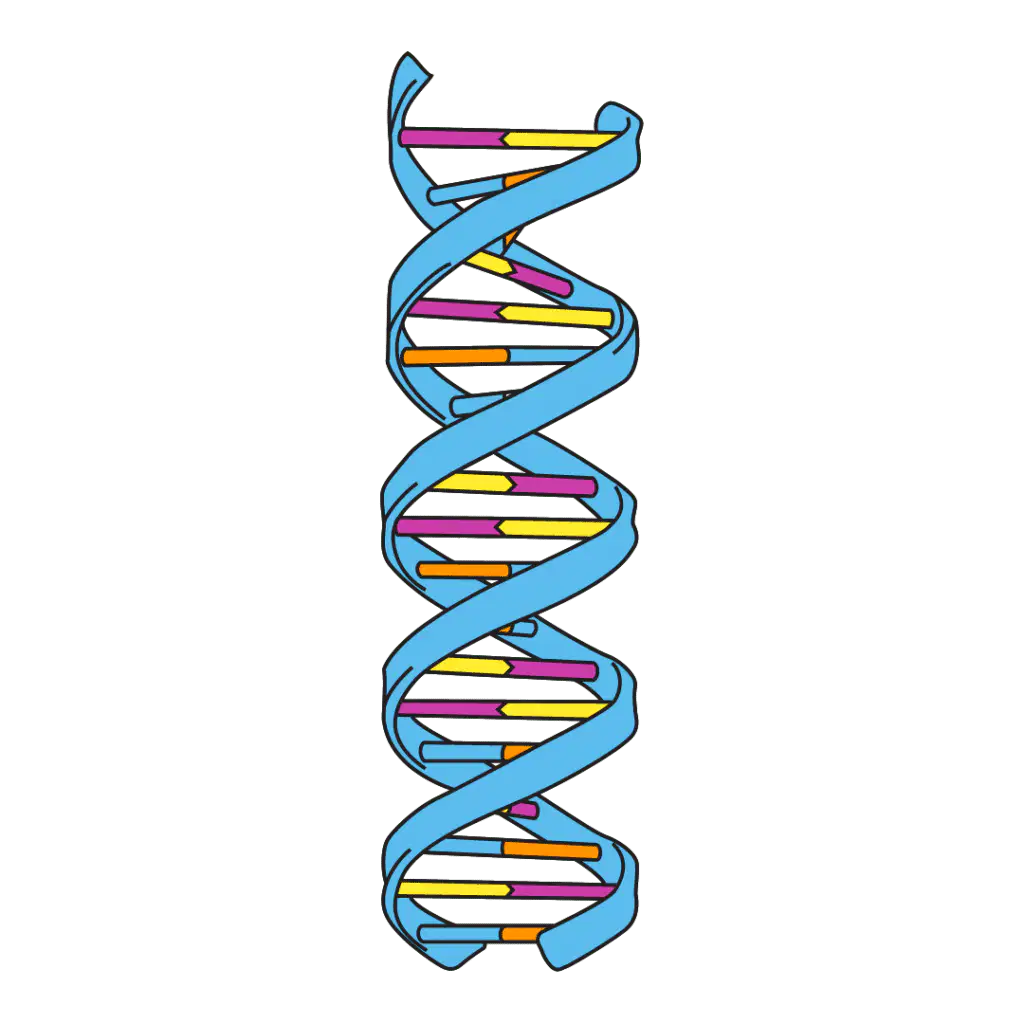
single stranded
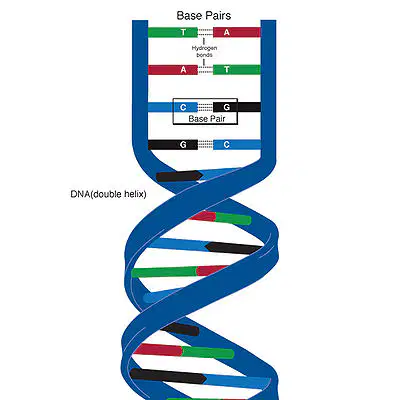
G bonds with ______________.
A
G
C
T
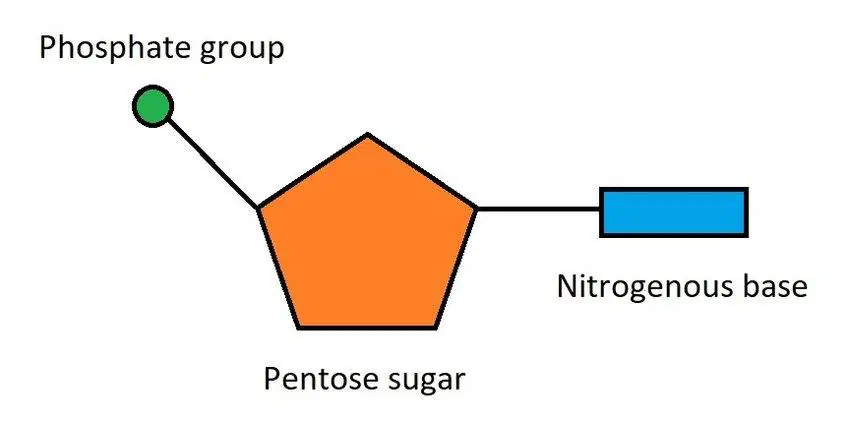
hydrogen, sugar, lipid
sugar, phosphate, base
protein, carb, lipid

The building block (monomer) of nucleic acid is called _____.
A pairs with ______________.
G
T
C
A


What type of RNA is shown in this image?
rRNA
mRNA
tRNA

In RNA the base T is replaced with
U
G
C
A
There are 3 types of RNA. What are they? (Select all that apply)
tRNA
rRNA
mRNA
xRNA

What type of RNA is shown in this image?
rRNA
mRNA
tRNA
What are the names of the nitrogenous bases in DNA? (Select all that apply)
adenine
cytosine
thymine
guanine
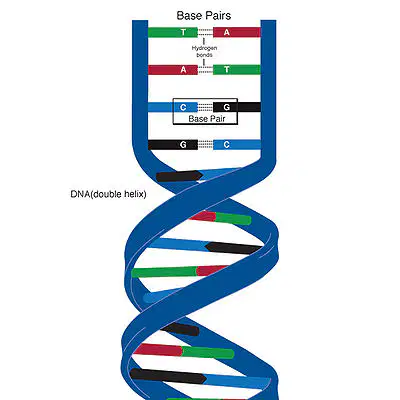
In DNA, T always pairs with...
T
C
G
A
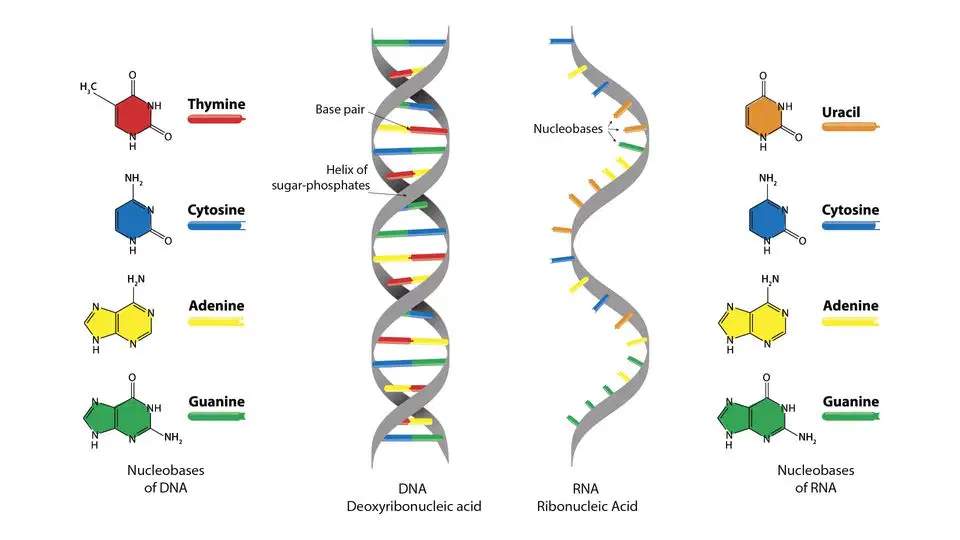
Which of these bases are in RNA? (Select all that apply)
There are 3 types of RNA
False
True

