
 Worksheets
1st Half of Quarter 4 Last Chance Recovery
Total questions: 112
Worksheet time: 3hrs 1mins
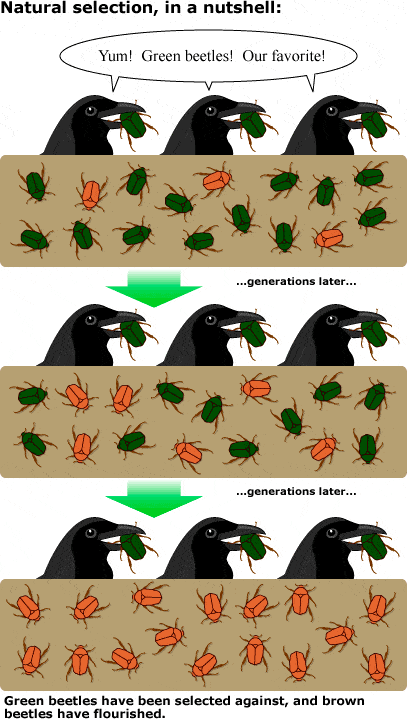
What is the successful adaptation?

What are the four groups of macromolecules?
nucleic acids, proteins, carbohydrates, lipids
nucleotides, amino acids, triglycerides, monosaccharides
monomers, polymers, dimers, trimers
glucose, fructose, sucrose, lactose

All of these finches have different shaped beaks, they are an adaptation to gain access of
Water
Food
Shelter
Mates

Why has antibiotic resistance evolved in bacteria?
Bacteria reproduce quickly
Bacteria with a resistance to the antibiotic, passed that trait to offspring
Bacteria that are resistant reproduce faster than non resistant strains
Bacteria exposed to antibiotics develop a resistance to them

Genetic drift is change in the allele frequency of a population due to...
random chance
natural selection
non-random mating (sexual selection)
artificial selection
A(n)________ is a measure of how common a certain allele is in a population.
Allele Frequency
Gene Pool
Genotypical Number
Genetic Drift


Evolution by chance, survival of the luckiest:
genetic drift
sexual selection
fitness
coevolution

Charles Darwin said all that species share:
a common ancestor
the same DNA
the same species
a home


Offspring DIFFERENT from parent = _________

A scientist is studying two traits in a snail: body texture and whirls. Smooth body (S) is dominant to bumpy body (s), and whirl (W) is dominant to no whirl (w).
A SsWw and a ssww beetle mate and produce the number of offspring shown in the table. What % recombination is occurring here?
33%
25.6%
29.6%
70.4%


Fossils are _________
the most significant evidence of evolutionary relationships between species
distinct and direct evidence of evolution
a complete record of evolution
all of the above
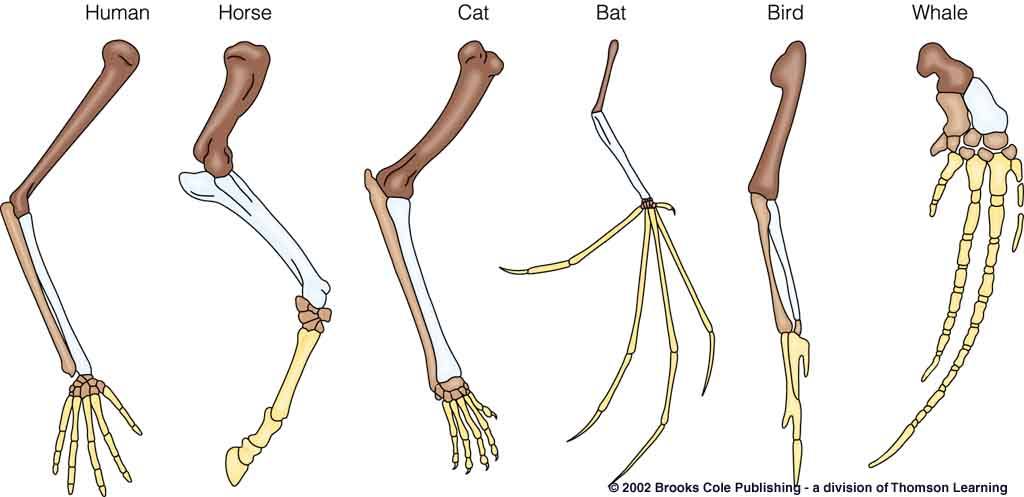
Examples of homologous structures include
the wings of a bat and a bird
the wings of a bat and the limbs of a cat
the limbs of a cat and the limbs of a tortoise
none of the above
An example of a vestigial structure is
the forelimb of a whale
the wings of an eagle
the pelvic bone of a whale
the tail bone of a monkey
The strongest evidence for evolution from a common ancestor is
similar DNA sequences
similar body structures
similar fossils
all of the above
The hands of different mammals are vestigial structures
True
False
________ anatomy is the study of the similarities and differences in the structures of different species
Human
Comparative
Relative
The wings of a bat and birds are _________ structures
vestigial
homologous
analogous



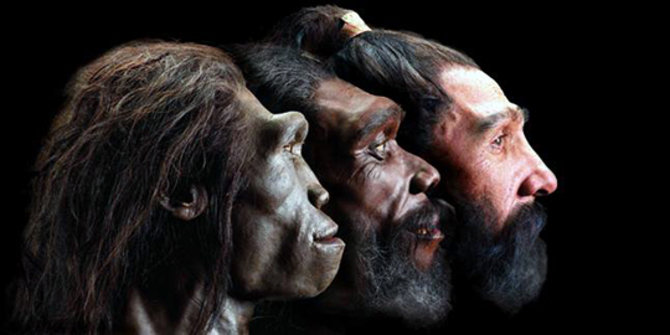
Scientists have found evidence that about 2.4 million years ago a gene regulating jaw muscles mutated and may have led to the more graceful human jaw we see today. The diagram below shows the skulls of 3 hominid species. Which statement below most closely explains the link between jaw size and hominid evolution?
The jaws of hominids evolved to be smaller and less protruding over time as did the skull.
The jaws of hominids evolved to be larger and more protruding over time.
There appears to be no change in the jaws of hominids over time.
The jaws of hominids changed over time due to a change in brain size

Based on the illustration to the right, what do the similarities between human and chimpanzee hands and feet suggest about the different organisms?
Chimpanzees and humans both have hands and feet adapted for walking upright, showing they have identical DNA.
Chimpanzees and humans both have similar hands for grasping, proving they make and use complex tools.
Humans and chimpanzees both developed five digits on their hands and feet, suggesting they have a common ancestor.
Humans and chimpanzees both have thumbs, proving they eat similar foods like meat, nuts, and vegetation.
How is the scientific theory of evolution supported by the comparison of the skulls and skeletons of modern humans and extinct hominids?
By making the hip, spine, and skull comparisons, the age of different hominid specimens can be determined.
Comparison of skull and skeletons provides evidence that humans and different hominid species interacted.
Similarity in skull shapes, hands, and hips between extinct hominids and humans supports a common ancestry.
Skull and skeleton comparisons can explain why hominids were inferior and became extinct while humans evolved.
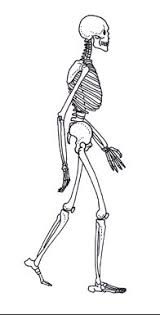
The ability to walk upright on two legs is called:
bipedalism
quadropedalism
bicyclepedalism
tripedalism

The illustration below shows four lobes of the human brain.
What lobe is designated by label 2?
temporal
parietal
occipital
frontal

Which lobe of the brain is designated by number 4?
Occipital Lobe
Parietal Lobe
Frontal Lobe
Temporal Lobe
Modern humans and their closest relatives belong to the same family. Members of this family are called:
hominids
primates
homo sapiens
Lucy
What continent did humans evolve from?
the Americas
Asia
Africa
many places all at once

Which is the oldest of these four species?
Australopithecus
Tool-making hominids
Homo Neanderthalensis
Homo Sapiens



Which group is not represented in the food web?
producers
primary consumers
secondary consumers
decomposers

What do the arrows in the food chain indicate about the flow of energy in an ecosystem?
Energy is continuously recycled by the organisms in an ecosystem.
Energy flows in one direction in an ecosystem, from producers to consumers.
More of the available energy in an ecosystem is given to large animals than to small animals.
Organisms at the end of the food chain receive more energy than those at the beginning.

In this energy pyramid, which organism would most likely be in level 2?
bird
fox
caterpillar
tree
Which one of the following is true of grass in an ecosystem?
It converts oxygen to glucose.
It produces carbon dioxide from oxygen and water.
It produces glucose from carbon dioxide and water.
It converts water to energy.

How would the removal of earthworms from the food chain affect the other organisms?
The number of bass will increase.
The number of crayfish will decrease.
The crayfish will get their energy directly from the sun.
The number of bass and ospreys (bird) will increase.

Interactions in an ecosystem result from the transfer of matter and energy from producers to consumers and eventually decomposers. What are the forms of energy transfer from numbers 1 through 4?
Chemical energy to chemical energy
Light energy to chemical energy
Chemical energy to heat energy
Heat energy to mechanical energy

The diagram shows part of an aquatic food web for a stable lake ecosystem in Connecticut. What is the source of energy for the algae?
waves
sunlight
bacteria
rotifers, water fleas and tadpoles

Suppose that a new predator of the rabbit migrated to this ecosystem. What is the most likely initial effect on the other organisms?
More competition among the mice for food
More competition among the hawks for food
Less competition among snakes for food
Less grass available for food

For the food chain shown, which of the following changes would have the most severe consequences?
a drastic decrease in rainfall, causing a drought
the poaching of predatory hawks by game hunters
the introduction of a second predator that eats field mice
a parasitic infestation that reduces the cricket population

The diagram provided shows a marine food chain. In this food chain, the zooplankton are
primary producers.
primary consumers.
secondary consumers.
tertiary consumers.

The picture shows an energy pyramid. What will most likely happen to the foxes and the wolves if the rabbits are removed?
The foxes will eat more wolves.
The foxes will eat fewer wolves.
There will be more foxes and wolves.
There will be fewer foxes and wolves.

A student examines the information in the table. The student concludes that Organism W should be placed at the base of the food web to represent the feeding relationships in the marine ecosystem. However, the student later learns that Organism W's cells do not contain chloroplasts. Based on the new information, which conclusion would be appropriate?
Another organism in the marine ecosystem is a producer.
Organism W is a secondary consumer in the marine ecosystem.
The role of Organism T in the marine ecosystem changes during its life.
This marine ecosystem does not have any producers.
Which of these organisms would most likely be found at the top of an energy pyramid?
clams
sardines
sharks
kelp (seaweed)

The picture shows the energy flow through a meadow community. Which of the following would most likely occur to the populations within the community of organisms immediately after a wildfire burns the environment?
Hawks would increase and foxes would increase.
Hawks would decrease and foxes would increase.
Meadow plants would increase and rabbits would decrease.
Meadow plants would decrease and rabbits would decrease.
Which of these organisms would most likely be found at the bottom of a biomass pyramid?
giant squids
sand sharks
sea cucumbers
green algae


A biologist compares how different ecosystems undergo succession. She divides the series of events happening during succession into different stages. What feature below is found only in secondary succession but not in primary succession?
the lack of pioneer species in the second stage
the presence of pioneer species in the final stage
the presence of trees and large plants in the final stage
the presence of soil in the first stage
Scientists that study the effects of global warming predict that a change in Earth's average temperature of even a few degrees will have dramatic effects. One consequence of global warming is the melting of the polar ice caps, which will in turn affect polar bear that use sea ice as a platform for hunting seals. What will most likely happen to the population of polar bears as a result of global warming?
It will increase as polar bears adapt to other habitats.
It will increase because polar bears will have fewer predators.
It will decrease as the habitat suitable for polar bears decreases.
It will decrease because polar bears will become easier to hunt.
As forested areas are cut down, habitats are often permanently changed to agriculture or other land use. How does the conversion of natural forest to human land uses affect an ecosystem?
There will be a decrease in biodiversity in the ecosystem.
There will be an increase in animal populations in the ecosystem.
There will be less space to plant crops and build houses in the ecosystem.
There will be more nutrients in the ecosystem's soil after the forests are cut down.
In the 1930s, the Red Imported Fire Ant was accidentally introduced into the United States. This species is native to South America, but has thrived in the United States because of a lack of natural enemies here. Which of the following best explains how the Red Imported Fire Ant has affected native ant species in the U.S. that do have predators?
Native ant species preyed on the Red Imported Fire Ant and increased in population.
Native ant species interbred with the Red Imported Fire Ant, creating new ant species.
The Red Imported Fire Ant caused native ant species to become more susceptible to predators.
The Red Imported Fire Ant caused a decline in native ant species by competing for their resources.
Why are there so few aquatic plants and phytoplankton that live at the bottom zones in the ocean?
The ocean floor contains many decomposers.
Most sunlight is absorbed before reaching these levels.
Water is a limiting factor.
The temperature in these zones is extremely low.
The pH of the water in several lakes in Norway and Sweden had decreased to below 5.0 due to an increase in acid rain. Which of the following is most likely to happen in these lakes?
the decline of several fish populations.
an increase in the amount of primary producers
an increase in numbers of fish
increased predator-prey relationships
Salt water is an abundant resource but unusable for irrigation and drinking. As demands on freshwater sources increase, the use of desalination processes to remove salt from ocean water is increasing. A concern of desalinating water is the large amounts of recovered salts that are returned to the ocean. Which of the following describes the most likely impact of desalination on the surrounding ocean environment?
Methane gas would pollute the ocean environment as shoreline organisms begin to die and decay.
Alteration in ocean salt levels would cause loss of species biodiversity and unbalanced populations in marine food webs.
Nonrenewable resources in the ocean environment would become depleted and upset the ecosystem's balance.
Increased levels of salts and minerals in the ocean would result in overpopulation of marine bivalves due to strengthened shells.
Which of the following is matched correctly?
hurriances- density dependent facto, abiotic
hurricanes- density dependent factor, biotic
hurricanes- density independent factor, abiotic
hurricanes- density independent factor, biotic
Every year, monarch butterflies from Canada and the United States, spend the winter in central Mexico. The dry and mild climate in Mexico allows the monarch butterflies to survive the winter. One winter, a week of storms caused freezing temperatures and 43 cm of snow in Mexico. What was the most likely impact of these storms on the monarch butterflies?
Monarch butterflies died in large numbers.
Monarch butterflies immediately migrated back to the United States.
Monarch butterflies did not migrate from Canada and the Untied States the next year.
Monarch butterflies evolved several new adaptations to survive the winter in Mexico.
Five hundred years after the deer had established a flourishing population in the park, a few of them venture back to their original woods and have babies with the deer there.
Genetic Drift
Mutations
Non-random mating
Gene flow

