Wayground logo

Free Printable Worksheets

Font size

S
M
L
XL
Worksheets

Earth's Diversity Review Two: Ecosystems, Impacts, & Recyc.

Total questions: 74

Worksheet time: 37mins

Name
Class
Date
1.
Which of the following will increase the size of a population?
a)
emigration and births
b)
immigration and deaths
c)
immigration and births
d)
emigration and deaths
2.
Which of the following is a density-dependent limiting factor?
a)
human activities 
b)
unusual weather
c)
competition
d)
natural disaster
3.
Which of the following statements about primary succession is true?
a)
It begins with a climax community
b)
Small mammals are the first to live there
c)
It begins with bare rock
d)
It begins with rock and soil
4.
The movement of a single caribou into a herd is an example of
a)
population
b)
immigration
c)
emigration
d)
predation
5.
Lichens and mosses that first live in uninhabited areas are examples of
a)
secondary species
b)
non-native species
c)
pioneer species
d)
climax species
6.
Secondary succession is most likely to occur
a)
on a volcanic island
b)
after a rainstorm
c)
after a Thanksgiving Turkey dinner
d)
after a forest fire
7.
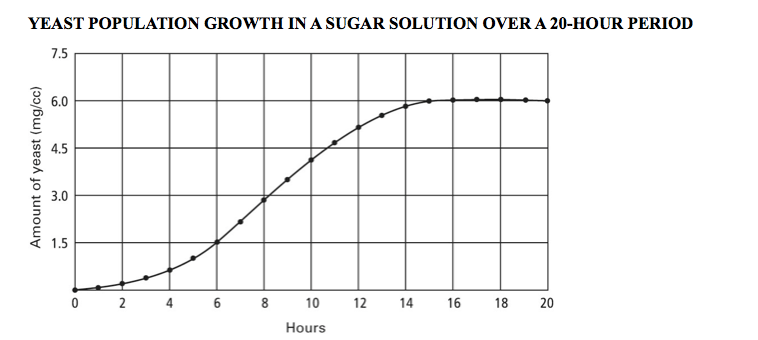
 What is the name for this leveling off shown in the graph?
a)
logistic line
b)
carrying capacity
c)
climax point
d)
mediocre
8.
What 2 factors decrease population size?
a)
Immigration, Births
b)
Emigration, Births
c)
Emigration, Deaths
d)
Immigration, Deaths
9.
What factor describes when populations decrease because animals are moving out of a population?
a)
Emigration
b)
Limiting Factors
c)
Immigration
d)
Exponential Growth
10.
Number of individuals per unit area.
a)
population density
b)
dispersion
c)
biotic potential
d)
carrying capacity
11.
Food, water, sunlight, shelter, and space are resources that are often __________.
a)
limiting factors
b)
wet
c)
messy
d)
found in rocks
12.
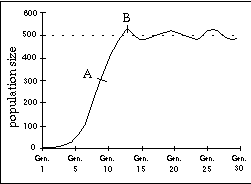
What is the carrying capacity of the following graph?
a)
1000
b)
8000
c)
800
d)
600
13.
What is the carrying capacity of the graph?
a)
around 500
b)
more than 500
c)
less than 500
d)
around 600
14.
If the death rate of a population is greater than the birthrate, the population shrinks.
a)
True
b)
False
15.

If the wolf population goes extinct on the island, what is likely outcome

a)

Moose will population will remain stable

b)

The moose population will grow and eat all the vegetation

c)

The other species that rely on the vegetation will take over for the wolves

d)

New predators will begin hunting Moose

16.
If wolves were re-introduced what would happen to the moose population
a)
The moose would go extinct from over hunting
b)
The wolf population would take over the island
c)
The moose population would decline to normal levels
d)
The moose would adapt to other environments
17.

We know that population sizes change over time. All statement(s) are true about this change EXCEPT:

a)

When there are more births than deaths the population size will increase.

b)

When there are more deaths than births the population size will decrease.

c)

When there are more deaths than births the population size will increase.

d)

When there are more births than deaths the population size will increase

18.

Birth rates in a population, such as the moose on Isle Royale, can be affected by all of the following EXCEPT:

a)

Availability of food

b)

Availability of mates

c)

Health of the mother

d)

Changes in the environment

e)

No exceptions - All of these factors affect birth rates.

19.

Review the graph provided. What statements can be made about the significant decline in wolves around 1979?

a)

The wolf decline was a direct result of moose decline.

b)

The is no way to know why the wolf population dropped.

c)

The drop is most likely due to the declining moose population, but more information would be needed to determine that.

d)

The drop is most likely due to the increasing moose population, but more information would be needed to determine that.

e)

The wolf decline was a direct result of the moose increase.

20.

Humans are causing extiction in which ways?

a)

By poaching animals for food or products.

b)

By destroying the natural habitat of species.

c)

By polluting the environments of the world.

d)

All of the above.

21.
When taken to a new habitat, non-native plants often threaten native plants of the new habitat.  Why do they do this?
a)
Non-native plants are able to mutate rapidly
b)
Non-native  plants cause native animals to relocate
c)
Non-native plants are able to be used for medicine
d)
Non-native plants compete with native plants for resources
22.
What effect will an invasive species have on the carrying capacity of an ecosystem?
a)
The carrying capacity will increase
b)
The carrying capacity for everyone will decrease
c)
The carrying capacity will only decrease for those in competition for same resource
d)
The carrying capacity for all animals will stay the same
23.
Kudzu has overgrown many parts of southern Missouri and native ground plants have disappeared from the area. This is an example of:
a)
Parasitism between kudzu and the native plants
b)
A predator prey relationship between ground plants and kudzu
c)
Competition occurring between the native and invasive species
d)
Commesalism occurring between the kudzo and native plants
24.
1. What makes a species invasive?
a)
Moving to a new ecosystem and taking resources from natives 
b)
Not having papers
c)
Species that can't adapt
d)
Plants that take up too much space
25.
What is the greenhouse effect?
a)
warming of the earth due to gases in our atmosphere.
b)
cooling of the earth due to gases in our atmosphere
26.
What are the 5 main greenhouse gases?
a)
CO2, N2O, CH4, H2O, O3
b)
CO2, NO2, NH4, H2O, O2
27.
Which 2 greenhouse gases contribute the MOST to global warming of Earth?
a)
N2O and H2O
b)
O3 and H2O
c)
CO2 and CH4
28.
The main human activity that releases greenhouse gases is
a)
using bottled water
b)
burning fossil fuels
c)
texting on cellphones
d)
eating meat
29.
How can global warming cause sea levels to rise? Choose the best answer.
a)
by causing it to rain more often
b)
by melting glaciers and ice caps
c)
by increasing the number of undersea volcanic eruptions
d)
by creating bigger and more powerful hurricanes
30.
Why does cutting down trees increase global warming?
a)
trees soak up carbon dioxide
b)
trees provide shade which counteracts global warming
c)
trees absorbs the sun's energy without radiating back into the atmosphere
d)
trees drain greenhouse gases like methane from soil
31.
Things you can do to help decrease global warming include:
a)
Eat more ice cream.
b)
Keep your freezer door open.
c)
Keep your air conditioner on high.
d)
Turn off your lights when you’re not using them.
32.
A species whose presence indicates the health of an ecosystem
a)
keystone species
b)
Indicator species
c)
plants
d)
producers
33.

A niche ________________.

a)

is the function that an organism performs in the food web of that community.

b)

includes everything else the organism does and needs in its environment.

c)

is specific to each individual animal and plant.

d)

All of the above.

34.
What is the water cycle?
a)
the 3 forms of water
b)
the movement of water on, above, or below the surface of the Earth
c)
when water melts
d)
when clouds form
35.
Which is the opposite of condensation?
a)
runoff
b)
evaporation
c)
precipitation
d)
transpiration
36.
Which best explains why runoff is important?
a)
It returns water to other locations on Earth
b)
It increases the chance of flooding
c)
It makes evaporation occur faster
d)
It increases condensation
37.
What is the energy source for the water cycle?
a)
the sun
b)
the earth
c)
water
d)
the moon
38.
What is it called when plants give off water vapor as a waste product?
a)
condensation
b)
evaporation
c)
sublimation
d)
transpiration
39.
When water _________, dew forms.
a)
Melts
b)
Evaporates
c)
Condenses
d)
Precipitates
40.
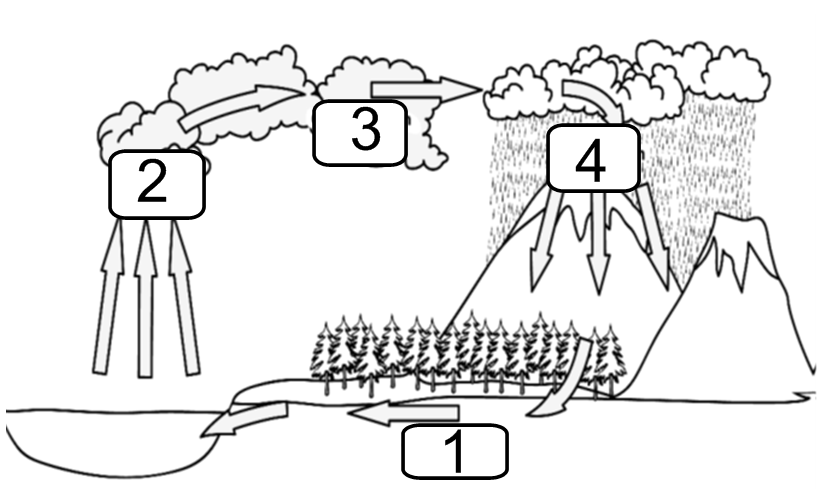
Which stage does the #2 show in the diagram?
a)
condensation
b)
evaporation
c)
precipitation
d)
run off
41.
What is a layer of rock or sediment that holds water?
a)
glacier
b)
well
c)
aquifer
d)
natural spring
42.

97% of the Earth's water is located in....

a)

ground water

b)

the ocean

c)

lakes, rivers, and streams

d)

glaciers

43.
Which of the following causes all of the water on the planet to change its state (solid, liquid, gas) and move through the water cycle?
a)
amount of plant matter
b)
location of ice caps
c)
size of ocean
d)
temperature
44.
Precipitation happens when clouds of water droplets are too ______________.
a)
cold
b)
light
c)
heavy
d)
hot
45.

Which of the following are types of precipitation?

a)

snow

b)

clouds

c)

condensation

d)

hail

e)

rivers

46.

How many different states can water exist in?

a)

7

b)

2

c)

4

d)

3

47.
What does NOT produce carbon dioxide?
a)
Photosynthesis
b)
Burning Fossil Fuels
c)
Animal respiration
d)
Plants decaying
48.
TRUE or FALSE?
All of the carbon in existence is continually recycled in the carbon cycle.
a)
True
b)
False
49.
Organisms that do not decompose can be buried and become what?
a)
water
b)
nutrients
c)
air
d)
fossil fuels
50.
Carbon can be found in...
a)
The atmosphere
b)
Soil
c)
Fossil fuels
d)
All of the above
51.
Respiration is the process by which animals take in _____ and release _____. 
a)
photosynthesis, air
b)
carbon, oxygen
c)
oxygen
d)
oxygen, carbon dioxide
52.
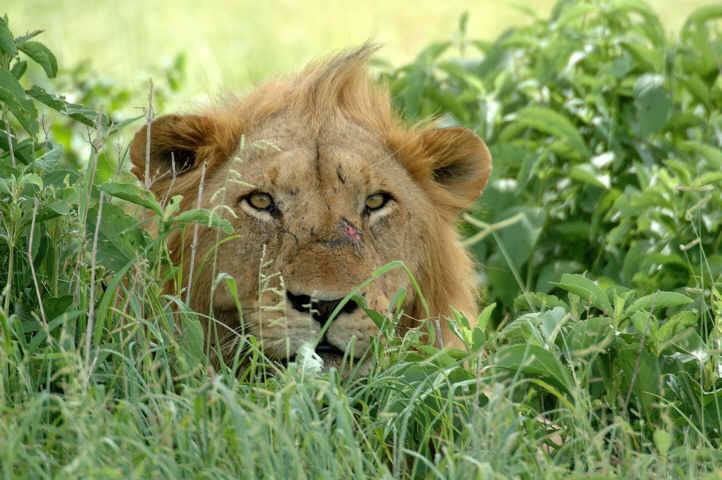
How does the carbon in grass become part of a lion?
a)
The lion eats the grass
b)
Carbon from grass doesn't end up in a lion. 
c)
The carbon ends up in the lion's food chain. 
d)
The lion breathes in carbon given out by the plant
53.
If the plant population decreased, the amount of carbon would _________.
a)
Stay the same
b)
Increase
c)
Decrease
54.

Which gas do plants release, that humans depend on for survival?

a)

Water

b)

Carbon Dioxide

c)

Oxygen

d)

Sugar

55.
What is deforestation?
a)
Clearing Earth's forests on a massive scale
b)
Eating too much vegetables
c)
Going to a forest and pulling weeds
d)
Clearing the five trees in my backyard
56.

What type of resources are considered finite and cannot be replenished in a short amount of time?

a)

Renewable Energy

b)

Nonrenewable Energy

c)

All Energy

d)

Generational Energy

57.

What type of energy is able to be regenerated in a short amount of time or are continuous?

a)

Renewable Energy

b)

Nonrenewable Energy

c)

All Energy

d)

Generational Energy

58.

Which of the following are fossil fuels? (Select all that apply.)

a)

Coal

b)

Oil

c)

Natural Gas

d)

Nuclear Energy

59.

Which of the following are renewable energy sources? (Select all that apply.)

a)

Solar

b)

Wind

c)

Hydroelectric

d)

Geothermal

e)

Biomass

60.
_________is energy generated when moving water turns turbines.
a)
Wind
b)
Hydro
c)
Geothermal
d)
Solar
61.
What kind of environment would have had to existed in the past for an area to have coal today?
a)
Any environment where a large number of plants and animals died.
b)
A swamp with many generation of plants that died and couldn't decompose naturally.
c)
A sea where many plants and animals died and couldn't decompose.
d)
A desert environment where no living things ever existed. 
62.
When coal is used by humans, it is typically used to 
a)
Heat homes directly
b)
Heat water 
c)
Generate electricity
d)
Heat food
63.
A disadvantage of solar energy is
a)
that the clouds can block the sunlight
b)
it is not available at night
c)
that the clouds can block the sunlight and it is not available at night
d)
the sun is too hot to be absorbed in solar panels
64.

Energy that is made from heat inside Earth

a)

Coal

b)

Fossil Fuels

c)

Geothermal

d)

Solar

65.
Does the United States gets most of its energy from renewable resources?
a)
Yes
b)
No
66.
Define Biomass energy:
a)
Energy created by burning plant and animal wastes
b)
Energy created by tides and dams
c)
 Uses “farms”
67.

What are renewable resources?

a)

A limited amount and cannot be replaced in a human life time.

b)

Plastic bags

c)

Coal, oil, and natural gas

d)

Can be replaced in our lifetime through natural processes
68.
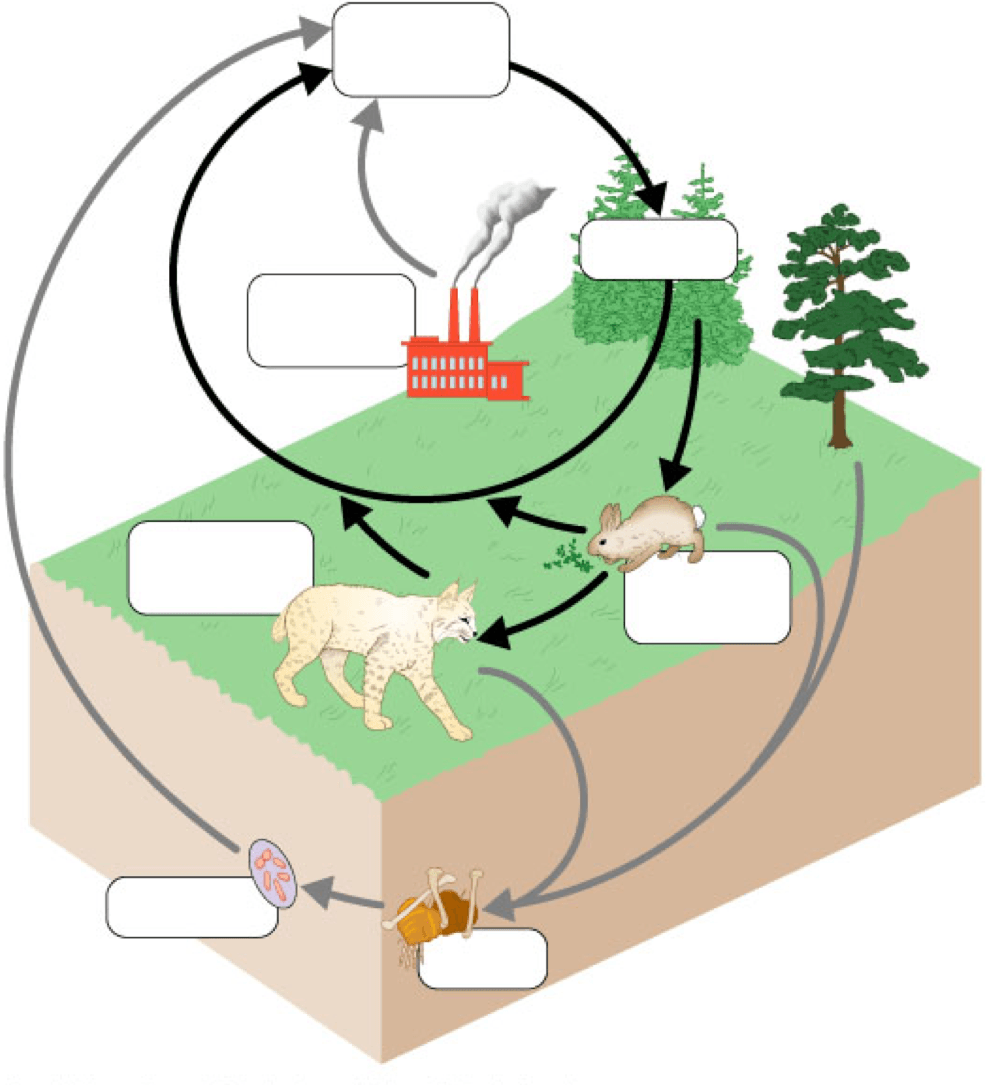
In what process is Carbon transformed into chemical energy?
a)
Photosynthesis
b)
Respiration
c)
Primary Production
d)
Secondary Production
69.
Combustion is another word for __________.
a)
Transportation
b)
Respiration
c)
Fossil Fuels
d)
Burning
70.

_____________ is an essential element of all living creatures.

a)

Gold

b)

Carbon

c)

Carbon dioxide

d)

Silver

71.

The total amount of the carbon on Earth is constant.

a)

True

b)

False

72.

Organisms that die in the ocean may __________ to the bottom and form limestone rock of a period of time.

a)

sink

b)

float

c)

rise

d)

increase

73.

Over ________________ of years, once-living matter that remains in the ground can transform into fossil fuels.

a)

millions

b)

hundreds

c)

thousands

d)

a few handful

74.
During photosynthesis, carbon is moved from which reservoir to which reservoir?
a)
From the atmosphere to the terrestrial biosphere.
b)
From the troposphere to the terrestrial biosphere.
c)
From the lithosphere to the terrestrial biosphere.
d)
From the hydrosphere to the terrestrial biosphere