wayground logo

Free Printable Worksheets

Font size

S
M
L
XL
Worksheets

Semester 1 Exam 20-21

Total questions: 90

Worksheet time: 2hrs 45mins

Name
Class
Date
1.
How would you write 4.3756 x 10in standard form?
a)
437,560,000
b)
0.00043756
c)
43,756
d)
4,3756
2.
How would you write 0.0005 in scientific notation?
a)
50 x 105
b)
5 x 10^-4 
c)
5 x 10³
d)
.5 x 103
3.
When writing a number in scientific notation, the first number must be greater than 1, but less than 10.
a)
False
b)
True
4.
How do you write
8.317 x 10⁶
in standard form?
a)
8, 371, 000
b)
83, 170, 000
c)
837, 100
d)
8, 317, 000
5.

What is the density of an object with a volume of 15 mL and a mass of 42 g?

a)

0.352 g/mL

b)

2.80 g/mL

c)

630 g/mL

d)

None of the above is correct

6.

How do you find the volume of an object?

a)

V=D/M

b)

Displacement or LxWxH

c)

V=M/D

d)

V=M/D, displacement, LxWxH

7.

Objects with an uneven surface are hard to find the volume. In this case you should . . .

a)

use displacement (graduated cylinder)

b)

V=m/d

c)

L x W x H

d)

None of the above

8.

If you know the mass of an object and the volume of the object, what formula will you be using?

a)

V=M/D

b)

D=M/V

c)

M=D X V

d)

D=V/M

9.

If the mass of a rock is 150 g and the volume is 5 mL, what is the density of the rock?

a)

30 g/cm3

b)

3 g/mL

c)

30 g/mL

d)

3.0 g/mL

10.

if you measured 120 mL and drop in a rock and the water goes up to 180mL. what is the volume of the rock?

a)

120 mL

b)

180 mL

c)

60 mL

d)

6 mL

11.

What is the volume of the cube if it measures 4 cm by 6 cm by 5 cm?

a)

120 mL

b)

120 cm

c)

120 cm3

d)

120

12.

What is the abbreviation for grams.

a)

g

b)

gms

c)

frams

d)

grams

13.

what is the density of gold if its mass is 72 g and the volume is 9 mL?

a)

18 g/mL

b)

8g/cm3

c)

8 g/mL

d)

8.0 g/mL

14.

what is density?

a)

the amount of space

b)

the amount of mass in an object

c)

the amount of mass in a given space.

d)

the amount of space.

15.

what is the density of gold if its mass is 72 g and the volume is 9 mL?

a)

18 g/mL

b)

8g/cm3

c)

8 g/mL

d)

8.0 g/mL

16.

what is density?

a)

the amount of space

b)

the amount of mass in an object

c)

the amount of mass in a given space.

d)

the amount of space.

17.
20,000 cm = ____ m
a)
200
b)
680
c)
20
d)
1,001
18.
5,000 m = _____ km
a)
50
50
b)
500
c)
5
d)
50,000
19.
17,000 mm = _______ cm
a)
11,700
b)
1,700
c)
700
d)
2,000
20.
0.932 g = ___________ mg
a)
9.32
b)
93.2
c)
932
d)
9,320
21.
32.9 km = ___________ cm
a)
32,900
b)
329,000
c)
3,290,000
d)
32,900,000
22.
Convert 65 mg to g
a)
65 g
b)
.65 g
c)
.065 g
d)
.0065 g
23.
___hg = 18kg
a)
18,000
b)
180
c)
1,800
d)
1
24.
<, >, =
1/2 kg              500 g
a)
<
b)
>
c)
=
25.
Which is greater? 
9,000 milliliters or 10 liters
a)
9,000 mL
b)
10 L
26.

400 cm = ? m

a)

4

b)

40

c)

400

d)

4,000

27.
If an eraser is 25 millimeters long, how many centimeters long is it?
a)
2
b)
2.5
c)
25
d)
250
28.
There are ___ millimeters(mm) in 2.7 centimeters (cm)
a)
270 mm
b)
.27 mm
c)
27 mm
d)
.027 mm
29.
If a pencil was 7 centimeters long, how many millimeters long would it be?
a)
70
b)
700
c)
7,000
d)
70,000
30.
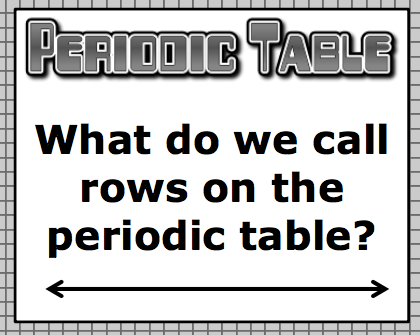
a)
Periods
b)
Groups
31.
All matter is made of
a)
atoms
b)
cells
32.
What does the 1.00794 stand for?
a)
Hydrogen
b)
atomic number
c)
atomic mass
d)
atomic explosion
33.
How many protons are in Beryllium?
a)
4
b)
9
c)
5
d)
2
34.

In an element box, the number at top is the

a)

atomic number

b)

atomic name

c)

atomic mass

d)

atomic symbol

35.

Rows in the Periodic Table are called

a)

Periods

b)

Groups/Families

c)

Cousins

d)

Metals

36.

Column in the Periodic Table are called

a)

Periods

b)

Groups/Families

c)

Cousins

d)

Metals

37.

The elements that touch the zigzag line on the Periodic Table are called

a)

metals

b)

nonmetals

c)

metalloids

d)

gasses

38.
Silver
a)
Si
b)
S
c)
E
d)
Ag
39.
Potassium
a)
P
b)
Ss
c)
K
d)
Po
40.
Copper
a)
Cu
b)
C
c)
F
d)
Fe
41.
Nickel
a)
N
b)
El
c)
Ck
d)
Ni
42.
Which element is found in period 3 group 2?
a)
Sodium (Na)
b)
Magnesium (Mg)
c)
Yttrium (Y)
d)
Boron (B)
43.
The color of a mineral in powder form is called the mineral's 
a)
hardness
b)
specific gravity
c)
luster
d)
streak
44.
How light reflects off of a mineral is called the mineral's 
a)
luster
b)
streak
c)
cleavage
d)
fracture
45.
The following image shows what mineral property?
a)
Hardness
b)
Streak
c)
Cleavage
d)
Density
46.
Diamond has a hardness of ___ on Mohs Hardness Scale.
a)
1
b)
5
c)
8
d)
10
47.
What mineral is the softest mineral on Moh's Hardness Scale and the main ingredient in baby powder?
a)
feldspar
b)
talc
c)
gypsum
d)
kaolinite
48.
A mineral breaks into pieces like are shown in the picture. How would you describe its breakage?
a)
Fracture
b)
Cleavage
c)
Glassy
d)
Waxy
49.
A mineral breaks into pieces like are shown in the picture. How would you describe its breakage?
a)
Fracture
b)
Cleavage
c)
Glassy
d)
Waxy
50.
Minerals are identified by observing their ___________.
a)
physical properties
b)
name
c)
location
51.
A rock formed from fragments of other rocks is a(n)
a)
Metamorphic Rock
b)
Sedimentary Rock
c)
Extrusive Rock
d)
Igneous Rock
52.
This rock was another type of rock that was heated and compressed over time. What type of rock is this?
a)
Sedimentary
b)
Igneous
c)
Metamorphic
53.
This rock started as molten magma. What type of rock is this?
a)
Sedimentary
b)
Igneous
c)
Metamorphic
54.
This rock was formed by smaller pieces of rock that settled at the bottom of a lake millions of years ago. What type of rock is this?
a)
Sedimentary
b)
Igneous
c)
Metamorphic
55.
The process when rocks break into smaller pieces due to exposure to natural elements is called
a)
erosion
b)
weathering
c)
sediments
56.
What are the 3 major types of rocks?
a)
Igneous, Metamorphic, Sedimentary
b)
Metamorphic, Igneous, Cementation
c)
magma, lava, crystals
57.
The name rock is given when it is broken down into smaller pieces.
a)
texture
b)
weathering
c)
sediment
d)
erosion
58.

Which rock is formed form the cooling of volcanic ash on Earth's surface?

a)

intrusive igneous

b)

foliated metamorphic

c)

extrusive igneous

d)

organic sedimentary

59.

Rocks that form from colling magma inside Earth?

a)

Igneous intrusive

b)

Igneous extrusive

c)

Metamorphic foliated

d)

Metamorphic nonfoliated

60.
True/False: Igneous rocks can only turn into metamorphic rocks.
a)
True
b)
False
61.

Any rock that forms from another rock as a result of changes in heat or pressure (or both) is a:

a)

chemical rock

b)

igneous rock

c)

sedimentary rock

d)

metamorphic rock

62.

This is a natural solid that is made of one or more minerals.

a)

Mineral

b)

Fossil

c)

Rock

d)

Sediment

63.

This is the continuous process of rock changing from one type to another.

a)

Igneous rocks

b)

Sedimentary rocks

c)

Metamorphic rocks

d)

Rock Cycle

64.

What type of rock might contain evidence of past life?

a)

Sedimentary Rock

b)

Igneous Rock

c)

Metamorphic Rock

65.

Which of the following lists the steps an igneous rock undergoes in order to become a sedimentary rock, in the correct order?

a)

Deposition, erosion, melting, cooling

b)

Erosion, weathering, eruption, cooling

c)

Dissolving, deposition, cooling, fracture

d)

Weathering, erosion, deposition, cementation

66.

Limestone is a sedimentary rock. During the rock cycle, limestone is changed into marble, a metamorphic rock. The processes that act on limestone and change it into marble are

a)

weather and erosion

b)

heat and pressure

c)

compacting and cementing

d)

melting, cooling, and hardening

67.

According to the diagram, what process is shown by letter A?

a)

extrusion

b)

erosion

c)

crystallization

d)

intrusion

68.

According to the diagram, what process is shown by letter B?

a)

compaction & cementation

b)

weather & erosion

c)

heat & pressure

d)

melting

69.

If a lot of heat is applied to a rock, it will turn into

a)

magma

b)

rocks

c)

sediment

d)

metamorphic rocks

70.
Has large crystals because of slow cooling
a)
sedimentary rock
b)
metamorphic rock
c)
intrusive igneous rock
d)
extrusive igneous rock
71.
Has small or no crystals because of rapid cooling
a)
sedimentary
b)
metamorphic
c)
extrusive igneous
d)
intrusive igneous
72.
Has wavy bands.
a)
sedimentary rock
b)
metamorphic rock
c)
extrusive igneous rock
d)
intrusive igneous rock
73.
Contains fossils. 
a)
sedimentary rocks
b)
metamorphic rocks
c)
extrusive igneous rocks
d)
intrusive igneous rocks
74.
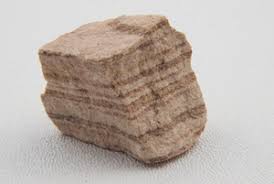
Identify this rock
a)
gabbro
b)
breccia
c)
conglomerate
d)
gneiss
75.
Identify this rock
a)
gneiss
b)
fossiliferous limestone
c)
andesite porphyry
d)
granite
76.
Identify this rock
a)
Granite
b)
Slate
c)
Pumice
d)
Obsidian
77.
Identify this Rock
a)
magma
b)
basalt
c)
sandstone
d)
limestone
78.

gritty/grainy

a)

Gneiss

b)

Sandstone

c)

Granite

d)

Coal

79.

black, a little glossy

a)

Gneiss

b)

Limestone

c)

Granite

d)

Coal

80.

multi colored, spots

a)

Sandstone

b)

Granite

c)

Slate

d)

Pumice

81.

black, hard, glassy

a)

Quartzite

b)

Limestone

c)

Obsidian

d)

Conglomerate

82.

lightweight, holey, spongy

a)

Shale

b)

Slate

c)

Pumice

d)

Gneiss

83.

crystals in layers

a)

Limestone

b)

Obsidian

c)

Gneiss

d)

Pumice

84.

melted sand

a)

Obsidian

b)

Shale

c)

Gneiss

d)

Quartzite

85.

What kind of rock is "Basalt"?

a)

Sedimentary

b)

Igneous

c)

Metamorphic

86.

What kind of rock is "Sandstone"?

a)

Sedimentary

b)

Igneous

c)

Metamorphic

87.

What kind of rock is "Marble"?

a)

Sedimentary

b)

Igneous

c)

Metamorphic

88.

An irregularly shaped stone was lowered into a graduated cylinder holding a volume of water of 5 ml. The height of the water rose to 10 ml. If the mass of the stone was 20 g, what was its density?

a)

4 g / mL

b)

2 g / mL

c)

2.75 g / mL

d)

8.2 g / mL

89.

What is aboveground molten rock?

a)

Extrusive

b)

Magma

c)

Lava

d)

Sedimentary

90.

What is underground molten rock?

a)

Lava

b)

Magma

c)

Soil

d)

Intrusive