wayground logo

Free Printable Worksheets

Font size

S
M
L
XL
Worksheets

Periodic Table

Total questions: 44

Worksheet time: 1hrs 11mins

Name
Class
Date
1.
In the modern periodic table elements are arranged by:
a)
atomic mass
b)
atomic number
c)
valence electrons
d)
number of isotopes
2.
Why were there blank spaces left in Mendeleev's periodic table?                                              
a)
He didn't know what to put there.
b)
 Undiscovered elements not yet known.
c)
Multiple elements could have fit
d)
He forgot to add the elements in.
3.

Which property did Mendeleev use to order his periodic table?

a)

Shielding effect

b)

Eletronegitivity

c)

Atomic Mass

d)

Metallic Character

4.
An atom that has the electron configuration of 1s22s22p63s23p64s23d5 is classified as
a)
A transition element
b)
a noble gas
c)
an alkali metal
d)
an alkaline earth metal
5.

The vertical columns on the periodic table are called:

a)

periods

b)

elements

c)

groups

d)

matter

6.

The horizontal rows on the periodic table are called:

a)

periods

b)

elements

c)

groups

d)

matter

7.
A rule that states that repeating chemical and physical properties of elements change periodically with the atomic number of the elements is the _________.
a)
periodic law
b)
alkaline-earth metals
c)
actinide
d)
group rule
8.
Elements in a ..................have similar chemical properties.  
a)
period
b)
group
c)
row
9.
According to the Periodic Table of the Elements, which set of elements has similar properties?
a)
H, C, I
b)
He, H, Al
c)
He, Ne, Ar
d)
Na, Ca, Al
10.

The majority of elements on the periodic table are:

a)

radioactive.

b)

nonmetals.

c)

metals.

d)

gases.

11.

Which of the following is not true of Metals?

a)

they make up a majority of elements

b)

they are shiny

c)

they are good conductors

d)

they are poor conductors

12.
The atoms along the staircase are called 
a)
metals
b)
nonmetals
c)
metalloids
d)
noble gases
13.

Which of the following elements is a Metalloid? (Select all that apply)

a)

Boron (B)

b)

Aluminum (Al)

c)

Carbon (C)

d)

Silicon (Si)

14.

What group does Lithium (Li) belong to?

a)

1

b)

2

c)

3

d)

4

15.

Which period does Lithium (Li) belong to?

a)

1

b)

2

c)

3

d)

4

16.

Which group are the Alkali Metals in?

a)

1

b)

2

c)

17

d)

18

17.
Which is an alkali metal?
a)
Magnesium
b)
Iron
c)
Sodium
d)
Europium
18.
Which is a halogen?
a)
Helium
b)
Chlorine
c)
Oxygen
d)
Neptune
19.

Which group are the Halogens in?

a)

1

b)

2

c)

17

d)

18

20.

Which group are the Alkaline Earth Metals in?

a)

1

b)

2

c)

17

d)

18

21.

Which group are the Noble Gases in?

a)

1

b)

2

c)

17

d)

18

22.
Which group of the periodic table is composed of inert (not reactive)  gases?
a)
alkali metals
b)
alkaline earth metals
c)
halogens
d)
noble gases
23.
What is the family name of this group of elements? 
a)
Alkali metals 
b)
Halogens 
c)
Noble Gases 
d)
Alkali Earth Metals 
24.
Which properties are characteristic of the Group 1 metals?
a)
high reactivity and the formation of unstable compounds
b)
low reactivity and the formation of unstable compounds
c)
high reactivity and the formation of stable compounds
d)
low reactivity and the formation of stable compounds
25.
Elements in the same column of the periodic table always have the same # of _______ as one another.
a)
Protons
b)
Neutrons
c)
Electrons
d)
Valence Electrons
26.
Valence electrons are the...
a)
Innermost electrons
b)
Middle electrons
c)
Outermost electrons
d)
Any electrons
27.
a)
2
b)
3
c)
5
28.

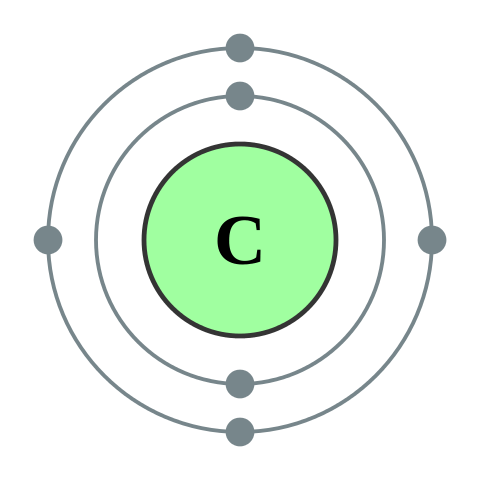
How many valence electrons does carbon have?

a)

4

b)

5

c)

6

d)

7

29.

USE THE PERIODIC TABLE

How many valence electrons does Phosphorus have?

a)

31

b)

5

c)

15

d)

4

30.

USE THE PERIODIC TABLE

Find the element that has 3 Valence Electrons and 2 energy levels.

a)

Magnesium - Mg

b)

Lithium - Li

c)

Aluminum - Al

d)

Boron - B

31.

Which group of the periodic table is composed of inert (not reactive) gases with 8 valence electrons?

a)

alkali metals

b)

alkaline earth metals

c)

halogens

d)

noble gases

32.

This could be the dot diagram of

a)

Mg

b)

Cl

c)

C

d)

O

33.

This is a correct dot diagram for neon (Ne)

a)

true

b)

false

34.

This is a correct dot diagram for nitrogen (N)

a)

true

b)

false

35.
Electronegativity is...
a)
the ability of an atom to attract/ accept electrons
b)
the ability of an atom to lose electrons
c)
the energy required to remove an electron from a specific atom
d)
how easy it is to make friends. 
36.
Which has the greater Electronegativity: 
N or C?
a)
C
b)
N
37.
The symbols W, X, Y, and Z represent four elements shown on the outline of a periodic table.
Which element has the highest electronegativity?

a)
W
b)
X
c)
Y
d)
Z
38.
Sodium (Na) and potassium (K) are in the same group on the periodic table. Based on their locations, which statement about sodium and potassium is true?
a)
Sodium is less electronegative than potassium. 
b)
Sodium has fewer energy levels than potassium. 
c)
Sodium has a larger ionic radius than potassium. 
d)
Sodium has lower ionization energy than potassium. 
39.
Fluorine, chlorine, bromine, and iodine all have the same number of valence electrons and have a tendency to gain electrons. Which element has the greatest ionization energy and electronegativity?
a)
fluorine
b)
chlorine 
c)
bromine 
d)
iodine 
40.
The ionization potential of an element is the amount of energy required to remove an electron from an isolated atom or molecule. According to the periodic table, which of the following indicates the correct decreasing order of ionization energy?
a)
Li > Na > K > Cs
b)
Na > K > Li > Cs
c)
Li > K > Na > Cs 
d)
Cs > K > Na > Li 
41.
Which of the following will have a lower ionization energy than Scandium (Sc)?
a)
Helium (He)
b)
Titanium (Ti)
c)
Calcium (Ca)
d)
Magnesium (Mg)
42.
Which atom has the largest atomic radius?
a)
potassium
b)
rubidium 
c)
francium
d)
cesium
43.
Metals have the largest - 
a)
atomic radius and electronegativity
b)
electronegativity and ionization energy
c)
atomic radius only
d)
ionization energy and atomic radius
44.
As you move down the periodic table atoms get bigger.  This is because ____________.
a)
The atoms have more mass.
b)
The atoms have more protons.
c)
The atoms have more energy levels
d)
The atoms have more neutrons