wayground logo

Free Printable Worksheets

Font size

S
M
L
XL
Worksheets

Cell Cycle, Mitosis, Meiosis, and Human Reproduction 2023

Total questions: 52

Worksheet time: 31mins

Name
Class
Date
1.
Which of the following is the correct acronym for the stages of the cell cycle?
a)
IPMATC
b)
MPIATC
c)
CAPMIT
d)
IMATCP
2.
Cells spend 90% of their time in this stage of the cell cycle. This is the reason you would see most cells in this stage if viewed under a microscope.
a)
Prophase
b)
Metaphase
c)
Anaphase
d)
Interphase
3.
Cell division occurs to allow for 
a)
Growth
b)
Reproduction
c)
Repair
d)
All of the above
4.
The sister chromatids of each chromosome are separated (come apart) and move to opposite ends of the cell. Name that Stage!
a)
Prophase
b)
Metaphase
c)
Anaphase
d)
Telophase
5.
The cytoplasm is divided between the cells splitting the cell into two. Name that Stage!
a)
Cytokinesis
b)
Interphase
c)
Prophase
d)
Metaphase
6.
DNA is copied in the S part of this stage. Name that Stage!
a)
Interphase
b)
Prophase
c)
Metaphase
d)
Anapahse
7.
Nucleolus and nuclear membrane start to disappear, chromatin condenses into chromosomes, and spindle fibers start to form. Name that Stage!
a)
Interphase
b)
Prophase
c)
Metaphase
d)
Anaphase
8.
The chromosomes start to line up in the middle of the cell.
a)
Prophase
b)
Metaphase
c)
Anaphase
d)
Telophase
9.

What type(s) of cells undergo mitosis?

a)

sex cells

b)

gametes

c)

body cells

d)

sperm and egg cells

10.
What do the cells look like at the end of mitosis?
a)
different from original cell
b)
similar to the original cell
c)
identical to the original cell
d)
none of these
11.
a)
Prophase
b)
Interphase
c)
Anaphase
d)
Telophase
12.
a)
Anaphase
b)
Cytokinesis
c)
Telophase
d)
Metaphase
13.
a)
Cytokinesis
b)
Interphase
c)
Anaphase
d)
Metaphase
14.
a)
Anaphase
b)
Cytonkinesis
c)
Interphase
d)
Prophase
15.
a)
Cytokinesis
b)
Anaphase
c)
Telophase
d)
Prophase
16.

Chromosomes that are paired by size and content are called _______ chromosomes.

a)

homeostasis

b)

homologous

c)

matching

d)

sister

17.

Body cells are also called _________ cells.

a)

normal

b)

prokaryotic

c)

pathogens

d)

somatic

18.

Cells that contain 2 sets of chromosomes are called _________ (2n).

a)

diploid

b)

haploid

c)

triploid

d)

polyploid

19.
What is cancer?
a)
The heart does not receive enough blood.
b)
Sudden disruption of blood flow to part of the brain.
c)
Blood filled weak spot.
d)
Uncontrolled growth and spread of abnormal cells.
20.
An abnormal mass of cancer cells is called a 
a)
tumor
b)
cyst
c)
lesion
d)
polyp
21.
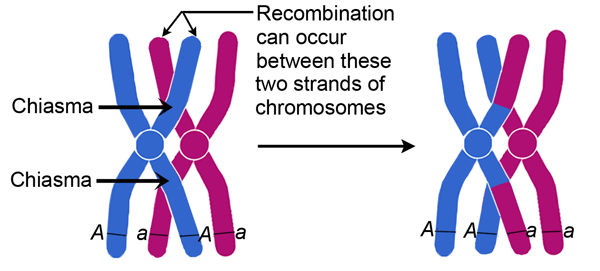
which process is shown?
a)
diffusion
b)
repiration
c)
recombination
d)
translation
22.
Which process?
a)
mutation
b)
transcription
c)
respiration
d)
translation
23.

CROSSING OVER INCREASES

a)

LIFE SPAN

b)

GENETIC VARIATION

c)

THE NUMBER OF OFF-SPRING

d)

ALL ARE TRUE

24.

CROSSING OVER TAKES PLACE DURING

a)

PROPHASE II

b)

PROPHASE I

c)

INTERPHASE

d)

METAPHASE I

25.

CANCER CELLS ARE DIFFERENT BECAUSE THE DON'T ENTER THE G-0 PHASE AND THEY ARE LIKELY TO DO WHICH OF THE FOLLOWING

a)

FAIL TO COMPLETE S PHASE

b)

MUTATE DURING G1 PHASE

c)

REPEAT THE CELL CYCLE CONTINUOUSLY

d)

DIE AFTER COMPLETING MITOSIS

26.

A major male sex organ that produces and stores sperm.

a)

Prostate Gland

b)

Testicle

c)

Ovary

d)

Vas deferens

27.
Identify structure number 4 which is used to transport sperm.
a)
testis
b)
urethra
c)
vas deferens
d)
prostate
28.
What is the name of the structure labeled #3 where sperm is stored?
a)
testis
b)
epididymis
c)
scrotum
d)
seminal vesicle
29.
What is the name of the structure labeled #3 where sperm is stored?
a)
testis
b)
epididymis
c)
scrotum
d)
seminal vesicle
30.

The sac that holds/protects the testicles is

a)

Testes

b)

Epididymis

c)

Ovaries

d)

Scrotum

31.
What is structure #3
a)

Ovary

b)

Uterus

c)

Fallopian Tube

d)

Endometrium

32.
the lining of the uterus that thickens as an egg matures
a)
cervix
b)
endometrium
c)
uterus
33.
reproductive organs that produce eggs and hormones
a)
cervix
b)
vagina
c)
ovaries
34.
The part of the female reproductive system where fertilization takes place
a)
Uterus
b)
Womb
c)
Vaginal opening
d)
Fallopian Tubes
35.

What the name of the part pointed out in blck line?

a)

Vagina

b)

Menstruation flow

c)

Uterus

d)

Ovum

36.

Whats the part pointed out?

a)

Uterus

b)

Vagina

c)

Fallopian Tubes

d)

Menstrual Flow

37.

What is the part pointed out?

a)

Cervix

b)

Uterus

c)

Vagina

d)

Menstrual Flow

38.
Structure 2 is the 
a)
cervix
b)
vagina
c)
uterus
d)
ovary
39.
Structure 7 is the 
a)
cervix
b)
vagina
c)
uterus
d)
ovary
40.

Which of the following helps your to genetically different from your parents?

a)

the stages of mitosis

b)

asexual reproduction

c)

cancer

d)

crossing over in Prophase I of meiosis

41.

The fallopian tube is a homologous structure to which of the following structures?

a)

vas deferens

b)

urethra

c)

ovaries

d)

testes

42.

Infertility can be caused by abnormalities in the uterine lining, interrupting what from happening?

a)

formation of a zygote

b)

implantation

c)

ovulation

d)

hormone release

43.

Organ attached to the lining of the uterus that provides a link between mother and fetus so that nutrients can be exchanged

a)

placenta

b)

umbilical cord

c)

amniotic sac

d)

amniotic fluid

44.

Ovaries are to eggs (Ova) in plants, as Testes are to _________ in plants?

a)

pollen

b)

filament

c)

stamen

d)

anther

45.

In the image.

What is number 2 pointing to?

a)

Cytoplasm

b)

Centromere

c)

Chromosome

d)

Chromatid

46.
Fruit fly body cells have 8 chromosomes. Which best describes a  somatic daughter cell produced  by the fruit fly?
a)
16 chromosomes.
b)
46 chromosomes.
c)
8 chromosomes.
d)
4 chromosomes.
47.
What is a similarity between these two processes?
a)
They both produce genetically diverse daughter cells.
b)
They both use crossing over to produce daughter cells identical to the parent cell. 
c)
Both replicate their DNA only once during interphase.
d)
Both  processes produce diploid daughter cells.
48.
The following data was collected over a period of time from an experiment about changes in the amounts of macromolecules a Eukaryotic cell. The data was collected as part of a study investigating how eukaryotic cells grow and divide over time. Which statement below best describes a possible inference that could be drawn from the given data?
a)
The cell does not have a cell membrane and will not be able to divide.
b)
The cell has just left the synthesis phase of interphase and is preparing to divide. 
c)
The cell is cancerous as there are not more available enzymes to regulate the cell cycle.
d)
The cell is not healthy as the changes observed indicate the cell is preparing for apoptosis.
49.
Based on current knowledge about the reproductive differences in species how would you expect the genetic variation to compare between a population bacteria and a fruit fly population?
a)
The fruit flies have more genetic variation because they inherit genetic information from both parents.
b)
The fruit flies have less genetic variation because they reproduce sexually.
c)
The bacteria have less genetic variation because the cells of a bacteria are smaller.
d)
The bacteria have more genetic variation because reproduction happens asexullay.
50.
This image shows chromosomes during Prophase 1. Which of the following correctly describes the process shown?
a)

segregation of sister chromatids

b)

condensation and segregation of alleles

c)

mutationin which the DNA content of the gene is altered

d)

crossing - over in which genes are exchanged

51.

During mitosis, if an organism has 10 chromosomes, how many will the new daughter cells have?

a)

10

b)

8

c)

5

d)

2

52.

During meiosis, if an organism has 10 chromosomes, how many will the new daughter cells have?

a)

10

b)

8

c)

5

d)

2