
 Worksheets
science cambridge checkpoint 8 test
Total questions: 90
Worksheet time: 1hrs 5mins
Carbohydrates are used by the body to
make important chemicals such as enzymes and antibodies
provide enrgy
store energy
make new cell membranes
Fat is used by the body for which two of the following functions:
make new cells
make new cell membranes
make important chemicals such as enzymes and antibodies
store energy
Which of the following are naturally occurring and can be obtained from plants and animals?
Fats
Carbohydrates
Vitamins
Minerals
Which of the following are naturally occurring and can be obtained from soil and water?
Fats
Carbohydrates
Vitamins
Minerals
Which nutrient helps to keep food moving easily through the alimentary canal?
Fats
Protein
Carbohydrates
Fibre
Vitamins and minerals
Which "nutrient" typically makes up 60-70% of the body?
Fats
Protein
Carbohydrates
Fibre
Water
Foods which are good sources of protein include:
fish, meat, beans, eggs and dairy
pasta, bread, grains, potatoes
fruits, vegetables, whole seeds
cheese, oil, butter, meat
Foods which are good sources of carbohydrates include:
fish, meat, beans, eggs and dairy
pasta, bread, grains, potatoes
fruits, vegetables, whole seeds
cheese, oil, butter, meat
Foods which are good sources of fat include:
fish, meat, beans, eggs and dairy
pasta, bread, grains, potatoes
fruits, vegetables, whole seeds
cheese, oil, butter, meat
Foods which are good sources of vitamins and minerals include:
fish, meat, beans, eggs and dairy
pasta, bread, grains, potatoes
fruits, vegetables, whole seeds
cheese, oil, butter, meat
To test whether or not a food contains starch:
test with iodine solution. If the iodine turns from blue/black to yellow/brown, it contains starch.
test with iodine solution. If the iodine turns from yellow/brown to blue/black, it contains starch.
test with Benedict's solution. If the bluish mixture changes to red upon heating, it contains starch
test with Benedict's solution. If the reddish/brown mixture changes to blue upon heating, it contains starch
To test whether or not a food contains sugar:
test with iodine solution. If the iodine turns from blue/black to yellow/brown, it contains sugar.
test with iodine solution. If the iodine turns from yellow/brown to blue/black, it contains sugar.
test with Benedict's solution. If the bluish mixture changes to red upon heating, it contains sugar
test with Benedict's solution. If the reddish/brown mixture changes to blue upon heating, it contains sugar
Having a "balanced diet" means a diet that:
has equal amounts of carbohydrates, protein, fats and sugars, fruits and vegetables
provides all the different kinds of nutrients, along with the right amount of energy your body uses each day
takes in an equal amount of food as water consumed
eating as much fruits and vegetables as Al Baik chicken and fries
What happens if you take in too many vitamins in your diet?
you develop enhanced immunity to disease
your body excretes the excess
your skin slowly turns an orange colour
your eyesight improves
Cells can get energy from which three of the following nutrients?
carbohydrates
protein
fats
vitamins and minerals
What happens if you take in too much energy-giving nutrients in your diet?
you develop an energy overload
your body excretes the excess
your body turns the extra nutrients to fat
muscle formation increases
The process by which food reaches blood cells by moving through the walls of the alimentary canal is:
absorption
diffusion
digestion
ingestion
The process in which large molecules of food is broken down into smaller ones, so they can be absorbed, is:
absorption
diffusion
digestion
ingestion
The large molecules that need to be broken down into smaller molecules, so that nutrients can be digested are
proteins
fats
fibre
starch
sugar
what is the difference between starch and sugar?
Sugar molecules are complex starch molecules (many starch molecules joined together, making it difficult to digest)
Starch molecules are complex sugar molecules (many sugar molecules joined together, making it difficult to digest)
Sugar molecules are "simple starches", (small molecules that can be digested)
Starch molecules are "simple sugars", (small molecules that can be digested)
What is the main function of enzymes found in both saliva and the small intestine?
to help kill bacteria
to move food all the way through the alimentary canal, from mouth to anus
to break down large molecules into small molecules so that they can pass through the walls of the alimentary canal
to break down large molecules into small molecules so that they can pass through the oesophagus
The order that food passes through, in the alimentary canal is:
mouth - stomach - oesophagus - small intestine - large intestine - anus
mouth - oesophagus - stomach - large intestine - small intestine - anus
mouth - stomach - small intestine - large intestine - oesophagus - anus
mouth - oesophagus - stomach - small intestine - large intestine - anus
The function of the mouth is to
break down food molecules into smaller molecules using teeth, and to kill bacteria using enzymes in saliva
break down food molecules into smaller molecules using teeth only.
break down food molecules into smaller molecules using both teeth, and break down starch into sugar using saliva
allow us to extract the maximum taste of food before they pass through the digestive system
Which part of the digestive system uses hydrochloric acid to kill micro-organisms in food, and gastric juices to break down protein?
mouth
stomach
small intestine
large intestine
liver
Which parts of the digestive system absorb water?
stomach
small intestine
large intestine
liver
pancreas
What is the function of the liver?
makes bile, (which is stored in the gall bladder), but flows into the small intestine to help with digesting fats
makes juices (such as insulin), that flow into the small intestine to help digest protein, starch and fat.
has no known useful function
makes juices such as hydrochloric acid to kill micro-organisms
What is the function of the pancreas?
makes bile, (which is stored in the gall bladder), but flows into the small intestine to help with digesting fats
makes juices, that flow into the small intestine to help digest protein, starch and fat.
has no known useful function
makes juices such as hydrochloric acid to kill micro-organisms
What is the function of the appendix?
makes bile, (which is stored in the gall bladder), but flows into the small intestine to help with digesting fats
makes juices (such as insulin), that flow into the small intestine to help digest protein, starch and fat.
has no known useful function
makes juices such as hydrochloric acid to kill micro-organisms
Food does not pass through which of the following organs, in the digestive system?
stomach
liver
large intestine
pancreas
appendix
Digestion happens in the
mouth
stomach
small intestine
large intestine
Biomass is:
dead and decaying biological matter
a unit of measure that gives the mass of dead cells
living biological cells
a unit of measure that gives the mass of living cells
You are carrying out an experiment to see if plants need light. You do this by testing two samples of seeds, one in the light, and one in the dark, and seeing if they germinate. What variable should stay the same throughout the experiment?
amount of light
amount of water
number of seeds
temperature
Leaves are green and roots are white because
leaves contain chlorophyll, but roots don't
roots contain chlorophyll, but leaves don't
leaves absorb green light but roots do not
roots absorb green light, but leaves do not
Select all that apply:
A leaf is adapted for photosynthesis and plant growth because
their cells contain chlorophyll
it is very thin, so light can reach all the cells inside them
veins carry water to the cells
it has a stalk that attaches the leaf to the plant
water can enter the leaf through stomata
The function of the cuticle (waxy layer) on the leaf is to
keep it looking shiny
stop the leaf from turning brown
keep the upper epidermis together
stop the leaf cells from drying out
The layer of cells in a leaf where most of the photosynthesis occurs is the
waxy layer
upper epidermis
palisade layer
spongy layer
lower epidermis
The function of the stomata in leaves is to
allow water to enter the leaf
create spaces for guard cells
let carbon dioxide get into the leaf
let oxygen get into the leaf
stoma are
cells that can be found on the upper epidermis
cells that can be found on the lower epidermis
tiny holes found on the upper epidermis
tiny holes found on the lower epidermis
When a leaf taken from a plant is put into water that is warmer than the air,
nothing happens
bubbles appear on the top surface
bubbles appear on the lower surface
the leaf gets bigger
Select all that apply:
Which of the following affects the rate of photosynthesis?
amount of water given to a plant
the intensity of the light on the plant
amount of carbon dioxide given to a plant
colour of light the plant is exposed to
When investigating the rate of photosynthesis in plants, the main reason water-plants are used is because
plants need water
we can measure the rate by measuring the change in temperature of the water
its easier to keep the temperature of the plant constant
we can measure the rate by counting bubbles
Select all the functions that the root of a plant has:
food storage for the plant
keeps the plant upright
anchors the plant to the ground
keeps the plant alive in difficult conditions, when the above-ground parts die
absorb water and minerals from the soil
Root hairs cells are specialised cells for plant growth because
they have a large surface area for absorbing water and nutrients
they have a large surface area to allow for greater photosynthesis
they keep growing until they reach water and nutrients
they keep growing until they reach sunlight for photosynthesis
Roots always grow
upwards
downwards
in a direction dependant on how the seed was oriented
no preferred direction
Water and minerals are transported from the roots to the leaves through the
phloem vessels
stalk
xylem vessels
subway system
stomata
Select all that apply: xylem vessels
are very tiny, and usually bunched together
have very hard and strong walls that help keep a plant upright
are always found in the middle of plant cells
make up the wood in a tree trunk
are located in the outer layer only of plants
Select all that apply:
The xylem vessels in a leaf can be found
towards the upper layer of the leaf
towards the lower layer of the leaf
inside the veins of the leaf
in both the upper and lower epidermis of the leaf
What does the word “Atom” mean?
Cannot be divided
The smallest thing
An element
A particle

The air is a _________.
element
mixture
compound
energy

Water is a ___________.
element
mixture
compound

Carbon is a(n) ______
compound
element
mixture

Which of the following is true of oxygen?
Oxygen is an element because its most basic unit is a single type of atom
Oxygen is a compound because its most basic unit is a single type of atom.
Oxygen is a mixture because its most basic unit contains more than one particle.
Oxygen is a compound because its most basic unit contains more than one type of particle.
Which statement identifies why oxygen is classified as a pure substance and air is classified as a mixture?
Oxygen is more reactive than air.
Oxygen has a higher density than air.
Oxygen goes under a phase change, whereas air is always a gas.
Oxygen contains only one substance, but air contains several substances.

When electricity passes through water, hydrogen and oxygen are produced. Which table correctly labels the compounds and elements involved in the process?
Water-->Compound
Hydrogen-->Compound
Oxygen--->Element
Water-->Compound
Hydrogen--->Element
Oxygen--->Compound
Water--->Compound
Hydrogen--->Element
Oxygen--->Element

This image is a model of...
an element
a compound
a homogenous mixture
a heterogeneous mixture

This picture is a model of...
an element
a compound
a homogenious mixture
a heterogeneous mixture.

How many elements are represented in the compound?
Na2CO3
1
2
3
4

Rows on the Periodic Table are called _____ while columns are called _____.
groups, families
groups, periods
periods, groups
families, groups

What is a compound?
The smallest unit of all matter.
Two or more atoms bonded together.
A substance containing only one type of atom.
A substance containing different types of bonded atoms.
P is the symbol for
Potassium
Phosphorous
Plutonium
Plasticine
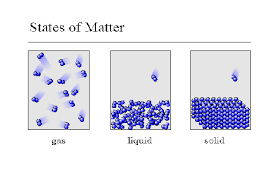


There is very little space between the molecules of a liquid. There is a lot of space between the molecules of a gas.
True
False
WRONG
Nope


Over 2000 years ago a Greek philosopher called (a) suggested that everything was made up of tiny pieces.

