wayground logo

Free Printable Worksheets

NEW

Font size

S
M
L
XL
Worksheets

Unit 5 Review- Weather and Climate Factors

Total questions: 55

Worksheet time: 41mins
Name
Class
Date
1.

What type of front is this? 

a)
warm front
b)
cold front
c)
stationary front
d)
occluded front
2.

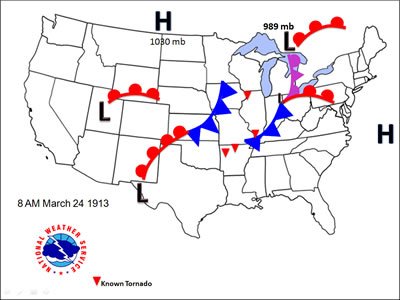
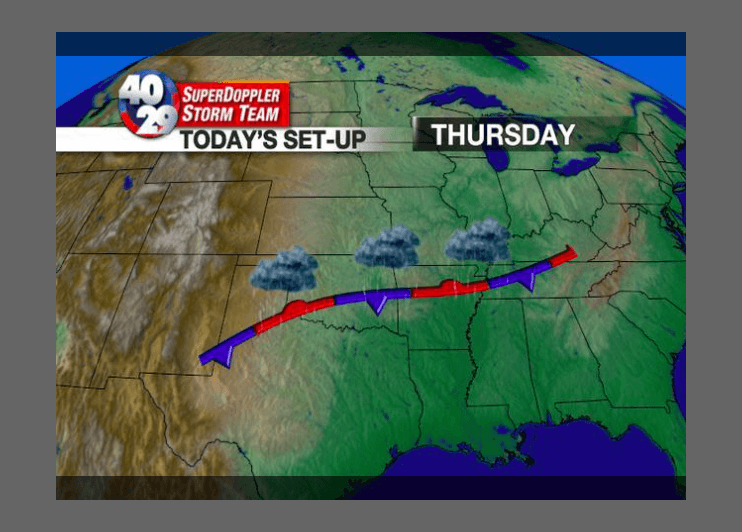
What type of front is over Texas?

a)

warm front

b)

cold front

c)

stationary front

d)

occluded front

3.

Which produces clear, sunny weather?

a)

a low pressure system

b)

a high pressure system

4.
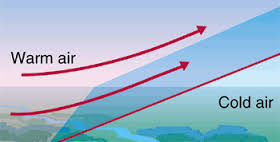
Which type of front is pictured?
a)
Cold front
b)
Warm front
c)
Occluded front
d)
Stationary front
5.
What symbol is this?
a)
warm front
b)
cold front
c)
stationary front
d)
occluded front
6.

What front has stationary (not moving) air?

a)

Warm Front

b)

Cold Front

c)

Occluded Front

d)

Stationary Front

7.

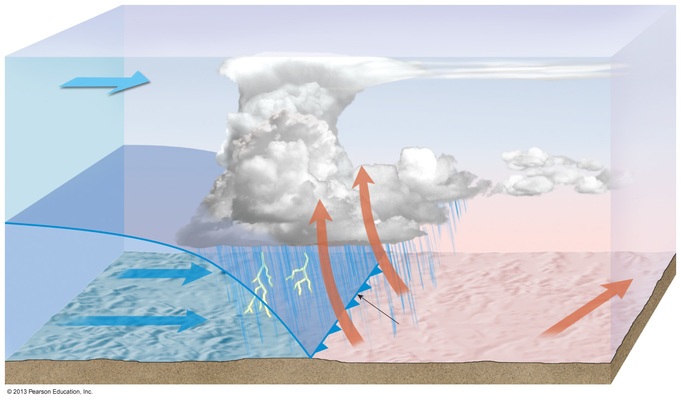
What kind of front results in thunderstorms?

a)

warm front

b)

cold front

8.
What type of air mass is represented by the circled area?
a)
continental polar
b)
maritime tropical
c)
maritime polar
d)
continental tropical
9.
A low pressure system will bring what type of weather into an area?
a)
clouds / precipitation
b)
lots of sunshine
10.

Which front does this show?

a)

cold front

b)

warm front

c)

stationary front

d)

occluded front

11.
What does this symbol on a weather map indicate? 
a)
High pressure system
b)
Low pressure system
c)
Cold Front
d)
Warm Front
12.

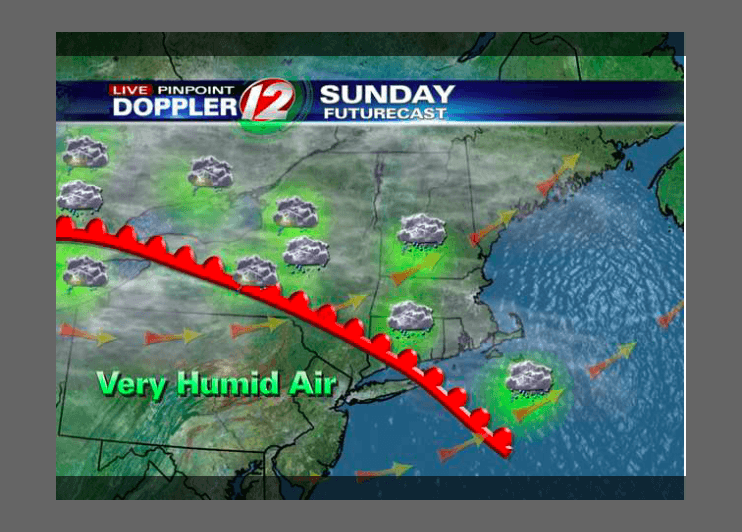
What type of front is over Michigan?

a)

Warm front

b)

Cold front

c)

Occluded front

d)

Stationary Front

13.
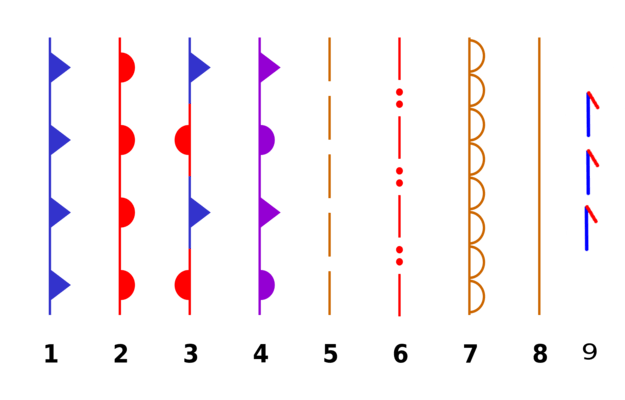
What does symbol # 3 mean?
a)
stationary front
b)
occluded front
c)
warm front
d)
cold front
14.
What type of air mass is described as dry and cold?
a)
maritime tropical
b)

maritime polar

c)
continental polar
d)
continental tropical
15.
What type of air mass would be typically seen in the circled area?
a)
maritime continental
b)
continental tropical
c)
continental polar
d)
maritime polar
16.
a)

warm

b)

cold

c)

low

d)

high

17.

What type of air mass is described as wet and warm?

a)
maritime tropical
b)
maritime polar
c)
continental tropical
d)
continental polar
18.

What type of air mass will form over the Atlantic ocean near the equator?

a)

Dry and warm

b)

Dry and Cold

c)

Wet and Warm

d)

Wet and Cold

19.
A high pressure system will bring what type of weather into an area?
a)
clouds
b)
clear skies
20.
Which type of air would you find at air mass B?
a)
cold, dry
b)
warm, humid
c)
warm, dry
d)
cold, humid
21.
What does this symbol on a weather map indicate? 
a)
High pressure system
b)
Low pressure system
c)
Cold front
d)
Warm front
22.
a)

stationary

b)

warm

c)

cold

d)

occluded

23.

Should bring nice weather

a)

Low pressure

b)

High pressure

24.
A severe storm which involves a funnel cloud forming over land is:
a)
hurricane
b)
tornado
c)
thunderstorm
d)
blizzard
25.
A severe storm that involves high winds and forms over water is:
a)
tornado
b)
thunderstorm
c)
hurricane
d)
blizzard
26.

What has the highest albedo?

a)

the oceans

b)

Ice in the Arctic or Antarctic

c)

the ground

d)

roads

27.
Albedo can best be described as...
a)
the temperature at the equator
b)
the amount of solar radiation absorbed
c)
the amount of solar radiation reflected
d)
the air pressure during El Nino
28.
In which layer do virtually all weather phenomena take place?
a)
troposphere
b)
mesosphere
c)
stratosphere
d)
thermosphere
29.

How does heat energy from the sun reach Earth?

a)

conduction

b)

insulation

c)

radiation

30.

Which would you expect to have the lowest albedo?

a)

dark soil

b)

white sand

c)

ice and snow

d)

deep sea water

31.

If you want to keep your house cool all year, should you design the house roof to have a high or a low albedo?

a)

High

b)

Low

32.
Within the stratosphere is the ozone layer. What does the ozone layer do?
a)
It protects us from meteors
b)
It protects us from violent solar flares
c)
It protects us from ultra violet radiation
d)
It helps us breathe
33.

Name that symbol.

a)

Cold Front

b)

Warm Front

c)

Stationary Front

d)

Occluded Front

34.

Name that symbol.

a)

Cold Front

b)

Warm Front

c)

Stationary Front

d)

Occluded Front

35.

Brings some clouds and gentle rains. Hint warm air is coming

a)

Cold Front

b)

Warm Front

c)

Stationary Front

d)

Occluded Front

36.

The hottest layer of the atmosphere:

a)

Troposphere

b)

Stratosphere

c)

Mesosphere

d)

Thermosphere

37.

The skies in Houston are...

a)

Cloudy

b)

Clear

38.

What type of front is moving through Charlotte, North Carolina?

a)

Warm

b)

Cold

c)

Occluded

d)

Stationary

39.

A cold front is coming, what weather should Idaho expect soon?

a)

Clear

b)

Stormy

40.

You have a flight into Atlanta today. What kind of skies can you expect?

a)

Clear and sunny

b)

Very Cloudy

41.
Which city can expect to see an increase in temperatures over the next 24 hours?
a)
Billings, Montana
b)
Atlanta, Georgia
c)
Minneapolis, Minnesota
d)
Miami, Florida
42.

Which of these are true about the difference between weather and climate

a)

weather is long term

b)

weather is short term

c)

climate is short term

43.

Which areas have wetter climates?

a)

Areas near the coasts

b)

Areas in the center of continents

44.

What does most (50%) sunlight do when it reaches earth?

a)

Gets absorbed by the surface

b)

Gets reflected by the surface

c)

Gets absorbed by the clouds

d)

Gets reflected by the clouds

45.

Which has a lower albedo, an asphalt parking lot or a snow-covered field?

a)

Asphalt parking lot

b)

Snow-covered field

c)

They have the same albedo

46.

As elevation increases, the climate gets.....

a)

hotter

b)

colder

47.

What effect does a large body of water usually have on coastal cities?

a)
The water causes cooler summers and colder winters. 
b)
The water causes cooler summers and warmer winters. 
c)
The water causes hotter summers and warmer winters. 
d)
The water causes warmer summers and colder winters. 
48.

The _______ of a mountain range is the side that receives a lot of precipitation.

a)

windward side

b)

leeward side

49.

Areas that receive the MOST solar radiation and are always WARM

a)

Poles

b)

Tropics

c)

Temperate

50.

The coldest regions on earth are the ___________regions because they receive the LEAST solar radiation

a)

Polar

b)

Tropics

c)

Temperate

51.

Cities near the ocean have

a)

LESS rainfall

b)

more STABLE temperatures

c)

more VARIABLE temperatures

52.

Windward climates are

a)

Cool and dry

b)

Cool and Wet

c)

Warm and Dry

d)

Warm and Wet

53.

Leeward climates are

a)

Cool and dry

b)

Cool and Wet

c)

Warm and Dry

d)

Warm and Wet

54.

During the summer, the northern hemisphere (where we live) is tilted

a)

towards to the sun

b)

away from the sun

55.
Which BEST describes why latitudes closest to the equator have warmer climates?
a)
they are at lower elevations
b)
they receive more solar energy
c)
they are nearer to ocean currents
d)
they get more winds that carry energy in the form of heat