
 Worksheets
Natural Selection 2023
Total questions: 51
Worksheet time: 31mins
Which of the following best illustrates natural selection?
An organism with favorable genetic variations will tend to survive and breed successfully.
A population monopolizes all of the resources in its habitat, forcing other species to migrate.
A community whose members work together utilizing all existing resources and migratory routes.
The largest organisms in a species receive the only breeding opportunities.

The graphs below show the changes in crab color at one beach.
Which of the following is most likely to have caused the change in the distribution?
A new predator arrived that preferred dark-tan crabs.
A new predator arrived that preferred light-tan crabs.
A change in beach color made medium-tan crabs the least visible to predators.
A change in beach color made medium-tan crabs the most visible to predators.
A population that is isolated in a remote environment is still able to experience genetic variation. How could genetic variation that contributes to evolution occur in such a population?
A mutation in a liver cell produces liver cancer.
Lateral gene transfer occurs that produces an organism that is less resistant to drought.
A mutation in an egg cell causes a change in DNA that produces an organism that is more sensitive to sunlight.
A mistake in DNA replication before meiosis produces an organism that is better able to outrun predators.

Suppose a certain species of insect lives in the lush green canopy of the rain forest. Some of the insects are bright green in color, and some are bright yellow. Assume there is a natural predator of the insect in the area. What do you expect to happen to the populations of the green and the yellow insects over time?
The green insect population will increase and the yellow insect population will decrease.
The green insect population will decrease and the yellow insect population will increase.
Both insect populations will remain constant over time.
Both insect populations will increase over time.
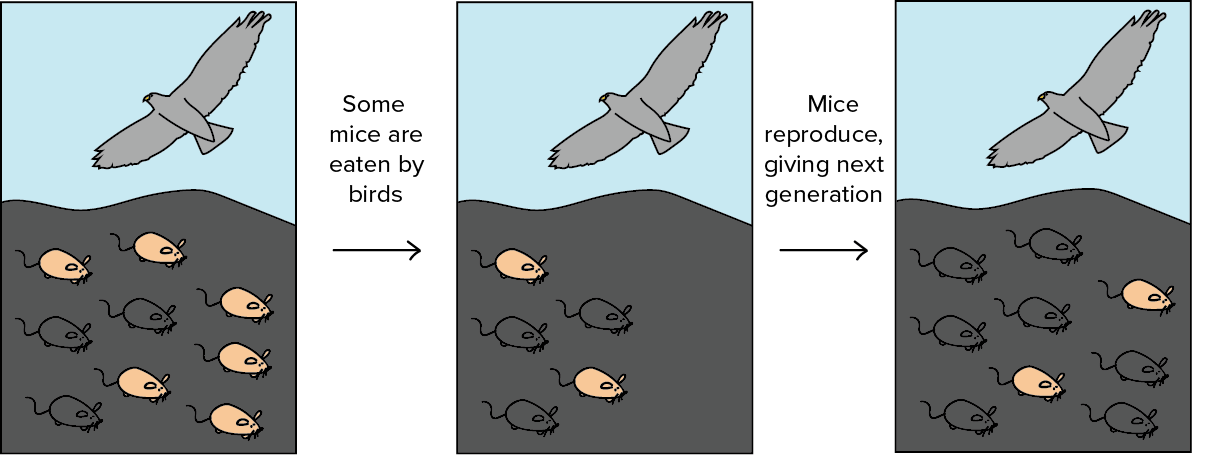
A population of rabbits grows rapidly from one year to the next. Then one year, a disease strikes approximately one fourth of the adult rabbits. The disease remains with the population in the years that follow.
As explained by Darwin’s theory, which of these conditions allows the rabbit population to evolve by natural selection?
The disease affects adult and juvenile rabbits equally.
The disease reduces the ability of the rabbits to reproduce.
Some rabbits are resistant to the disease, and they pass the resistance to their offspring.
No rabbits are resistant to the disease, and all die when the disease strikes them.
Natural selection occurs during the lifetime of a single organism.
True
False


The picture shows a/an ___________
homologous structure
vestigial structure
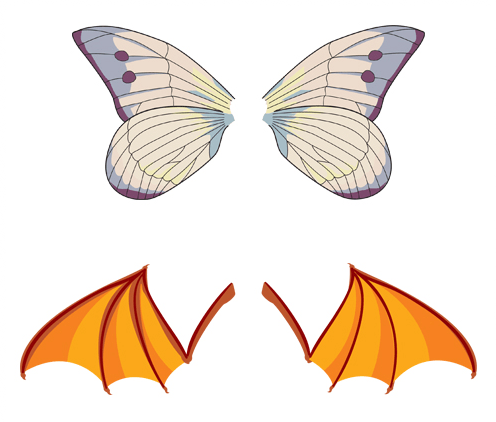
What is this an example of?
Homologous structure
Analogous structure
Vestigial organs
Functional adaption

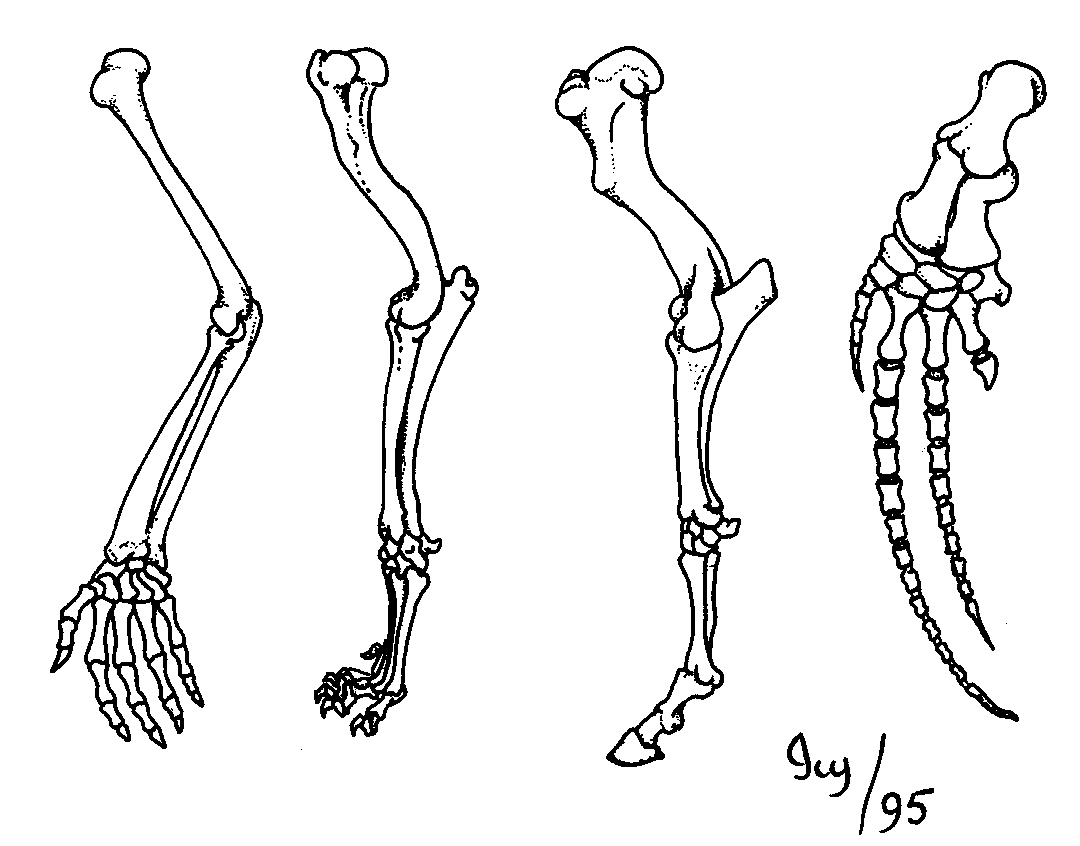
Similarities in bone arrangements, like those in the picture, support the hypothesis that...
these organisms are not well adapted
these organisms share a common ancestor
these organisms all share the same DNA sequences
these organisms are members of the same species

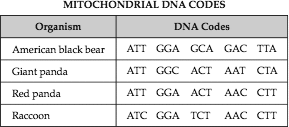
What conclusions can be made based on this table shown?
the American black bear and the giant panda are most closely related
the giant panda and the red panda are most closely related
the red panda and the racoon are the most closely related
the giant panda and the racoon are most closely related

Bats are common in Texas, especially in rocky regions. Bats with longer hang claws have demonstrated higher fitness because of their ability to cling to rock while resting. This adaptation is becoming more frequent in the population. What mechanism of evolution is this?
Natural Selection
Non-random mating
Gene Flow
Genetic Drift


When members of two populations cannot successfully reproduce.
reproductive isolation
lonely isolation
convergent isolation
genetic drift

These camels share a comon ancestor and are of different species. They have
converged because of their environments
diverged because of their environments
gone extinct, the evidence is in the fossil record
all swam back to each other for a reunion

The ostrich males use their wings to attract a mate yet these birds are flightless. Thier wings are
analogous structures
homologous structures
vestigial structures
essential to flight
Gene flow is the movement of genes due to:
migration
organisms leaving a population
organisms moving into a population
all of these
A great way to remember genetic drift is
The word "drift" has an "R" it it for random change
the little finger on my hand because the population either start or restarts small
small gene pools can be problematict because of a lack of varience
All are great and true

Ocelots, Leopardus pardalis, are considered endangered in the United States, with an estimate of less than 80 individual remaining in Willacy and Cameron counties of southern Texas. In the 20th century, humans altered the landscape from native rangelands to other uses, causing habitat fragmentation. This is
a result of gene flow
a result of genetic drift
a result of humans positive interaction with the wild
all are correct
founder effect
bottleneck effect
Non-random mating
gene flow

F
G
H
J

A
B
C
D

G. Atlantica and G Stehlini are the least closely related
G. Simonyi and G. Bravoana are the most closely related
G. Galloti eisentrauti and G galloti palmae are the most closely related
G galloti eisentrauti and G. galloti galloti are the least closely related

belong to the same species
must range great distances to eat
have very similar skeletal structures
are descended from a common ancestor

Which letter represents the most recent common ancestor of sponges and mushrooms?
A
B
C
D
E

Which trait(s) do conifers have?
vascular tissue only
vascular tissue and seeds
vascular tissue, seeds and flowers
seeds only

According to the cladogram, which organism is most distantly related to the chimpanzee?
salmon
salamander
lizard
hamster

Which trait should go where A is on the cladogram?
eyes
feet
lips
hat

What is the common ancestor of Letters A, B, C, D, E?
1
2
3
4

Where is the alligator and T. rex's common ancestor?
Point A
Point B
Point C
Point D

Vestigial structures
structures that perform a similar function but are not similar in origin
remnants of once-important structures that have slowly lost all or most of their function
features found in different organisms that share structural similarities but may have very different functions
preserved remains of an organism
A new river forms and splits two populations, causing ______________ speciation
Sympatric
Allopatric
Extreme
Convergent
A speciation in which new species evolve from a single ancestral species while inhabiting the SAME geographic region.
Sympatric speciation
Allopatric speciation
Complex speciation
Divergent speciation
when the organism develops different courtship rituals which do not attract main population this is a part of ____________ speciation.
Allopatric
Sympatric
Simple
Temporal
There are two main ways that speciation happens naturally. Both processes create new species by reproductively isolating populations of the same species from each other. What are these two types of isolation?
geographical and behavioral
geographical and complex
behavioral and complex
locational and geographical
Which best describes punctuated equilibrium?
Speciation occurs due to natural selection
Speciation occurs due to isolation
Speciation occurs slowly in geologic time, followed by long periods with very fast evolutionary change.
Speciation occurs suddenly and rapidly in geologic time, followed by long periods with little evolutionary change.
During microevolution, a(n) __________________ will become more or less common within a population.
species
allele
ribosome
fossil

Speciation that caused by breeding occurring at different time of the day is called
behavioral isolation
temporal isolation
ecological isolation
habitat isolation

