wayground logo

Free Printable Worksheets

Font size

S
M
L
XL
Worksheets

Writing and Naming Compounds (Make Up)

Total questions: 100

Worksheet time: 4hrs 43mins

Name
Class
Date
1.
What is the correct term for "bond that forms when electrons are shared equally"?
a)
ionic bond
b)
metallic bond
c)
nonpolar covalent bond
d)
polar covalent bond
2.
What is the correct term for "bond that forms between a metal and a nonmetal"?
a)
ionic bond
b)
metallic bond
c)
nonpolar covalent bond
d)
polar covalent bond
3.
What is the correct term for "bond that forms when electrons are shared unequally"?
a)
ionic bond
b)
metallic bond
c)
nonpolar covalent bond
d)
polar covalent bond
4.
What is the correct term for "atom with more protons than electrons"?
a)
positive ion (cation)
b)
negative ion (anion)
c)
neutral atom
d)
stable atom
5.
What is the correct term for "atom with more electrons than protons"?
a)
positive ion (cation)
b)
negative ion (anion)
c)
neutral atom
d)
stable atom
6.
What is the correct term for "atom with a full valence shell"?
a)
positive ion (cation)
b)
negative ion (anion)
c)
neutral atom
d)
stable atom
7.
Which type of bond is formed by the attraction of charged particles?
a)
ionic
b)
polar covalent
c)
nonpolar covalent
d)
metallic
8.
Which compound contains covalent bonds?
a)
NaI
b)
K2O
c)
N2O3
d)
BeO
9.
Which two elements would form an ionic bond?
a)
carbon and hydrogen
b)
oxygen and silicon
c)
cesium and iodine
d)
potassium and calcium
10.
Which of the following is a property of all covalent compounds?
a)
They are formed froma metal and a nonmetal.
b)
They are solids.
c)
They share electrons.
d)
They conduct electricity.
11.

What is the total number of atoms in the chemical formula shown below?

Al2(SO4)3

a)

5

b)

15

c)

10

d)

17

12.
Which is not a property of ionic compounds?
a)
They are formed when nonmetals bond to nonmetals.
b)
They form crystals.
c)
They dissolve in water.
d)
They have high melting points.
13.
Ba+2, Br-1
a)
BrBa
b)
Br2Ba2
c)
BaBr2
d)
Br2Ba
14.
Ca+2, O-2
a)
CaO
b)
OCa
c)
Ca-2O+2
d)
Ca2O2
15.
The correct chemical formula for magnesium phosphide is
a)
MgP
b)
Mg₂P₃
c)
Mg₃P₂
d)
Mg₃(PO₄)₂
16.
K+, O-2
a)
KO
b)
K2O
c)
K-2O2
d)
O2K
17.
When adding a subscript to a polyatomic ion, you should...
a)
multiply any subscripts on the polyatomic ion by the subscript you are adding
b)
put parentheses around the polyatomic ion before adding a subscript
c)
write the new subscript next to any subscripts on the polyatomic ion
d)
put the polyatomic ion in square brackets before adding the subscript
18.
What is the correct name for P₃Cl₆?
a)
Potassium chloride
b)
Phosphorous chloride
c)
Triphosphorous hexachloride
d)
Tetraphosphorous heptachloride
19.
What is the correct name for MgI₂?
a)
Manganese IV iodide
b)
Manganese diiodide
c)
Magnesium iodide
d)
Magnesium diiodide
20.
What is the correct formula for dinitrogen tetroxide?
a)
N₃O₃
b)
(N₂)₂(O₄)₃
c)
N₂O₄
d)
N₄O₂
21.
What is the correct formula for phosphorous trichloride?
a)
P₃Cl
b)
PCl₃
c)
KCl₃
d)
K₃Cl
22.
Ionic compounds generally form when ____________ and ________________ react with each other.
a)
nonmetals and nonmetals
b)
metals and metals
c)
metals and nonmetals
d)
polyatomic elements & nonmetals
23.
Metals tend to _____ electrons to form _______; nonmetals tend to _____ electrons to form ________.
a)
lose, cations ;   lose, anions
b)
gain, cations ;    lose, anions
c)
gain, anions ;    gain, cations
d)
lose, cations ;     gain, anions
24.
The purpose of bonding for most elements is to achieve greater stability and to have a complete ______ of electrons in the outermost energy level.
a)
pair
b)
nucleus
c)
octet
d)
molecule
25.
Which of the following is the correct name for the chemical formula Ca(NO2)2?
a)
cadmium nitride
b)
calcium nitrate
c)
calcium nitrite
d)
cadmium nitrite
26.
Which of the following is the correct name for the chemical formula Li2S?
a)
Lithium sulfate
b)
lithium sulfide
c)
lithium sulfite
d)
lithium hyposulfite
27.
What is the name of C3Cl?
a)
Carbon octachloride
b)
Tricarbon octachloride
c)
Carbon trichloride
d)
Octacarbon trichloride
28.
What is the name of Al(NO3)3?
a)
Aluminum trinitrate
b)
Monoaluminum nitrate
c)
Aluminum (III) nitrate
d)
Aluminum Nitrate
29.
The formula of calcium phosphate is 
a)
CaPO4
b)
Ca2(PO4)3
c)
Ca3PO4
d)
Ca3(PO4)2
30.

What is the correct formula for aluminum sulfide?

a)

Al3S2

b)

Al2S

c)

AlS2

d)

Al2S3

31.

What is the correct chemical formula for magnesium iodide?

a)

MgI2

b)

Mg2I

c)

MgI

d)

Mg2I2

32.

What is the formula for manganese(III) oxide?

a)

MnO

b)

MnO3

c)

Mn3O

d)

Mn2O3

33.
Name the following ionic compound: BeCl2
a)
beryllium chlorine
b)
beryllium II chloride
c)
beryllium chloride
d)
beryllium dichloride
34.

Why do atoms bond?

a)

They typically don't bond

b)

To add or take away energy levels

c)

To have a full valance shell.

d)

To have a full inner shell

35.

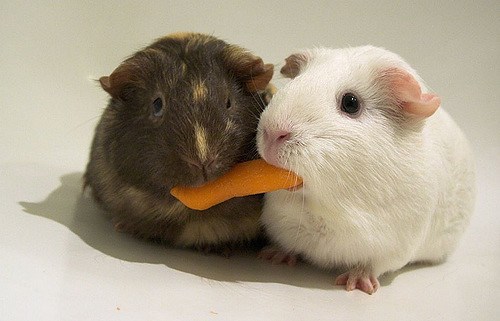
Which bond does this picture best represent?

a)

Metallic bond

b)

ionic bond

c)

covalent bond

d)

James Bond

36.

What do positive ions tend to do?

a)

lose electrons

b)

gain electrons

c)

lose protons

d)

gain protons

37.

What happens when magnesium loses 2 electrons?

a)

It stabilizes to a net charge of 0

b)

It turns into an atom

c)

It becomes negatively charged

d)

It becomes positively charged

38.

Predict the bond between Mg and Cl

a)

covalent

b)

ionic

c)

metallic

d)

none of the above

39.

What category of element usually forms a positive ion?

a)

Metals

b)

Nonmetals

c)

metalloids

d)

Noble gases

40.

Which category of elements usually form negative ions?

a)

metals

b)

nonmetals

c)

metalloids

d)

noble gases

41.
Elements on the LEFT side of the periodic table will most likely form:
a)
Positive ions
b)
Negative ions
c)
Neutral Ions
d)
None of these
42.
An ionic bond forms when atoms ___________ electrons.
a)
gain
b)
share
c)
increase
d)
transfer
43.
Chemical bonds form when atoms
a)
combined nuclei
b)
give up neutrons
c)
gain protons
d)
share or transfer electrons
44.
If an atom loses two electrons what charge will it have?
a)
+ 2
b)
 - 2
c)
+1
d)
-1
45.
If an atom gains one electron what charge will it have?
a)
-2
b)
-1
c)
+1
46.
Valence electrons are: 
a)
Electrons farthest away from the nucleus
b)
Electrons closest to the nucleus
c)
Electrons that just come and go - they don't stay with the atom
d)
Electrons in the second shell
47.
What are oxidation numbers?
a)
Number of electrons in the outer most energy level
b)
Number of protons
c)
Electrons gained or lost in chemical bonding
d)
Number of neutrons gained or lost
48.

Which has the greater Electronegativity:

Nitrogen or Carbon?

a)

Carbon

b)

Nitrogen

49.
Electronegativity is...
a)
how good an atom is at attracting electrons
b)
the ability of an atom to lose electrons
c)
the energy required to remove an electron from a specific atom
d)
how easy it is to make friends. 
50.
The element with the lowest electronegativity in Period 3 is - 
a)
Na
b)
Cl
c)
Ar
d)
Mg
51.
Elements closer to the noble gases have stronger attraction for electrons.
a)
True
b)
False
52.
Which of the following is the least electronegative element?
a)
oxygen
b)
potassium
c)
fluorine
d)
nitrogen
53.
What elements have zero electronegativity?
a)
metals
b)
nonmetals
c)
metalloids
d)
noble gases
54.

H is the chemical symbol for which element?

a)

Helium

b)

Hydrogen

c)

Mercury

d)

Hydroxide

55.

Na is the chemical symbol for which element?

a)

Sodium

b)

Nitrogen

c)

Neon

d)

Sulfur

56.

Ca is the chemical symbol for which element?

a)

Carbon

b)

Chlorine

c)

Calcium

d)

Carbonate

57.

Fe is the chemical symbol for which element?

a)

Freon

b)

Iron

c)

Fluorine

d)

Silver

58.

Si is the chemical symbol for which element?

a)

Synthesis

b)

Sodium

c)

Sulfur

d)

Silicon

59.

The chemical symbol for potassium is

a)

Po

b)

K

c)

Ko

d)

Pt

60.

The chemical symbol for nitrogen is

a)

Na

b)

Ni

c)

N

d)

Ng

61.

Silver

a)

S

b)

Ag

c)

Au

d)

Sn

62.

Neon

a)

No

b)

Na

c)

Ne

d)

Ni

63.

Sulfur

a)

S

b)

Sn

c)

Na

d)

Sr

64.

Copper

a)

C

b)

Cu

c)

Cr

d)

Co

65.

Pb

a)

Plutonium

b)

Lead

c)

Platinum

d)

Radon

66.

Zn

a)

Magnesium

b)

Silver

c)

Zerconium

d)

Zinc

67.
Roman numerals tell you the ____ of the metal cation(s) in an ionic compound.
a)
number
b)
mass
c)
type
d)
charge
68.
True or false: When naming ionic compounds, use prefixes to indicate subscripts
a)
True
b)
False
69.
Ionic compounds are written with
a)
cation (+ ion) first then anion (- ion)
b)
anion (- ion) first then cation (+ ion)
c)
either way is fine
d)
polyatomic ions first
70.
The formula for copper (II) hydroxide is
a)
Cu(II)OH
b)
Cu(OH)2
c)
Cu2OH
d)
CuOH2
71.
The chemical formula for tin (IV) oxide is written
a)
Sn2O4
b)
Ti2O4
c)
SnO2
d)
TiO2
72.
What is the atomic number?
a)
the number of protons
b)
the number of protons and neutrons
c)
the number of neutrons
d)
the number of protons and electrons
73.
What is the mass number defined as?
a)
the number of protons
b)
the number of protons and neutrons
c)
the number of neutrons
d)
the number of protons and electrons
74.
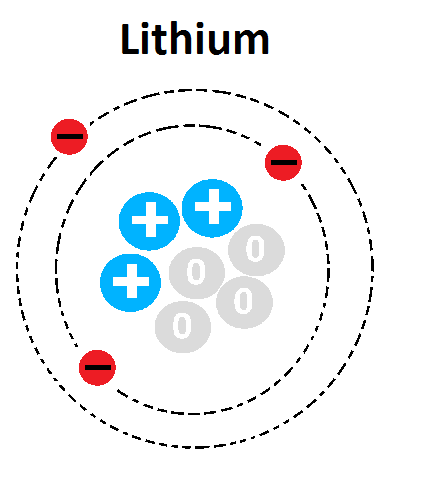
What is the atomic number of this atom?
a)
1
b)
3
c)
4
d)
7
75.

Atoms of the same element which have a different number of neutrons are called _________________.

a)

ions

b)

isotopes

c)

quarks

d)

molecules

76.
The relative atomic mass is the average mass of an atom compared to 
a)
the mass of a carbon-12 atom.
b)
1/12 the mass of a carbon-12 atom
c)
the mass of a hydrogen atom
d)
1/12 the mass of a hydrogen atom
77.

NaCl

a)

58.44

b)

22.99

c)

35.45

d)

12.44

78.

Cs2SO4

a)

397.9

b)

361.8

c)

313.9

d)

361.9

79.

K4Fe(CN)6

a)

368.3 g/mole

b)

308.32 g/mole

c)

238.27 g/mole

d)

587.62 g/mole

80.

(NH4)2SO4

a)

128.1 g/mole

b)

114.1 g/mole

c)

132.1 g/mole

d)

70.1 g/mole

81.

The molar mass of an element is equal to its...

a)

Atomic number

b)

Atomic mass

c)

Oxidation number

d)

Valence electrons

82.

What is the molar mass of Cs2SO4 ?

a)

313.9 g/mole

b)

228.97 g/mole

c)

361.9 g/mole

d)

180 g/mole

83.
Calculate the mass of calcium carbonate. Make sure to have the correct formula.
a)
100.1 g/mol
b)
68.34 g/mol
c)
300.3 g/mol
d)
124.1 g/mol
84.
What are the units for molar mass?
a)
grams
b)
amu
c)
grams/mole
d)
liters
85.

Find the percentage composition of Mg in Mg3(PO4)2.


a)

13.45% Mg

b)

23.57% Mg

c)

48.68% Mg

d)

27.75% Mg

86.
Find the percent composition of hydrogen in (NH4)2S.
a)
11.8%
b)
41.1%
c)
47.1%
87.
What is the percent by mass of magnesium in MgO?
a)
20%
b)
40%
c)
50%
d)
60%
88.

What is the percent by mass of Oxygen in water? H2O.

a)

33 %

b)

88.9%

c)

11.1%

d)

50%

89.

What is the charge on iron in the formula Fe(SO4)2?

a)

+1

b)

+2

c)

+3

d)

+4

90.

When writing the symbol for an element the first is letter_____________ and the second letter (if it has one) is _______________.

a)

lower case, lower case

b)

capitalized, capitalized

c)

capitalized, lower case

d)

lower case, capitalized

91.

The chemical bonds formed between atoms depends on

a)

the electron configuration

b)

the attraction of the atom for electrons

c)

both the electron configuration and the attraction of the atom for electrons

d)

none of the above

92.

An electronegativity difference for 2.0 would make the bond

a)

nonpolar covalent

b)

polar covalent

c)

very polar covalent

d)

ionic

93.

The formula for a compound composed of a metal and a nonmetal is written with the symbol of the _______ first and the ______ second.

a)

metal, metal

b)

metal, nonmetal

c)

nonmetal, nonmetal

d)

nonmetal, metal

94.

What is the purpose of a chemical formula?

a)

allows scientist to be lazy

b)

shorthand notation so non chemistry can not read

c)

provides a clear and simple method to indicate the number and kind of elements

d)

provide a systematic way to confuse students

95.

Ions formed from a single atom are known as ______.

a)

ions

b)

cations

c)

monatomic ions

d)

polyatomic ions

96.

Compounds composed of two elements

a)

binomials

b)

polynomials

c)

binary compounds

d)

organic compounds

97.

A group of atoms that act as a unit in a wide variety of chemical reactions.

a)

biatomic ion

b)

triatomic ion

c)

polyatomic ion

d)

ion

98.

Compounds that attract and bond with water molecules when they crystallize are called _________________.

a)

evaporation

b)

hydrate

c)

condensation

d)

anhydrous

99.

Name the following hydrate


CuSO4*5H20

a)

Copper (II) Sulfate

b)

Copper (I) Sulfate pentahydrate

c)

Copper (II) Sulfate pentahydrate

d)

Copper (II) Sulfate hexahydrate

100.

Find the formula mass of CuSO4*5H20

a)

141.60 g/mol

b)

249.68 g/mol

c)

201.68 g/mol

d)

69.68 g/mole