
 Worksheets
unit 4 review apes
Total questions: 92
Worksheet time: 2hrs 24mins
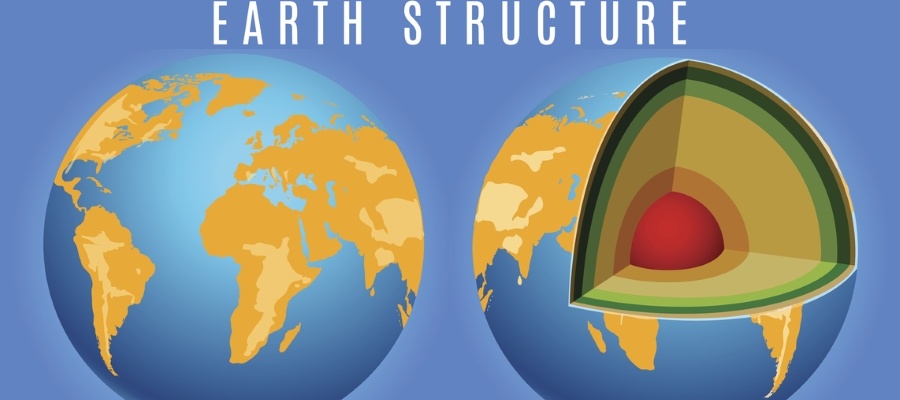
The surface of the earth, otherwise known as the ______, is broken into seven major pieces and sits atop a liquid layer called the _______
lithosphere, asthenosphere
astenosphere, mantle
crust, litosphere
asthenosphere, lithosphere
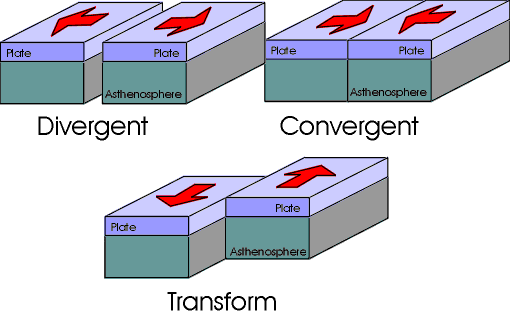
In a transform plate boundary, the ...
plates are the same age
convergent plate is older, oceanic plate is younger
convergent plate is younger, divergent plate is older
closer the plates are the younger they are
Sea surface temperature changes great than 0.5oC for greater than 5 months across the central tropical Pacific Ocean are known as
the arctic effect
the get stream
a typhoon
El Nino-Southern Oscillation

I. variation in the angle of sunlight that reaches Earth
II. variation in the amount of surface area over which the Sun's rays are distributed
III. variation in the amount of sunlight reflected from clouds


The type of plate boundary where two plates come together is a .....
Convergent Boundary
Divergent Boundary
Transform Boundary
Plate Boundary

What type of event will occur at this boundary?
Earthquake
Volcano Eruption
Tornado
Mountain Building
A divergent boundary occurs when plates ....
Pull apart
Come together
Slide past each other
subducting
Mountains are created when....
Two continental plates collide
Two oceanic plates pull apart
An Oceanic plate subducts under a Continental Plate
Two continental plates pull apart

The process by which the ocean floor sinks beneath a deep-ocean trench and back into the mantle is known as _______
convection.
continental drift.
subduction.
conduction.

What is the correct order (starting from the surface) of Earth’s layers?
crust, outer core, inner core, mantle
mantle, outer core, inner core, crust
crust, mantle, outer core, inner core
outer core, inner core, crust, mantle

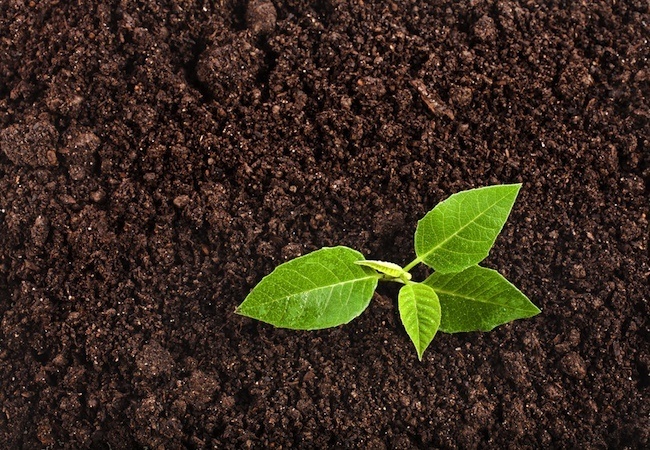


The rate at which water flows through the soil is called soil percolation or ______.
Groundwater
Permeability
Soil Pores
Porosity


The movement of the tectonic plates is caused by
the rotation of the Earth.
convection currents in the Asthenosphere
the gravity of the iron-nickel core.
the Moho discontinuity.
In some areas of the world, like California and Japan, earthquakes are a common occurrence. How can this best be explained?
The strong ocean currents are undermining both areas causing earthquakes.
Both areas are located near the edge of the Pacific Ocean, the unstable sand causes earthquakes.
Both areas are subjected to strong ocean wind and waves that causes earthquakes.
Both areas are on the boundary of active plates, the motion of the plates causes earthquakes.
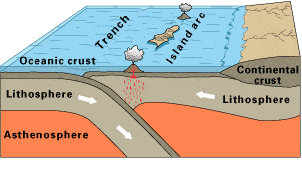
Observe this diagram of a plate boundary. One statement BEST describes what is happening. It is that
the oceanic crust is melting.
the denser ceanic crust is subducting under the less dense oceanic crust
volcanic islands are forming.
the tectonic plates are moving away from each other.
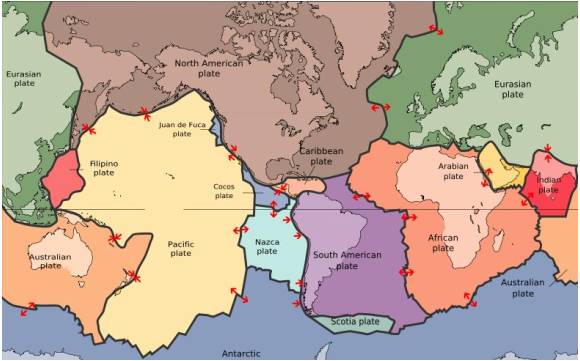
The map in the picture shows tectonic plate boundaries. This map would be useful in predicting the location of future
droughts
hurricanes
earthquakes
tornadoes
In which layer of the atmosphere does ozone help block UV radiation from striking the Earth?
troposphere
mesosphere
stratosphere
thermosphere
In which layer of the atmosphere do all the pressure, wind, and precipitation changes occur?
Outer space
stratosphere
troposphere
mesosphere

Which letter refers to a convergent plate boundary?
A
B
C
D
Most volcanism in the world is associated with
faulting
aquifer depletion
midcontinental hot spots
plate boundaries
Which letter refers to a divergent plate boundary?
A
B
C
D
Which letter refers to a transform plate boundary?
A
B
C
D
Volcanoes, island arcs, and mountains would be found at which letter?
A
B
C
D

The location where new crust is being created at a divergent plate boundary
A
B
C
D
The location where new crust is being created at a divergent plate boundary
A
B
C
D
The location where Island arcs are being created.
A
B
C
D

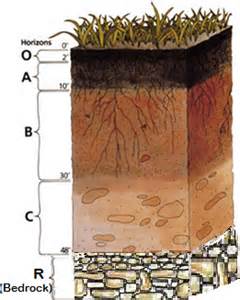
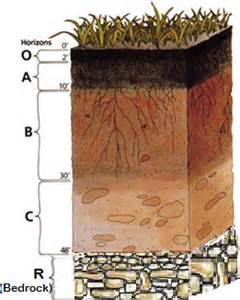
This horizon is the most biologically active horizon and is made of a mixture of organic & mineral material.
A
B
C
D
E
In this picture E is the parent material. The D layer is the least weathered and most similar to parent material. What is this horizon?
A Horizon
B Horizon
C Horizon
D Horizon
E Horizon
This horizon is missing from the picture. It is only in some acidic (forested) soils where metals and nutrients are leached from above.
A Horizon
B Horizon
C Horizon
D Horizon
E Horizon
Which of the lettered choices in the soil profile above represents the region with the greatest concentration of organic material?
A Horizon
B Horizon
C Horizon
D Horizon
E Horizon
The erosion of soil will destroy the soil profile and increase compaction. When water cannot percolate through the compacted soil it creates runoff which leads to more loss of soil. This is an example of a
negative feedback loop.
positive feedback loop.
circular feedback loop.
rain shadow effect.

What are the proportions of sand, silt, and clay for the soil at point T ?
75% Sand, 20% Silt, 5% Clay
70% Sand, 20% Silt, 10% Clay
65% Sand, 30% Silt, 10% Clay
60% Sand, 30% Silt, 10% Clay
What are the proportions of sand, silt, and clay for the soil at point X ?
5% Sand, 95% Silt, 5% Clay
5% Sand, 20% Silt, 5% Clay
65% Sand, 30% Silt, 10% Clay
60% Sand, 30% Silt, 10% Clay
What is the correct sequence of layers of the earth's atmosphere from earth's surface to space?
troposphere, stratosphere, mesosphere, thermosphere.
mesosphere, stratosphere, thermosphere, troposphere.
troposphere, mesosphere, stratosphere, thermosphere.
stratosphere, troposphere, mesosphere, thermosphere.
Which two factors allow earth to experience four distinct seasons?
latitude & solar intensity
tilt of axis & rotation of axis
tilt of axis & rotation around sun
distance from sun & place in orbit around sun
Temperatures in the stratosphere increase with elevation due to the presence of the
electrically charged ions
high-speed winds
ozone Layer
numerous clouds
The Coriolis effect
changes the circulation direction of water running down a drain
changes the direction of river flow
changes the direction of winds all around the earth
causes winds in the Southern Hemisphere to move to the west
The Coriolis effect
changes the circulation direction of water running down a drain
changes the direction of river flow
changes the direction of winds all around the earth
causes winds in the Southern Hemisphere to move to the west
The Coriolis effect is a result of
earth's gravitational pull
earth's rotation on its axis
the gravitational pull of the moon
the revolution of earth around the sun
Trade winds in the Northern and Southern Hemispheres deflect toward
the equator
the poles
continental landmasses
higher latitudes
The surface of the earth, otherwise known as the ______, is broken into seven major pieces and sits atop a liquid layer called the _______
lithosphere, asthenosphere
astenosphere, mantle
crust, litosphere
asthenosphere, lithosphere
When did the super continent Pangaea exist?
20 million years ago
100 million years ago
175 million years ago
250 million years ago

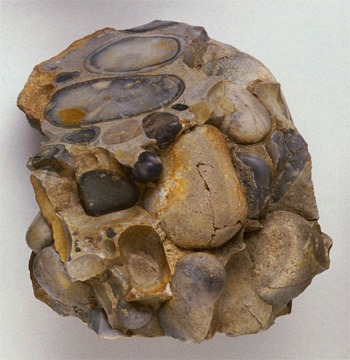
Rock that is from from previous rock that has been subjected to pressure and heat, such as marble or slate, is
metamorphic
intrusive igneous
sedimentary
extrusive igneous
classic

The majority of the earth's atmosphere is composed of
N2
O2
Ar
CO2
He

The soil texture with the highest porosity is
sand
clay
loam
silt
humus

The soil texture with the highest permeability is
sand
clay
loam
silt
humus

Ozone in the stratosphere is responsible for blocking __ emitted by the sun
infrared radiation
gamma radiation
visible light
x-ray radiation
ultraviolet radiation
Which is the correct order of the convection cells, starting from the equator?
Polar, Ferrell, Hadley
Ferrell, Hadley, Polar
Polar, Hadley, Ferrell
Hadley, Ferrell, Polar
Hadley, Polar, Ferrell
Latent heat release
increases air temperature
decreases air temperature
increases the amount of water vapor
increases air pressure
decreases air pressure
Temperature in adiabatic heating occurs due to
water vapor condensing
a pressure increase
absorption of sunlight
a pressure decrease
a volume increase
High productivity and nutrient availability occurs in the ocean with
gyres
El Nino
upwelling
prevailing westerlies
warm waters
Which of the following has the highest soil nutrient levels?
Temperate seasonal forest
Hot desert
Taiga/boreal forest
Tropical rainforest
Temperate rainforest
A mountain range has lush vegetation on the windward side and a desert on the leeward side. This is
land breeze
sea breeze
rain shadow effect
Coriolis effect
La Nina
Subduction of tectonic plates occurs at
convergent boundaries
divergent boundaries
transform (conservative) boundaries
hot spots
polar cells
Which is a direct result of the Coriolis Effect?
Upwellings
tides
ocean conveyor belt
Tsunami
Ocean gyres

