wayground logo

Free Printable Worksheets

Font size

S
M
L
XL
Worksheets

Digestive and Respiratory Systems Quiz

Total questions: 94

Worksheet time: 48mins

Name
Class
Date
1.

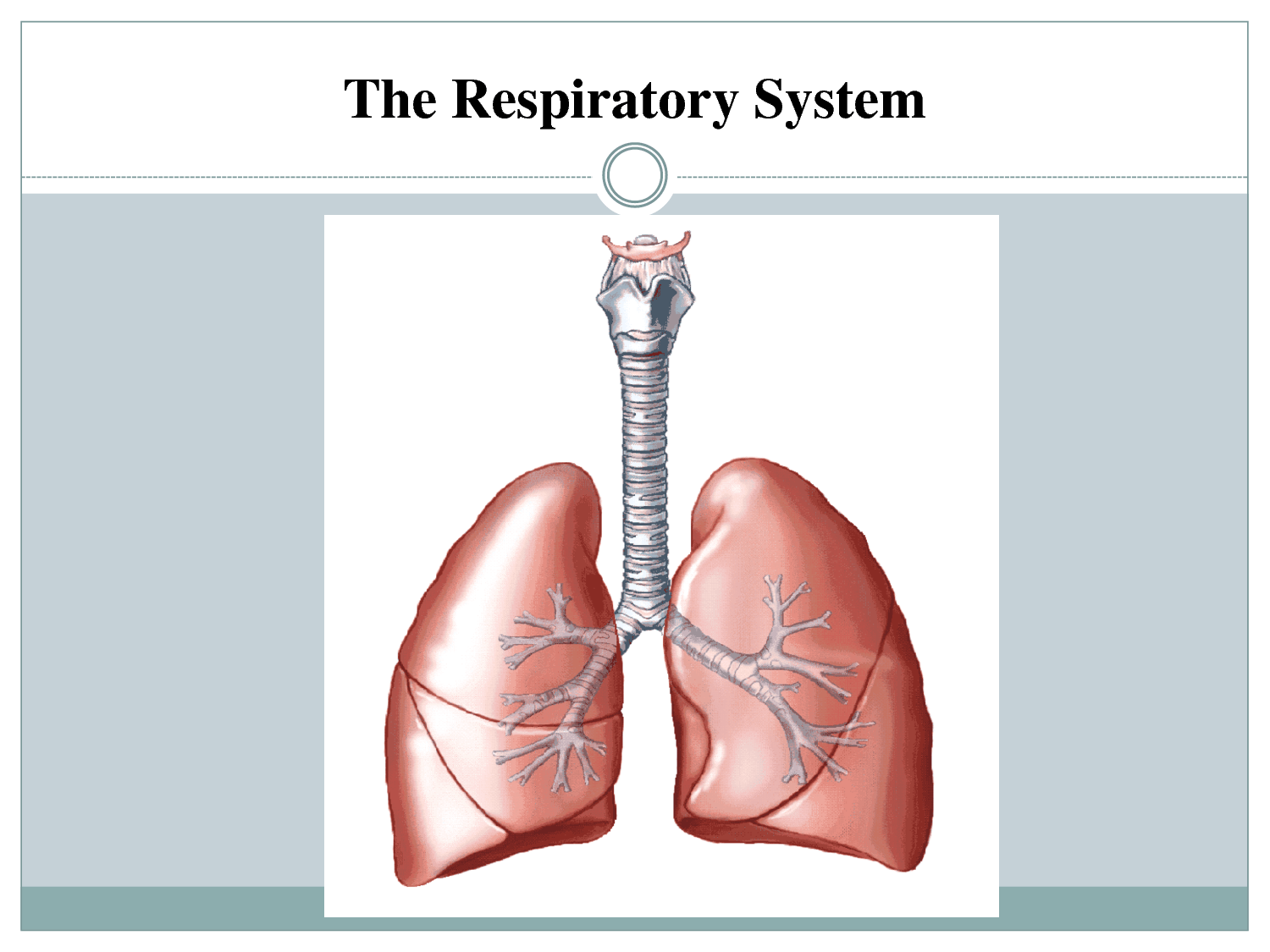
Which of the following is not part of the Respiratory System?

a)

Trachea

b)

Larynx

c)

Lungs

d)

Stomach

2.

Which of the following does smoking worsen?

a)

arthritis

b)

respiration

c)

exrection

d)

emphysema

3.

Warmed, moist air enters a tubelike passageway used by food, air, and liquid. What is this passageway called?

a)

larynx

b)

asthma

c)

pharynx

d)

trachea

4.
What is mechanical digestion? 
a)
When amylase breaks down starch 
b)
The tearing, grinding, and chewing process of food. 
c)
When fats are emulsified into tiny drops.
d)
When trypsin breaks proteins into amino acids.
5.
What is B pointing to in the digestive system diagram?
a)
large intestine
b)
small intestine
c)
liver 
d)
gall bladder
6.
The wavelike motion that moves food through the digestive tract is called ...
a)
emulsification
b)
paralysis
c)
pericarditis
d)
peristalsis
7.
What is the job of the esophagus?
a)
Break down large food molecules into smaller ones.
b)
Digesting fats.
c)
Moving food in a thin liquid called chyme
d)
Move food from the mouth to the stomach
8.
The process by which large food molecules are broken down into smaller food molecules is called ....
a)
chemical digestion
b)
oxidation 
c)
absorption
d)
respiration
9.
#4 in the digestive system diagram is the ...
a)
appendix 
b)
large intestine 
c)
pancreas 
d)
 gall bladder
10.
The fingerlike projections on the lining of the small intestine are called  ...
a)
lipase
b)
cilia
c)
bile
d)
villi
11.
# 3 in the digestive system diagram is the ...
a)
esophagus
b)
 liver
c)
 stomach 
d)
mouth
12.
Food leaves the stomach in a thin, liquid form called...
a)
chyme
b)
bile
c)
pepsin
d)
saliva
13.
The pancreas is an organ that releases digestive chemicals into what organ?
a)
small intestine 
b)
 liver
c)
 gall bladder 
d)
stomach
14.
 #7 in the digestive system diagram is the ...
a)
small intestine
b)
large intestine
c)
liver
d)
gallbladder
15.
12. What does the gallbladder store that helps emulsify fats into droplets?  
a)
chyme
b)
mucus
c)
bile
d)
 pepsin
16.
# 2 in the digestive system diagram is the ...
a)
stomach 
b)
 large intestine
c)
appendix
d)
liver 
17.
 The movement of food molecules from the digestive system to the blood is called...
a)
emulsification 
b)
chemical digestion
c)
absorption 
d)
 peristalsis
18.
C in the digestive system diagram is the...
a)
large intestine 
b)
esophagus 
c)
liver 
d)
stomach
19.
Where does the digestive system begin?
a)
gall bladder 
b)
mouth 
c)
pharynx 
d)
small intestine
20.
Which organ produces enzymes in the mouth that break down starches?
a)
pancreas 
b)
hormonal glands
c)
gall bladder 
d)
salivary glands 
21.
What kind of digestion happens in the stomach?
a)
only mechanical 
b)
only chemical
c)
  both mechanical & chemical 
d)
neither mechanical or chemical
22.
Which organ does food NOT travel through?
a)
large intestine 
b)
stomach 
c)
pancreas 
d)
rectum
23.
What is B on the digestive system diagram pointing to?
a)
salivary glands
b)
pancreas 
c)
esophagus 
d)
gall bladder 
24.
Which organ produces bile, which helps break down fats? 
a)
gall bladder 
b)
liver  
c)
 salivary glands 
d)
pancreas
25.
Where does chyme go when it leaves the stomach?  
a)
gall bladder 
b)
large intestine 
c)
appendix 
d)
small intestine 
26.
What are the muscular contractions of the esophagus called?  
a)
contractions 
b)
peristalsis 
c)
homeostasis 
d)
osmosis
27.
A type of protein that speeds up the rate of chemical reactions & breaks down food is called 
a)
carbohydrates 
b)
enzymes 
c)
fats 
d)
villi
28.
Which of the following is NOT an accessory organ in the digestive system? 
a)
Pancreas
b)
 Gall bladder 
c)
small intestine 
d)
liver
29.
In what part of the small intestine does the majority of digestion occur? 
a)
jejunum 
b)
ileum 
c)
duodenum 
d)
 transverse colon
30.
What structures in the small intestines makes absorption of nutrients possible?
a)
Duodenum
b)
Colon
c)
Sigmoid
d)
Villi
31.
What is the approximate length of small intestine? 
a)
 4-7 cm  
b)
4-7 ft  
c)
4-7 meters 
d)
 4-7 km
32.
Chemical and mechanical process that breaks food down into small molecules so that they can be absorbed by the body
a)
peristalsis
b)
emulsification
c)
digestion
d)
purification
33.
What protects your stomach from the acid in your stomach?
a)
the acid doesn't hurt you
b)
 layers of fat
c)
a lining inside your stomach 
d)
nothing
34.
You pancreas regulates blood sugar
true or false?
a)
false
b)
true
35.
After absorbing nutrients in the small intestine, where do they go?
a)
Large intestine
b)
Kidney
c)
Stomach
d)
Bloodstream
36.
Bile is produced by the liver and stored in the gallbladder. It is needed to help digest...
a)
Carbohydrates
b)
Proteins
c)
Fats
d)
Vitamins
37.
The villi is where the digestive system connects with the __________________ system.
a)
circulatory
b)
respiratory
c)
muscular
d)
skeletal
38.
#10 in the digestive system diagram is the ...
a)
large intestine
b)
pancreas
c)
appendix
d)
gall bladder
39.

When you inhale, which of the following contracts and moves down?

a)

bronchioles

b)

diaphragm

c)

nephrons

d)

lungs

40.

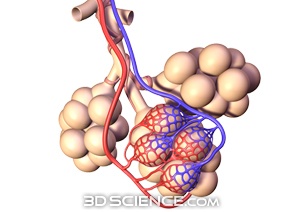
At the end of broncioles are thin walled sacs called what?

a)

trachea

b)

bronchi

c)

alveoli

d)

pneumonia

41.

Where is the voice box located in our respiratory system?

a)

Larynx

b)

Pharynx

c)

Trachea

d)

Lungs

42.

Which disease is casued by smoking?

a)

Type 1 Diabetes

b)

Bladder Infection

c)

Lung Cancer

d)

Muscular Dystonia

43.

About how many alveoli are located in the lungs?

a)

300 - 600 million

b)

1-50

c)

100 -1000

d)

10-20 million

44.

When INHALING you breathe in _________.

a)

Oxygen

b)

Carbon Dioxide

c)

Water Vapor

d)

Nitrogen

45.

When EXHALING you breathe out __________.

a)

Oxygen

b)

Carbon Dioxide

c)

Hemoglobin

d)

Nitrogen

46.

Hair in your nose and mucus help to trap dust, bacteria, and other materials from going into your lungs when you breathe in.

a)

True

b)

False

47.

Your lungs have as much surface area as a ___________

a)

tennis court

b)

soccer field

c)

classroom desk

d)

kitchen table

48.

After air moves through the Pharynx where does it go next?

a)

Trachea

b)

Capillaries

c)

Bronchi

d)

Nasal Cavity

49.

What is needed by the trachea to make sure it does not collapse?

a)

Rings of Cartilage

b)

Air

c)

Bronchi Tubes

d)

Smooth Muscle

50.
What is the main function of the respiratory system?
a)
to provide oxygen and remove carbon dioxide from the body
b)
to bring oxygen to the body
c)
to break down food and absorb nutrients
d)
to remove oxygen from the body and deliver carbon dioxide
51.
What are the main organs of gas exchange in the respiratory system?
a)
diapragm
b)
lungs
c)
trachea
d)
bronchi
52.
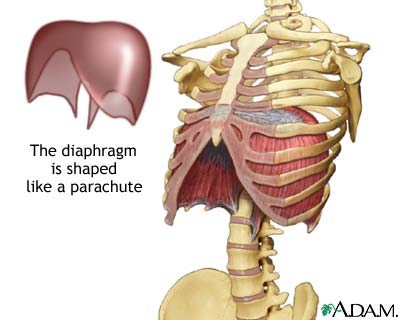
What is function of the dome-shaped diaphragm?
a)
This is where gas exchange happens.
b)
Air passes through the diaphragm on the way to the lungs.
c)
It attaches to the lungs to help in breathing.
d)
It is under the lungs and keeps them from falling down to your stomach.
53.
When you breathe, your lungs take in ___ and remove ___. 
a)
air/oxygen
b)
oxygen/carbon dioxide 
c)
carbon dioxide/waste 
d)
waste/air 
54.
What is the function of the bronchi?
a)
Transport air from nose to lungs
b)
Transport air from trachea to lungs
c)
Transport air from lungs to alveoli
d)
Transport air from alveoli to blood
55.
A disorder of the lungs called ____ causes the bronchi to become restricted (get smaller) so air can't get to the lungs.
a)
asthma 
b)
cold
c)
influenza 
d)
bronchitis 
56.
The two main branches from the trachea (one to each lung)
a)
bronchi
b)
alveoli
c)
capillaries
d)
bronchioles
57.
The air sacs that are covered with capillaries where gas exchange takes place
a)
bronchi
b)
lungs
c)
oxygen
d)
alveoli
58.

Within the lungs, the exchange of oxygen and carbon dioxide occurs between the alveoli and the ___________.

a)

trachea

b)

bronchi

c)

capillaries

d)

diaphragm

59.
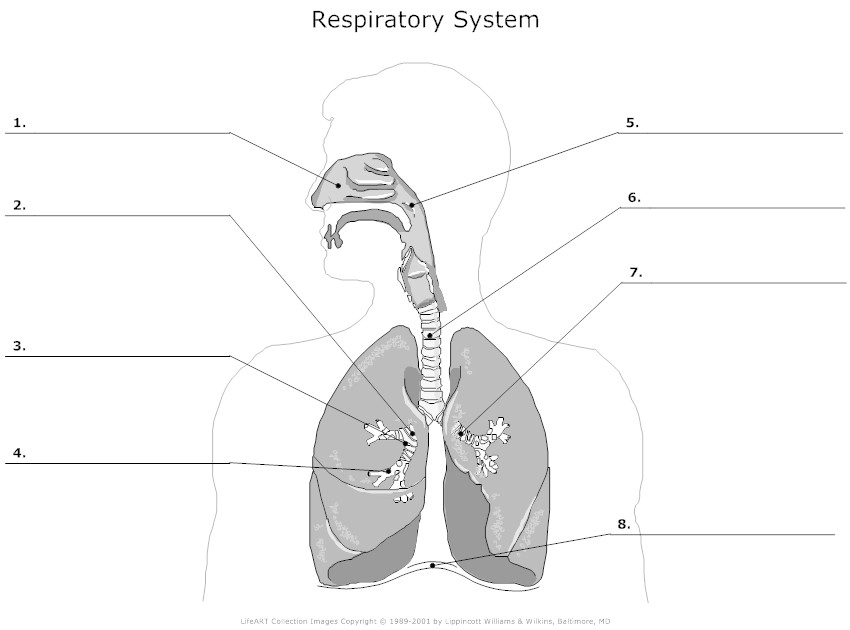
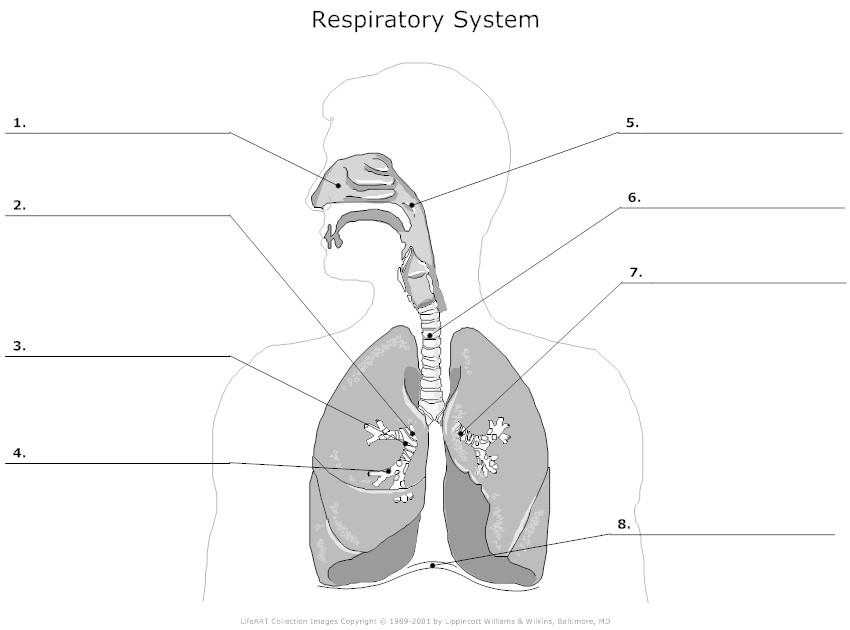
Name the organ label # 6. 
a)
alveoli 
b)
bronchi 
c)
trachea 
d)
lungs 
60.
What is tube that is also known as your wind pipe?
a)
esophogus
b)
bronchi
c)
trachea
d)
alveoli
61.
Name the structure labeled 8 
a)
lungs 
b)
trachea 
c)
diaphragm 
d)
alveoli 
62.
The passageway that is shared by both the digestive and respiratory system is the....
a)
larynx
b)
pharynx
c)
trachea
d)
nose
63.
Flap of skin that covers the opening to the windpipe during swallowing
a)
Stomach
b)
Trachea
c)
Pancreas
d)
Epiglottis
64.
The Pharynx is the muscle that moves the lungs
a)
True
b)
False
65.

Hemoglobin is...

a)

Protein in blood that carries nutrients

b)

Oxygen in blood that carries protein

c)

Protein in blood that carries oxygen

d)

Nutrients in blood that carries protien

66.

What cellular process will move oxygen into body cells?

a)

Transportation

b)

Active transport

c)

Diffusion

d)

Respiratory

67.

When air moves into the lungs, oxygen...............

a)

Diffuses across the membranes of the alveoli and exits the blood.

b)

Moves across the membranes of the alveoli by active transport.

c)

Diffuses across the membranes of the alveoli and enters the blood.

d)

Converted into carbon monoxide.

68.

What is the FIRST step of the breathing process?

a)

Lungs expand

b)

Diaphragm contracts

c)

Diaphragm relaxes

d)

Air flows into alveoli

69.
The waste product formed during cellular respiration is:
a)
NaCl
b)
CO2
c)
C6H12O6
d)
O2
70.

When you inhale, air passes through the following respiratory structures in which order?

a)

nose, lungs, bronchi, trachea

b)

lungs, bronchi, nose, trachea

c)

trachea, nose, lungs, bronchi

d)

nose, trachea, bronchi, lungs

71.
Which muscle allows the lungs to inflate and deflate?
a)
trachea 
b)
larynx
c)
diaphragm
d)
lungs
72.
Another name for the trachea is the:
a)
Windpipe 
b)
Throat
c)
Larynx
d)
Esophagus
73.

What is "G" pointing to?

a)

epiglottis

b)

trachea

c)

larynx

d)

pharynx

74.

What is "E" pointing to?

a)

nasal cavity

b)

pharynx

c)

larynx

d)

trachea

75.

What is "C" pointing to?

a)

artery

b)

vein

c)

alveoli

d)

capillary

76.

What is "A" pointing to?

a)

trachea

b)

pharynx

c)

nasal cavity

d)

bronchi

77.

What is "C" pointing to?

a)

pharynx

b)

larynx

c)

trachea

d)

bronchiole

78.

What is "I" pointing to?

a)

bronchioles

b)

pleura

c)

pharynx

d)

alveoli

79.

What is "E" pointing to?

a)

pharynx

b)

larynx

c)

trachea

d)

bronchi

80.

What is "C" pointing to?

a)

bronchioles

b)

bronchi

c)

trachea

d)

diaphragm

81.

What is "D" pointing to?

a)

bronchioles

b)

pleura

c)

diaphragm

d)

diadem

82.

What is "H" pointing to?

a)

bronchi

b)

trachea

c)

bronchioles

d)

respiratory membrane

83.

What is "E" pointing to?

a)

alveoli

b)

vein

c)

capilaries

d)

artery

84.

What are "A" and "F" pointing to?

a)

capillaries

b)

veins

c)

arteries

d)

alveoli

85.

What is "B" pointing to?

a)

alveoli

b)

bronchioles

c)

capillaries

d)

arteries

86.

What is "D" pointing to?

a)

bronchi

b)

bronchiole

c)

trachea

d)

alveolar sac

87.

Rib cage moves up and out.

a)

Inhaling

b)

Exhaling

88.

air pressure in the chest cavity increases.

a)

inhaling

b)

exhaling

89.

Tiny hair like structures which move mucus and trapped material to back of throat.

a)

glottis

b)

epiglottis

c)

cilia

d)

pleura

90.

Condition in which bronchial tubes are irritated and too much mucus is produced.

a)

respiratory infection

b)

bronchitis

c)

lung cancer

d)

asthma

91.

Bacteria, viruses, and other microorganisms are examples of this.

a)

fibrosis

b)

pleurisy

c)

bronchitis

d)

respiratory infection

92.

This warms and moistens air; filters dust particles

a)

epiglottis

b)

diaphragm

c)

nasal cavity

d)

thoracic cavity

93.

Put these in the order that air travels through.

a)

pharynx, trachea, larynx, bronchioles

b)

larynx, trachea, bronchi, bronchioles

c)

pharynx, trachea, bronchioles, alveoli

d)

pharynx, larynx, trachea, epiglottis

94.

Cellular respiration takes place in....

a)

respiratory system

b)

digestive system

c)

body cells

d)

nucleus