
 Worksheets
Unit 4: Earth Composition
Total questions: 60
Worksheet time: 32mins
crust
outermost layer of Earth (thinnest layer)
the 3 layers that make up the Earth (crust, mantle, core)
a substance composed of 2 or more elements
the middle layer (most of the Earth's mass)
mantle
outermost layer of Earth (thinnest layer)
the 3 layers that make up the Earth (crust, mantle, core)
a substance composed of 2 or more elements
the middle layer (most of the Earth's mass)
outer core
liquid layer of the Earth's core that lies beneath the mantle
strong, lower part of the mantle
the plastic layer of the mantle on which pieces of lithosphere move
outermost, rigid layer of the Earth (the crust and the upper, rigid part of the mantle)
inner core
the dense center of the Earth
vibrations through the Earth that happen when there is an earthquake
a machine that measures the times at which seismic waves arrive at different distances from an earthquake
pieces of lithosphere that move around on top of the astenosphere
seismic waves
dense center of the Earth
vibrations through the Earth that happen when there is an earthquake
a machine that measures the times at which seismic waves arrive at different distances from an earthquake
pieces of lithosphere that move around on top of the asthenosphere
seismograph
the dense center of the Earth
vibrations through the Earth that happen when there is an earthquake
a machine that measures the times at which seismic waves arrive at different distances from an earthquake
pieces of lithosphere that move around on top of the astehnosphere
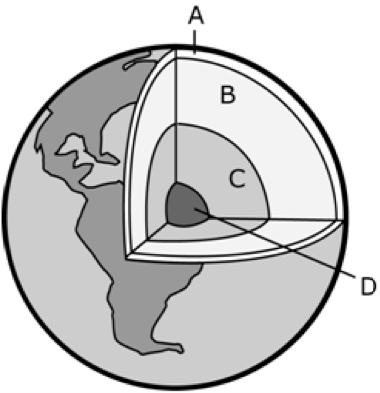
Which letter in the diagram identifies the layer of Earth made up of solid nickel and iron?
layer A
layer B
layer C
layer D

Rock formed from the cooling and solidifying of molten materials
metamorphic
sedimentary
crystal
igneous
Hot molten rock below the earth's surface
Magma
inner core
crust
outer core
An area where two plates, converge, diverge, or move past one another.
core
lithosphere
fault
boundary
Formed from another rock type through heat or pressure
inner core
Metamorphic
fault
outer core
Large section of the lithosphere
lava
tectonic plate
infrared wave
fault
outer layer of soil
mantle
crust
pedosphere
inner crust
dislocation along a break in rock
face
fault
surface
crust
contains crust (and upper mantle)
core
mantle
lithosphere
seismic wave
Energy from plate movements
tectonic plates
seismic wave
inner mantle
core
Hot molten rock on Earth's surface
waves
Lava
core
volcanic activity
Rock formed from deposited sediment
metamorphic rock
igneous rock
sedimentary rock
sandstone
Formed at convergent boundaries
creeks
rivers
fault
mountains
Movement of fluid material due to heat (occurs in the mantle)
condensation
convection
heat energy
metamorphosis
inner core

What is the correct order of the earth's layers from inside to outside?
inner core, mantle, outer core, crust
outer core, inner core, mantle, crust
crust, mantle, outer core, inner core
inner core, outer core, mantle, crust
What is the correct order of earths layers from outside to inside?
crust, mantle, outer core, inner core
mantle, outer core, inner core, crust
inner core, outer core, crust, mantle
crust, outer core, inner core, mantle
Select ALL layers that are solid.
crust
mantle
outer core
inner core


The process when rocks break into smaller pieces due to exposure to natural elements is called
melting
weathering
sediments
The name rock is given when it is broken down into smaller pieces.
texture
weathering
sediment
erosion
This is the continuous process of rock changing from one type to another.
Igneous rocks
Sedimentary rocks
Metamorphic rocks
Rock Cycle
What type of rock might contain evidence of past life?
Sedimentary Rock
Igneous Rock
Metamorphic Rock
Which of the following lists the steps an igneous rock undergoes in order to become a sedimentary rock, in the correct order?
Deposition, erosion, melting, cooling
Erosion, weathering, eruption, cooling
Dissolving, deposition, cooling, fracture
Weathering, erosion, deposition, cementation
Limestone is a sedimentary rock. During the rock cycle, limestone is changed into marble, a metamorphic rock. The processes that act on limestone and change it into marble are
weather and erosion
heat and pressure
compacting and cementing
melting, cooling, and hardening

According to the diagram, what process is shown by letter A?
extrusion
erosion
crystallization
intrusion
According to the diagram, what process is shown by letter B?
compaction & cementation
weather & erosion
heat & pressure
melting
If a lot of heat is applied to a rock, it will turn into
magma
rocks
sediment
metamorphic rocks
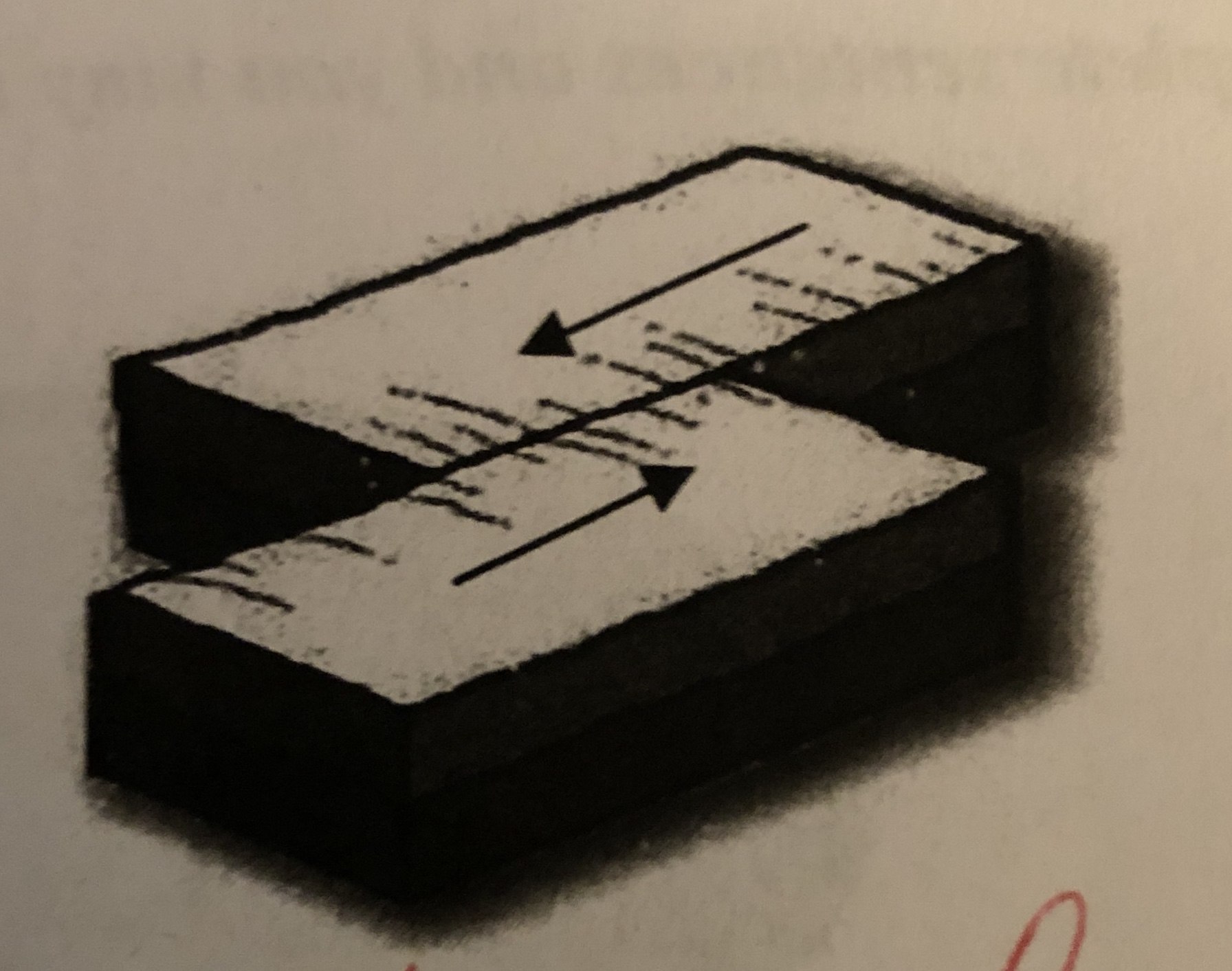
What type of boundary is this?
convergent
divergent
transform
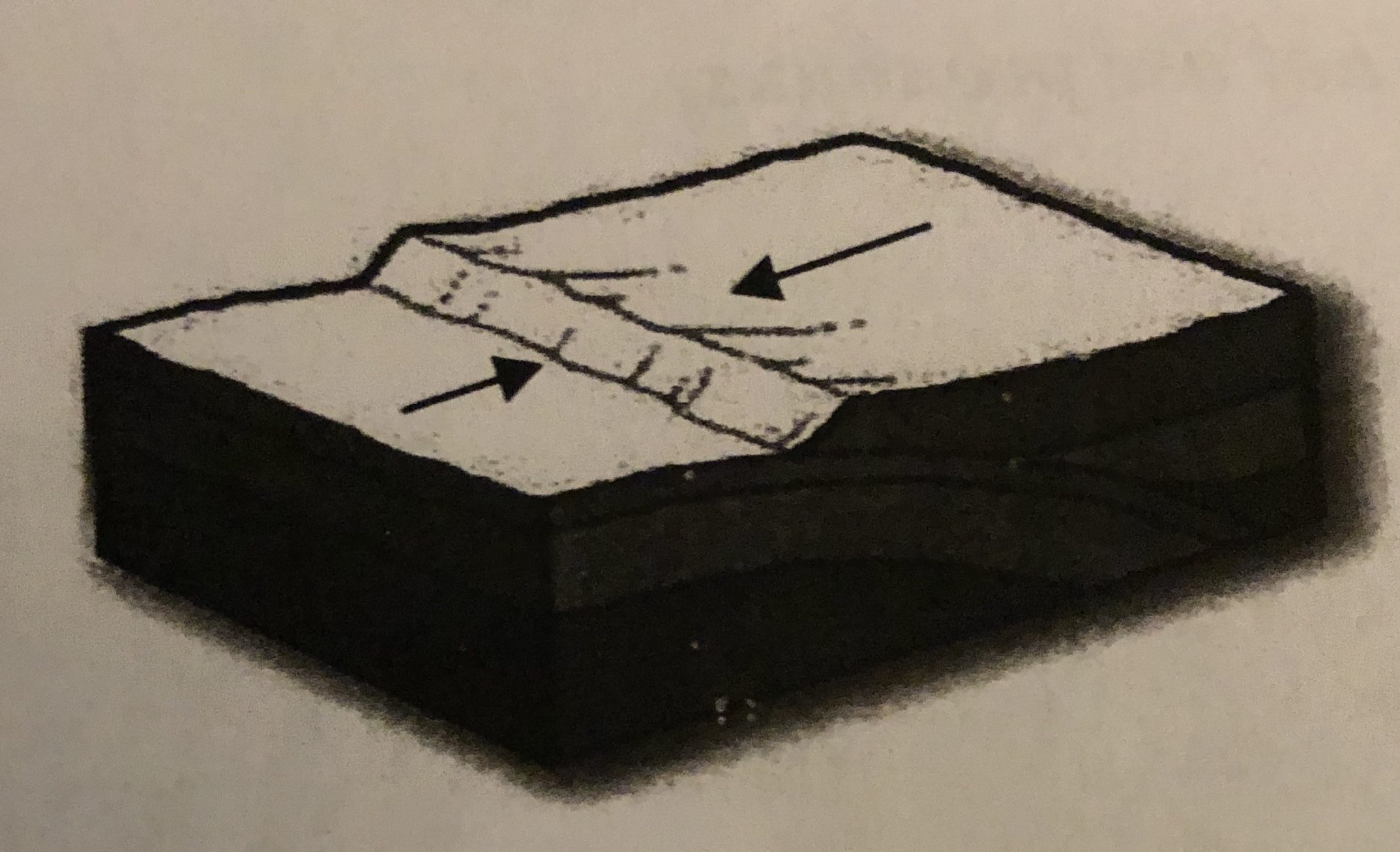
What type of boundary is this?
convergent
transform
divergent
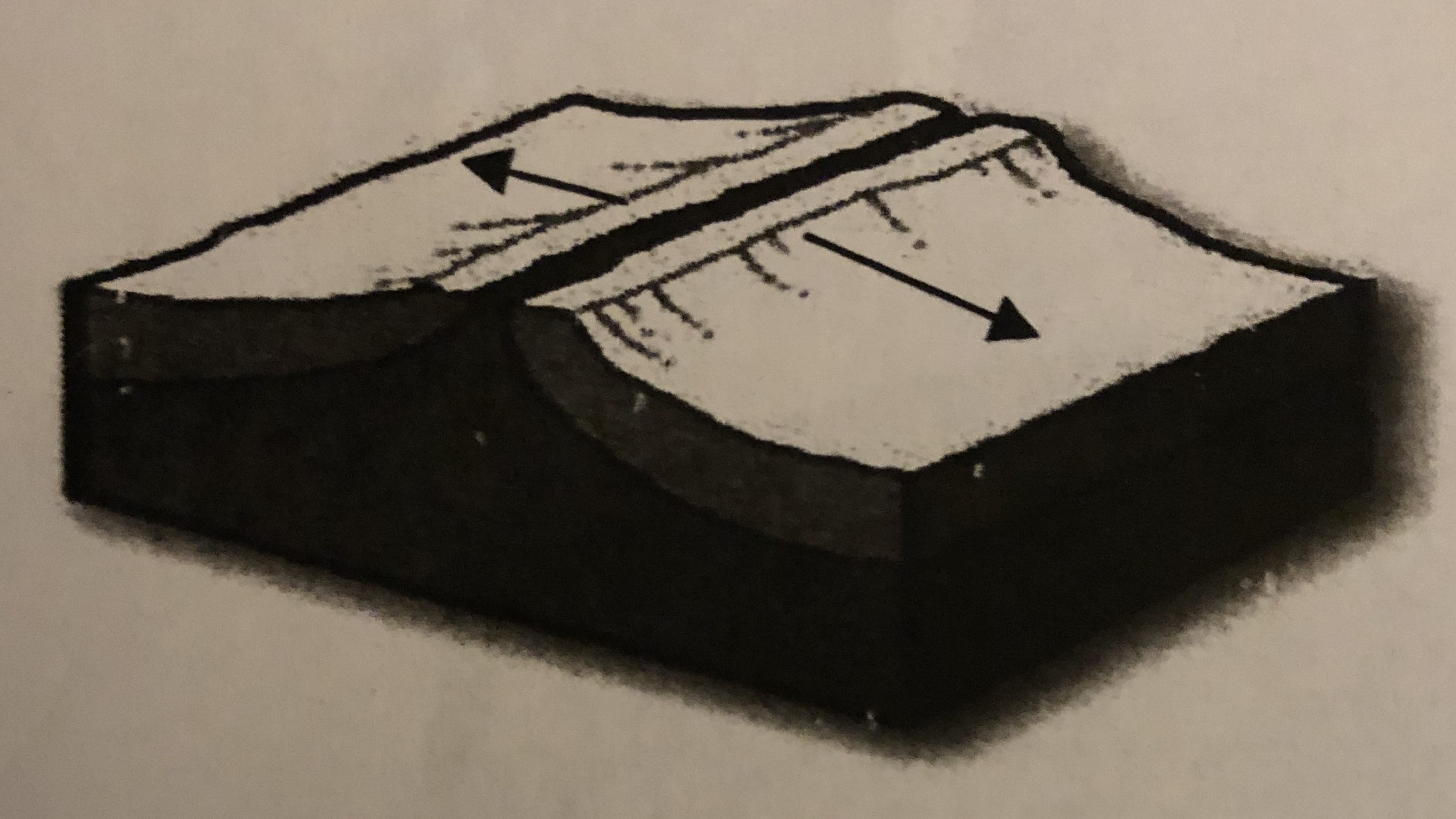
What type of boundary is this?
convergent
divergent
transform
When one tectonic plate sinks under another, this is called...
Convegent
Divergent
Subduction
Transform

Name the type of fault
Oblique Slip
Dip Slip
Strike Slip

Name the type of fault
Dip Slip Normal
Dip Slip Reverse
Strike Slip
Oblique Slip
Most earthquakes happen along _________________.
the coast
faults
the desert
mountain ranges
What are the names of the four types of Soil?
loam, sand, silt, clay
loam, sand silt, bark
sand, silt, clay, rocks

