
 Worksheets
Unit 4 "The structure of matter"
Total questions: 64
Worksheet time: 46mins
What is the basic unit of matter and is the smallest particle of an element?
¿Cuál es la unidad básica de la materia y la partícula más pequeña de un elemento?
Atoms
Elements
Compounds
Molecules
Two or more atoms chemically bonded together are called a:
Dos o más átomos unidos químicamente se denominan:
atom
element
molecule
mixture

How many carbon atoms are there in a methane molecule?
¿Cuántos átomos de carbono hay en una molécula de metano?
0
1
4
5
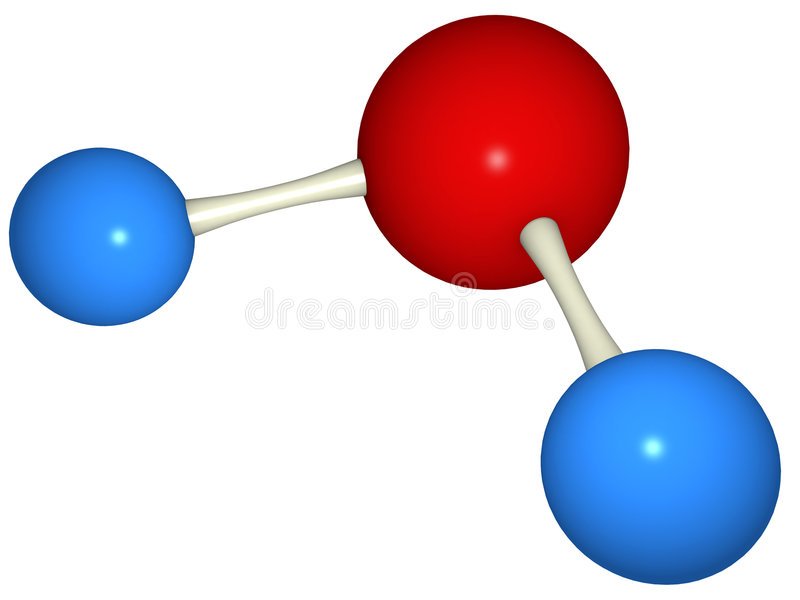
How many hydrogen atoms are there in a water molecule? H20
¿Cuántos átomos de hidrógeno hay en una molécula de agua? H20
0
1
2
3
This is anything that has mass and takes up space (meaning it has a volume).
Esto es cualquier cosa que tenga masa y ocupe espacio (lo que significa que tiene un volumen).
matter
mass
element
energy
Is NO2 an element or a molecule?
element
molecule
How many atoms are in CaCO3?
3
4
5
6
How many atoms are in NO2?
1
2
3
4
Is K an element or a molecule?
element
molecule

Which of the following is an example model of CH4?


None of these options
How many carbon atoms are there in C3H12O5?
1
3
12
5
How many sodium atoms are there in NaCl2?
1
2
3
4
In crystals, atoms are arranged in an ordered [BLANK]
Molecule
Matter
Compound
Pattern
What has atoms arranged in an ordered pattern?
Protons
Crystals
Solids
Matter
How are elements different from atoms?
Elements are made out of atoms
Atoms are made out of elements
Elements are made out of molecules
Molecules are made out of atoms.

What is an atom?
The basic building block of matter; made of electrons, protons, and neutrons.
The simplest unit of a chemical compound that can exist; formed when two or more atoms of different elements join together chemically (with a bond).
The simplest unit of a chemical compound that can exist; formed when two or more atoms of the same or different elements join together chemically (with a bond).
A pure substance that is made from a single type of atom.

What is an molecule?
The basic building block of matter; made of electrons, protons, and neutrons.
The simplest unit of a chemical compound that can exist; formed when two or more atoms of different elements join together chemically (with a bond).
The simplest unit of a chemical compound that can exist; formed when two or more atoms of the same or different elements join together chemically (with a bond).
A pure substance that is made from a single type of atom.
What is an compound?
The basic building block of matter; made of electrons, protons, and neutrons.
The simplest unit of a chemical compound that can exist; formed when two or more atoms of different elements join together chemically (with a bond).
The simplest unit of a chemical compound that can exist; formed when two or more atoms of the same or different elements join together chemically (with a bond).
A pure substance that is made from a single type of atom.

What is an element?
The basic building block of matter; made of electrons, protons, and neutrons.
The simplest unit of a chemical compound that can exist; formed when two or more atoms of different elements join together chemically (with a bond).
The simplest unit of a chemical compound that can exist; formed when two or more atoms of the same or different elements join together chemically (with a bond).
A pure substance that is made from a single type of atom.

What is the smallest particle of an element; made of electrons, protons, and neutrons?
orbital
atom
element
periodic table

What is anything that has volume and mass?
weight
atoms
structure
matter

What is the simplest unit of a chemical compound that can exist, formed when two or more atoms join together chemically?
molecule
atom
element
matter

What is a single substance, either an element or a compound, with definite composition and properties?
element
molecule
pure substance
atom

What is the state of matter with definite volume and shape?
solid
liquid
gas
matter

What does the subscript tell us about a molecule?
atom type
a number
the number of a specific type of atom present
molecule

What scientist is best known for his "Plum Pudding" model of the atom?
J.J. Thomson
Ernest Rutherford
John Dalton
Democritus
who said that nucleus also contains neutral particles
Bohr
Chadwick
Bacquerrel
rutherford
___________ proposed that matter is made of indivisible particles.
Dalton
JJ. Thomson
Rutherford
Bohr
________ proposed that electrons can only travel in fixed orbits
dalton
Thompson
Rutherford
Bohr
_________ found out that atom has negative charges called electrons.
dalton
thomson
rutherford
Bohr
_________ realised that the atom has a positive charge at the centre of it
Dalton
Thomson
Rutherford
Bohr
What does “atomos” mean
invisible
indivisible
immincible
inevitable

In an element box, the number at top is the
atomic number
atomic name
atomic mass
atomic symbol

___________________ are positively charged particles located in the nucleus of an atom.
Electrons
Neutrons
Protons
Isotopes
Isotopes are atoms of the same element with different numbers of
electrons
neutrons
protons
nuclei
Elements on the Periodic Table are ordered according to their
element name
element symbol
number of atoms
atomic number

Rows in the Periodic Table are called
Periods
Groups/Families
Cousins
Metals

Column in the Periodic Table are called
Periods
Groups/Families
Cousins
Metals

The nucleus of an atom is located in its
electron cloud
center
proton
backpack

The chemical symbol in this element box is
26
Fe
Iron
55.845


How many elements are in CaCO3?
3
4
5
6
How many elements are in CaCO3?
3
4
5
6

