
Font size
 Worksheets
Biology 20 Midterm Review - Body Systems
Total questions: 114
Worksheet time: 4hrs 48mins
A scientist was studying the effect of temperature on bacterial growth. What is the manipulated variable?
Length of the experiment
Number of bacteria
Reproduction rate
Temperature

What is oxygen needed for?
energy releasing chemical reactions
to make glucose
to take in sunlight
none of the above
Which one accurately describes the difference between respiration and cell respiration?
respiration produces glucose while cell respiration does not
cell respiration is a process in cells where energy is made, while respiration is breathing
respiration occurs in cells while cell respiration produces glucose
none of the above
After the nose, air passes into the
larynx
pharynx
bronchi
bronchioles
The "windpipe" is known as the
alveoli
esophagus
trachea
bronchi
A small flap of tissue that covers the trachea is called the
bronchi
larynx
pharynx
epiglottis
Where would you find cilia?
nose and alveoli
bronchioles and mouth
trachea and nose
all of the above
Where is carbon dioxide and oxygen exchanged at capillaries?
trachea
larynx
alveoli
bronchi

What is labeled F?
bronchioles
trachea
bronchi
diaphragm

What is labeled at E?
bronchi
trachea
pharynx
none of the above
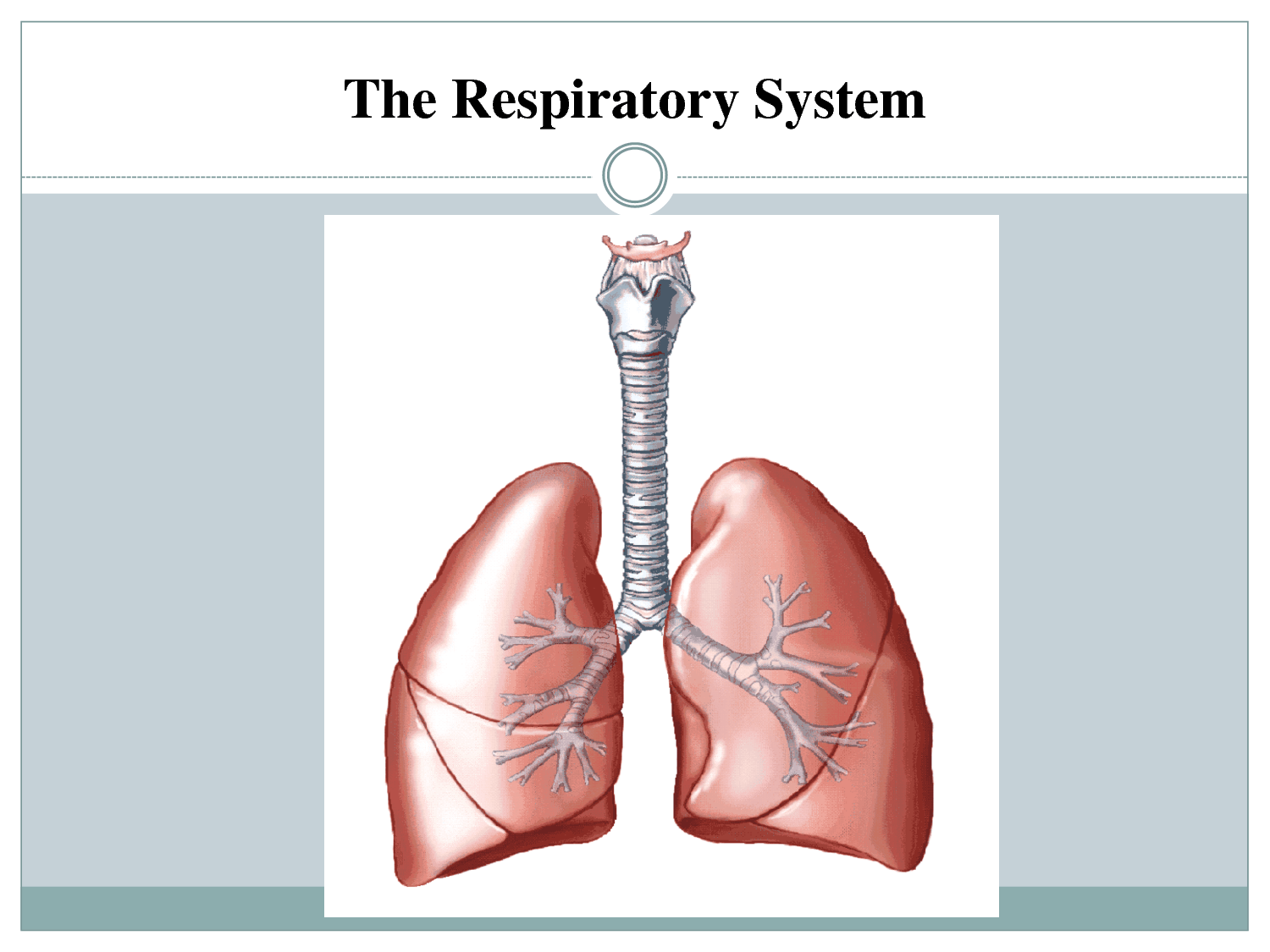
Which describes the amount of air you breathe in during one breath?
Residual volume, and is 1,200 mL of air
Inspiratory reserve volume, and is 500 mL of air
Tidal volume, and is 500 mL of air
Vital capacity volume, and is 4,800 mL of air
What is the maximum amount of air your lungs can hold?
Tidal volume, and is 500 mL
Inspiratory reserve volume, and is 3,100 mL
Vital capacity volume, and is 4,800 mL
Total lung capacity, and is 6,000 mL
Which term describes the additional amount of air you would take IN after a tidal volume amount of air, in order to blow out your birthday candles?
Residual volume, and is 1,200 mL of air
Inspiratory reserve volume, and is 3,100 mL of air
Inspiratory reserve volume, and is about 4,800 mL of air
Vital capacity volume, and is about 3,100 mL of air
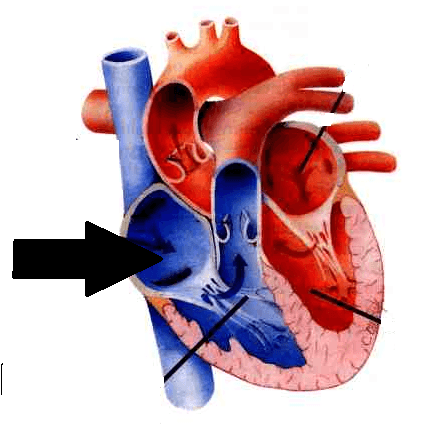
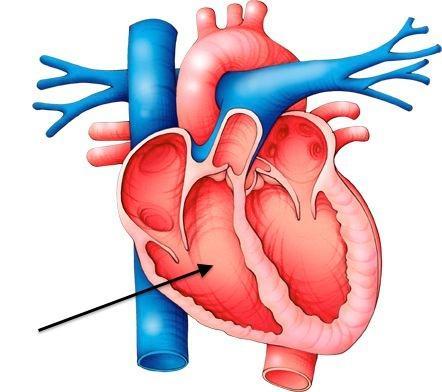
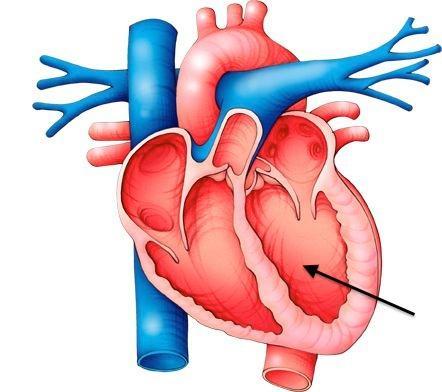
The mammalian heart has ___ chambers.
1
2
3
4
These cells play a vital role in defending the body against infection
Leucocytes
Erythrocytes
Blastocytes
Plasmacytes
_______ function in the life-saving process of clotting blood.
Phagocytes
Leucocytes
Erythrocytes
Platelets
True or false:
Arteries always carry blood away from the heart.
True
False
True or false:
Arteries always carry oxygenated blood.
True
False
The blood in the vena cava is...
oxygenated, returning to the heart
deoxygenated, returning to the heart
oxygenated, leaving the heart
deoxygenated, leaving the heart
The contraction/emptying phase of the cardiac cycle?
Systole
Diastole
The relaxing/filling stage of the cardiac cycle?
Systole
Diastole
Coronary arteries...
supply the heart muscle cells with a supply of blood.
supply the brain cells with a supply of blood.
contain deoxygenated blood.
when clogged, cause a stroke.
The type of blood vessel where exchange of gases, nutrients, and wastes occurs?
arteries
capillaries
veins

An abnormal widening/ballooning of a portion of an artery.
aneurysm
embolism
thrombosis
atherosclerosis

Instrument used to measure blood pressure?
AED
ECG
Sphygmomanometer
ultrasound

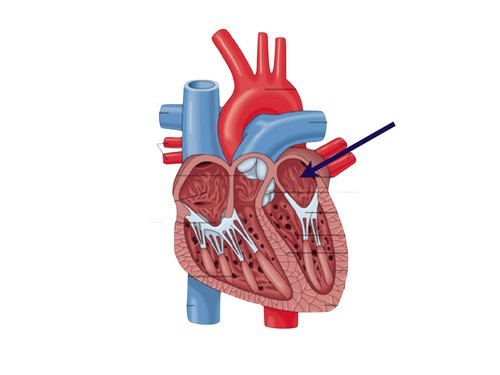
Name part I.
pericardium
mediastinum
septum
unknownum

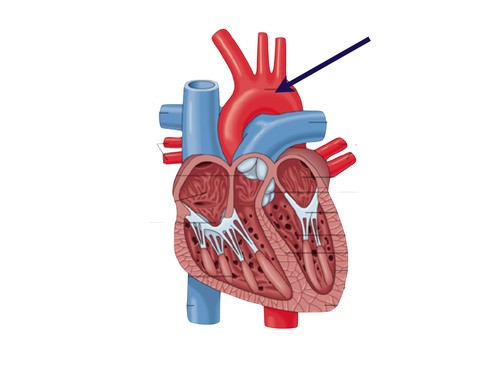
Name part B.
Pulmonary arteries
Pulmonary veins
Superior Vena cava
Aorta


A condition in which a person's immune system is overly sensitive to environmental substances that are normally harmless.
Allergy
Antigen
Bacteria
Virus
Which best describes the relationship between antibodies and antigen?
One antibody can affect several different antigens.
Antibodies are specific to one antigen.
Antigens are produced in response to antigen.
Immunity develops when an antigen destroys an antibody.


FATS---->FATTY ACIDS/GLYCEROL
STARCH---->MALTOSE
Which reagent would test for the presence of enzymes (proteins)?
Benedict's solution
iodine solution
Biuret solution
ethanol


What is number 2?
Glomerulus
Bowman's Capsule
Henle's Loop
Proximal Tubule
Which kidney function is described:
H+ and HCO3- ions are selectively excreted or reabsorbed in order to maintain blood pH.
removal of metabolic waste
pH balance
hormone secretion
osmoregulation
This is the outer portion of the kidney - the tissue has low solute concentration
renal cortex
renal artery
renal pelvis
renal medulla
This is the hollow area of the kidney - it collects urine to deliver to the ureter
renal cortex
renal artery
renal pelvis
renal medulla
Thick filaments are in a myofibril are
ATPase
Sarcoplasmic reticulum
Actin
Myosin
Thin filaments in a myofibril are
Sarcomeres
Sarcoplasm
Actin
Myosin

Calcium:
causes ATP binding to actin
increases the action potential along the sarcolemma
binds to proteins on myosin
triggers the binding of myosin to actin
What is a crossbridge?
Where myosin binds to actin
Where the calcium crosses into the cytoplasm
Where calcium binds with troponin
None of the answers are correct.
The energy needed to perform a muscle contraction comes directly from
ATP
Oxygen
Glucose
Calcium
What is the structure that stores the Calcium in the muscle cell.
Sarcoplasm
Sarcolemma
Myoglobin
Sarcoplasmic Reticulum
Place the following events in sequence:
A) Your arm moves
B) An impulse travels along a nerve
C) You decide you want to move your arm.
A B C
C B A
C A B
A C B
Which filament slides inward during muscle contraction
Actin
Myosin

