
 Worksheets
Unit 7 Weather Review 2024
Total questions: 41
Worksheet time: 23mins
Weather is
the weather of a region at a given time.
the short-term condition of the atmosphere.
the long-term average atmospheric condition, including extremes that may occur.
a reference to temperature patterns only.
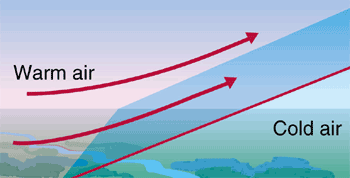
Why does warm air rise above cold air?
Warm air is less dense
Warm air is more dense
Cold air is stronger than warm air

Which sentence correctly characterizes the relationship between air pressure and wind movement?
Winds tend to flow from areas of low pressure to areas of high pressure.
Winds tend to flow north from high-pressure systems.
Winds tend to flow from areas of high pressure to areas of low pressure.
Winds tend to flow south from high-pressure systems.

Identify the Prevailing Westerly Winds
A
B
C
D
Identify the Subtropical High / Horse Latitudes
A
B
C
D
Identify the Doldrums
A
B
C
D

Which labeled point is currently experiencing the greatest winds?
A
B
C
D
Two types of ocean currents are
a. local and global
b. sea and land
c. surface and deep
d. warm and cold
The Global Conveyor Belt is a constantly moving global system of deep-ocean circulation driven by
a. temperature and salinity
b. salinity and latitude
c. landmasses and surface winds
d. the Coriolis effect
Warm ocean currents originate at the ______________ and head toward the ____________
a. Poles; Equator
b. Northern hemisphere; Southern hemisphere
c. Equator; Poles
d. Westerly Winds; Subtropical High / Horse Latitudes
Which ocean current warms the climate of northwestern Europe?
a. Canary Current
b. Labrador Current
c. Gulf Stream
d. Peru
The air near the center of this low- pressure system usually will
a. be clear and cool
b. rise and form clouds
c. remain static
d. squeeze together to form a high pressure system
The large, circular surface-current pattern found in each ocean
a. Global Conveyor Belt
b. Gyre
c. Surface Current
d. Circumpolar Current
The large, circular surface-current pattern circling the earth is the
a. Global Conveyor Belt
b. Gyre
c. Surface Current
d. Circumpolar Current
The large, circular surface-current pattern that absorbs, stores & redistributes heat around the globe is the
a. Global Conveyor Belt
b. Gyre
c. Surface Current
d. Circumpolar Current
Currents have an effect on:
a. Weather
b. Climate
c. Tornadoes
d. Cold Fronts
Cold polar water has a greater density than equatorial water because:
a. Polar water molecules are spaced farther apart
b. Polar water is found on the surface of oceans
a. Polar water expands and rises as it flows in gyres
d. Polar water has a colder temperature and a higher salinity
Lines shown on the map that connect lines of equal pressure are called:
winds
isobars
pressure belts
thermal zones
Which type of currents carried the 28,000 rubber ducks around the world?
Deep ocean currents
Gulf stream
California current
Surface currents
Warm air holds more moisture than cold air because:
Cold air has a higher rate of evaporation than warm air
Warm air has a higher rate of evaporation than cold air
There is less space in warm air for water vapor
This is a false statement because warm and cold air hold equal amounts of water vapor

Which location illustrates the angle of incoming solar radiation at the Equator?
A
B
C
Can’t tell

Why is there no solar insolation shown at location A from October through February?
Intense cold prevents insolation from being absorbed during that time.
Dust in the atmosphere blocks sunlight during that time.
Snow in the atmosphere blocks sunlight during that time.
The Sun is below the horizon during the winter
Which of the following affects the angle at which the sun's rays hit Earth?
Coriolis effect
Wind
Latitude
Longitude
The Horse latitudes and Doldrums do not have wind due to:
Air moves up and down without creating wind
Intense solar insolation at these points of reference
Strong ocean currents
The Coriolis effect
The jet stream is a narrow, variable band of very strong, predominantly westerly air currents encircling the globe. It is found in which layer of the atmosphere:
The upper Exosphere
The upper Troposphere into the Stratosphere
The Ozone Layer
The Thermosphere

In the northern hemisphere which season is summer?
A
B
C
D
Cold polar water has a greater density than equatorial water because:
Polar water molecules are spaced farther apart
Polar water has a colder temperature and a higher salinity
Polar water is found on the surface of oceans
Polar water expands and rises as it flows in gyres

Which statement best explains why City A has a cooler climate than City B?
.
City B has a longer summer
City A receives less solar insolation
City B is influenced by a warm ocean current
City B is farther from the equator
Currents help regulate Earth’s climate by storing and transporting heat.
True
False
Two types of ocean currents are
warm and cold
sea and land
local and global
Non of the above
The Global Conveyor Belt is a constantly moving global system of deep-ocean circulation driven by
a.
b.
c.
salinity and latitude
temperature and the Coriolis effect
temperature and salinity
temperature and surface winds
The large, circular surface-current pattern found in each ocean is the Global Conveyor Belt
True
False
The large, circular surface-current pattern found in each ocean is the Circumpolar Current
True
False
The large, circular surface-current pattern found in each ocean is a gyre.
True
False
The term used for the combination of temperature and salinity that drives deep ocean currents is the Thermohaline.
True
False3
The term Thermal Inertia refers to
a.
b.
c.
d.
the speed at which the warmest parts of the Earth travel around the sun
the time required to absorb solar energy before temperature changes.
how fast heat travels
has nothing to do with temperature

