wayground logo

Free Printable Worksheets

Font size

S
M
L
XL
Worksheets

PNHS-Marcelo Green ALS Test: Balance in Nature

Total questions: 87

Worksheet time: 4hrs 4mins

Name
Class
Date
1.
Temperature, light, air, water, and soil are all  _____  parts of the environment
a)
alive
b)
biotic 
c)
abiotic
d)
living
2.

What is the difference between the biotic and abiotic factors?

a)

Biotic factors are living things and abiotic factors are nonliving things.

b)

Biotic factors are nonliving things and abiotic factors are living things.

3.

Abiotic means

a)

living

b)

nonliving

4.
Biotic means
a)
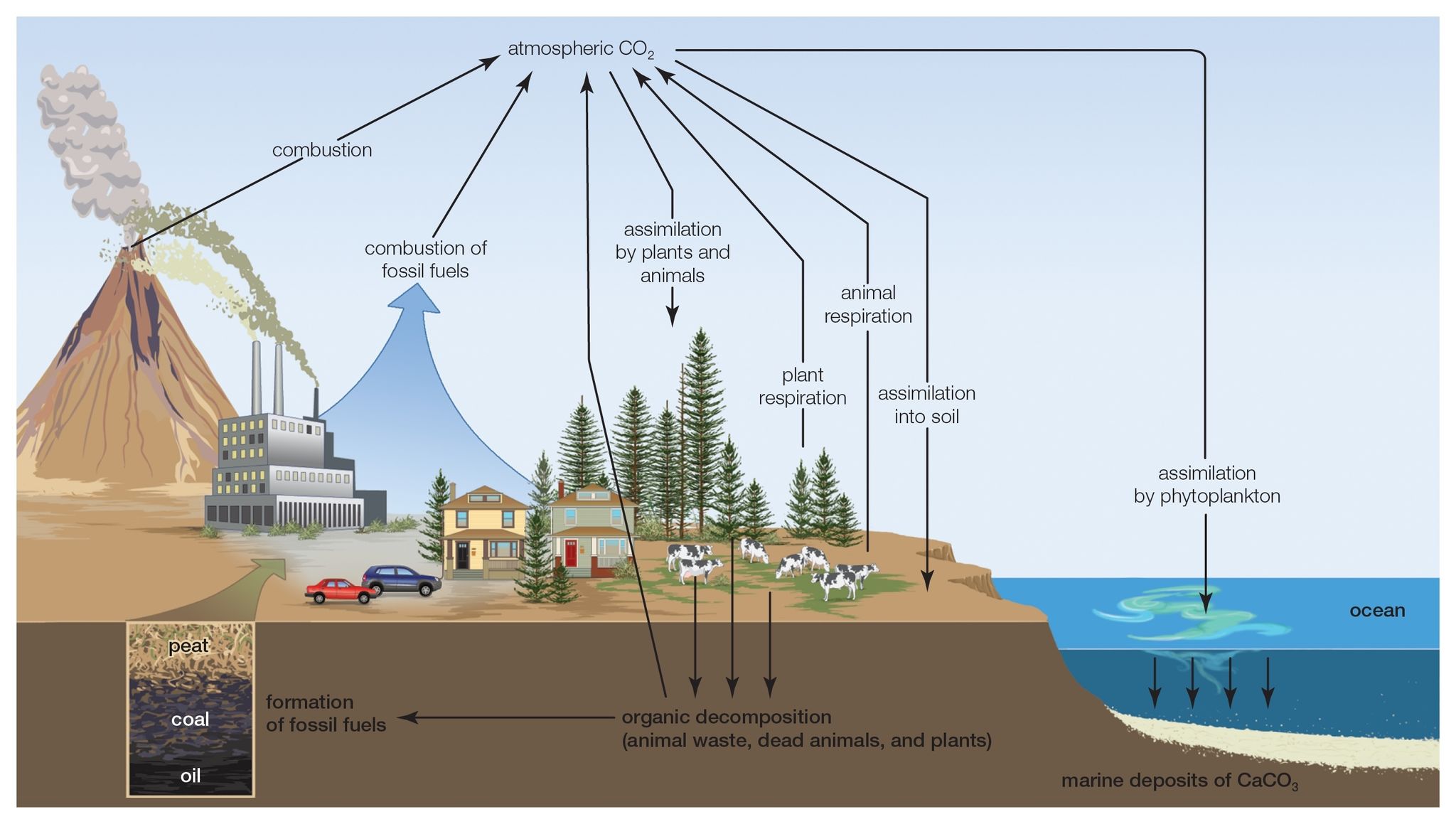
living
b)
nonliving
5.

What is a example of a abiotic factor?

a)

Panda

b)

Bacteria

c)

Butterfly

d)

Weather

6.
Temperature, light, air, water, and soil are all  _____  parts of the environment
a)
alive
b)
biotic 
c)
abiotic
d)
living
7.
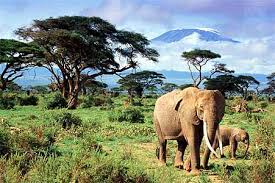
What are the biotic factors in this image?
a)
sunlight, elephants, and grasses
b)
sunlight, water,  and air
c)
elephants, plants, trees 
8.

Temperature is an example of what kind of factor?

a)

biotic

b)

abiotic

c)

dead

d)

living

9.

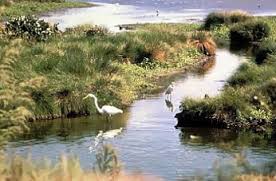
What are the abiotic factors in this image?

a)

water, sunlight, dirt, air

b)

birds, trees, and sunlight

c)

water, trees, and birds

10.

Lizards and cacti are biotic factors in a desert ecosystem that would rely on which abiotic factors?

a)

insects and sun

b)

water and insects

c)

snakes and temperature

d)

water and soil

11.

Which of the following shows an abiotic factor interacting with a biotic factor in the environment?

a)

Lamprey eels survive by attaching themselves to trout.

b)

Water temperature affects its oxygen level.

c)

Low light intensity affects the growth of forest pine trees.

d)

Gypsy moth caterpillars eat the leaves of apple tree.

12.

Which of the following is an abioitic factor that could affect biotic factors?

a)

Population of rabbits.

b)

Length of daylight.

c)

Presence of harmful bacteria.

d)

Number of herbivores.

13.
What is a producer? 
a)
Organism that creates their own food.
b)
Organism that eat other organisms for energy
c)
Organism that eat other dead organisms
14.
What is a consumer? 
a)
Organism that creates their own food.
b)
Organism that eat other organisms for energy
c)
Organism that eat other dead organisms
15.
What is a decomposer? 
a)
Organism that creates their own food.
b)
Organism that eat other organisms for energy
c)
Organism that eat other dead organisms
16.
What do Omnivores eat? 
a)
Plants ONLY 
b)
Animals ONLY
c)
Plants AND Animals
17.
What do Omnivores eat? 
a)
Plants ONLY 
b)
Animals ONLY
c)
Plants AND Animals
18.
What do Herbivores eat? 
a)
Plants ONLY 
b)
Animals ONLY
c)
Plants AND Animals
19.
What animal is on the top of the food chain? 
*Remember Humans are on the top of all food chains because we do not get hunted. 
a)
Grass
b)
Grasshopper
c)
Mouse
d)
Owl
20.
Who does the owl get energy from? 
a)
Grass
b)
Grasshopper
c)
Mouse
d)
Ow
21.
Who is the producer in this food chain? 
a)
Grass
b)
Grasshopper
c)
Mouse
d)
Ow
22.

Plants are called producers because they can produce their own:

a)

music

b)

food

c)

air

23.

A food chain is:

a)

an animal that eats only plants.

b)

a diagram that shows how energy moves from one organism to another. (Grass>Mouse>Owl)

c)

An animal that is hunted and eaten by another animal.

24.

A living thing that breaks down dead plants and animals - such as, fungi, worms, bacteria, is:

a)

decomposer

b)

food web

c)

omnivore

25.

A system of many food chains that interact with each other:

a)

predator

b)

consumer

c)

food web

26.

A living thing that needs to eat other living things for food:

a)

consumer

b)

producer

c)

desk chair

27.

An animal that is hunted and eaten by another animal:

a)

predator

b)

prey

c)

scavenger

28.
What does an "exchange of gases" mean?
a)
It means that gases are apart of everything. 
b)
It means that orange juice is an upside down milkshake with a missing tail.
c)
It means that humans and plants trade gases back and forth.
d)
It means that carbon in apart of all living things. 
29.
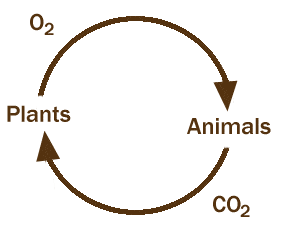
Why is the CO2 and O2 cycle considered to be a cycle?
a)
there is a exchange of gases
b)
the trees use it and trees are apart of all cycles
c)
there is a continuous exchange of gases
30.
Oxygen is a living element that humans and animals require to live. 
a)
True 
b)
False
31.
Which statement is true about the carbon dioxide-oxygen cycle?
a)
animals breathe in nitrogen and release oxygen which is used by plants
b)
animals breathe in oxygen and release carbon dioxide which is used by plants
c)
animals breathe in nitrogen and release carbon dioxide which is used by plants
d)
animals breathe in carbon dioxide and release oxygen which is used by plants
32.
If all the trees on Earth were destroyed, what would be the effect on humans?
a)
there would be a lack of food
b)
there would be a lack of oxygen
c)
there would be a lack of fresh water
d)
there would be a lack of carbon dioxide
33.
The class decided to have a terrarium.  The teacher says it is important to include both plants and animals.  Why is it necessary to include both plants and animals?
a)
plants provide food for the animals and animals provide water for the plants
b)
plants provide water for the animals and animals provide food for the plants
c)
plants provide carbon dioxide for the animals and animals provide oxygen for the plants
d)
plants provide oxygen for animals and the animals provide carbon dioxide for the plants
34.
If the removal of many plants and trees increase in a forest, what effect could this have on the carbon dioxide and oxygen cycle?
a)
CO2 levels decrease
b)
CO2 levels increase
c)
Nitrogen levels decrease
d)
Oxygen levels increase
35.
The CO2/O cycle is important to animals because it provides
a)
a gas they take in when breathing
b)
chemicals that build bones
c)
energy they need to move
d)
fresh water for their survival
36.
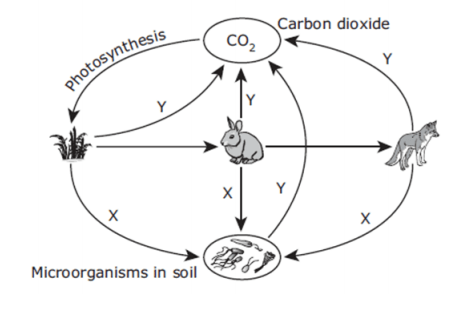
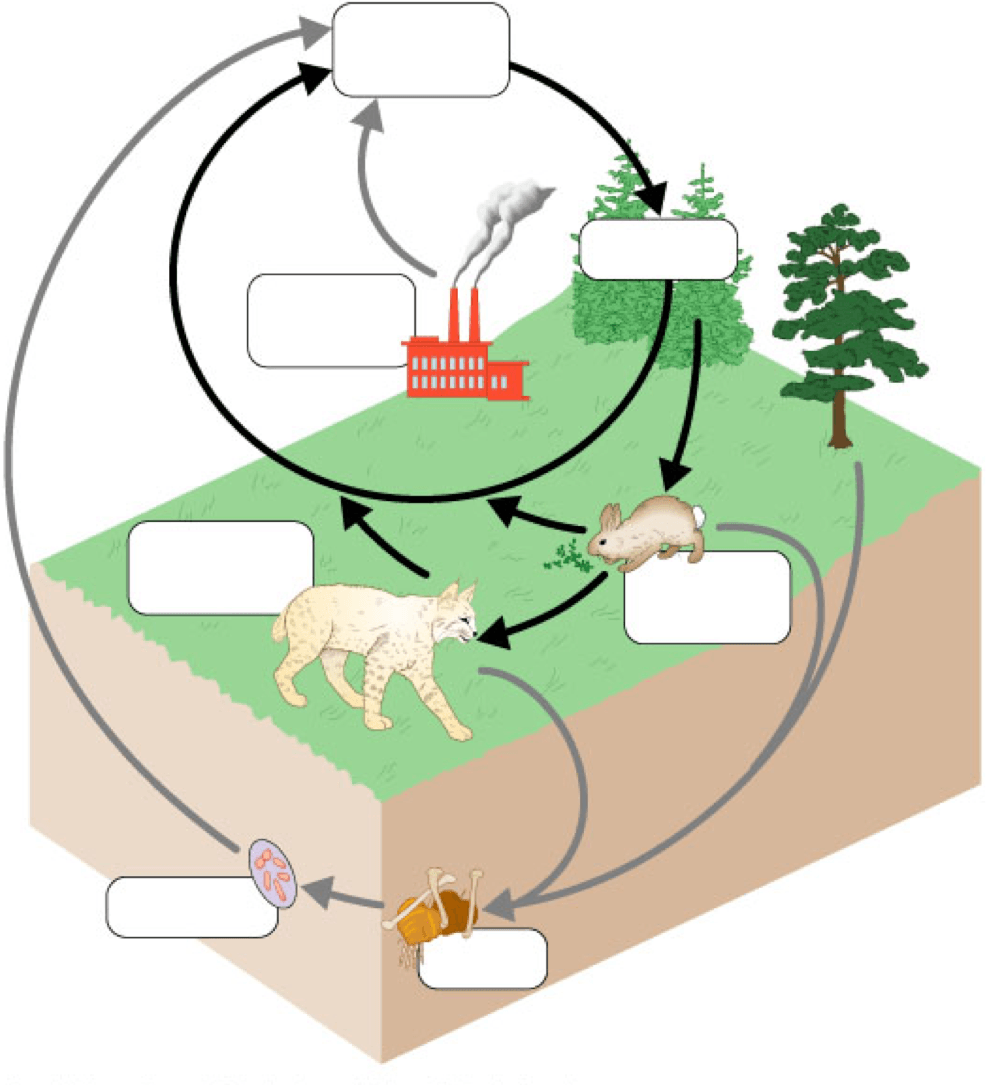
The diagram shows the flow of organic molecules through an ecosystem. What two processes are identified by the labels X and Y?
a)
X : Respiration
Y : Predation
b)
X : Adaptation
Y : Decomposition
c)
X : Fermentation
Y : Nitrogen Fixation
d)
X : Decomposition
Y : Respiration
37.
In what process is Carbon transformed into chemical energy?
a)
Photosynthesis
b)
Respiration
c)
Primary Production
d)
Secondary Production
38.

How do animals get carbon?

a)

By eating plants and or other animals.

b)

They absorb it from the atmosphere.

c)

From the ground

d)

They do not get carbon from anywhere.

39.

Which of the following are fossil fuels?

a)

Coal, water, oil

b)

Oxygen, coal, oil

c)

Coal, Oil, Natural Gas

d)

None of the above

40.
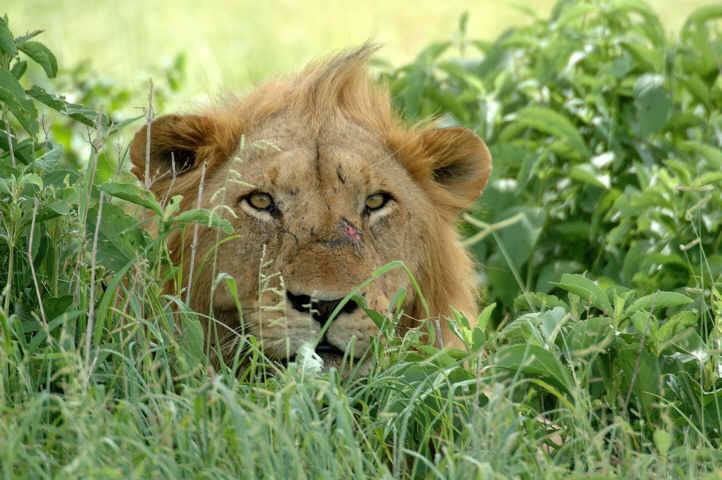
How does the carbon in grass become part of a lion?
a)
The lion eats the grass
b)
Carbon from grass doesn't end up in a lion. 
c)
The carbon ends up in the lion's food chain. 
d)
The lion breathes in carbon given out by the plant
41.
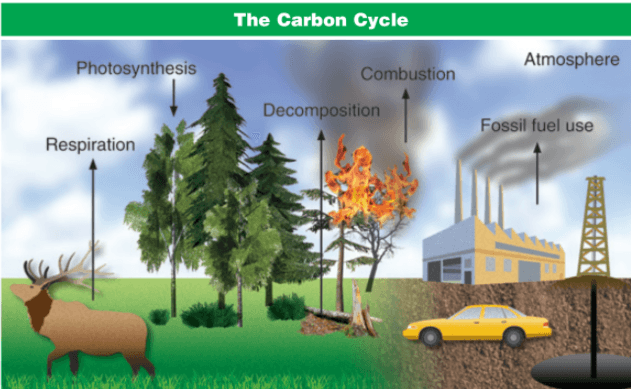
Burning fossil fuel has which effect in the carbon cycle?
a)
It removes carbon dioxide from the atmosphere.
b)
It puts carbon dioxide under the ground.
c)
It adds carbon dioxide to the atmosphere.
d)
It has no effect in the carbon cycle.
42.
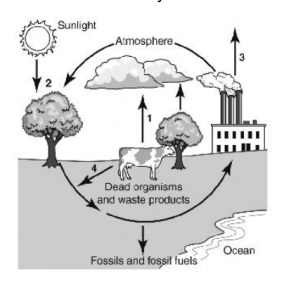
What is happening at 1?
a)
respiration: releasing CO2
b)
decomposing CO2 in the soil
c)
photosynthesis: absorbing CO2
d)
turning CO2 from the atmosphere into organic molecules
43.
Which of the following add carbon dioxide to the atmosphere?
a)
volcanoes
b)
combustion of fossil fuels
c)
animal and plant respiration
d)
all of these
44.

What is happening at 4?

a)

respiration: releasing CO2

b)

decomposing CO2 in the soil

c)

photosynthesis: absorbing CO2

d)

turning CO2 from the atmosphere into organic molecules

45.

Which gas do plants release, that humans depend on for survival?

a)

Water

b)

Carbon Dioxide

c)

Oxygen

d)

Sugar

46.

How does the human body return carbon to the atmosphere in the carbon cycle?

a)

Waste products

b)

Photosynthesis

c)

Cellular respiration

d)

Formation of glucose

47.
Organisms that do not decompose can be buried and become what?
a)
water
b)
nutrients
c)
air
d)
fossil fuels
48.

Which organisms are aquatic plants?

a)

Crabs

b)

Phytoplankton

c)

Fish

d)

Zooplankton

49.

How are phytoplankton similar to trees?

a)

Both are at the top of the food chain

b)

Both conduct photosynthesis

c)

Both grow in soil

d)

Both are about the same size

50.
What is the process during which water changes from a liquid to a gas as it heats up?
a)
Condensation
b)
Runoff
c)
Precipitation
d)
Evaporation
51.
What step of the water cycle occurs when clouds become too heavy
a)
Condensation
b)
Runoff
c)
Precipitation
d)
Evaporation
52.
What is the process during which water cools and turns from a gas to a liquid?
a)
Condensation
b)
Runoff
c)
Precipitation
d)
Evaporation
53.
True or False: Water vapor is the name given to water in liquid form.
a)
True
b)
False
54.
What is NOT an example or precipitation?
a)
Rain
b)
Snow
c)
Sleet
d)
Wind
55.
True or False: Runoff is water that is absorbed by the ground.
a)
True
b)
False
56.

What is the correct order of the water cycle?

a)

Evaporation, Condensation, Precipitation, Runoff

b)

Runoff, Precipitation, Condensation, Evaporation

c)

Evaporation, Precipitation, Runoff, Condensation

d)

Condensation, Evaporation, Runoff, Precipitation

57.
True or False: Water in a glass will evaporate much faster than a puddle of water.
a)
True
b)
False
58.

What is the process during which water evaporates from the leaves of plants and trees and goes up into the atmosphere as water vapor.

a)

Condensation

b)

Runoff

c)

Precipitation

d)

Transpiration

59.

What step of the water cycle does this picture show?

a)

Condensation

b)

Runoff

c)

Precipitation

d)

Evaporation

60.

What is it called when water droplets form on the outside of a cool glass?

a)

Condensation

b)

Transpiration

c)

Precipitation

d)

Evaporation

61.

What step of the water cycle is shown in this picture?

a)

Condensation

b)

Runoff

c)

Precipitation

d)

Evaporation

62.

Which example is a form of precipitation?

a)

Dew

b)

Fog

c)

Frost

d)

Hail

63.

In which area would the rate of evaporation be the lowest?

a)

Over the ocean

b)

Over the mountains

c)

Over the rainforest

d)

Over the desert

64.

As a part of the water cycle, water from Earth's surface enters the clouds and finally falls back to the ground in the form of rain. What is the correct sequence of processes water undergoes?

a)

Evaporation, Condensation, Precipitation

b)

Precipitation, Condensation, Evaporation

c)

Condensation, Evaporation, Precipitation

d)

Evaporation, Precipitation, Condensation

65.

What would happen if the Sun is removed from the water cycle?

a)

The water cycle would not include precipitation but would continue with groundwater flow.

b)

The water cycle would no longer occur because the Sun provides the energy for evaporation and transpiration.

c)

The water cycle would no longer occur because the Sun provides energy for the formation of clouds.

d)

The water cycle would not include evaporation and transpiration but would continue with condensation.

66.

A student draws a model to represent the precesses involved in the water cycle, as shown. To which process is the formation of clouds related?

a)

Condensation

b)

Evaporation

c)

Freezing

d)

Melting

67.

The image shows various stages in the water cycle. During which stage does water flow back towards the sea as runoff?

a)

W

b)

X

c)

Y

d)

Z

68.

Rain and snow are two different forms of precipitation that fall on Earth's surface. Which factor is responsible for there being different forms of precipitation?

a)

Evaporation

b)

Run-off

c)

Temperature

d)

Transpiration

69.

What is precipitation?

a)

Sweat from our bodies on hot days

b)

Warm rain but not cold snow or sleet

c)

Gas that we use in furnaces or ovens

d)

Any form of water that falls from the sky

70.

What is another name or synonym for the water cycle?

a)

Geologic cycle

b)

Hydrologic cycle

c)

Geosphere

d)

Carbon cycle

71.

What are formed when water vapor condenses?

a)

Clouds

b)

Mountains

c)

Transpiration

d)

Valleys

72.
What is it called when plants give off water vapor as a waste product?
a)
condensation
b)
evaporation
c)
sublimation
d)
transpiration
73.

The movement caused within a fluid by the tendency of hotter and therefore less dense material to rise, and colder, denser material to sink under the influence of gravity, which consequently results in transfer of heat. ____________________

a)

Evaporation

b)

Convection

c)

Precipitation

d)

Transpiration

74.
Warm, less dense air (including vapor) rises in the atmosphere. Cool, more dense air (including vapor) sinks. This transfer is . . . .
a)
convection
b)
conduction
c)
radiation
d)
gravity
75.

A result of using radioactive elements from atomic enery stations.

a)

air pollution

b)

radiation pollution

c)

land pollution

d)

water pollution

76.

A disturbance of silent environment with harsh loud noises.

a)

thermal pollution

b)

air pollution

c)

sound pollution

d)

light pollution

77.

Households pollute water sources by ...... waste into ponds, lakes and rivers.

a)

damaging

b)

dumping

c)

losing

d)

leading

78.

A lot of fish have died recently because of the ........ water in the lake.

a)

contaminating

b)

contaminated

c)

contaminate

d)

contaminant

79.

Many people in this area have cholera because they drink ..... water.

a)

treat

b)

treatment

c)

untreatment

d)

untreated

80.
The ozone layer protects us from
a)
UV rays
b)
CFCs
c)
Increased atmospheric heat
d)
Decreased atmospheric heat
81.
The ozone layer is damaged by
a)
CFCs
b)
Increase in greenhouse gases
c)
Increased global temperatures
d)
Sulfuric and nitric acids
82.

Which of the following is a source of air pollution?

a)

Difficulty in breathing

b)

Factories

c)

Eye irritation

d)

Drinking water

83.

Carbon monoxide is released from...

a)

human body

b)

plants

c)

vehicles

d)

styrofoam

84.
To help our environment, you should


a)
recycle, remember, and reduce.
b)
reduce, reuse, and recycle.
c)
reduce, repair, and recycle. 
d)
  reuse, replace, and recycle. 
85.
Which is NOT one of the three types of pollution?
a)
air
b)
water
c)
fire
86.
Which of the following is not a natural cause of water pollution?
a)
Volcanoes
b)
Animal waste
c)
Oil spills
d)
Silt from storms and floods
87.
__________ means to use something old to make something new.
a)
reduce
b)
reuse
c)
recycle