wayground logo

Free Printable Worksheets

Font size

S
M
L
XL
Worksheets

Final 174

Total questions: 173

Worksheet time: 2hrs 30mins

Name
Class
Date
1.
Fossils are usually found in which type of rock?
a)
sedimentary
b)
metamorphic
c)
crystal
d)
igenous
2.
Which of the following is true about plate boundaries?
a)
A very high percentage of volcanos can form around plate boundaries
b)
Rivers are formed around plate boundaries.
c)
If you are near a plate boundary you could easily fall into it because of soft ground.
d)
They always happen at the edge of oceans and continents
3.
Earth’s crust is made of many layers of rock. Layers farthest from the surface are the oldest, while layers closest to the surface are the 
a)
second oldest
b)
youngest
c)
darkest
d)
lightest
4.
The movement of water through the atmosphere using precipitation, condensation, sublimation, evaporation, and transpiration is known as _____________________.
a)
The Carbon Cycle
b)
Photosynthesis
c)
Cellular Respiration
d)
The Water Cycle
5.
When grains and materials are compacted and cemented together, they form which type of rock?
a)
igneous
b)
sedimentary
c)
metamorphic
d)
crystal
6.
True or False: Wind is caused by the differences of temperature in the atmosphere.
a)
True
b)
False
7.
Which of the following results in the formation of clouds?
a)
Evaporation
b)
Condensation
c)
Precipitation
d)
Transpiration
8.
Rain, hail, sleet, and snow is best known as
a)
Weather
b)
Climate
c)
Precipitation
d)
Water
9.

Convection currents are in what layer?

a)

Crust

b)

Mantle

c)

Core

10.

List the layers from the outer layer to the center

a)

Mantle, crust, outer core, inner core

b)

Outer core, inner core, mantle, crust

c)

Crust, mantle, inner core, outer core

d)

Crust, mantle, outer core, inner core

11.

Tectonic plates that move apart are

a)

transforming

b)

converging

c)

subducting

d)

diverging

12.

Tectonic plates that move towards each other and collide are

a)

transforming

b)

converging

c)

subducting

d)

diverging

13.

When one tectonic plate one goes under another plate it is

a)

transforming

b)

converging

c)

subducting

d)

diverging

14.

Tectonic plates that slide beside each other are

a)

transforming

b)

converging

c)

subducting

d)

diverging

15.

The arrow is pointing to what tectonic plate

a)

South American plate

b)

North American plate

c)

Eurasian plate

d)

Nazca plate

16.

What plate is labeled A

a)

Eurasian plate

b)

Pacific plate

c)

North American plate

d)

Antarctic plate

17.

Earth quake occur on

a)

transforming plates

b)

converging plates

c)

subducting plates

d)

diverging plates

18.

The Mid-Atlantic Ridge formed due to

a)

transforming plates

b)

converging plates

c)

subducting plates

d)

diverging plates

19.

List the type of rock formed in order

a)

metamorphic rock, igneous rock and sedimentary rock

b)

sedimentary rock, metamorphic rock and igneous rock

c)

Igneous rock, metamorphic rock and sedimentary rock

d)

sedimentary rock, igneous rock and metamorphic rock

20.

Sedimentary rock forms by this process

a)

Compaction and cementation

b)

Heat and pressure

c)

Cooling of magma

d)

Weathering and erosion

21.

Metamorphic rock forms by this process

a)

Compaction and cementation

b)

Heat and pressure

c)

Cooling of magma

d)

Weathering and erosion

22.

Igneous rock forms by this process

a)

Compaction and cementation

b)

Heat and pressure

c)

Cooling of magma

d)

Weathering and erosion

23.

Sediments forms by this process

a)

Compaction and cementation

b)

Heat and pressure

c)

Cooling of magma

d)

Weathering and erosion

24.
_____________________ carries information for inherited traits.
a)
DNA
b)
FBI
c)
RNA
d)
CBS
25.
Traits that are passed from generation to generation are called ____________________
a)
Excited Traits
b)
Inherited Traits
c)
Inclined Traits
d)
Special Traits
26.
__________________ is a change in the nucleotide base sequence of DNA.
a)
switch
b)
eraser
c)
creation
d)
mutation
27.
To transfer genes from one organism to another is ________________________
a)
Genetic Engineering
b)
Ribosome
c)
Inherited Traits
d)
Replication
28.
__________________________ is used to identify the unique patterns in a person's DNA.
a)
RNA Eye Test
b)
DNA Fingerprinting
c)
Echolocation
d)
Gene Splicing
29.
Which of the following best describes a DNA molecule?
a)
double helix
b)
contains ribose
c)
made of amino acids
d)
contains Uracil
30.
What does DNA stand for?
a)
Deoxyribonucleic acid
b)
Denitrogenous acid
c)
Deribonucleic acid
d)
Diribonucleic acid
31.

How many chromosomes do human cells have?

a)

46

b)

23

c)

2

d)

44

32.
What is a gene?
a)
A bundle (like a hot dog bun) that the DNA is packed into
b)
something inside the nucleus
c)
a piece of DNA
d)
all of your DNA
33.

Bundled up, organized DNA is called a

a)

gene

b)

trait

c)

chromosome

d)

nucleotide

34.
Which electromagnetic waves have the highest frequencies and the shortest wavelengths?
a)
microwaves
b)
visible light
c)
gamma rays
35.
Which electromagnetic waves are used in ovens and cell phone communications?
a)
Infrared rays
b)
ultraviolet rays
c)
microwaves
36.
For waves in any medium, as the wavelength decreases, what happens to the frequency?
a)
It also decrease
b)
It stays the same
c)
It increases
37.
How much of the electromagnetic spectrum is made up of visible light?
a)
only a small portion
b)
a very l;arge portion
c)
about half
38.
Which of the following has wavelengths longer than microwaves?
a)
Infrared waves
b)
Radio waves
c)
Visible light
39.
Which electromagnetic waves are used in devices such as heat lamps & TV remote controls?
a)
ultraviolet rays
b)
microwaves
c)
infrared rays
40.
What waves have the lowest energy? 
a)
Gamma rays
b)
Visible light waves
c)
Radio waves
d)
X rays
41.

Which color has the longest wavelength?

a)

Yellow

b)

Red

c)

Green

d)

Purple

42.
What is a repeating pattern that can transfer energy?
a)
Motif
b)
Prism
c)
Radio
d)
Wave
43.
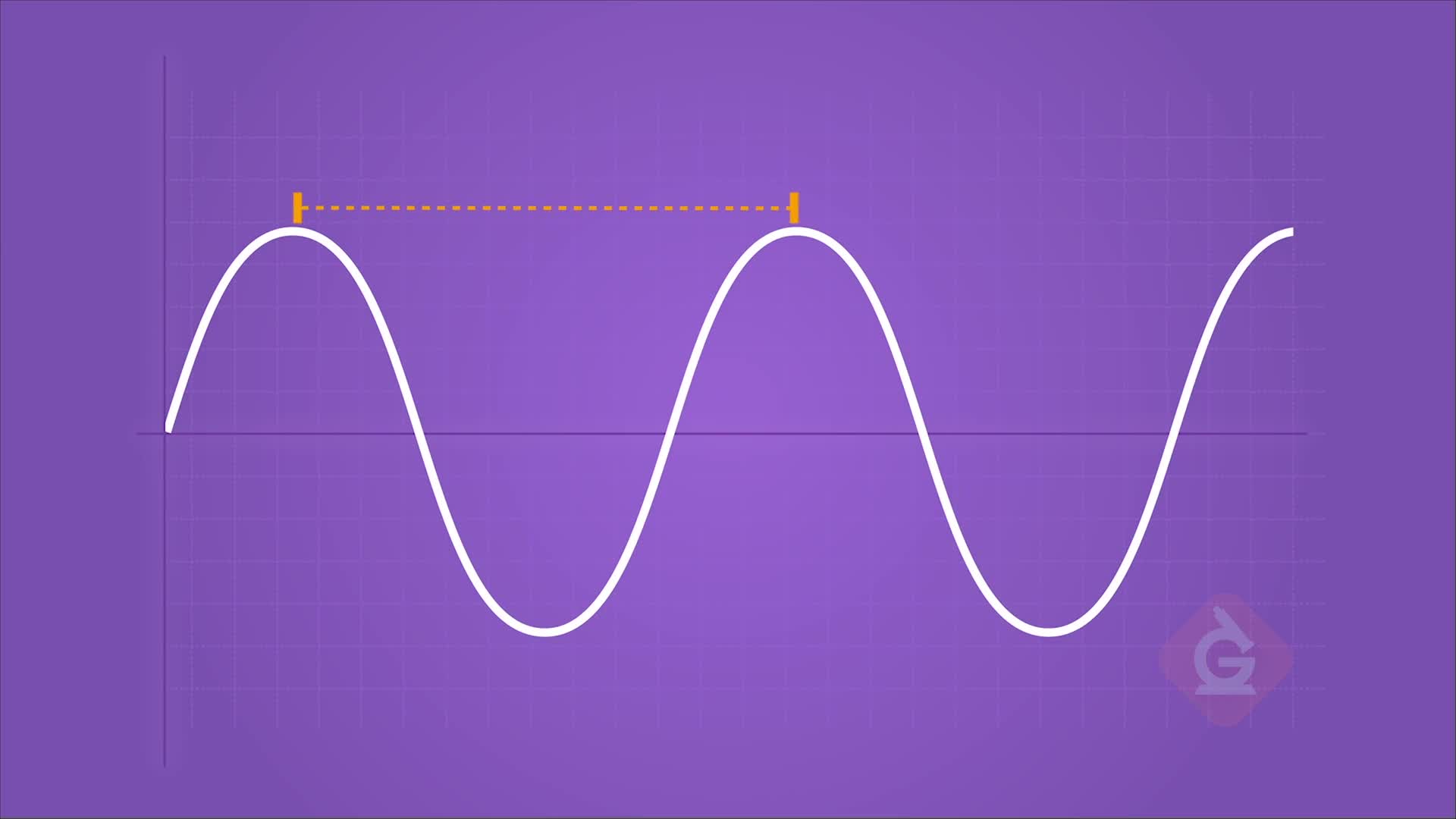
What is the distance from the peak of one wave to the next peak?
a)
Amplitude
b)
Frequency
c)
Period
d)
Wavelength
44.
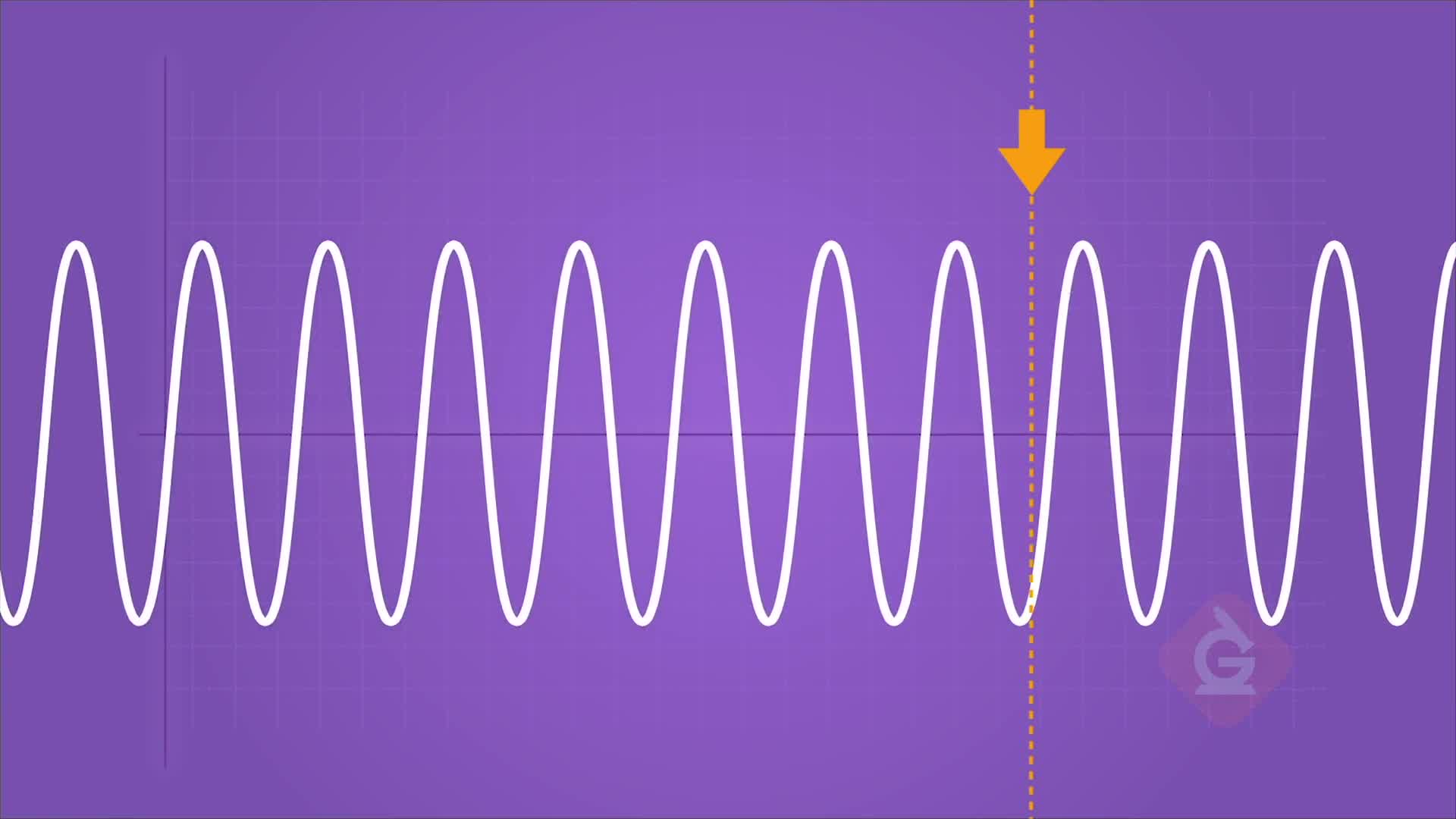
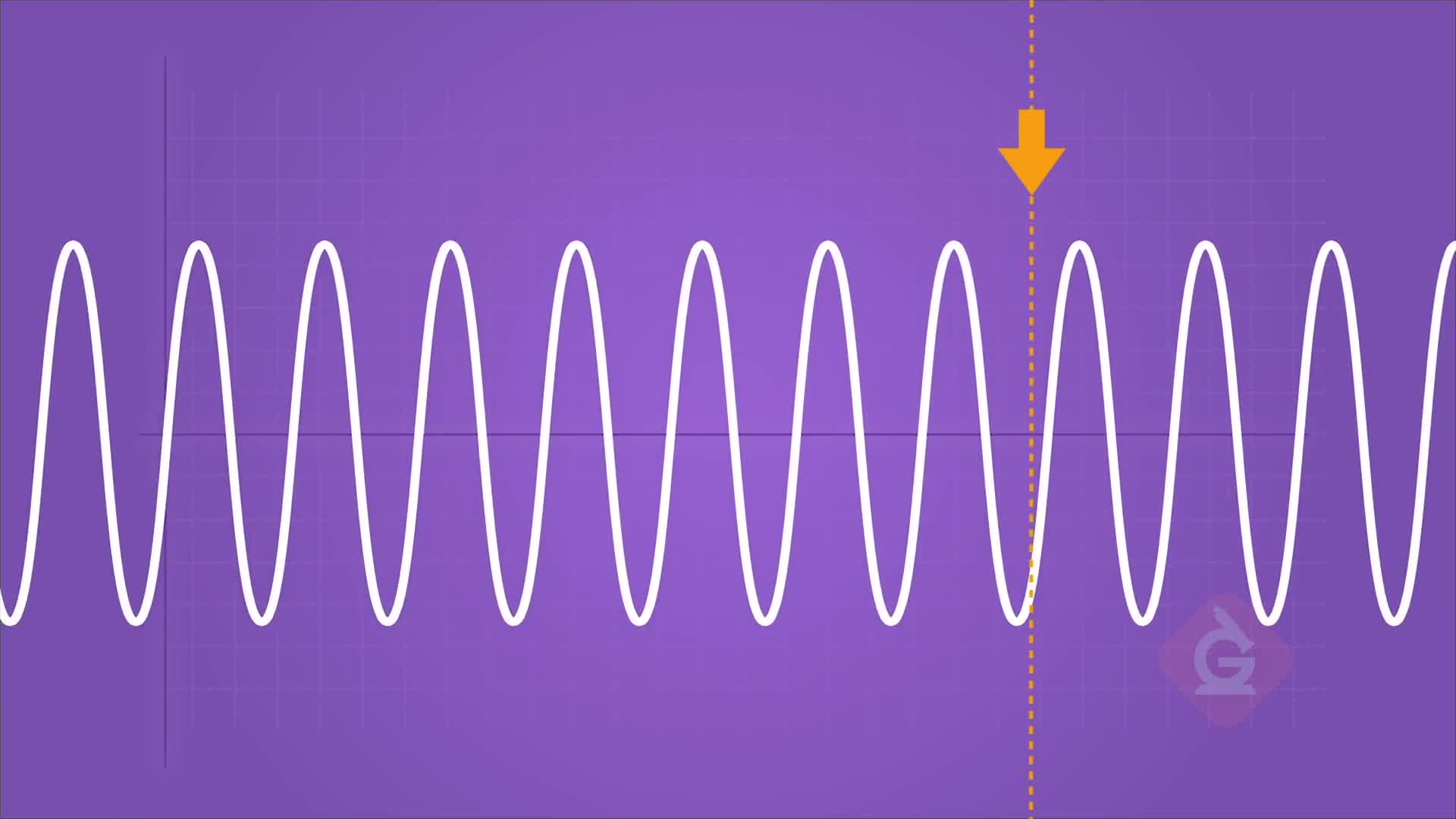
What is the number of waves that pass a point in one second?
a)
Amplitude
b)
Frequency
c)
Period
d)
Wavelength
45.
These waves from the sun cause sunburn.
a)
Gamma
b)
Microwaves
c)
Radio
d)
Ultraviolet
46.
Increasing the amplitude of a wave, _________ the wave's energy.
a)
increases
b)
decreases
c)
does not change
47.
The energy of waves _______ as the wavelength gets shorter.
a)
increases
b)
decreases
c)
stays the same
48.
A series of steps used by scientists to solve a problem or answer a question. 
a)
scientific method
b)
recipe
c)
data collection
d)
metric system
49.
A testable explanation to a problem that has not yet been tested. 
a)
data
b)
theory
c)
hypothesis
d)
fact
50.
This variable in an experiment is the one being changed by the scientist. 
a)
dependent variable
b)
independent variable
c)
data
d)
control group
51.
Testing a hypothesis often involves a(n):
a)
answer
b)
experiment
c)
problem
d)
safety check
52.
The summary at the end of an experiment that explains the results. 
a)
conclusion
b)
procedures
c)
materials
d)
responding variable
53.
The name of the information that you get from your experiment (you organize it into charts and graphs).
a)
observations
conclusion
b)
data
c)
variables
d)
hypothesis
54.
Dependent variable means
a)
the scientist controls what to test
b)
educated guess
c)
ask a question
d)
what is being measured
55.
If you increase the amount of spinach you eat, then you will increase the iron in your blood. 
What's the dependent variable?
a)
increase the amount of iron in your blood
b)
spinach you eat
56.
If I ride my bike to school instead of walking, then I will get to school faster. What is the dependent variable?
a)
True
b)
How fast you get to school
c)
Riding a bike or walking
d)
False
57.
Will a construction paper air plane fly faster than an airplane made from notebook paper? Choose the best hypothesis.
a)
If I make a paper airplane from notebook paper, then it will fly faster than construction paper.
b)
Yes.
c)
No.
d)
I think the construction paper air plane will fly faster.
58.
Which side of a penny will hold more drops of water? Choose the best hypothesis.
a)
If I use the heads side of a penny, then it will hold more drops of water than tails.
b)
Heads
c)
Tails
d)
Tails will hold more drops of water.
59.
If I read this question carefully, then I will answer it correctly. What is the independent variable?
a)
I hope so
b)
Yes
c)
Reading or not reading carefully
d)
Likelihood of a correct answer
60.
Which of the following would be considered quantitative data?
a)
Color
b)
Smell
c)
6.84 cm
d)
texture
61.
Explaining the color of a chemical would be what kind of observation?
a)
Qualitative 
b)
Quanitative
62.
What is the part of the experiment that is left alone or “natural", and is used to compare back to?
a)
Independent Variable
b)
Dependent Variable
c)
Control Group
d)
Experimental Group 
63.
You will want your experiment to have ____ independent variable(s) in it for the experiment to be valid.
a)
1
b)
2
c)
3
d)
4
64.
What is a factor that the experimenter has full control over and changes to see what happens?
a)
Dependent Variable
b)
Independent Variable
c)
Control group 
d)
Hypothesis
65.
What is a factor that changes because of what the experimenter does?
a)
Dependent Variable
b)
Independent Variable
c)
Control Group
d)
Hypothesis
66.
Are recessive traits shown with capital or lowercase letters? 
a)
Capital
b)
Lowercase
67.
The physical appearance or the way a gene looks is known as it's....
a)
genotype
b)
allele
c)
gene
d)
phenotype
68.
The mathematical chance that something will happen is known as...
a)
chance
b)
luck
c)
probability
69.
The different forms of genes are known as
a)
environment
b)
probability
c)
traits
d)
alleles
70.
An allele or gene that always shows is
a)
recessive
b)
dominant
c)
hidden
d)
present
71.
Two of the same genes for a trait (sometimes called purebred). BB or bb
a)
homozygous
b)
hetrozygous
c)
protein
d)
chromosome
72.
Two different genes for a trait (sometimes called hybrid). Bb
a)
protein
b)
homozygous
c)
heterozygous
d)
genotype
73.
What would the ratio for genotypes be for this Punnett Square?
a)
2Bb:2bb
b)
2BB:2Bb
c)
1BB:2Bb:1bb
d)
4Bb
74.
T - tall and t = short
In the punnett square below, what belongs in the missing square
a)
tt
b)
Tt
c)
Bb
d)
TT
75.
Dominant alleles are represented by a:
a)
Male gene
b)
lowercase letter
c)
recessive trait
d)
capital letter
76.
A ________________________ is used to predict the possible genotype from certain parents
a)
Mendel Grid
b)
Genetic Tic Tac Toe
c)
Punnett Square
d)
Pedigree Plot
77.
Heredity is the passing of traits from _____________________ to _____________________
a)
predators to prey
b)
water to rain
c)
parents to offspring
d)
fungi to protists
78.
___________________________ is the field of science that studies of how traits are passed on, or inherited.
a)
dominant traits
b)
ratio
c)
phenotype
d)
genetics
79.
He is known as the father of modern day genetics.
a)
Gregory Mendel
b)
Greg Mendel
c)
Gregor Mendel
d)
Grace Mendel
80.
What are the possible phenotypes in this punnett square?
a)
Bb, bb, BB
b)
purple, white
c)
Bb, bb
d)
light purple
81.
What is a gene?
a)
An entire chromosome that  codes for a trait
b)
a piece of clothing
c)
a piece of a DNA on chromosome that codes for a trait
d)
Chemical messengers in your brain that code for a trait
82.
What is a genotype? 
a)
The genetic make up (code)
b)
The physical trait
83.
Barnacles sometimes live on the outside surface of other larger shelled organisms without causing any harm. What is the ecological relationship?
a)
Mutualism
b)
Parasitism
c)
Commensalism
d)
Predator-Prey
84.
Cows and pronghorn both eat the same types of food in areas of Utah. What is the ecological relationship?
a)
Cooperation
b)
Parasitism
c)
Commensalism
d)
Competition
85.
Ants protect soft bodied aphids and in return the aphids feed the ants a sugary drink. What is the ecological relationship?
a)
Cooperation
b)
Parasitism
c)
Commensalism
d)
Mutualism
86.
What term best describes the vole, the small rodent, in this image?
a)
Prey
b)
Predator
c)
Producer
d)
Competition
87.
A relationship that describe a close interaction between two different species is known as what?
a)
Biodiversity
b)
Symbiosis
c)
Predation
d)
Emigration
88.
This is known as a relationship in which one organism benefits, while the other is unaffected.
a)
Parasitism
b)
Mutualism
c)
Immigration
d)
Commensalism
89.
An organism that helps to recycle nutrients within an ecosystem by eating dead or decaying organisms is a:
a)
Predator
b)
Autotroph
c)
Producer
d)
Decomposer
90.
This is known as a relationship in which both organisms involved benefit. 
a)
Predator-Prey
b)
Commensalism
c)
Mutualism
d)
Decomposition
91.

As a leopard is searching for prey, a lion stalks and slowly approaches it. This could be considered what type of relationship between the lion and leopard?

a)

Competition

b)

Predator/Prey

c)

Mutualism

d)

Commensalism

92.

Cordyceps are a type of a fungi that hijack insects muscular and nervous systems, eventually leading to the death of the insect. What type of relationship is this?

a)

Commensalism

b)

Predator/Prey

c)

Parasitism

d)

Competition

93.

In which state of matter do the particles have the least amount of kinetic energy?

a)

gas

b)

liquid

c)

solid

94.

Which of the following is a measure (not a tool) of the average kinetic energy of an object?

a)

temperature

b)

thermometer

c)

speedometer

d)

pressure

95.

The slower the particles in a substance move,

a)

the colder it is.

b)

the warmer it is.

c)

the more energy it has.

96.
At higher temperatures
a)
particles in an object have less energy
b)
particles in an object move faster
c)
a gas contracts
97.

What is shown in the image?

a)

cold water rising through conduction

b)

warm water rising through conduction

c)

cold water rising through convection currents

d)

warm water rising through convection currents

98.

Which type of heat transfer causes your feet to feel warm when you walk barefoot on a hot sidewalk?

a)

convection

b)

conduction

c)

insultation

d)

radiation

99.

Jane had a bowl of hot soup for lunch. The soup was so hot she decided to put it in the refrigerator for a few minutes to cool it. What happened to cool the soup so Jane could eat it?

a)

The heat moved from the soup to the cold air in the refrigerator.

b)

The cold in the refrigerator move into the hot soup.

c)

No heat or cold moved out of or into the soup. It simply cooled off.

100.

Vibranium (metal) is usually a solid at room temperature. What action would change its state of matter?

a)

Add heat to change it from a solid to a liquid.

b)

Remove heat to change it from a solid to a liquid.

c)

Add heat to change it from liquid to a solid.

d)

Remove heat to change it from a solid to gas.

101.

Amy made fresh coffee that was way too hot. She added ice to cool off the coffee. Which of the following best describes the direction of heat flow while the coffee is cooling?

a)

Heat flows from ice to the coffee.

b)

Heat flows between the ice and the coffee equally.

c)

Heat flows from the ice to the air.

d)

Heat flows from the coffee to the ice.
102.
What rock type is made from compacting and cementing?
a)
Sedimentary
b)
Igneous
c)
Metamorphic
103.
Which way to transform boundaries move in relation to each other?
a)
Come together
b)
Move apart
c)
Slide next to each other
d)
Bend each other
104.
Which way to divergent boundaries move in relation to each other?
a)
Come together
b)
Move apart
c)
Slide next to each other
d)
Bend each other
105.
Which way do convergent plates move in relation to each other?
a)
Come together
b)
Move apart
c)
Slide next to each other
d)
Bend each other
106.
What term refers to breaking down rocks?
a)
Weathering
b)
Erosion
c)
Deposition
107.
What term refers to moving weathered materials?
a)
Weathering
b)
Erosion
c)
Deposition
108.
What term refers to where eroded materials end up?
a)
Weathering 
b)
Erosion
c)
Deposition
109.
What is the outermost layer of the Earth?
a)
Crust
b)
Inner core
c)
Outer core
d)
Mantle
110.
What layer would you find magma in?
a)
Inner core
b)
Outer core
c)
Mantle
d)
Crust
111.
Which of the following terms relates to the idea of new ocean floor being created?
a)
Sea floor spreading
b)
Transform boundary
c)
Fault line
d)
Fossil record
112.
What do scientists use as evidence of continental drift?
a)
Sea floor spreading
b)
Fossil record
c)
Coastline shapes
d)
All of these options
113.
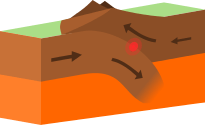
What type of plate boundary is this?
a)
Plate
b)
Divergent
c)
Convergent
d)
Transform
114.
What type of event will occur at this boundary?
a)
Earthquake
b)
Volcano Eruption
c)
Tornado
d)
Mountain Building
115.

The theory that says Earth's continents once made up an ancient supercontinent, and have been drifting apart ever since, is called the theory of...

a)

Pangea

b)

Plate Tectonics

c)

Natural Selection

d)

Gravity

116.

Oceanic Trenches are formed by _______ plate boundaries

a)

Convergent

b)

Transform

c)

Plate

d)

Divergent

117.

How is it possible for new crust to be formed without increasing the surface area of the Earth?

a)

Crust is destroyed at the same time it is created

b)

New crust is underwater where it sinks

c)

New crust breaks more easily than old crust

118.

Which of the following occurs because of convection currents?

a)

Tectonic plates on the crust move.

b)

The mantle increases in size.

c)

Pressure in the crust increases.

d)

Pressure in the crust decreases.

119.

Where does the heat come from that drives this convection current in the mantle?

a)

The sun

b)

The crust

c)

the mantle

d)

the core

120.

During sea floor spreading, molten material rises up from the mantle...

a)

along the continents

b)

at the mid ocean ridges

c)

deep ocean trenches

d)

at north and south poles

121.

What is aboveground molten rock?

a)

Extrusive

b)

Magma

c)

Lava

d)

Sedimentary

122.

What is it called when layers pile up and press down on the material below?

a)

Compaction

b)

Layering

c)

Cementation

d)

I don't know

123.
The name rock is given when it is broken down into smaller pieces.
a)
texture
b)
weathering
c)
sediment
d)
erosion
124.
Electrical Energy is transferred to _____ Energy.
a)
Thermal
b)
Solar
c)
Electrical
d)
None
125.
Electrical Energy is transferred to _____ Energy.
a)
Mechanical
b)
Solar
c)
Electrical
d)
Thermal
126.
The Electrical Energy of the stove is transferred to _____ Energy.
a)
Solar
b)
Thermal
c)
Potential
d)
Electrical
127.
What is the energy transformation?
a)
Kinetic to Mechanical to Electrical
b)
Kinetic to Mechanical to Kinetic
c)
Electromagnetic to Mechanical to Electrical
d)
Kinetic to Sound to Electrical
128.
What is the energy transformation?
a)
Kinetic to Mechanical and Electrical
b)
Chemical to Thermal and Electromagnetic (light)
c)
Electromagnetic to Chemical and Electrical
d)
Kinetic to Sound and Chemical
129.
What is the energy transformation?
a)
Mechanical to Kinetic to Sound
b)
Mechanical to Electrical to Light
c)
Electrical to Thermal to Mechanical
d)
Kinetic to Sound to Potential
130.
What energy transformations take place when a battery-operated radio is in use?
a)
Electrical to chemical to light
b)
Sound to chemical to mechanical
c)
Chemical to electrical to sound
d)
Light to electrical to thermal
131.
A television works by transforming electrical energy into what other kinds of energy?
a)
Light, thermal, and sound
b)
Thermal, chemical, and solar
c)
Sound, mechanical, and electrical
d)
Light, chemical, and mechanical
132.
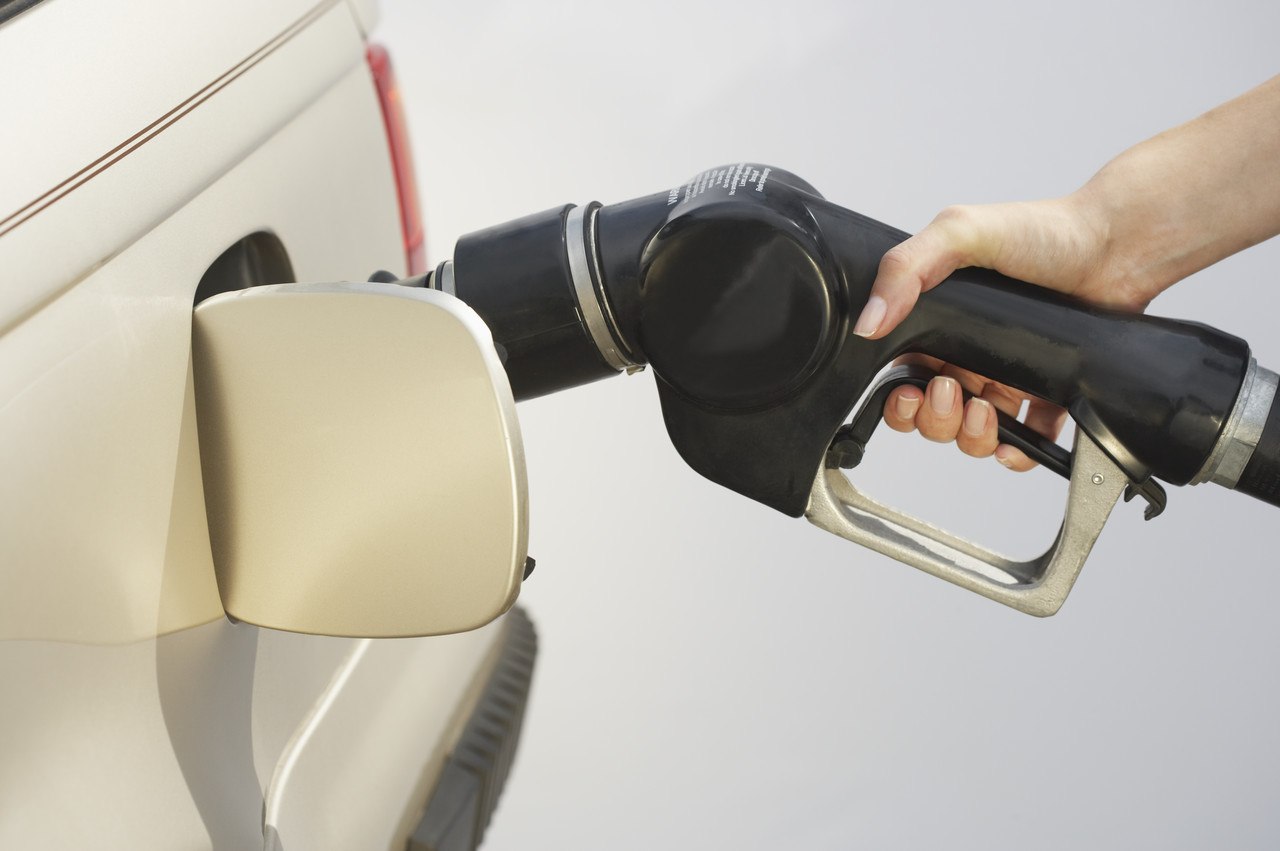
Which energy conversion is taking place when you put gasoline in a car?
a)
thermal -> electrical
b)
mechanical -> electrical
c)
chemical -> mechanical
d)
mechanical -> electromagnetic
133.

Which letter shows the ball when it has THE MOST potential energy?

a)

A

b)

B

c)

C

d)

F

e)

G

134.

Which letter shows the ball when it has NO potential energy?

a)

B

b)

C

c)

D

d)

E

e)

F

135.

Which letter shows the ball when it has THE MOST kinetic energy?

a)

B

b)

C

c)

D

d)

E

e)

F

136.

Which letter shows the ball when it has THE LEAST kinetic energy?

a)

A

b)

B

c)

C

d)

F

e)

G

137.

Which letter shows the ball when it is moving the fastest?

a)

B

b)

C

c)

D

d)

E

e)

F

138.

Which letters shows the ball when it has BOTH kinetic and potential energy?

The ball starts and ends AT REST. List all that apply in alphabetic order!

(a)  

139.

The Law of Conservation of Energy states:

a)

Energy can created or destroyed but not transformed

b)

Energy cannot be created or destroyed, it can only transformed

c)

Energy can't be created, destroyed or transformed

d)

Energy cannot be created or destroyed.

140.
Energy can be created.
a)
True
b)
False
141.

What happens when the ball goes from the highest position to the lowest position

a)

PE and KE increases and decreases together

b)

Impossible to know without knowing the mass of the object

c)

the PE decreases while KE increases

142.

Gravity can be defined as the –

a)

force of attraction between two or more masses.

b)

friction created when two objects are in contact.

c)

energy given off by stars due to nuclear reactions.

d)

path an object follows as it moves through space.

143.

The Law of Superposition helps scientists to determine what?

a)

The absolute age of rock layers

b)

The age of fossils

c)

The relative age of rock layers

d)

the super powers of squirrels

144.
According to the law of superposition, the oldest fossils are found 
a)
At the top of the rock layers
b)
Near the bottom of the rock layers
c)
In the middle of the rock layers
d)
Somewhat near the surface
145.
Traces or remains of organisms that lived long ago
a)
Fossil
b)
Unconformity
c)
Superposition
d)
Column
146.
How does absolute age differ from relative age?
a)
only absolute dating indicates which rock is older than another
b)
only absolute dating finds the age in years
c)
only relative dating finds the age in years
147.
Scientists use radioactive decay to measure...
a)
relative time
b)
absolute time
c)
half-lives
d)
time of day
148.

Where would law of superposition be more useful than radioactive dating?

a)

used to tell which hill peak is the nearest

b)

used to tell the exact age of your family

c)

used to tell which layer of sedimentary rock in the grand canyon is the oldest

d)

used to tell whether two animals that lived in different continents are related

149.

Look at the reference image. Which combination accurately portrays the correct age order?

a)

B is higher so it is OLDER than D

b)

C is older than E, even though it is FOLDING upwards

c)

G is older than all the other layers

d)

A is higher, so is OLDEST layer

150.

A cave explorer found a bunch of Megalodon sharks teeth in a cave in the middle of the Arizona Desert. What best explains why he would discover shark fossils here?

a)

Megalodons would hunt their prey on the surface as well the ocean

b)

Megalodons were known to fly

c)

Millions of years ago Arizona was under water. Over time the Earth changed, the ocean became a desert, and the shark's teeth were fossilized.

d)

Megalodons love Arizona, and go there to retire

151.

Look at the reference image. How can we use this image to show that Earth changed over time.

a)

All the dinosaurs had the same DNA

b)

None of the dinosaurs ever moved from their main country

c)

Fossils of the same type of organism can be found on continents that are not connected, showing that all continents were once together.

d)

Life... uhhh... finds a way...

152.
According to the law of superposition, which layer is the youngest?
a)
A
b)
B
c)
C
153.
What type of rock do fossils form in?
a)
Igneous
b)
Sedimentary
c)
Metamorphic
d)
Classic
154.

Which of the following statements is incorrect?

a)

Layer 4 is younger than 3

b)

Layer 1 is older than 3

c)

Layer 4 is older than 2

d)

Layer 2 is older than 4

155.

What is relative dating?

a)

used to determine a fossils approximate age by comparing it to similar rocks and fossils of known ages.

b)

used to determine the precise age of a fossil by using radioactive dating to measure.

c)

Order of layers from oldest to youngest

d)

Used to determine the location of the rocks around the world.

156.

The Law of Superposition states that

a)

the older layers of rock are at the bottom

b)

the older layer of rock are at the top

c)

the younger layer of rock is at the bottom

d)

the younger layer of rock is in the middle

157.
Who was the first naturalist to study evolution?
a)
Charles Darwin
b)
Gregor Mendal
c)
Carolus Linneaus
d)
Thomas Edison
158.
This is a process by which organisms inherited advantageous traits that tend to reproduce more successfully than the other organisms do. 
a)
Artificial selection
b)
Natural selection
c)
Populations
d)
Environment
159.
This is a process in which organisms gradually change over time.
a)
Environment
b)
Competition
c)
Evolution
d)
Fossils
160.
The surroundings and conditions in which an organism lives and operates.
a)
Evolution
b)
Population
c)
Environment
d)
Biological diversity
161.
These are natural differences within a species.
a)
Evolution
b)
Genetic variation
c)
Biological diversity
d)
Populations
162.
This is the variation of living organisms.
a)
Biological diversity
b)
Evolution
c)
Environment
d)
Natural selection
163.
This is an inherited trait that helps an organism survive and reproduce in its environment.
a)
Evolution
b)
Population
c)
Environment
d)
Adaptation
164.
This is an ecological relationship in which two or more organisms depend on the same limited resource.
a)
Adaptation
b)
Competition
c)
Evolution
d)
Natural selection
165.
The death of every member of a species.
a)
Competition
b)
Population
c)
Extinction
d)
Evidence
166.
The availability of facts indicating whether a hypothesis is valid (true).
a)
Fossil
b)
Evidence
c)
Extinction
d)
Competition
167.

When we examine this whale fossil, we can see that the whale has a pelvic bone that doesn't seem to be used by the whale. What do scientists infer?

a)

The whale had an ancestor with legs

b)

The whale must use the pelvis for an unknown reason

c)

The whale was born with an extra bone and has a disorder

d)

The whale had an ancestor with wings

168.

How do scientists use embryology to support the theory of evolution?

a)

Embryos of many species have a lot of similar characteristics when they are first forming showing different creatures must have a common ancestor

b)

Embryos of many species have very little in common until they start developing for long periods of time

c)

Features like gills and tails prove that all animals are really just fish

169.
Humans, birds, whales, and lizards all have similar arm bones. What is the reason for this?
a)
The function of these bones is the same in all animals
b)
They live in similar environments
c)
They have a common ancestor
d)
All organisms resemble humans
170.
What do we call similar physical structures that indicate a link to a common ancestor?
a)
absolute dating
b)
adaptations
c)
gradualism
d)
homologous structures
171.
Mistakes or changes that occur int he DNA sequence are called....
a)
adatations
b)
Darwinism
c)
mutations
d)
natural selection
172.
What is it called when an organism is best adapted to its environment, it will survive and reproduce more successfully than other organisms less adapted?
a)
cloning
b)
evolution of all species
c)
natural selection
d)
selective breeding
173.
In the graph shown, how many species of lizards seem to have beneficial adaptations?
a)
1
b)
2
c)
3
d)
4