wayground logo

Free Printable Worksheets

NEW

Font size

S
M
L
XL
Worksheets

Basic Genetics

Total questions: 37

Worksheet time: 20mins

Name
Class
Date
1.
What 3 things make up a nucleotide?
a)
Sugar, Phosphate, Nitrogen Base
b)
Sugar, Hydrogen, Carbon
c)
Carbon, Phosphate, Nitrogen
d)
mRNA, tRNA and rRNA
2.
DNA is copied during a process called ______________ which results in an identical copy of itself.
a)
Photosynthesis
b)
Transcription
c)
Replication
d)
Translation
3.
The central dogma of biology states that information flows in one direction from 
a)
nuclei to RNA to cytoplasm
b)
ribosomes to proteins to DNA
c)
genes to nuclei to ribosomes
d)
DNA to RNA to proteins
4.
How many base pairs would be needed to chain together 3 amino acids?
a)
3
b)
6
c)
9
d)
12
5.
What is assembled during transcription?
a)
transfer RNA
b)
messenger RNA
c)
DNA replication
d)
court proceedings
6.
What is made during translation?
a)
transfer RNA
b)
messenger RNA
c)
Proteins
d)
Spanish Rice
7.
What stores the code for making an individual protein?
a)
DNA
b)
a gene
c)
a chromosome
d)
transfer RNA
8.
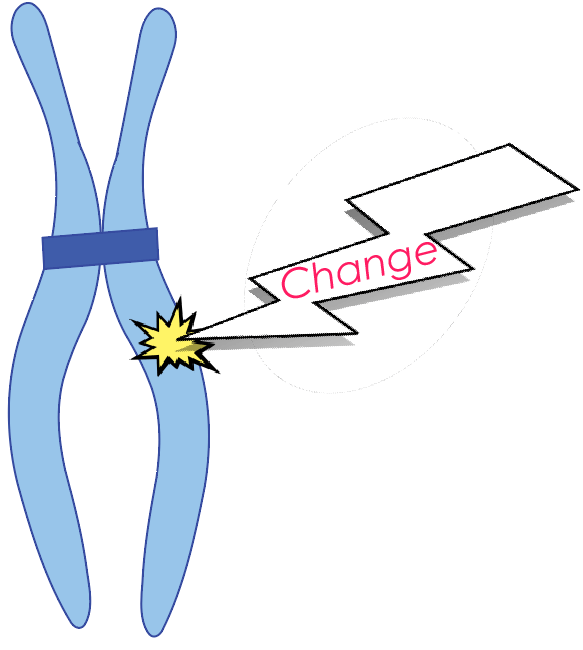
How is a mutation caused?
a)
changing the tRNA
b)
a mutagen
c)
cancer
9.
A 3 nucleotide sequence of mRNA
a)
codon
b)
anticodon
10.
Which type(s) of RNA is(are) involved in protein synthesis?
a)
transfer RNA
b)
messenger RNA
c)
tRNA and mRNA
d)
tRNA, mRNA, and rRNA
11.
DNA replication results in two DNA molecules,
a)
each with two new strands.
b)
each with one new strand and one original strand.
c)
each with two original strands.
d)
one with two new strands and the other with two original strands.
12.
The order of nitrogenous bases in DNA determines the order of ______________ in proteins.
a)
nucleic acids
b)
lactic acids
c)
Phosphates
d)
amino acids
13.

A change in a gene, group of genes or chromosome that results in a change in the proteins

a)

Replication

b)

Mutations

c)

Translation

d)

Transcription

14.

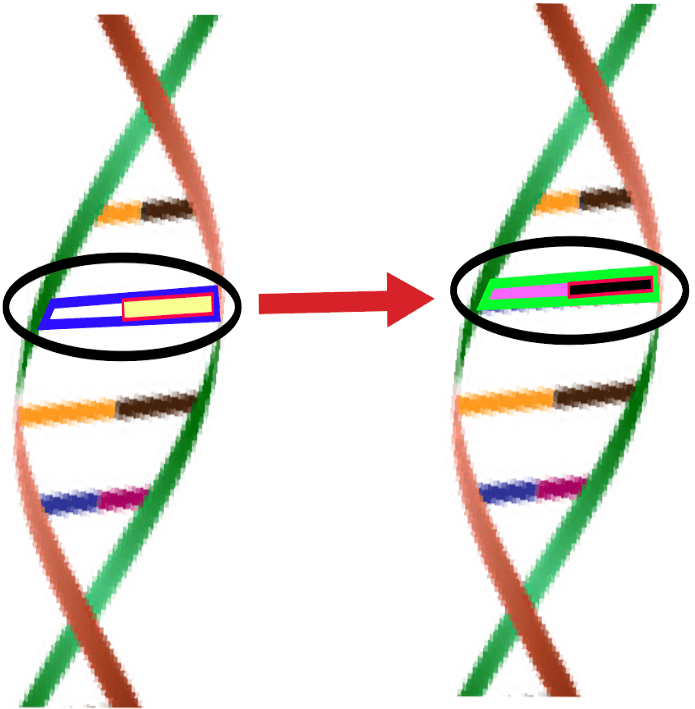
A permanent change in the DNA sequence

which can affect a single gene or group of genes

a)

Homeostasis

b)

Somatic Cell

c)

Chromosomal Mutation

d)

Gene Mutation

15.

One nucleotide base is changed so only one amino acid

is affected

a)

Substitution Mutation

b)

Point Mutation

c)

Translocation

d)

Inverse Mutation

16.

A point mutation where one nucleotide base replaces an original nucleotide base

a)

Inversion Mutation

b)

Chromosomal Mutation

c)

Translocation

d)

Substitution Mutation

17.

A substitution mutation that has no effect

on amino acids sequence

a)

Insertion Mutation

b)

Translocation

c)

Silent Mutation

d)

Deletion Mutation

18.

A nucleotide base is inserted or deleted shifting the entire DNA sequence. Entire protein will be changed.

a)

Substitution Mutation

b)

Silent Mutation

c)

Frameshift Mutation

d)

Translocation

19.

A frameshift mutation where a nucleotide base

is removed from the DNA sequence.

a)

Deletion Mutation

b)

Substitution Mutation

c)

Translocation

d)

Silent Mutation

20.

A frameshift mutation where a nucleotide base is added

to the DNA sequence

a)

Insertion Mutation

b)

Deletion Mutation

c)

Substitution Mutation

d)

Chromosomal Mutation

21.

Mutations that involve parts of or all of

a chromosome

a)

Replication

b)

Deletion Mutation

c)

Chromosomal Mutation

d)

Transcription

22.
The haploid number of human chromosomes is
a)
11
b)
12
c)
23
d)
46
23.
The diploid number of human chromosomes is
a)
23
b)
46
c)
92
24.
Each identical side of a chromosome is the 
a)
centromere
b)
chromatin
c)
centriole
d)
chromatid
25.
Autosomes are
a)
chromosomes found in autotrophs, only
b)
chromosomes that automatically correct all errors in the DNA
c)
chromosomes that determine traits other than sex
d)
chromosomes that determine the sex of the individual
26.

An organism's reproductive cells, or sex cells, are called _____.

a)

bacteria

b)

prokaryotes

c)

gametes

d)

pathogens

27.

A _______ is a segment of DNA that codes for a specific protein or RNA molecule.

a)

gene

b)

gamete

c)

chromosome

d)

chromatid

28.

The 2 exact copies of DNA in a chromosome are called ________.

a)

chromatids

b)

genes

c)

mutations

d)

pathogens

29.

How many chromosomes does a human body cell have, total?

a)

48

b)

46

c)

23

d)

47

30.

Chromosomes that are paired by size and content are called _______ chromosomes.

a)

homeostasis

b)

homologous

c)

matching

d)

sister

31.

Cells that contain 2 sets of chromosomes are called _________ (2n).

a)

diploid

b)

haploid

c)

triploid

d)

polyploid

32.

Cells that contain only ONE set of chromosomes are called ________ (n).

a)

diploid

b)

polyploid

c)

triploid

d)

haploid

33.

A _______ is an egg that has been fertilized by a sperm cell.

a)

gene

b)

chromosome

c)

zygote

d)

embryo

34.

The 23rd pair of chromosomes that do determine the sex of an individual are called ___________.

a)

sex chromosomes

b)

autosomes

c)

homologous

d)

genes

35.

The 2 female sex chromosomes are ___.

a)

XY

b)

XX

36.

The 2 male sex chromsomes are _____.

a)

XY

b)

XX

37.

A photo of the chromosomes in a dividing cell that are arranged by size is called a _________.

a)

mutation

b)

gene

c)

picture

d)

karyotype