
 Worksheets
The Periodic Table
Total questions: 100
Worksheet time: 1hrs 5mins
The order of elements in the periodic table is based on
the number of protons in the nucleus.
the electric charge of the nucleus.
the number of neutrons in the nucleus.
atomic mass.
Which of the following elements is an alkali metal?
calcium
magnesium
mercury
sodium
In Mendeleev's periodic table, elements in each column had similar
atomic masses.
properties.
atomic numbers.
symbols.
What determines the order of elements on today's periodic table?
increasing atomic mass
decreasing atomic mass
increasing atomic number
decreasing atomic number
What are two properties that make a metal a good choice to use as wire in electronics?
conductivity, malleability
ductility, conductivity
luster, malleability
malleability, high density
Where are most metals on the periodic table?
on the left side only
on the right side only
in the middle only
on the left side and in the middle
Which is NOT a property of metals?
brittleness
conductivity
ductility
luster
Iodine is a nonmetal. What is one property of iodine?
conductivity
dull appearance
malleability
ductility


Which of the following elements is a non-metal in group 14?
Carbon (C)
Silicon (Si)
Tin (Sn)
Lead (Pb)

Which pair of elements would most likely have similar properties?
Calcium (Ca) and cobalt (Co)
sodium (Na) and chlorine (Cl)
boron (B) and phosphorus (P)
oxygen (O) and sulfur (S)

Which two elements are in the same period?
boron (B) and lithium (Li)
beryllium (Be) and calcium (Ca)
phosphorus (P) and oxygen(O)
boron (B) and phosphorus (P)
Which arrow shows the direction of the groups on the
Periodic Table?


The atomic number is the same as
the---
atomic mass
group number
number of protons
period number

Metals are located on the
________ side of the
Periodic Table.
ZIG-ZAG
LEFT
RIGHT
BOTTOM

Which one of the following is a property of an element
“magnesium” (Mg in group 2)?
brittle
conducts electricity
not ductile
both brittle and malleable
Atom T has a proton number of 11 and a nucleon number of 23. Which of the following is true about element T?
It does not conduct electricity
If forms an oxide with the formula TO
It is a hard black solid
It reacts with water to form an alkaline solution
Group 1 elements are also known as
Noble gas
Halogen
Alkaline earth metals
Alkali metals
Arrange the elements in group 1 from the top to bottom of the group.
Li, Na, K, Fr, Rb, Cs
Li, Na, K, Rb, Fr, Cs
Li, Na, K, Rb, Cs, Fr
Fr, Cs, Rb, K, Na, Li
What gas is given off when group 1 elements reacts with water?
Hydrogen
Oxygen
Carbon dioxide
Helium
Which of the "Halogens" is found in liquid state at room temperature?
Flourine
Astatine
Iodine
Bromine
As you move down the group, halogens' reactivity...
increases
decreases
doesn't change
shows no trend.
Which halogens can displace bromide ions to make bromine?
Fluorine and iodine.
Fluorine and bromine.
Fluorine and chlorine
Chlorine and iodine.

A displacement reaction involves...
a solution turning brown or yellow.
a less reactive element taking the place of a more reactive element.
a dislocated hip.
a more reactive element taking the place of a less reactive element.
Would a displacement reaction occur for Bromine + Potassium Iodide?
Yes
No
Maybe
The Halogens are found in which group number?
5
6
7
0
Would a displacement reaction occur for Iodine + Potassium Bromide?
Yes
No
Maybe
As you go down the group, how does the boiling point of the halogen elements change?
Increases
Decreases
They're all about the same
True or false? Halogens are metals.
True
False
Which Halogen is the most reactive?
Bromine
Fluorine
Iodine
Chlorine
Which Halogen has the lowest melting point?
Fluorine
Bromine
Iodine
Chlorine
What colour is bromine?
red-brown
orange-red
yellow-green
yellow
6.15: Which of these is not a property of noble gases?
Colourless
Odourless
Flammable
Gas at room temperature

Which of the following has the lowest boiling point?
Argon
Krypton
Xenon
Helium
Neon
What is the trend in boiling point for noble gases?
There is no trend.
Boiling point decreases down the group.
Boiling point increases down the group.
All the boiling points are the same.


Carbon
CA
Ca
C
Cn
Zinc
Z
Zc
Zi
Zn
Sulfur
Sf
Sr
S
Su
Neon
Nn
No
N
Ne
Calcium
Ca
CA
Cl
CL
Copper
C
Co
Cu
CP
Helium
H
He
HE
Hl
Hydrogen
H
Hy
Hg
h
Hydrogen
H
Hy
Hg
h
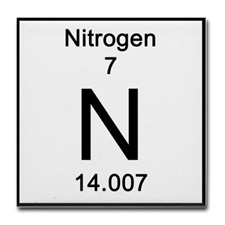
N
Nitrogon
Notanelement
Sodium
Nitrogen
Au
Silver
Golg
Gold
sliver
Pb
lead
gold
peanutbutter
nitrogen
Fe
Lead
Iron
Gold
Lead
Iodine
Ie
Io
ID
I
Potassium
T
P
K
Pm
Cl
Chorliden
Chorline
Cobolt
Carbon
Aluminum
A
Am
An
Al
Silver
Ag
AG
S
Au
H20 - name?
hydrooxic acid
hydrogen oxygen
water
hydrogen oxide
CaF2- name?
calcium fluorate
calcium fluoride
fluoride calcite
fluorine calciumate
HCl- name?
hydrogen chloride
chlorine hydrogen
hydrogen chlorine
hydrogen chlorate
Which pair of elements would most likely have similar properties?
Calcium (Ca) and cobalt (Co)
sodium (Na) and chlorine (Cl)
boron (B) and phosphorus (P)
oxygen (O) and sulfur (S)

Rows in the Periodic Table are called
Periods
Groups/Families
Cousins
Metals

Column in the Periodic Table are called
Periods
Groups/Families
Cousins
Metals

The elements that touch the zigzag line on the Periodic Table are called
metals
nonmetals
metalloids
gasses
What do atoms of the same periodic group have in common?
They have the same atomic number.
They have the same chemical symbols.
The have similar chemical properties.
They have the same atomic mass.
The smallest particle of an element that has the same chemical properties of the element is
a molecule of that element.
an atom of that element.
a proton of that element.
the nucleus of the element.

A scientist creates a hypothesis, but the data she collects fail to support that hypothesis. The scientist should then
change the data to support the hypothesis.
change the hypothesis to match the results.
forget the whole idea and walk away.
use the data to develop and test a new hypothesis.
If a set of repeats in an experiment are very close to each other, we say that the results are what?
Accurate
Precise
Resolute
Valid

