wayground logo

Free Printable Worksheets

Font size

S
M
L
XL
Worksheets

Periodic Table & Atomic Structure

Total questions: 65

Worksheet time: 2hrs 36mins

Name
Class
Date
1.

Subatomic particles with a negative charge are called

a)

Electrons

b)

Neutrons

c)

Protons

d)

Quarks

2.

Which subatomic particle determines the identity of an element?

a)

protons

b)

neutrons

c)

electrons

3.

What is the atomic number?

a)

the number of protons in the nucleus

b)

the number of protons and neutrons in the nucleus

c)

the number of neutrons in the nucleus

d)

the number of protons in the energy levels

4.

What is the mass number?

a)

the number of protons in the nucleus

b)

the number of protons and neutrons in the nucleus

c)

the number of neutrons in the nucleus

d)

the number of protons and electrons in the atom
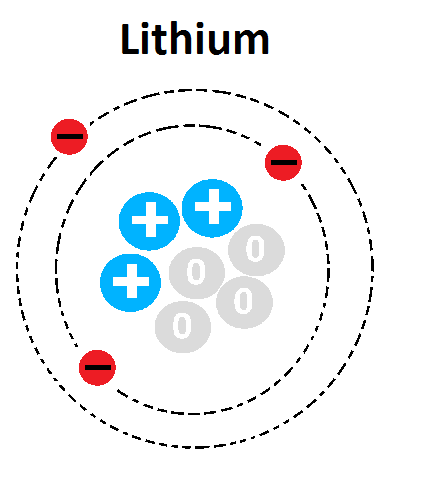
5.

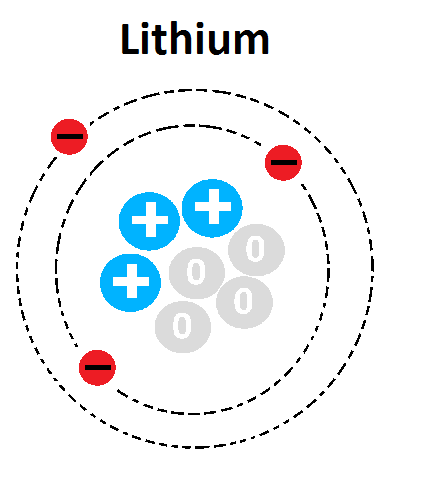
What is the atomic number of this atom?

a)

1

b)

3

c)

4

d)

7

6.

What is the mass number of this atom?

a)

1

b)

3

c)

4

d)

7

7.
In order for an atom to be neutral what has to be true?
a)
The atom has more protons than neutrons
b)
The atom has more neutrons than protons
c)
The atom has the same number of protons and neutrons
d)
The atom has the same number of protons and electrons
8.

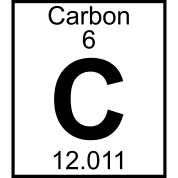
What does the C represent?

a)

atomic mass

b)

atomic number

c)

element name

d)

element symbol

9.

What does the 6 represent?

a)

Atomic mass

b)

atomic number

c)

chemical symbol

d)

element name

10.
What subatomic particles would you find in the nucleus of an atom?
a)
Protons only
b)
Protons and Neutrons
c)
Neutrons and Electrons
d)
Protons and Electrons 
11.

Subatomic particles with a positive charge are called

a)

neutrons

b)

atomic mass

c)

protons

d)

isotopes

12.
Subatomic particles that are neutral in charge
a)
Neutrons
b)
Protons
c)
Nucleus 
d)
Electrons
13.
A tiny but very dense, positively charged portion of the atom that holds most of the atomic mass
a)
Electron Shells
b)
Orbitals
c)
Electron Cloud
d)
Nucleus
14.
The mass number of an element that has 18 protons, 18 electrons, and 19 neutrons is _____.
a)
12.5
b)
13
c)
25
d)
37
15.
The atomic number of an element that has 9 protons, 9 electrons, and 10 neutrons is _____.
a)
9
b)
10
c)
19
d)
28
16.

How many protons does Helium (He) have?

a)

1

b)

2

c)

3

d)

4

17.
The symbol "K" represents which element?
a)
Magnesium
b)
Iron
c)
Potassium
d)
Copper
18.
What period is Silicon found in?
a)
1
b)
2
c)
3
d)
4
19.
Isotopes of the same element...
a)
have different number of neutrons
b)
have different number of protons
c)
have the same mass
d)
none of these are true
20.

Atoms of the same element with different atomic masses are called-

a)

Ions

b)

Isotopes

c)

Cations

d)

Anions

21.

Explain the difference between Carbon-12 and Carbon-14.

a)

Carbon-12 has an atomic number of 12 and carbon-14 has an atomic number of 14.

b)

Carbon-12 has 12 protons and carbon-14 has 14 protons.

c)

Carbon-12 has 6 neutrons and carbon-14 has 8 neutrons.

d)

Carbon-12 has more electrons than carbon-14.

22.

What element is in period 6, group 14

a)

lead

b)

bismuth

c)

potassium

d)

silicon

23.
What is the atomic number of the atom pictured? 
a)
9
b)
10
c)
18
d)
19
24.

Which type of element on the periodic table is found on the right side?

a)

metals

b)

nonmetals

c)

metalloid

25.
How many neutrons does an Oxygen-19 isotope have?
a)
19
b)
8
c)
11
d)
10
26.

What is the mass number of the pictured isotope?

a)

2

b)

4

c)

6

d)

Hehehehe

27.
What is the name of the pictured isotope?
a)
Chlorine-Schmorine
b)
Chlorine-17
c)
Chlorine-35
d)
Chlorine-18
28.
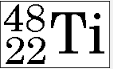
How many protons does this isotope of titanium have?
a)
48
b)
22
c)
26
d)
70
29.

Identify which category the three elements fall into.


Arsenic, Germanium, Antimony

a)

Metal

b)

Nonmetal

c)

Metalloid

30.

Identify which category the three elements fall into.


Mo, Pt, Zr

a)

Metal

b)

Nonmetal

c)

Metalloid

31.

Identify which category the three elements fall into.


Neon, Hydrogen, Iodine

a)

Metal

b)

Nonmetal

c)

Metalloid

32.

In what group number are the halogens found?

a)

18 (8A)

b)

1

c)

2

d)

17 (7A)

33.

A row on the Periodic Table of Elements

a)

family

b)

period

c)

row

d)

isotope

34.

Metals (select 3 that apply)

a)

are found on the right side of the periodic table.

b)

are found on the left side of the periodic table.

c)

are good conductors of heat and electricity.

d)

are brittle.

e)

are malleable and ductile.

35.

Nonmetals (select 3 that apply)

a)

are found on the right side of the periodic table.

b)

are found on the left side of the periodic table.

c)

are good conductors of heat and electricity.

d)

are brittle.

e)

can be solid, liquids, or gases at room temperature.

36.

Which halogen is found in period 4?

a)

Krypton (Kr)

b)

Xenon (Xe)

c)

Bromine (Br)

d)

Iodine (I)

37.
Alkali metals are found in which group of the periodic table?
a)
Group 1
b)
Group 2
c)
Group 7
d)
group 8 
38.
Which of the following is NOT an alkali metal
a)
Li
b)
Cl
c)
K
d)
Cs
39.

Which metal is NOT an Alkaline Earth Metal?

a)

Calcium

b)

Radon

c)

Strontium

d)

Radium

40.

Which of the following is not a transition metals?

a)

sodium

b)

chromium

c)

iron

d)

nickel

41.

Choose all of the transition metals from the list below

a)

potassium

b)

manganese

c)

copper

d)

beryllium

e)

cobalt

42.
Which of these is not a noble gas?
a)
Helium
b)
Argon
c)
Nitrogen
d)
Krypton
43.
How many elements are in the Noble Gas family?
a)
24
b)
13
c)
6
d)
18
44.
As you move down a group, atomic radius increases because - 
a)
you add more and more neutrons
b)
you add more and more protons
c)
you add more and more shells (energy levels)
d)
you add more atomic mass
45.
The atom with the largest atomic radius in Group 18 is - 
a)
Ar
b)
He
c)
Kr
d)
Rn
46.
As you move down the periodic table atoms get bigger.  This is because ____________.
a)
The atoms have more mass.
b)
The atoms have more protons.
c)
The atoms have more energy levels
d)
The atoms have more nuetrons
47.
Which atom has the largest atomic radius?
a)
potassium
b)
rubidium 
c)
francium
d)
cesium
48.
The atom with the largest atomic radius in Group 18 is - 
a)
Ar
b)
He
c)
Kr
d)
Rn
49.
How many elements are in C6H12O6?
a)
1
b)
2
c)
3
d)
4
50.
How many atoms of carbon (C) are in C6H12O6?
a)
3
b)
6
c)
12
d)
24
51.
Element or compound?
H2O
a)
element
b)
compound
52.
Which of the following is a compound?
a)
Co
b)
O2
c)
C
d)
CO2
53.
Which is the correct formula for:
 three hydrogen (H)
one sulfur (S)
four oxygen (O)
a)
H3SO4
b)
HSO4
c)
H4S3O
d)
H2O
54.
How many atoms are there TOTAL in:
H2SO4
a)
6
b)
5
c)
7
d)
3
55.
The substances at the beginning of a chemical equation are called the ____
a)
product
b)
yield
c)
chemical symbol
d)
reactants
56.
In this image, the symbols to the right of the arrow (in black) are called the_______.
a)
Products
b)
Reactants
c)
Subscripts
d)
Coefficients
57.
All of the following are chemical changes except
a)
iron rusting
b)
water evaporating
c)
wood burning
d)
food rotting
58.

Which element has the highest electronegativity?

a)

Fluorine (F)

b)

Iodine (I)

c)

Bromine (Br)

d)

Chlorine (Cl)

59.

Which has a higher ionization energy?

a)

Xenon (Xe)

b)

Rubidium (Rb)

c)

Strontium (Sr)

d)

Iodine (I)

60.

Which element has a larger radius?

a)

Bromine (Br)

b)

Potassium (K)

c)

Gallium (Ga)

d)

Arsenic (As)

61.

Atomic radius INCREASES when you go (a)   a group

62.

Ionization energy ________________ as you go DOWN a group

a)

increases

b)

decreases

63.

Which atom has smaller ionization energy

a)

strontium

b)

iodine

64.

What metal is most reactive

a)

lithium

b)

sodium

c)

potassium

d)

rubidium

65.

What non-metal is the most reactive

a)

iodine

b)

sulfur

c)

oxygen

d)

fluorine