Worksheets
AQA Bio A-Level Module 1A
Total questions: 70
Worksheet time: 35mins

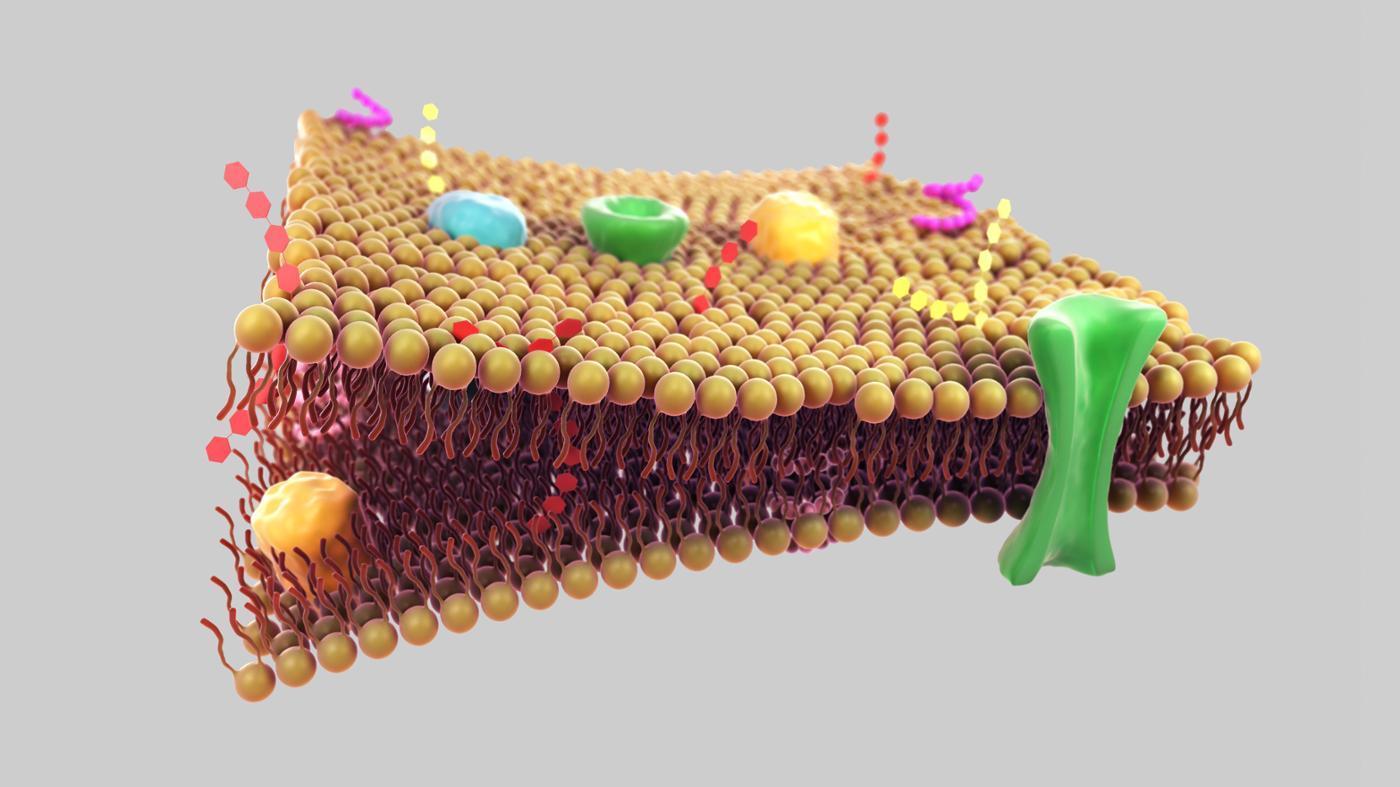
1. Makes up the cell membrane
2. Has a polar, hydrophilic head
3. Has 2 non-polar, hydrophobic tails


Lipids are composed of which atoms?
Hydrogen, Oxygen, Nitrogen
Hydrogen, Oxygen, Carbon
Oxygen, Nitrogen, Carbon
Oxygen, Nitrogen, Hydrogen
Which diagram is a triglyceride?


How many water molecules would be required to hydrolyse a triglyceride?
One
Two
Three
None
What type of bond is being broken when a triglyceride is hydrolysed?
glycosidic
peptide
ester
phosphodiester

The element _______is found in all of the organic compounds.
Iron
Carbon
Nitrogen
Oxygen
Monosaccharides are monomers of
Lipids
Nucleic Acids
Proteins
Carbohydrates
The main function of a carbohydrate is
long term energy storage
stores genetic information
short term energy storage
regulates and controls all body proccesses
What suffix (word ending) is used in the names of most carbohydrates?
-ase
-yme
-ose
-nic
All polymers are made up of...
monosaccharides
polysaccharides
monomers
none of these
How many sugar units make up polysaccharides?
one
two
more than two
zero


If a methyl group (-CH3), which does not like water, were at the 'R', the amino acid would likely be:
Hydrophobic
Hydrophilic
Ionic
Acidic


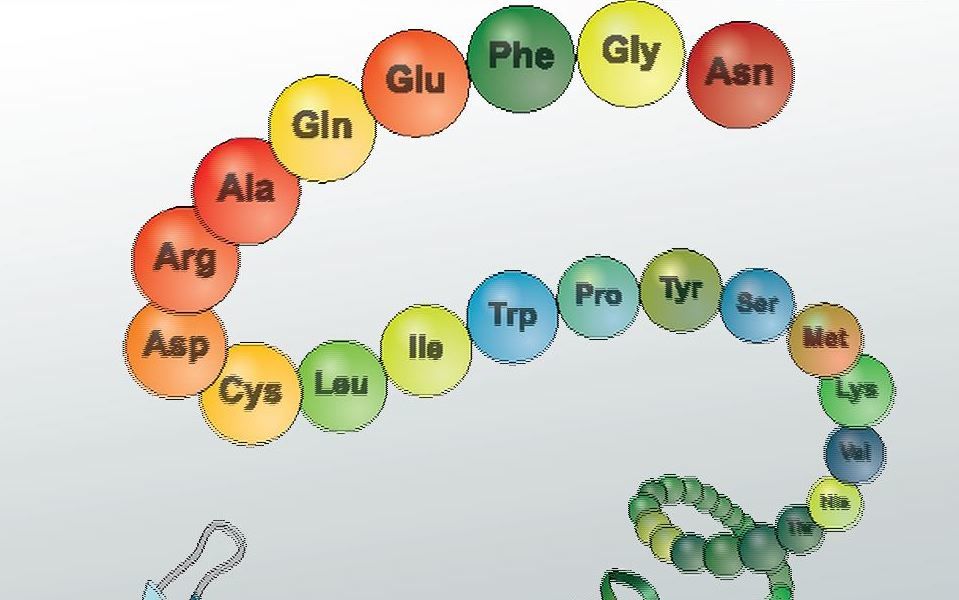
The entire polypeptide forms a three-dimensional structure
Primary
Secondary
Tertiary
Quaternary
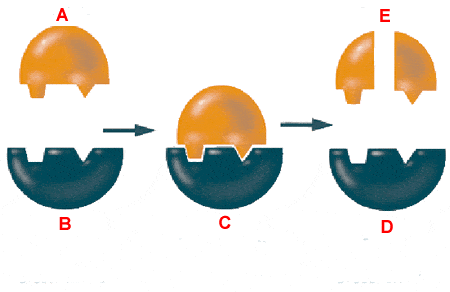
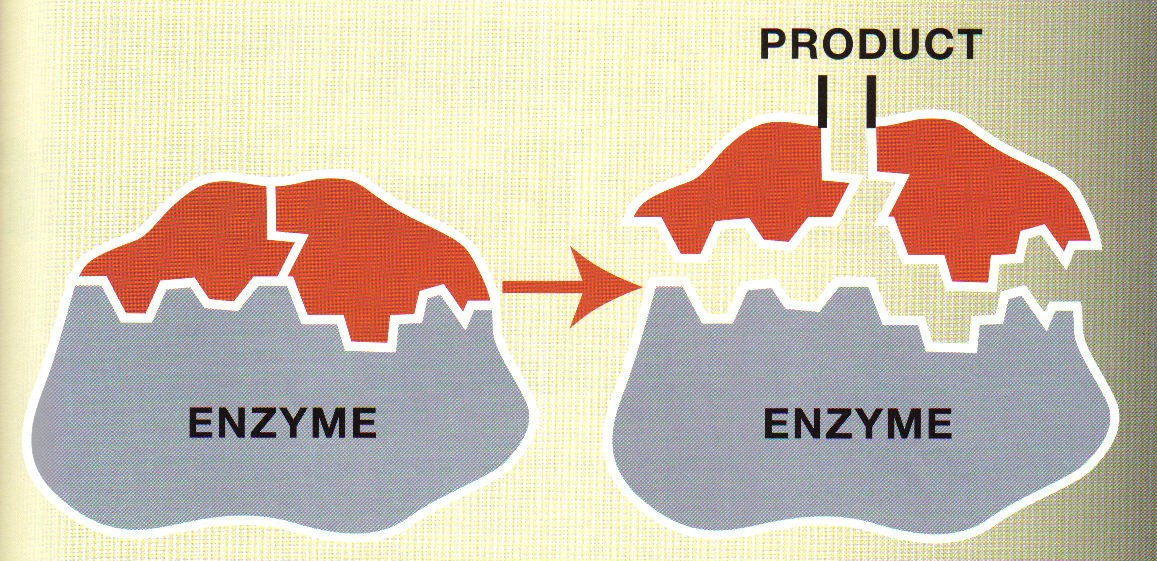
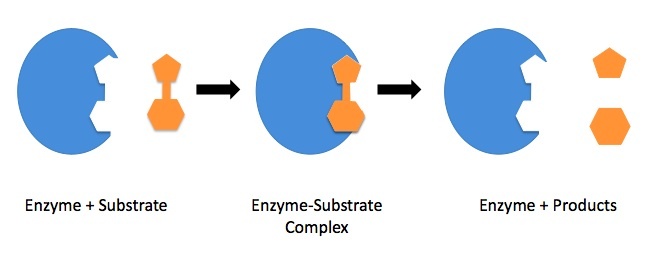
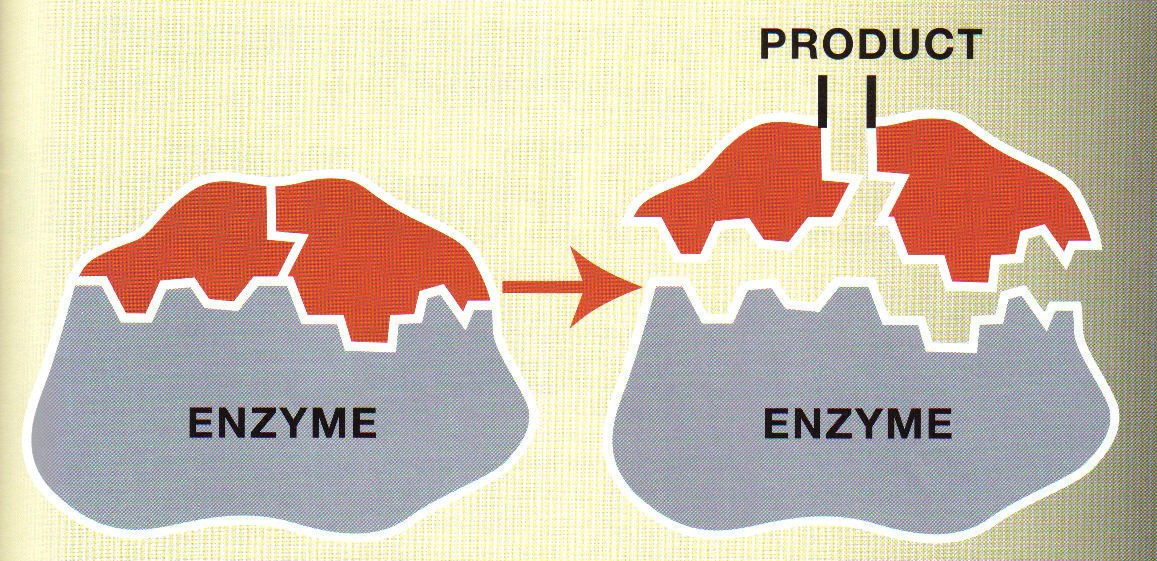
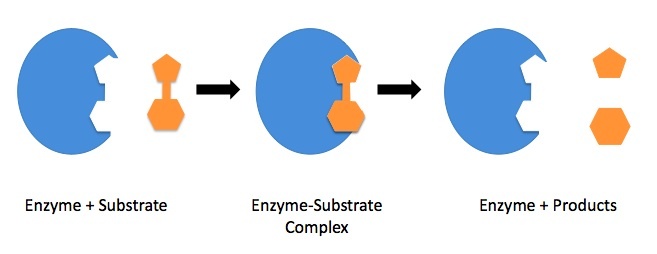
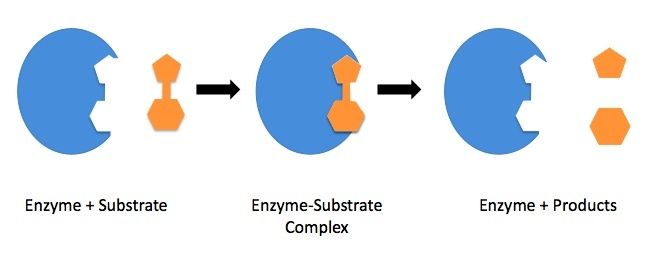
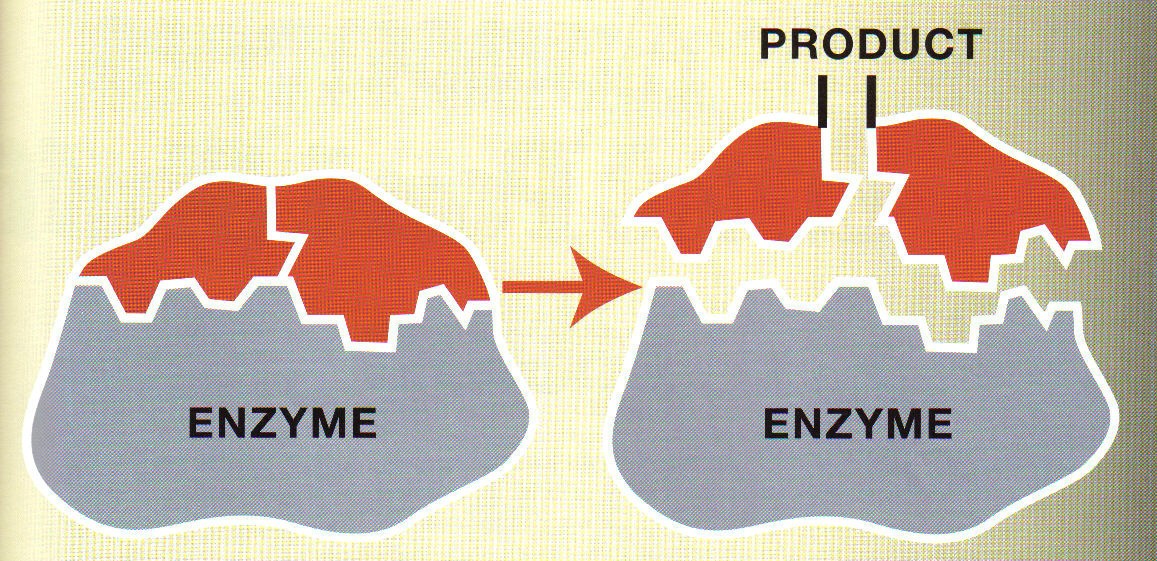
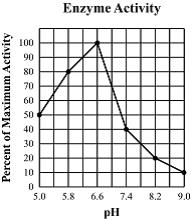
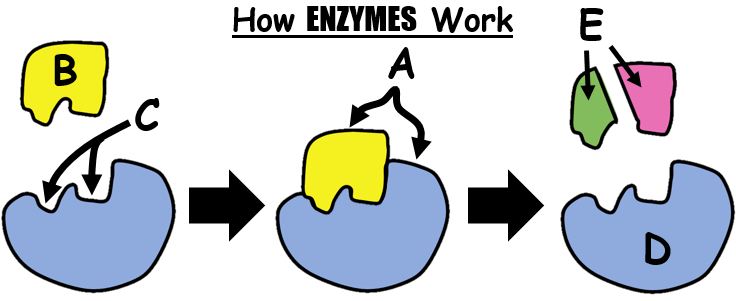

Which of the following best explains why enzymes are necessary for reactions in our cells?
The reactions are too slow to meet the needs of the cell if enzymes are missing.
Enzymes supply the oxygen necessary for the reactions.
Enzymes change reactants from solid to liquid during the reactions.
The reactions take up too much space in the cell if enzymes are missing.
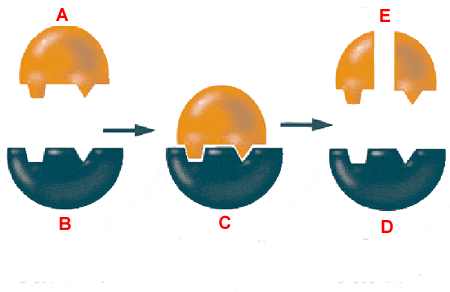
The ____________________ mechanism describes how each substrate must fit into the enzyme.
lock and key
hammer and nail
jigsaw puzzle
seesaw
Once a new product leaves an enzyme, the enzyme is unchanged and ready for the next substrate. What is this called?
fragile
reusable
specific
catalyst
Enzymes are _______________ that _____________________ chemical reactions by ____________ the amount of activation energy required to start the reaction.
carbohydrates, slow down, lowering
proteins, speed up, increasing
lipids, speed up, lowering
proteins, speed up, lowering
Exothermic reactions:
release energy
absorb energy
Endothermic reactions:
release energy
absorb energy
Polymer formed by the condensation of monosaccharides
Hydrolysis
Condensation
Disaccharide
Polysaccharide
Type of reaction that joins monomers to form polymers
Hydrolysis
Condensation
Monosaccharide
Polysaccharide
Small molecules that are joined to form polymers
Monosaccharide
Polysaccharide
Polymer
Monomer
Type of reaction that breaks polymers to form monomers
Hydrolysis
Condensation
Monomer
Polymer
Large molecule formed by the condensation of monomers
Polysaccharide
Monosaccharide
Polymer
Monomer
Monomer formed by the hydrolysis of polypeptides
Monosaccharide
Fatty acid
Amino acid
Nucleotide
Which of these could be formed by the condensation of amino acids?
Protein
Starch
Fat
DNA
Hydrolysis will _______ a _________ into a glycerol head and 3 fatty acids
build....polysaccharide
break....polysaccharide
build....triglyceride
break....triglyceride
Hydrolysis breaks apart polymers with the addition of
monomers
amine groups
water
hydroxyl groups