
Font size
 Worksheets
Nervous System Test Review
Total questions: 55
Worksheet time: 1hrs 12mins


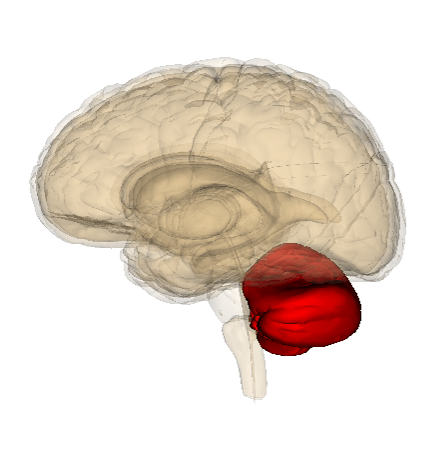
The dark red shaded portion is the ________
Cerebrum
Cerebellum
Brain Stem
Diencephalon
Glial cell that defends neurons
ependymal
microglial
schwann
oligodendrocyte
Two glial cells that insulate neurons by producing myelin
Schwann cells
Satellite
Oligodendrocyte
Ependymal cell
The junction between the axon tip of the sending neuron and the dendrite or cell body of the receiving neuron.
axon
synapse
dendrite
vesicle
Choose the glial cells that are in the CNS
Schwann cells
astrocytes
ependymal cells
satellite
Which of the following divisions of the nervous system controls voluntary behaviors?
Sympathetic
Parasympathetic
Autonomic
Somatic
Afferent
The sympathetic and parasympathetic nervous systems together make up which division of the nervous system?
Central
Autonomic
Somatic
Peripheral
Regional
Another name for motor neurons is
efferent neurons.
afferent neurons.
somatic neurons.
sympathetic neurons.
parasympathetic neurons .
An electrical impulse within a single neuron is called a
synapse
membrane potential
action potential
cell body
This neurotransmitter is linked to feelings of pleasure, euphoria, and reward.
dopamine
serotonin
substance p
glutamate
endorphins
Which of the following symptoms would lead to a diagnosis of Parkinson disease?
Tremor
Rigidity
Postural instability
All of the above
Cranial nerve II is _____.
trochlear
vagus
facial
optic
Cranial nerve IV is _____.
trochlear
accessory
vagus
trigeminal
Cranial nerve V is _____.
facial
vagus
accessory
trigeminal
Cranial nerve X is _____.
facial
vagus
accessory
optic
Cranial nerve VIII is _____.
vestibulocochlear
glossopharyngeal
vagus
facial
Cranial nerve I is ______.
abducens
oculomotor
olfactory
facial
Cranial nerve XII is _______.
hypoglossal
glossopharyngeal
trigeminal
accessory
Cranial nerve XI is _____.
hypoglossal
facial
accessory
olfactory
Cranial nerve VII is ______.
abducens
optic
hypoglossal
facial
Cranial nerve IX is _____.
olfactory
vestibulocochlear
vagus
glossopharyngeal
Cranial nerve VI is _____.
vagus
abducens
optic
trochlear

Which part of the brain controls your blood pressure and heart rate?
brain stem
occipital lobe
cerebellum
frontal lobe

Which part of the brain controls your balance and coordination?
brain stem
occipital lobe
cerebellum
frontal lobe
This part contributes to controlling your emotions (associated with the limbic system) and has important autonomic functions including; cardiovascular, temperature, appetite and gastrointestinal control.
thalamus
hemisphere
hypothalamus
cerebrum
Involved in emotions such as anxiety and fear.
amygdala
basal ganglia
brainstem
medulla oblongata
Both Parkinson's Disease and Schizophrenia are associated with dysregulation of...
GABA
Dopamine
Serotonin
Endorphins
Which of the following is NOT a function of the nervous system?
Coordinates body functions
Responds to stimuli
Communication with muscles and glands
Carrying oxygen to the cells of your body
Which part of the nervous system detects changes inside and outside the body?
Sensory
Integrative
Motor
Central
Which of the following are part of the peripheral nervous system? (Check all that apply!)
Brain
Cranial nerves
Spinal cord
Spinal nerves
Oh no! Your blood sugar is too high, so your brain tells your pancreas to produce more insulin. Which is the effector?
Your brain
Your pancreas
Insulin
Blood sugar
What is the difference between a reflex and a normal nervous system response?
Reflexes don't involve the spinal cord
Reflexes don't involve the brain
Normal responses don't involve the spinal cord
Normal responses don't involve the brain

What is a function of letter D?
Coordination
Personality
Hearing
Seeing

Which lobe helps you understand what you read?
A
B
C
F

Which part of the brain helps regulate your heartrate and breathing?
B
D
E
A

