wayground logo

Free Printable Worksheets

NEW

Font size

S
M
L
XL
Worksheets

Quarterly #3 Review

Total questions: 52

Worksheet time: 46mins
Name
Class
Date
1.
All living things are made of...
a)
atoms 
b)
cells 
c)
bacteria 
d)
plants 
2.
What type of cell has a nucleus? 
a)
eukaryotic
b)
prokaryotic 
3.
What type of cell does not have a nucleus?
a)
eukaryotic 
b)
prokaryotic 
4.
Plants and animal cells are examples of ___ cells 
a)
prokaryotic cells 
b)
eukaryotic cells 
5.
Prokaryotic cells include bacteria.
a)
True
b)
False
6.
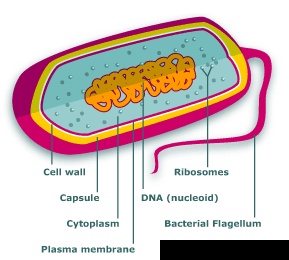
Which type of cell?
a)
Prokaryote
b)
Eukaryote
7.
Animal, fungi, plant, and protista cells are all examples of which type of cell?
a)
Eukaryotic
b)
Prokaryotic
c)
Both prokaryotic and eukaryotic
8.
Bacteria is what kind of cell?
a)
Eukaryotic
b)
Prokaryotic
9.
What structures distinguish a plant cell from an animal cell?
a)
Plant cells have cell walls and ribosomes.
b)
Plant cells have cell walls and chloroplasts.
c)
Plant cells have chloroplasts and ribosomes.
d)
Plant cells have chloroplasts and mitochondria.
10.
What is the name of the structure shown in the diagram where cellular respiration takes place?
a)
Chloroplast
b)
Mitochondrion
c)
Nucleus
d)
Vacuole
11.
The site of photosynthesis
a)
ribosome
b)
mitochondria
c)
chloroplast
d)
nucleus
12.
Prokaryotes have a nucleus to store their DNA. True or False?
a)
True
b)
 False
13.
Which structures are found in every living cell?
a)
cell membrane and cytoplasm
b)
chloroplasts and mitochondria
c)
a cell wall and nucleus
d)
chloroplasts and cell wall
14.
An organism made of one cell is called
a)
unicellular organism
b)
multicellular organism
15.

This organelle type collect sunlight which it converts to food for the plant (sugars).

a)

chloroplasts

b)

cytoplasm

c)

cell wall

d)

mitochondria

16.

The type of organelle that makes energy for the cell and is found in plants and animals is called

a)

nucleus

b)

mitochondria

c)

chloroplast

d)

cell membrane

17.

In order to be considered a living thing, that thing must

a)

grow and develop

b)

take in food and excrete waste

c)

reproduce

d)

all of the above

18.

Which part of the cell controls the movement of substances?

a)

mitochondria

b)

cell membrane

c)

chloroplast

d)

nucleus

19.

All of the following are functions of a cell membrane EXCEPT

a)

surrounding and protecting the contents of the cell.

b)

releasing waste products from the cell.

c)

producing energy for the cell processes.

d)

allowing gases to enter the cell.

20.

Which characteristic of a cell membrane allows it to control materials entering and leaving a cell?

a)

A cell membrane is surrounded by fluid.

b)

A cell membrane is semi-permeable.

c)

A cell membrane holds organelles in place.

d)

A cell membrane is found in plant and animal cells.

21.

Passive Transport

a)

Does require cell energy

b)

Does NOT require cell energy

22.
What is diffusion?
a)
when molecules move from a low concentration to a high concentration 
b)
when molecules move from a high concentration to a low concentration.
c)
no movement 
d)
molecules move everywhere
23.
Osmosis is the movement of _____ across a membrane.
a)
food
b)
energy
c)
oxygen
d)
water
24.
Which way will the water molecules move during osmosis?
a)
Out of the cell, so the cell shrinks.
b)
Out of the cell, so the cell swells.
c)
Into the cell, so the cell shrinks.
d)
Into the cell, so the cell swells.
25.
When both inside and outside of a cell have the same amount of water it is said that the cell has reached a state of
a)
Osmosis
b)
Diffusion
c)
Equilibrium
26.
Osmosis is a form of ______________. 
a)
Passive Transport
b)
Active Transport
27.
What is the definition of  Selective Permeability?
a)
The movement of materials across the cell membrane that requires NO ENERGY from the cell.
b)
The movement of materials through (or across) the cell membrane
c)
The ability of the cell membrane to allow some things to pass through while preventing other things from passing through.
d)
The movement of molecules from an area of high concentration to a area of low concentration 
28.
In passive transport, molecules move from an area of __________ concentration to an area of __________ concentraiton
a)
high, low
b)
low, high
c)
water, salt
d)
active, passive
29.
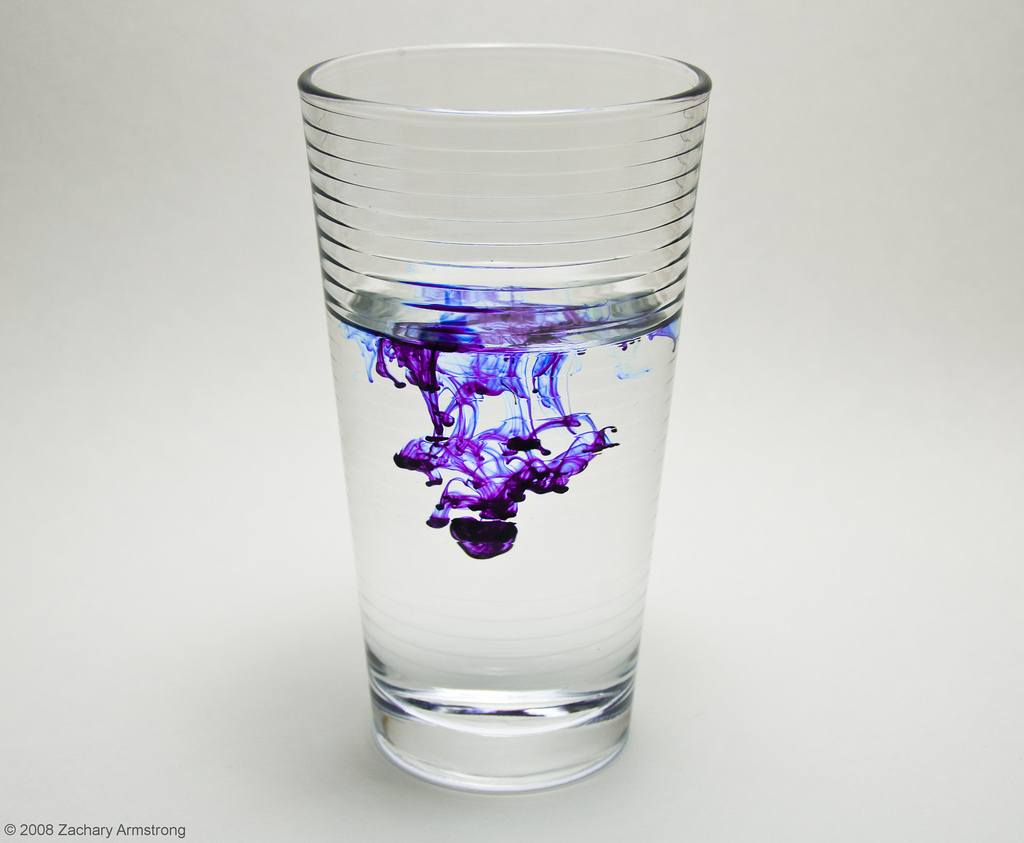
Where is there a low concentration of dye?
a)
at the bottom of cup
b)
in the color
c)
at the top of cup 
d)
no concentration gradient
30.
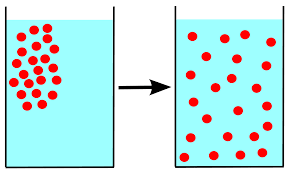
The picture below is an example of _________________.
a)
osmosis
b)
isotonic
c)
diffusion
d)
active transport
31.
Osmosis is the movement of _____ across a membrane.
a)
food
b)
energy
c)
oxygen
d)
water
32.
Passive transport requires no
a)
concentration gradients
b)
osmosis
c)
motion
d)
energy
33.
Which type of transport requires an input of energy?
a)
Passive Transport
b)
Osmosis
c)
Simple Diffusion
d)
Active Transport
34.
Someone sprays air freshener.  The scent fills the room.  This is an example of
a)
active transport
b)
osmosis
c)
diffusion
d)
cellular respiration
35.

Photosynthesis occurs in:

a)

Mitochondria

b)

Chloroplasts

c)

Humans

d)

Animals

36.

What are the reactants in Photosynthesis?

a)

Sun, CO2, glucose

b)

glucose and oxygen

c)

sun, carbon dioxide, water

d)

water, glucose

37.

The process in which plant cells make energy

a)

Exothermic

b)

Endothermic

c)

Cellular Respiration

d)

Photosynthesis

38.

In what process does ATP get created?

a)

photosynthesis

b)

cellular respiration

c)

radiation

d)

chemical

39.

How do humans get glucose so they can live?

a)

breathe it in

b)

photosynthesis

c)

eat food

d)

drink liquids

40.

Mitochondria and Chloroplasts are:

a)

organelles

b)

cells

c)

only in humans

d)

only in plants

41.

Cellular respiration happens

a)

only in plants

b)

only in animals

c)

only in humans and animals

d)

in plants and animals

42.

The products of cellular respiration are

a)

air and water

b)

carbon dioxide, water, and ATP

c)

glucose and carbon dioxide

d)

ATP, glucose, and oxygen

43.

For photosynthesis, a plant needs water, sun, and...

a)

oxygen

b)

carbon dioxide

c)

glucose

d)

mitochondria

44.

For humans to live, we need energy. What is the name of the energy that the body makes in cellular respiration?

a)

sugar

b)

glucose

c)

ATP

d)

fructose

45.

What is a product of photosynthesis AND a reactant for cellular respiration?

a)

oxygen

b)

water

c)

carbon dioxide

d)

Doctor Pepper

46.

Cellular respiration happens in the

a)

plants only

b)

animals only

c)

chloroplasts

d)

mitochondria

47.

What is the chemical equation for cellular respiration?

a)

Glucose + Oxygen -> Carbon dioxide + Water + Energy

b)

Oxygen + Carbon dioxide + Energy -> Glucose + Water

c)

Carbon dioxide + Glucose -> Oxygen + Water + Energy

d)

Water + Carbon dioxide + Energy -> Oxygen + Glucose

48.
What is the equation for photosynthesis
a)
Water + Carbon dioxide + Energy -> Oxygen + Glucose
b)
Carbon dioxide + Glucose -> Oxygen + Water + Energy
c)
Oxygen + Carbon dioxide + Energy  -> Glucose + Water
d)
Glucose + Oxygen -> Carbon dioxide + Water + Energy
49.
When an organism breaks down food, the atoms get rearranged into different molecules. When the atoms get rearranged, what is released?  
a)
Energy
b)
Water
c)
Glucose
d)
Oxygen 
50.
Cellular respiration is similar in both plants and animals in what way?
a)
Energy is required and oxygen is released.
b)
Nitrogen is required and energy is released.
c)
Oxygen is required and energy is released.
d)
Oxygen is required and carbon is released.
51.
What pigment in the leaf captures energy from the sun?
a)
carbon
b)
chlorophyll
c)
air
d)
chloroplast
52.
The main source of energy for all life comes from ____.
a)
the Earth
b)
the moon
c)
the sun
d)
the food we eat/make