
 Worksheets
Review GI system_ HIM
Total questions: 65
Worksheet time: 39mins
Which of the following correctly describes the purpose of digestion?
To break down complex food molecules into simple soluble molecules
To make complex food molecules from simple soluble molecules
To make use of simple soluble food molecules
To remove complex food molecules from the body
Large food molecules need to be broken down to be small enough to pass through cell membranes.
True
False
Which enzyme does the stomach produce?
amylase
lipase
maltase
protease
Where is the digestion of food completed?
liver
large intestine
stomach
small intestine
Why is the oesophagus muscular?
To break the food into even smaller pieces
To produce enzymes to digest food
To push food from the mouth into the stomach
To move the food back and forth in two directions
Where does carbohydrate digestion begins?
liver
mouth
oesophagus
stomach
Where does protein digestion begins?
large intestine
mouth
small intestine
stomach
Where does fat digestion begins?
colon
liver
small intestine
stomach
Select all the enzymes present in the intestinal juice.
amylase
lipase
maltase
protease
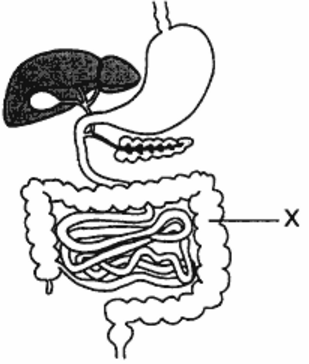
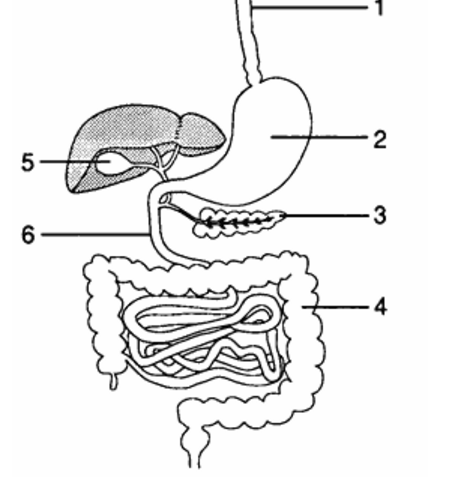
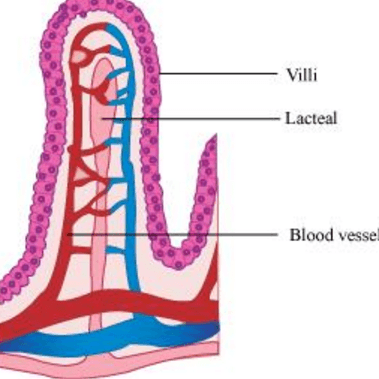


A greenish- yellow digestive juice
digestive juices
bile
The PARTS of the small intestine that helps absorb digested food
stomach
villi
Which of this statement is correct?
Fats, starch and proteins can pass through cell membranes.
Protein is a type of carbohydrate.
Action of bile is a chemical digestion.
Chemical digestion involves enzyme to break down food.
Which statement about enzyme is correct?
Enzymes speed up the rate of chemical reaction.
Enzymes change to a new substance after reaction.
In lock and key hypothesis, key is enzyme.
Enzyme is sensitive to temperature and concentration.
Which of the following statement about large intestine is wrong?
Undigested food mainly contains fiber reaches large intestine.
Mineral salts are not absorbed in large intestine.
Faeces are stored in rectum before egested out of body.

Which organ prevents food from entering the windpipe?
The uvala
The tongue
The trachea
The epiglottis
The gastrointestinal tract (GI tract)includes all the following, EXCEPT
Esophagus
Liver
Stomach
Small intestine
What breaks food into smaller pieces to begin mechanical digestion?
Stomach
Esophagus
Amylase
Teeth

Which of the following is the longest part of the Alimentary Canal?
A. Large intestine
A. Small intestine
A. Liver
A. Stomach
Complete digestion of food occurs in:
Stomach
Small intestine
Pancreas
Large intestine

Anterior part of the small intestine is
Ileum
Jejunum
Duodenum
Caecum

Posterior part of the stomach is
Cardiac part
Fundus
Pyloric part
Pylorus

Small pouch like dilations on the side of colon are
Haustra
Halter
Taeniae
Cordae tendinae
Which of the following answers correctly sequences the pathway food takes from the beginning to end?
mouth, esophagus, stomach, small intestine, large intestine
mouth, esophagus, stomach, large intestine, small intestine
mouth, stomach, esophagus, small intestine, large intestine
mouth, stomach, esophagus, large intestine, small intestine


The passage of nutrients from the digestive tract into the blood stream:
INGESTION
DIGESTION
ABSORPTION
DEFECATION
ONCE FOOD IS BROKEN DOWN CHEMICALLY, IT IS TURNED INTO:
BOLUS
CHYME
ONCE FOOD IS BREAKING DOWN MECHANICALLY, IT TURNS INTO:
CHYME
BOLUS

Another name for the digestive system is:
neuromuscular system
enteroendocrine system
gastrointestinal system
genitourinary system

Which of the following is the purpose of the rugae of the stomach:
to help trap food to increase the time in which it spends in the stomach
to increase its ability to expand
to propel food along
all of the above

Which of the following sphincters is responsible for preventing reflux of acid into the esophagus:
the pyloric sphincter
the gastric sphincter
the cardioesophageal sphincter
ileocecal sphincter
Which of the following is true regarding the pyloric sphincter:
it allows food to enter the stomach but closes to prevent regurgitation into the esophagus
it allows small amounts of chyme into the duodenum
it extends to a cavity that acts as a holding chamber called the pyloric antrum
none of the above
How does the stomach protect itself from the hydrochloric acid that it secretes:
it has a thick layer of stratified squamous cells that are rapidly produced to replace the damaged cells that are exposed to the acid
it secretes a protective layer of mucous that neutralizes the acid
it has a specialized membrane of cartilaginous tissue that is immune to the secreted acid
none of the above

Which of the following structures lead to an increased surface area of the small intestine:
villi
peristalsis
rugae
gastric pits

Which of the following structures attaches the intestines to the posterior abdominal wall:
serosa
mesentery
peritoneum
lacteal
__________ is NOT found in pancreatic secretions.
Cholecystokinin (CCK)
Bicarbonate
Procarboxypeptidase
Chymotrypsinogen
The largest of the salivary glands is the _____.

Write the name of the first part of the small intestine immediately beyond the stomach, leading to the jejunum.
Blind pouch hanging from the cecum (in the right lower quadrant [RLQ] is called

The longitude muscle of the colon arranged into three distinct bands.
taenia coli
haustra
epiploic appendages
external anal sphincter
The reflex that occurs in the large intestine and promotes the movement of feces toward the anus is the
flexures
greater omentum
defecation reflex
peristalsis
(a) are the longitudinal folds in the stomach's mucosa.

