
 Worksheets
Benchmark 2/STAAR Review
Total questions: 93
Worksheet time: 2hrs 34mins
One state of matter has no definite shape. Which one is it?
Solid
Gas
Liquid
Color

A pile of objects are mixed together. Some of the items are magnetic, others are not. What is the best way to separate them?
Throw them in a pool and see if they sink or float in water.
Hold a magnet above each item and see if they move toward the magnet.
Weigh each item to see the mass of each item.
Put items close to each other to see if they stick together.
What would be attracted to a magnet?


A teacher spilled a bottle of small steel beads into a container of glass beads. What is the most useful physical property to separate the two materials?
Mass
Shape
Magnetism
Color




What would you use this tool to measure?
Temperature of a drink
Texture of a piece of clothing
Length of a basketball hoop
Mass of a banana
What describes a solid?
Gets bigger in a holder
Takes the shape of what it is being stored inside
Stays the same shape and size
Releases into air from an open container

The thermometer shows 81degrees Fahrenheit. What will happen if the water temperature increases 19 degrees Fahrenheit.
Water will boil and turn into ice
Water will freeze and turn into ice
Water will boil and turn into steam
Water will freeze and turn into steam

What is an example of a liquid
The soda
The ice cubes
The bubbles
The glass

What is happening in the picture?
Items 1 and 3 are more dense
Items 2 and 4 are less dense
Items 2 and 3 are more dense
Items 3 and 4 are more dense

Which direction is the red arrow pointing?
Northwest
Northeast
Southwest
Southeast


Which experiment materials listed tests friction?
1 toy car, 1 ramp, 1 book, carpet, sand paper, wax paper
1 small toy car, 1 medium toy car, 1 big toy car, 1 ramp, 1 book
1 toy car, 1 ramp, 3 books
When conducting an experiment, in order to get reliable results, it is important to:
Change everything each time
Test many different variables at the same time
Test all forces at the same time
Repeat the investigation several times


Which direction is the red arrow pointing?
Northwest
Northeast
Southwest
Southeast
Which direction is the red arrow pointing?
Northwest
Northeast
Southwest
Southeast

Which direction is the red arrow pointing?
Northwest
Northeast
Southwest
Southeast

Which direction is the red arrow pointing?
Northwest
Northeast
Southwest
Southeast

If a student pulls a box to the NORTH and another student pull the box to the EAST, which way will the box move?
Northwest
Northeast
Southwest
Southeast
If a student pulls a box to the SOUTH and another student pull the box to the WEST, which way will the box move?
Northwest
Northeast
Southwest
Southeast
If a student pulls a box to the SOUTH and another student push the box from the NORTH side, which way will the box move?
North
South
East
West
If a student pulls a box to the WEST and another student push the box from the EAST side, which way will the box move?
North
South
East
West
Which experiment materials listed tests gravity?
1 toy car, 1 ramp, 1 book, carpet, sand paper, wax paper
1 small toy car, 1 medium toy car, 1 large toy car, 1 ramp, 1 book
1 toy car, 1 ramp, 3 books
Which experiment materials listed tests mass?
1 toy car, 1 ramp, 1 book, carpet, sand paper, wax paper
1 small toy car, 1 medium toy car, 1 large toy car, 1 ramp, 1 book
1 toy car, 1 ramp, 3 books

Why does the following circuit not work?
The light bulb is broken
The switch is closed
The wood block is an insulator
The battery is dead

The circuit does not work, what could you do to allow the circuit to work?
Add another light
Add another battery
Open the switch
Remove the wood block and connect the wires

Which lights would turn on if your closed switches 1 and 2?
red, blue, and white
red and white
red and blue
blue, white, yellow

What forms of energy are you using if you close switch 1?
light and electrical
light, sound, and electrical
light
sound

In order to produce ONLY LIGHT energy, which switch(es) would you need to close?
switch 1 and switch 2
switch 1, 2, and 3
switch 2 and switch 3
switch 1 and 3

The light bulb does not turn on, which statement explains why it is not working?
The battery is dead
The light bulb is broken
The bell is taking all of the energy
The light bulb is not part of a complete circuit
A material that does NOT let electricity pass through it is called ...
electrical conductor
Battery
electrical insulator
light bulb
Which of the following describes: Dissolved particles are distributed evenly and you can no longer see them.
conductivity
solution
mixture
If a material dissolves completely in a liquid, it is said to be...
soluble
insoluble
If a material does NOT dissolve in a liquid, it is said to be
soluble
insoluble
Adding salt to a liquid
soluble
insoluble
Adding pepper to a liquid
soluble
insoluble
Adding sugar to a liquid
soluble
insoluble
Adding sand to a liquid
soluble
insoluble
What causes your icecream to melt on a hot, sunny day?
conductivity
heat
When water is heated to its boiling point, it becomes a gas called
helium
water vapor
carbon dioxide

A lens was used to see an ant. This is what was seen. Which strategy would you use?


A student used a periscope to see the sign that was up high. Which strategy would you use?


A student saw a rainbow when he looked through the prism. Which strategy would you use?


Apples stay on surface of water. Which strategy would you use?


Coin descended to the bottom of cup. Which strategy would you use?


A picture was taken seconds after a girl was thrown into the pool. Which strategy would you use?


A student tried to separate aluminum cans from steel cans. Which strategy would you use?


Aluminum foil was used to complete a circuit. Which strategy would you use?


A emperor penguin uses its blubber to insulate. Which strategy would you use?


A student was studying about seasons. Which strategy would you use?


Students were learning about day and night. Which strategy would you use?


Students were learning about moon phases. Which strategy would you use?


Trees and water are renewable resources. Which strategy would you use?


Petroleum is a non renewable resources. Which strategy would you use?


Guitars cause vibrations. Which strategy would you use?


Sediments are being created. Which strategy would you use?


When an insect does not undergo a complete change. Which strategy would you use?


A ladybug completely changes. Which strategy would you use?


The steps needed in the making of fossil fuels. Which strategy would you use?


The two planets closest to the asteroid belt. Which strategy would you use?


Students used magnets to attract iron nails. Which strategy would you use?


If it is a full moon on day 3, on what day would you see the next moon phase? Which strategy would you use?


Lava causes much destruction in Hawaii. Which strategy would you use?


North pole side of a magnet repels the same pole. Which strategy would you use?


The circuit made a complete circuit. Which strategy would you use?


The circuit was incomplete. Which strategy would you use?


Where do the sediments that form a delta come from?
beach
mountain range
ocean floor
wind erosion
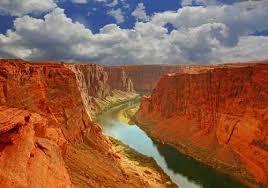
What landform is this?
plain
valley
mountain
canyon

What landform is this?
valley
canyon
plain
mountain

This landform is caused by...
land slide
slow change
rapid change
thunder storm
What landform is created when sediments are deposited at the mouth of a river.
mountain
volcano
canyon
delta
This landform is created when wind deposits sediments in a pile.
mountain
delta
valley
sand dune
What landform is created by fast moving water and makes very steep sides?
canyon
mountain
valley
plain
What agent causes a V-valley?
water
glacier
wind
waves

What landform is this?
U-valley
V-valley
canyon
mountains
What agent caused this landform to form?
ice
glacier
wind
water
What caused this U-shaped valley to form?
strong wind storm
fast moving river
slow moving glacier
earthquake
Fossil fuels came from the fossilized remains of plants and animals from long ago.
True
False
Fossil fuels are classified as nonrenewable because they.......
can be reused over and over
take millions of years to replace
can be found all over
provide all the energy we use
What is missing in order form fossil fuels? Dead organisms, burial, millions of years, pressure from sediment layers,...
fire
heat
water
cementation
Which of these happens FIRST in the life of a plant?
A seedling begins to grow.
A seed sprouts.
Flowers bloom on an adult plant.
A seedling grows into a young adult plant.

Why are seeds important?
because they can grow into new plants
because they are all the same size
because they always stay in one place
because they hold up the plant

Why do farmers like to keep beehives near their crops?
Bees scare away the animals.
Bees keep weeds away.
Bees help plants absorb nutrients from the soil.
Bees help carry plants’ pollen so they can make seeds.

How is a seedling different from an adult plant?
A seedling does not have flowers or fruit.
A seedling does not have roots.
A seedling does not have a stem.
A seedling does not need sunlight to grow.

