wayground logo

Free Printable Worksheets

Font size

S
M
L
XL
Worksheets

Units 1- 3 Review

Total questions: 50

Worksheet time: 41mins
Name
Class
Date
1.
The smallest part of an element is
a)
proton
b)
atom
c)
compound
d)
mixture
2.
An example of matter made of only one element is
a)
water
b)
gold bar
c)
light bulb
d)
salad mixture
3.
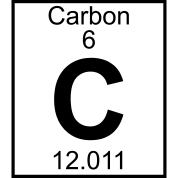
What does the C represent?
a)
atomic mass
b)
atomic number
c)
element name
d)
chemical symbol 
4.
An element is a ......
a)
pure substance
b)
compound
c)
mixture
d)
molecule
5.

What would the word "platinum" be described as being on the element card?

a)

Period

b)

Element chemical symbol

c)

Element name

d)

Atomic number

6.
Which model is used by scientists to determine the properties of elements? 
a)
the rock cycle
b)
a Punnett Square
c)
a pedigree chart
d)
 the Periodic Table
7.
The smallest unit of an element that still has the properties of that element is?
a)
a substance
b)
a mixture
c)
a compound
d)
an atom
8.
The smallest unit of an element that still has the properties of that element is?
a)
a substance
b)
a mixture
c)
a compound
d)
an atom
9.
Which of these is a mixture?
a)
Uncooked chocolate chips and cookie dough blended together with a spoon.
b)
Distilled water
c)
A nugget of gold
d)
A molecule of Oxygen
10.
What is a pure substance made of two or more elements that are chemically combined called?
a)
A. element
b)
B. compound     
c)
C. mixture
d)
D. solution
11.

Chicken noodle soup is a ______ mixture.

a)

A. HOMOGENEOUS

b)

B. HETEROGENEOUS

12.
This picture represents which of the following?
a)
element
b)
compound
c)
mixture
13.
This picture represents which of the following?
a)
element
b)
compound
c)
mixture
14.
This picture represents which of the following?
a)
element
b)
compound
c)
mixture
15.
A particle that moves around the nucleus is a(n)...
a)
Proton
b)
Neutron
c)
Electron
d)
Quark
16.
True or False? Neutrons have a negative charge
a)
True
b)
False
17.
Particles in an atom that are neutral and have no charge are 
a)
negatrons 
b)
electrons 
c)
neutrons 
d)
protons 
18.
The positive particles of an atom are 
a)
electrons 
b)
positrons 
c)
neutrons 
d)
protons 
19.

How many electrons does an atom of this element have?

a)

29

b)

35

c)

64

d)

93

20.

How many neutrons does an atom of this element have?

a)

15

b)

16

c)

31

d)

45

21.

Soda is an example of a ______ mixture.

a)

A. HOMOGENEOUS

b)

B. HETEROGENEOUS

22.
What are the 3 particles that make-up the atom?
a)
protons, neutrons, and isotopes
b)
neutrons, isotopes, and electrons
c)
positives, negatives, and electrons
d)
protons, neutrons, and electrons
23.
Particles in this state of matter are moving the fastest.
a)
solid
b)
liquid
c)
gas
24.
Particles in this state of matter are moving the slowest.
a)
solid
b)
gas
c)
liquid
25.
This state of matter takes ONLY the share of its container.
a)
liquid
b)
gas
c)
solid
26.
This state of matter keeps its shape and volume.
a)
gas
b)
solid
c)
liquid
27.
This state of matter takes both the shape and volume of it container.
a)
gas
b)
solid
c)
liquid
28.
In this state of matter, there is a strong attraction between molecules and they cannot break away from each other. 
a)
solid
b)
liquid
c)
gas
29.
In this state of matter, the molecules have enough energy to separate from each other. 
a)
gas
b)
solid 
c)
liquid
30.
When boiling water creates steam.
a)
condensation
b)
melting 
c)
freezing
d)
vaporization
31.
When dripping water turns into icicles. 
a)
melting
b)
freezing
c)
vaporization
d)
condensation 
32.
When a scoop of ice cream drips down the side of the cone.
a)
freezing 
b)
vaporization
c)
melting
d)
condensation
33.
The state of matter in which the atoms are locked and vibrate in place. 
a)
solid
b)
liquid
c)
gas
34.
Water exists as a _____________ at 700 mmHg and 50 °C.
a)
solid
b)
liquid
c)
gas
d)
supercritical fluid
35.

Examine the phase diagram of carbon dioxide. Which two answers would correspond to the temperature and pressure that would have carbon dioxide in the liquid states of matter?

a)

72.9 atm

b)

5.1 atm

c)

25 degrees C

d)

-78.5 degrees C

e)

-56.7 degrees C

36.
What state of matter is X?
a)
solid 
b)
liquid
c)
gas
d)
supercritical fluid
37.
What state of matter is Z?
a)
solid 
b)
liquid
c)
gas
d)
supercritical fluid
38.
What state of matter is Y?
a)
solid 
b)
liquid
c)
gas
d)
supercritical fluid
39.

In the following compound, H_2SO_4   how many atoms of oxygen (O) are present?

a)

1

b)

2

c)

3

d)

4

40.

 In the following compound,  CH_3COOH  


how many atoms of hydrogen (H) are present? 

a)

1

b)

2

c)

3

d)

4

41.

How many iron (Fe) atoms are in this Chemical Formula?


3Fe2O4

a)

2

b)

3

c)

6

d)

8

42.

The law of conservation states:

a)

matter is unbalanced and can operate under various states of matter

b)

matter is neither created nor destroyed but conserved from reactants to products

c)

matter is balanced and can operate under various states of matter

d)

matter is always destroyed and not conserved from reactants to products

43.
If a reaction starts with a total 75g of reactants it should produce 
a)
a total of 40g of products
b)
a total of 75g of products
c)
a total of 180 g of products
d)
None of the above
44.
In a reaction A + B ----> C,  reactant A has 5g and product  C has 9g. How many grams does reactant B should have? 
a)
4g
b)
5g
c)
9g
d)
14g
45.

Which chemical equation matches the model?

a)

3H2 + 3O 3H2O3H_2\ +\ 3O\ \rightarrow\ 3H_2O

b)

6H + 3O2 9H2O6H\ +\ 3O_2\ \rightarrow\ 9H_2O

46.
Is this equation balanced or unbalanced? 
H2 + O2 --> H2O
a)
balanced
b)
unbalanced
47.
Is this equation balanced or unbalanced? 
2Fe2O3 + 3C --> 4Fe + 3 CO2
a)
balanced
b)
unbalanced
48.

Choose the chemical formula that best represents the model below.

a)

CH4+2O2 CO2+2H2OCH_4+2O_2\ \rightarrow\ CO_2+2H_2O

b)

CH7+4O2 2O2+7H4CH_7+4O_2\ \rightarrow\ 2O_2+7H_4

c)

2CH4+2O2 2CO2+H2O2CH_4+2O_2\ \rightarrow\ 2CO_2+H_2O

d)

2CH5+O2 8CO2+2H2O2CH_5+O_2\ \rightarrow\ 8CO_2+2H_2O

49.

Which THREE statements are true to the following model?

a)

Reactants:

4Fe + 3O24Fe\ +\ 3O_2

b)

Products:
2Fe2O32Fe_2O_3

c)

This model does not apply the law of conservation of mass

d)

This model applies the law of conservation of mass

50.

In the procedure shown, a calcium chloride solution is mixed with a sodium sulfate solution to create the products shown. What is the mass of the product?

a)

100.5 grams

b)

200.43 grams

c)

300.23 grams

d)

105.25 grams