wayground logo

Free Printable Worksheets

Font size

S
M
L
XL
Worksheets

Matter - Study Guide

Total questions: 86

Worksheet time: 1hrs 29mins

Name
Class
Date
1.

not soft or yielding to pressure with a defined size and shape

a)

Liquid

b)

Solid

c)

Gas

2.

fluid matter having no fixed shape but a fixed volume

a)

Liquid

b)

Solid

c)

Gas

3.

state of matter distinguished as a suspensions of particles with no defined shape or size

a)

Liquid

b)

Solid

c)

Gas

4.

the temperature below which a liquid turns into a solid

a)

Boiling Point

b)

Melting Point

c)

Freezing Point

5.

the temperature at which a liquid boils at sea level

a)

Melting Point

b)

Boiling Point

c)

Freezing Point

6.

the temperature at which a solid turns into a liquid

a)

Melting Point

b)

Boiling Point

c)

Freezing Point

7.

process of changing from a gas to a liquid or solid state

a)

Sublimation

b)

Evaporation

c)

Condensation

8.

the process of becoming a gas (suspension of particles in the air)

a)

Sublimation

b)

Evaporation

c)

Condensation

9.

a change directly from the solid to the gas state

a)

Sublimation

b)

Evaporation

c)

Condensation

10.

Anything that has mass and occupies (takes up) space is called (a)   .

11.

a chemical reaction accompanied by the absorption of heat

a)

Endothermic

b)

Exothermic

12.

a chemical reaction accompanied by the evolution of heat

a)

Endothermic

b)

Exothermic

13.

a process in which substances are changed into others

a)

Chemical reaction

b)

Chemical change

c)

Physical change

14.

a process determined by substances composition and structure

a)

Chemical reaction

b)

Chemical change

c)

Physical change

15.

a usually reversible change in the physical properties of a substance, such as size or shape

a)

Chemical reaction

b)

Chemical change

c)

Physical change

16.

a substance that initiates or accelerates a chemical reaction is called a (a)   .

17.

the degree of hotness or coldness of a body or environment

a)

Temperature

b)

Fever

c)

Hypothermia

18.
What are the three states of matter?
a)
Rock, Brick, Shoe
b)
Solid, Liquid, Gas
c)
Liquid, Water, Soda
d)
Rain, Sleet, Snow
19.
When water vapor gets cold, it turns to a...
a)
liquid
b)
solid
c)
raindrop
d)
ice
20.
What is an example of a solid turning into another state of matter? 
a)
breaking a chair into pieces
b)
adding food coloring to water
c)
tearing a piece of paper
d)
water freezing
21.
What do all liquids have in common?
a)
They are clear
b)
They can be poured
c)
They are sticky
d)
You can drink them
22.
What state of matter does this picture show?
a)
Liquid
b)
Gas
c)
Solid
d)
Matter
23.
What state of matter does this picture show?
a)
Gas
b)
Solid
c)
Matter
d)
Liquid
24.

This state of matter is turning from a solid to a ____?

a)

liquid

b)

Freezing

c)

Gas

d)

Solid

25.

This ice in this glass is ___________.

a)

Freezing

b)

Melting

c)

Evaporating

d)

Liquidizing

26.

What causes a solid to turn into a gas?

a)

Cold temperatures

b)

Heat

c)

Pressure

27.
Which object is a solid that keeps it's shape when it changes containers? 
a)
Chocolate milk
b)
Gravel
c)
Oxygen
28.
At higher temperatures
a)
particles in an object have less energy
b)
particles in an object move faster
c)
a gas contracts
29.

Which state of matter does this picture show?

a)

Solid

b)

Liquid

c)

Gas

30.

What state of matter does this picture show?

a)

Solid

b)

Liquid

c)

Gas

31.

Which state of matter does this picture show?

a)

Solid

b)

Liquid

c)

Gas

32.

This is an example of ___________.

a)

evaporation

b)

Melting

c)

Freezing

d)

Condensation

33.

The picture is an example of:

a)

Solid

b)

Liquid

c)

Gas

34.

This heat is causing the water to _____.

a)

freeze

b)

boil

c)

melt

d)

condensate

35.

Matter is _________.

a)

when you use a balance

b)

only in space

c)

magnetism

d)

anything that has mass and takes up space

36.

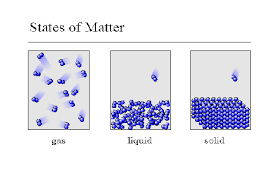
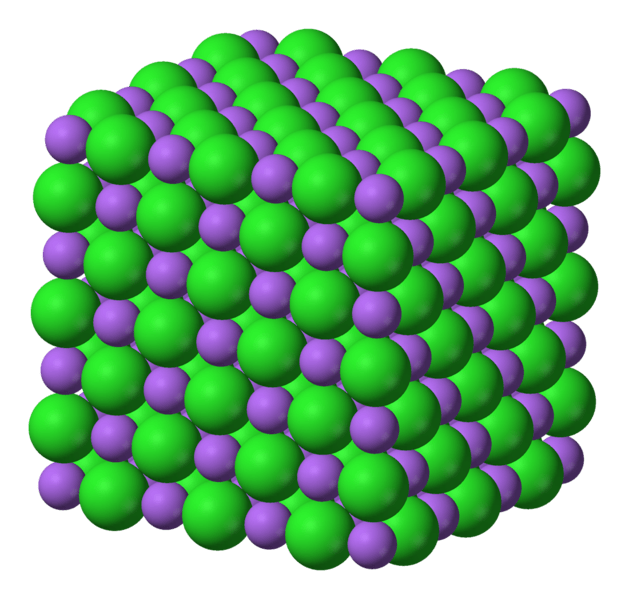
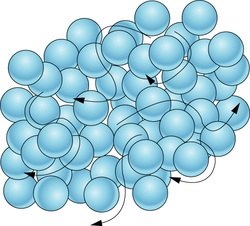
Molecules in a solid look like:

a)
b)
c)
d)
37.

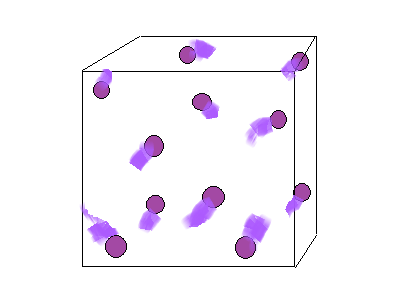
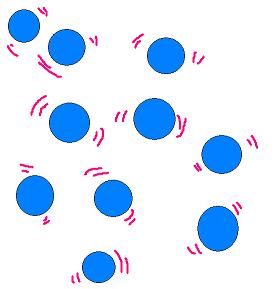
Molecules in a gas look like:

a)
b)
c)
d)
38.

Molecules in a liquid look like:

a)
b)
c)
d)
39.

Which arrow shows melting?

a)

1

b)

2

c)

3

d)

4

40.

Which arrow shows condensation?

a)

1

b)

2

c)

3

d)

4

41.

Which arrow shows freezing?

a)

1

b)

2

c)

3

d)

4

42.

Which arrow shows evaporation?

a)

1

b)

2

c)

3

d)

4

43.

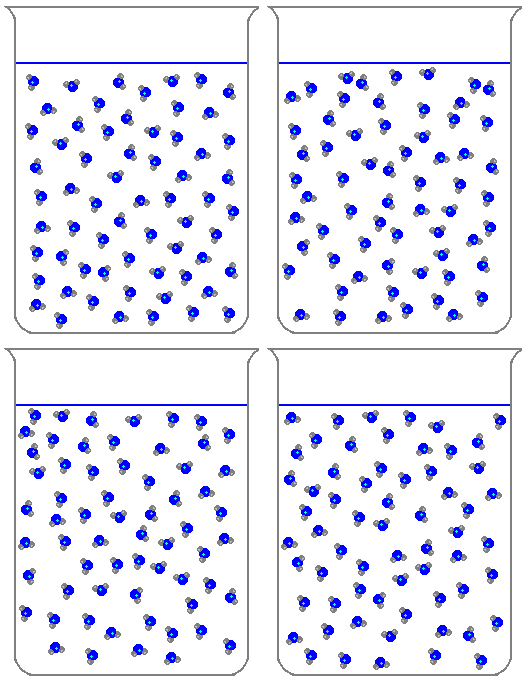
When temperature is increased, these molecules will become:

a)

solid

b)

liquid

c)

gas

44.

When temperature is decreased, these molecules will become:

a)

solid

b)

liquid

c)

gas

45.

When temperature is decreased, these molecules will become:

a)

solid

b)

liquid

c)

gas

46.

When temperature is increases, these molecules will become:

a)

solid

b)

liquid

c)

gas

47.

What do gases and liquids have in common?

a)

Both have definite shape

b)

Both take the shape of its container

c)

Both have definite volume

d)

Both do not have definite volume

48.

What do liquids and solids have in common?

a)

Both have definite volume

b)

Both have definite shape

c)

Both take the shape of its container

d)

Both can be compressed

49.
Ice melting
a)
Chemical Change
b)
Physical Change
50.
Water freezing
a)
Chemical Change
b)
Physical Change
51.
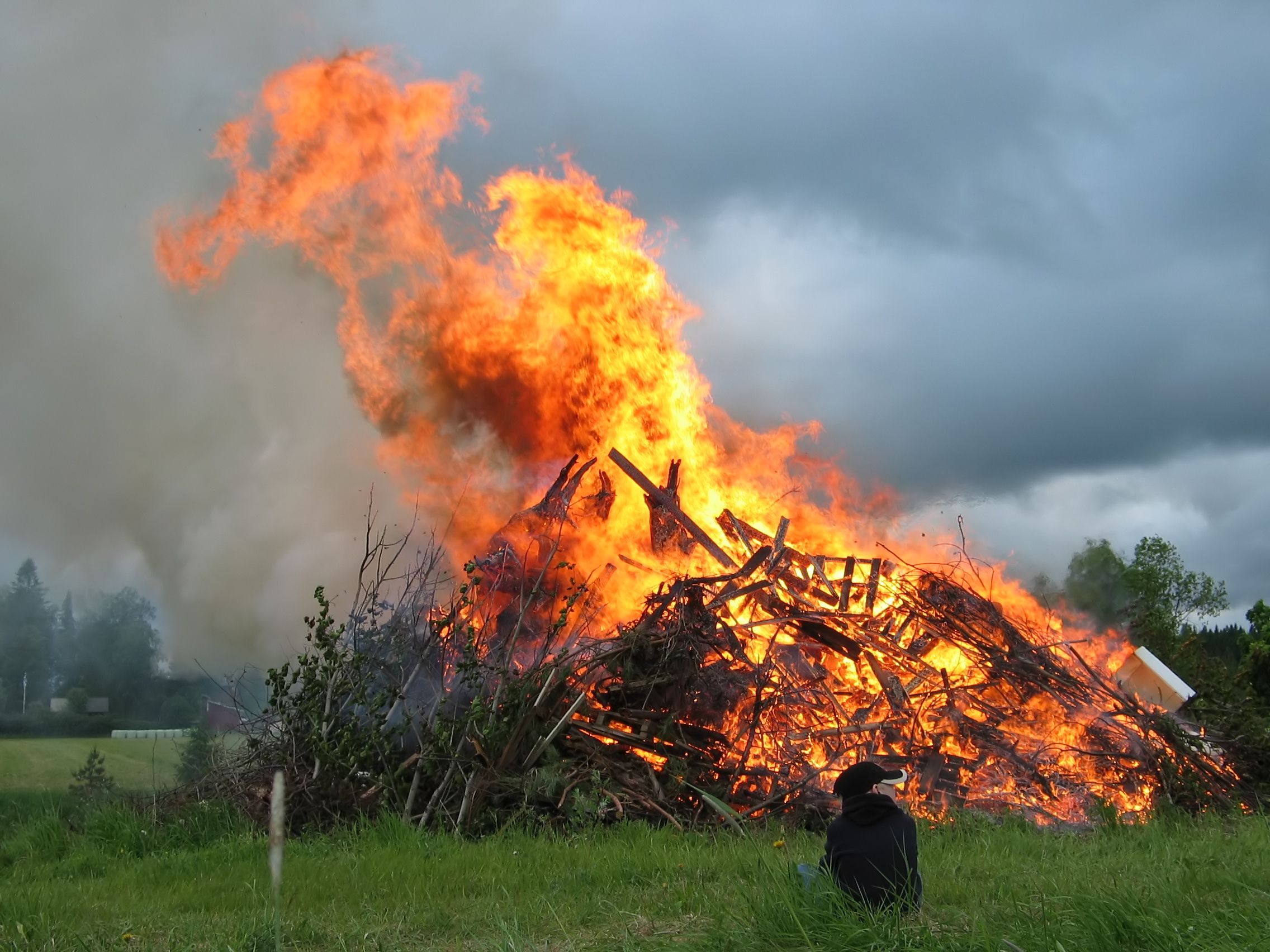
Wood burned in a fireplace
a)
Chemical Change
b)
Physical Change
52.
Cake batter baked in an oven
a)
Chemical Change
b)
Physical Change
53.
Baking soda and vinegar combine to make carbon dioxide
a)
Chemical Change
b)
Physical Change
54.
Glass bottle that is shattered
a)
Chemical Change
b)
Physical Change
55.
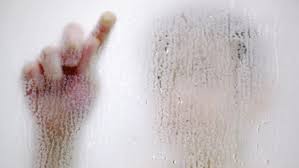
Students observed as small drops of water collected on the outside of a glass.
Which statement BEST describes why the water vapor in the air formed liquid water on the outside of the glass?
a)
The humidity outside the glass turns the vapor to liquid water.
b)
The water vapor pulls the water from inside the glass to outside the glass.
c)
The temperature of the water inside the glass is colder than the air outside the glass.
d)
The temperature of the water inside the glass is warmer than the air outside the glass.
56.
A student is creating a potting soil mix. She combines 100 grams of sand, 200 grams of soil, and 200 grams of pebbles to make her potting soil. What is the mass of the potting soil?
a)
100 grams 
b)
200 grams
c)
300 grams
d)
500 grams
57.
What is anything that has mass and takes up space?
a)
matter
b)
substance
c)
chemistry
d)
property
58.
Is wood burning a physical or chemical change?
a)
Physical 
b)
Chemical
59.
The Law of Conservation of Mass tells us matter can't  ______________.
a)
change color
b)
change state of matter
c)
be created or destroyed
d)
change temperature
60.
Is melting butter for popcorn a chemical or physical change?
a)
chemical
b)
physical
61.
Which of these scientific tools is essential for testing the Law of Conservation of matter? 
a)
Spring Scale 
b)
Metric Ruler 
c)
Balance 
d)
Graduated Cylinder 
62.
Jace measures 20 grams of water in a pan and then freezes it.  A day later he takes the ice cubes out of the pan and notices it is larger than before. What will it weigh? 
a)
40 grams 
b)
30 grams 
c)
20 grams 
d)
10 grams 
63.
What does the Law of Conservation of Matter refer to? 
a)
Matter can not be created or destroyed 
b)
Matter can be created but not destroyed 
c)
Matter can be destroyed but not created 
d)
Matter is being lost everyday 
64.
Why does a block of wood float, but a small nail sink in water? 
a)
The nail is more dense than the wood
b)
The wood is more dense than the nail
c)
They are equal in density but made of different materials.
65.
__________________________  is when gas cools and turns back into a liquid. 
a)
Concentration
b)
Coordination
c)
Condition
d)
Condensation
66.

The weight of a pencil is about

a)

5 g

b)

50 g

c)

500 g

d)

5 kg

67.

A 2 liter of Sprite weighs about

a)

2 g

b)

20 g

c)

200 g

d)

2 kg

68.

What tool would you use to provide evidence that mass is neither created or destroyed in a chemical or physical change?

a)

thermomter

b)

magnifying glass

c)

scale

d)

microscope

69.
In what state of matter, do particles move so fast they cannot be held together?
a)
Solid
b)
Liquid
c)
Gas
70.
What is room temperature?
a)
0 Degrees Celsius
b)
20 Degrees Celsius
c)
100 Degrees Celsius
71.
At what temperature does water boil?
a)
0 Degrees Celsius
b)
20 Degrees Celsius
c)
100 Degrees Celsius
72.
At what temperature does water freeze?
a)
0 Degrees Celsius
b)
20 Degrees Celsius
c)
100 Degrees Celsius
73.
What state of matter has no definite volume and assumes the shape of its container?
a)
Solid
b)
Liquid
c)
Gas
74.
What must happen to the temperature in order for a solid to form?
a)
Increase (get warmer)
b)
decrease (get colder)
75.
What must happen to the temperature in order for a gas to form?
a)
Increase (get warmer)
b)
Decrease (get colder)
76.
In what state of matter, do the particles spread out to fill their container?
a)
Solid
b)
Liquid
c)
Gas
77.
What state of matter has a definite volume and retains a fixed shape?
a)
Solid
b)
Liquid
c)
Gas
78.
In what state of matter, do the rigid-particles not move/slide past one another?
a)
Solid
b)
Liquid
c)
Gas
79.
In what state of matter, do the particles slip and slide past each other?
a)
Solid
b)
Liquid
c)
Gas
80.
In what state of matter, do the particles vibrate back and forth?
a)
Solid
b)
Liquid
c)
Gas
81.
What state of matter has a definite volume and assumes the shape of its container?
a)
Solid
b)
Liquid
c)
Gas
82.
A balance scale can be used to measure the...
a)
volume of an object
b)
mass of an object
c)
length of an object
83.
A graduated cylinder can be used to measure the...
a)
Mass of an object
b)
Volume of a liquid
c)
Length of an object
84.
Which statement is true about a GAS?
a)
Atoms/Molecules are packed tightly
b)
Atoms/Molecules are spread far apart
85.
Which statement is true about a SOLID?
a)
Atoms/Molecules are packed tightly together
b)
Atoms/Molecules are spread far apart
86.
A ruler can be used to measure the...
a)
Mass of an object
b)
Volume of a liquid
c)
Length of an object