
 Worksheets
Rate of Reaction
Total questions: 99
Worksheet time: 5hrs 57mins
Of the following, __________ will lower the activation energy for a reaction
increasing the concentrations of reactants
raising the temperature of the reaction
removing products as the reaction proceeds
adding a catalyst for the reaction
The minimum amount of energy needed to start a reaction is called the .....
activation energy
energy of reaction
entropy of reaction
reaction mechanism energy
A catalyst increases the rate of a reaction by .....
increasing the concentration of reactant(s).
decreasing the concentration of the reactant(s).
increasing the activation energy of the overall reaction.
decreasing the activation energy of the overall reaction.
Which of the following would NOT increase the rate of reaction?
raising the temperature
adding catalyst
increasing the concentration of the reactants
increasing the volume of the container
Dust particles suspended in the air inside unheated grain elevators can sometimes react explosively because the dust particles have a .....
high kinetic energy.
high activation energy.
catalytic effect on the reaction.
large surface area for the reaction.
Which factors affect the rate of a reaction?
temperature
concentration
surface area
pressure
catalyst
Increase in temperature causes the particles to .....
slow down
move faster
stay apart from each other
move in the correct order
Why does a higher concentration increase the rate of reaction?
it increases the amount of reactants
it lowers the activation energy
it increases the energy of reactant particles
it increases the frequency of collision
Why does a higher temperature increase the rate of a reaction?
It increases both the frequency collision and energy of reactant particles
It only increases the frequency of collision
It only increases the energy of reactant particles
It reduces the activation energy of the reaction

Which factors increase the rate of a reaction?
increasing temperature
increasing concentration
increasing total surface area
All of these
Increasing pressure causes the reacting particles ....
to bond together
to repel from each other
gain more kinetic energy
to move closer together
Why does a higher concentration increase the rate of reaction?
it increases the amount of reactants
it lowers the activation energy
it increases the energy of particle collisions
it increases the frequency of collisions
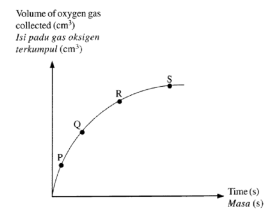
Diagram shows a graph of volume of oxygen gas collected against time in the decomposition reaction of hydrogen peroxide when using manganese dioxide as catalyst.
Which point shows the highest rate of reaction?
P
Q
R
S
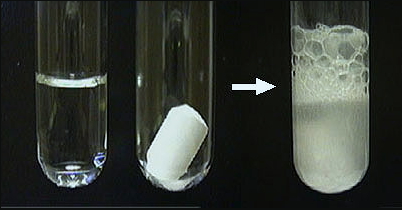
How could we make this reaction happen more quickly?
Decrease the concentration of the acid
crush the chalk to increase the surface area
Put the test tube in an ice bath
nothing to do
When surface area is decreased, the rate of reaction ....
Decreases, because there are LESS possible sites for correct collisions
Increases, because there are LESS possible sites for correct collisions
Decreases, because there are MORE possible sites for correct collisions
Increases, because there are MORE possible sites for correct collisions

The following graph shows two different reaction pathways for the same overall reaction at the same temperature. Which pathway is slower and why?
Red, because the activation energy is larger
Blue, because the activation energy is lower
both reaction progress at the same rate
none of above
Increasing the __________ causes the particles (atoms or molecules) of the reactants to move more quickly so that
they collide with each other more frequently and with more
energy.
Catalyst
Surface Area
Temperature
Concentration
Which of the following will lower the rate
of reaction?
adding an enzyme to the reaction
decreasing the temperature from 40°C to 10°C
breaking a chunk of calcium up into smaller pieces
increasing the amount of solute dissolved in a solution
Grinding a seltzer tablet into powder increases the rate of reaction due to increasing .....
concentration
surface area
temperature
reactants
What is the name given to a catalyst in the human body?
Biology
Catalyst
Chemical
Enzyme

Icing sugar has a greater ___________ than a solid cube of sugar.
Surface Area
Catalyst
Temperature
Concentration
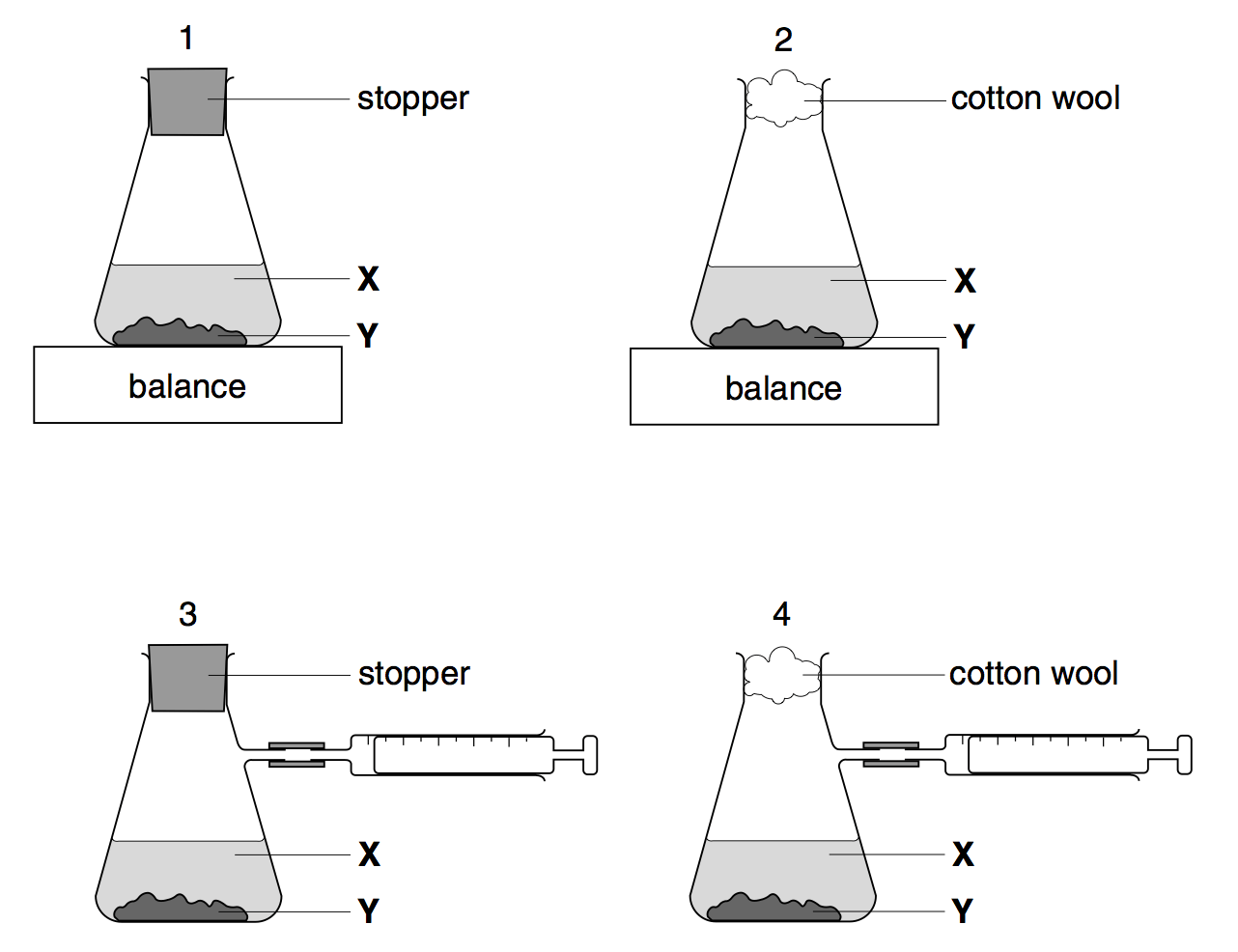
Which two diagrams show suitable methods for investigating the speed of the reaction?


A student investigates the rate of reaction between zinc and excess dilute hydrochloric acid.
What is the rate of reaction in the first 20 seconds (in cm3 of hydrogen produced per second)?
2.1
8.4
21
84
Which of the following is a possible unit for rate of reaction?
cm3/s
m/s
N
N/m2
If reaction A has an activation energy of 250 kJ and reaction B has an activation energy of 100 kJ, which of the following statements must be correct?
Rate of reaction A is greater than reaction B
Rate of reaction A is lower than reaction B
Rate of reaction A is equally with reaction B
none of above

From the energy profile diagram shown, what is the value of the activation energy?
100
250
150
350
The particles of reactants must collide in order for a reaction to take place. The fewer the collisions, the slower the rate of reaction.
Which one of the following will increase the rate of reaction?
Decreasing the concentration of solutions taking part in the reaction.
Breaking a solid reactant into many small pieces.
Lowering the temperature of the reactants.
Decreasing the pressure of gaseous reactants.
If the temperature of a reaction is increased by 10oC, the new rate of reaction will be approximately ....
four times greater
doubled
unchanged
ten times greater
Which of the following statements about catalysts is false?
They speed up reactions
They provide an alternative reaction pathway with a lower activation energy
They become chemically changed at the end of the reaction
They don't become chemically changed at the end of the reaction
Which factors affect the rate of a reaction?
temperature
concentration
size
pressure
catalyst
Increase in temperature causes the particles to
slow down
move faster
stay apart from each other
move in the correct order
Why does a higher concentration increase the rate of reaction?
it increases the amount of reactants
it lowers the activation energy
it increases the energy of reactant particles
it increases the frequency of collision
Why does a higher temperature increase the rate of a reaction?
It increases both the frequency collision and energy of reactant particles
It only increases the frequency of collision
It only increases the energy of reactant particles
It reduces the activation energy of the reaction
Grinding an effervescent tablet into powder increases the rate of reaction due to increase of
concentration
total surface area
temperature
size
Which factors increase the rate of a reaction?
increasing temperature
increasing concentration
increasing total surface area
All of these
Increasing the temperature gives particles more __________.
time
energy
space
frequency
Why does breaking up a solid reactant increase the rate of reaction?
it creates more solid
it creates more energy
it increases the total surface area
it increases the concentration
Why does a higher concentration increase the rate of reaction?
it increases the amount of reactants
it lowers the activation energy
it increases the energy of particle collisions
it increases the frequency of collisions
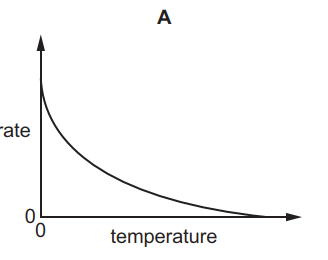
Which graph shows the effect of increasing temperature on the rate of reaction of calcium carbonate with dilute hydrochloric acid?
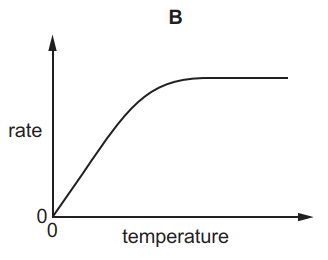
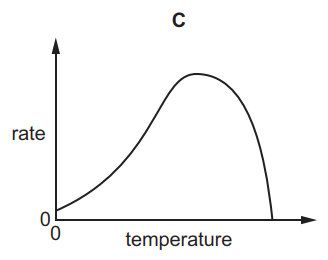
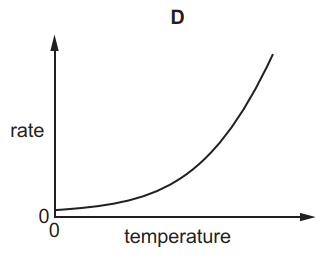
How could we make this reaction happen more quickly?
Decrease the concentration of the acid
crush the chalk to increase the surface area
Put the test tube in an ice bath

Increase in temperature causes the particles to
slow down
move faster
stay apart from each other
move in the correct order
Why does a higher concentration increase the rate of reaction?
it increases the amount of reactants
it lowers the activation energy
it increases the energy of reactant particles
it increases the frequency of collision
Why does a higher temperature increase the rate of a reaction?
It increases both the frequency collision and energy of reactant particles
It only increases the frequency of collision
It only increases the energy of reactant particles
It reduces the activation energy of the reaction
Grinding an effervescent tablet into powder increases the rate of reaction due to increase of
concentration
total surface area
temperature
size
Which factors increase the rate of a reaction?
increasing temperature
increasing concentration
increasing total surface area
All of these
Increasing pressure causes the reacting particles
to bond together
to repel from each other
gain more kinetic energy
to move closer together
Increasing the temperature gives particles more __________.
time
energy
space
frequency
As the frequency of ________________ collision increases, the rate of reaction increases.
time
speed
effective
efficient
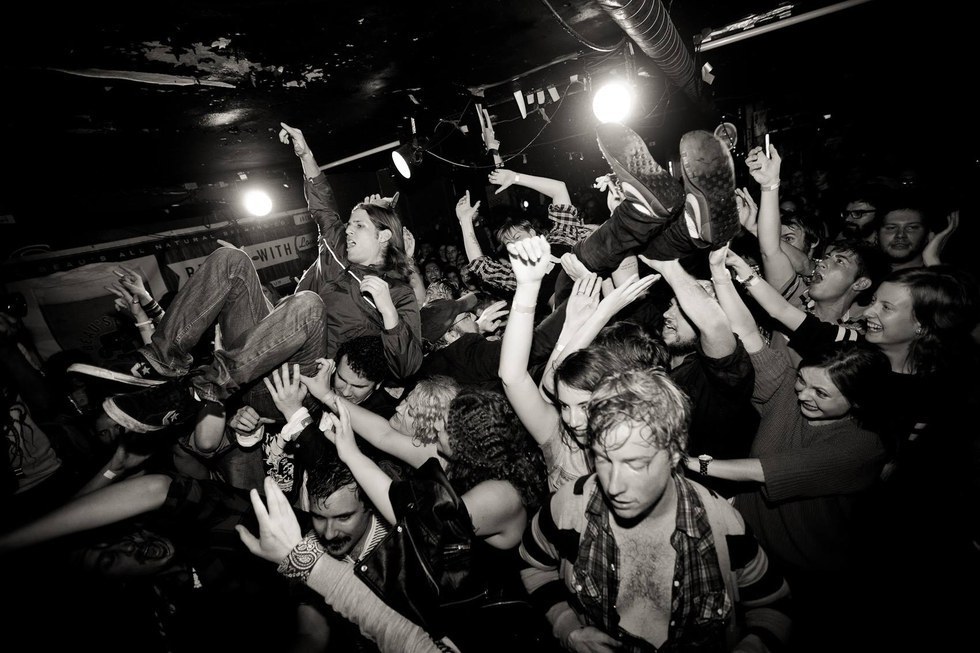
You add more bodies into a "mosh pit" to hope for more collisions. You have increased
temperature
concentration
pressure
catalyst
Why does a higher concentration increase the rate of reaction?
it increases the amount of reactants
it lowers the activation energy
it increases the energy of particle collisions
it increases the frequency of collisions
Which one shows that a chemical reaction has occurred?
dissolving
melting
formation of a gas
bending

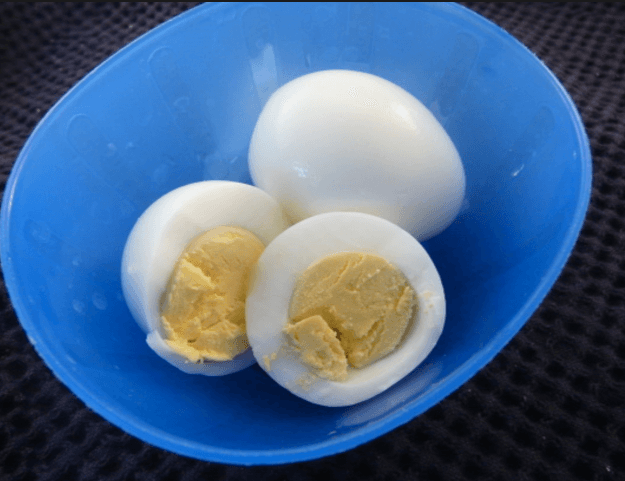
Hard-boiled eggs are the a result of a chemical change because
the eggs are the same size before vs after.
the eggs have different properties (smell, taste, color) before vs after.
the eggs weigh the same before vs after.
the eggs went through a phase change.
On a camping trip, Mr. Markowitz roasts a marshmallow in the campfire. He notices that the roasted marshmallow smells and tastes differently than the uncooked marshmallows. What change has taken place AND how does Mr. Markowitz know?
A chemical change because the marshmallow changed in taste, color, and smell
A chemical change because the marshmallow was heated up.
Only a physical change because the marshmallow changed in size
No change because the marshmallow is not a new substance
Which of the following is a clue that a chemical change has occurred? (Choose all correct answers.)
Formation of a gas (bubbles)
Color change
Phase change
Produces light or heat
Which of these is NOT a chemical reaction?
Single displacement
Synthesis
Decomposition
Stratification

Table 4 shows the total volume of gas evolved at different intervals for the dissociation of hydrogen peroxide.
What is the average rate of reaction in the second minute?
14.0 cm3 min-1
16.0 cm3 min-1
18.0 cm3 min-1
28.0 cm3 min-1
What is the meaning of the rate of reaction?
Decrease in amount of product
Decrease in amount of product against time
Increase in amount of products against time
Increase in amount of reactants against time
Which unit is correct for the rate of reaction?
g mol-1
g min-1
mol dm-3
kJ mol-1
Which of the following has the lowest rate of reaction?
Combustion of ethanol
Fermentation of glucose
Oxidation of magnesium
Precipitation of silver chloride
Which reactions has the highest rate of reaction?
Rusting of water pipe
Photosynthesis in green plant
Burning of a small piece of charcoal in the air
Formation of stalactites and stalagmites
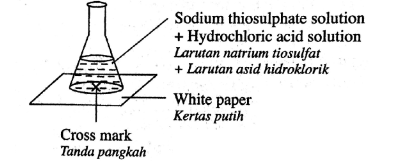
Diagram shows the apparatus set up for an experiment to determine the rate of reaction.
Which of the following techniques is the most suitable to determine the rate of reaction?
Record the time as soon as precipitate is formed
Record the time taken to obtain the maximum temperature
Record the times as soon as the cross mark cannot be seen
Record the times taken for the change of the pH value until a fixed pH value is obtained
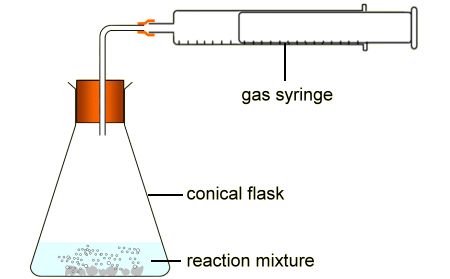
How is this equipment being used to measure the rate of reaction?
The gas syringe measures how much gas is produced in a certain time
The reaction mixture will increase in volume in a certain time

Table 7 shows the volume of carbon dioxide gas collected in an experiment for the reaction between excess calcium carbonate and hydrochloric acid.
What is the average rate of reaction for the experiment?
0.12 cm3 s-1
0.18 cm3 s-1
0.22 cm3 s-1
0.37 cm3 s-1

Table 19 shows the volume of gas collect for each minute for one reaction.
what is the rate of reaction for the first 4 minute of this reaction?
0.017 cm3 s-1
0.111 cm3 s-1
0.133 cm3 s-1
0.150 cm3 s-1
Increase in temperature causes the particles to
slow down
move faster
stay apart from each other
move in the correct order
Why does a higher concentration increase the rate of reaction?
it increases the amount of reactants
it lowers the activation energy
it increases the energy of reactant particles
it increases the frequency of collision
Increasing the temperature gives particles more __________.
time
energy
space
frequency
Why does breaking up a solid reactant increase the rate of reaction?
it creates more solid
it creates more energy
it increases the total surface area
it increases the concentration
How could we make this reaction happen more quickly?
Decrease the concentration of the acid
crush the chalk to increase the surface area
Put the test tube in an ice bath
Increasing pressure causes the reacting particles
to bond together
to repel from each other
gain more kinetic energy
to move closer together
What is the purpose of a catalyst?
Helps to slow down a reaction
Raises the activation energy
Lowers the activation energy
Is consumed by the reaction
What criteria must be met for reactant collisions to result in a successful product?
The reactants must collide with each other
The reactants must collide with enough energy and be in the right positions
The reactants must have enough energy to form the activated complex
Rank the state os matter from FASTEST to SLOWEST particle speed.
solid, liquid, gas
liquid, solid, gas
gas, liquid, solid
gas, solid, liquid
A log is burning in a campfire. If the concentration of oxygen reaching the log is increased, what will happen to the reaction rate?
reaction rate decreases
reaction rate increases
reaction rate remains the same
Adding a catalyst to a reaction will
Increase the rate
Decrease the rate
Not affect the rate

